F1 chequered flag explained: what it means and why timing still matters
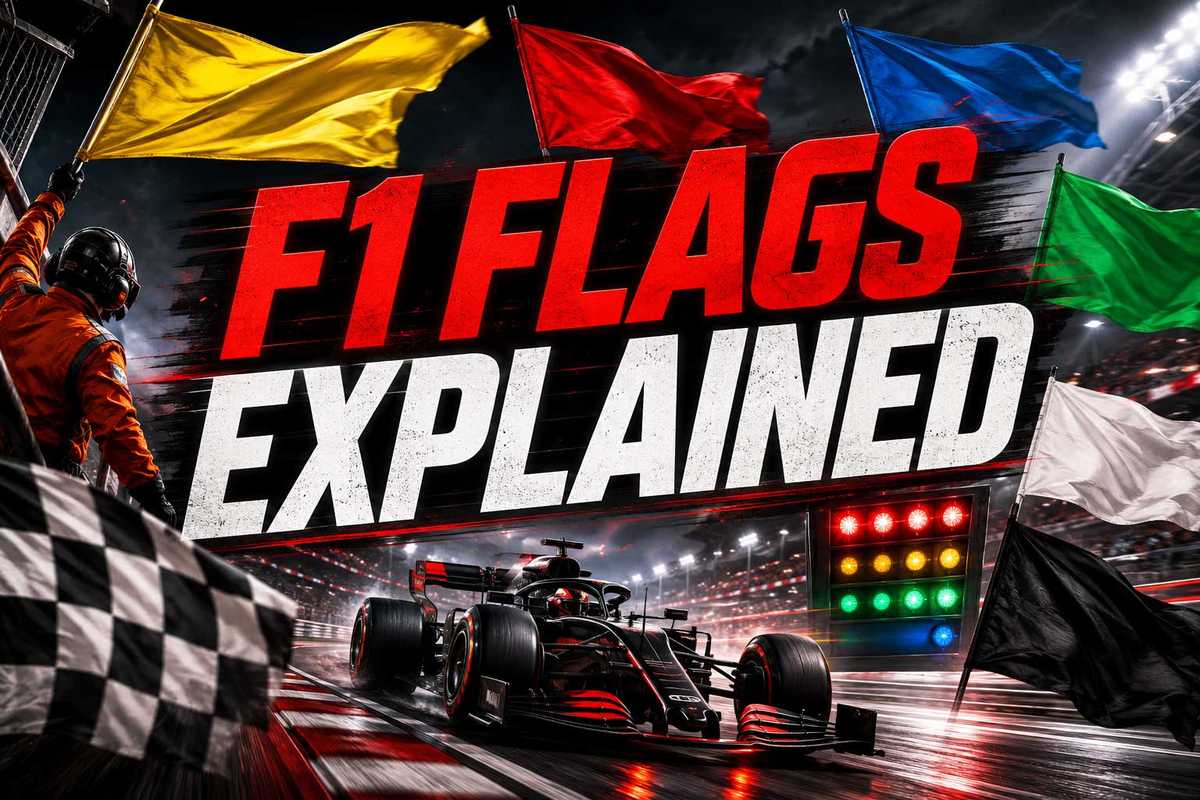
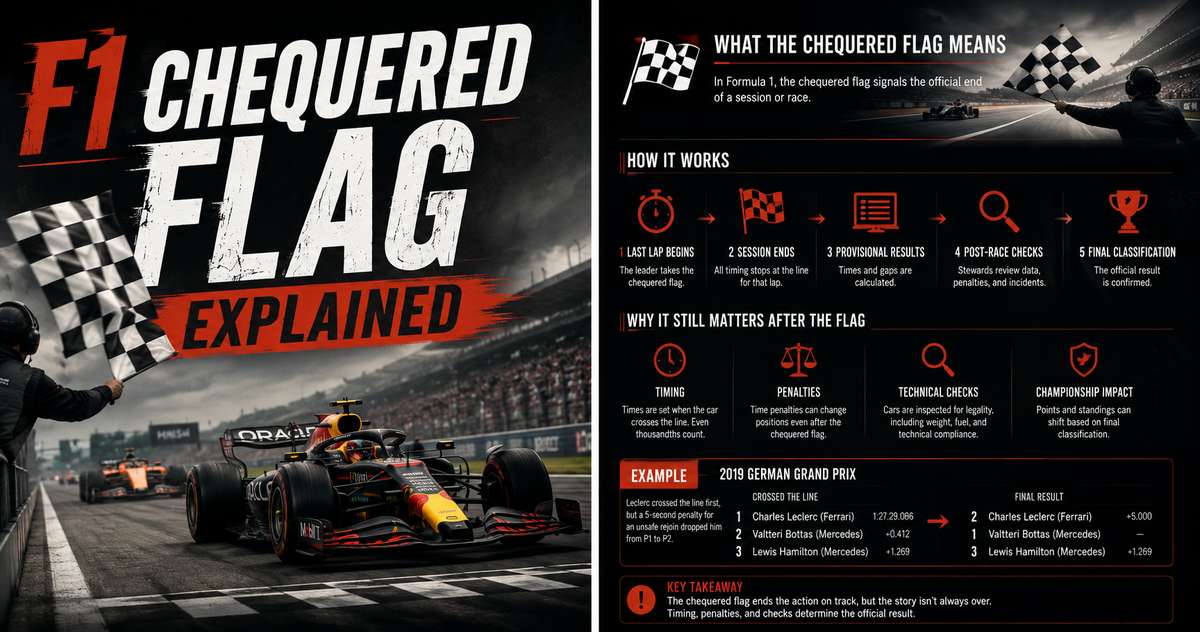
The black-and-white chequered flag in Formula 1 is the universal visual signal that a session—practice, qualifying or the race—has ended. It is shown at the Line and marks the moment the trackside end-of-session procedure begins, but the flag alone does not instantly settle every technical and sporting question: timing systems, parc fermé rules and the FIA's classification process still determine the official outcome.
Quick summary: The chequered flag is the end-of-session signal shown at the Line. After it is waved, cars must follow post-session procedures—typically proceeding to parc fermé—and timing and FIA classification rules are used to produce the provisional and final results.
Quick access: Definition • How it works • Rules & procedure
CLEAR DEFINITION
The chequered flag in Formula 1 is the official end-of-session signal. According to the FIA sporting regulations and the sport's official glossary, the black-and-white chequered flag is used to indicate that a session—practice, qualifying or the race—has finished and is displayed at the Line.
HOW IT WORKS
RULES AND FIA PROCEDURES
The FIA sporting regulations set out that the chequered flag is the end-of-session signal and that it will be shown at the Line. After the flag, cars are required to proceed directly to parc fermé without unnecessary delay and without receiving outside assistance except from marshals if it is necessary. These post-session steps allow scrutineering and timing verification to confirm the official classifications.
WHY IT MATTERS IN F1
For fans, the chequered flag is the moment of theatre: it marks the apparent end. For teams and officials, however, the procedure that follows is crucial. Electronic timing determines the precise order and lap counts at the instant the session ends, and the FIA issues a provisional classification based on those records. Any checks, parc fermé inspections or timing clarifications that follow can affect the transition from provisional to final classification.
COMMON MISUNDERSTANDINGS
Beginners sometimes think the chequered flag instantly finalises results on the spot. In reality, the flag indicates the end of on-track competition at that moment, but the official finishing order relies on the timing system and subsequent FIA procedures. Historical examples across motorsport show that premature waving or timing confusion can change which lap is counted for a car and therefore affect classification.
FAN VIEWING GUIDE
On television, watch the timing graphics and the pit-lane/finish-line cameras alongside the flag. The chequered flag will be visible at the Line, but the on-screen timing and the FIA's provisional classification release after the session are the reliable record of who finished where and on which lap.
CLOSING INTERPRETATION
The chequered flag is a simple, unmistakable signal: it ends a session at the Line. Understanding the role of timing systems, parc fermé procedures and the FIA's classification process explains why results are often described as provisional at first and why the work done off-track after the flag is as important as the final seconds on it. That interplay—visual tradition plus technical verification—is a small but important example of how Formula 1 combines spectacle with strict sporting procedure.
Author: Alex R.