F1 green flag explained: when racing really resumes and why it matters
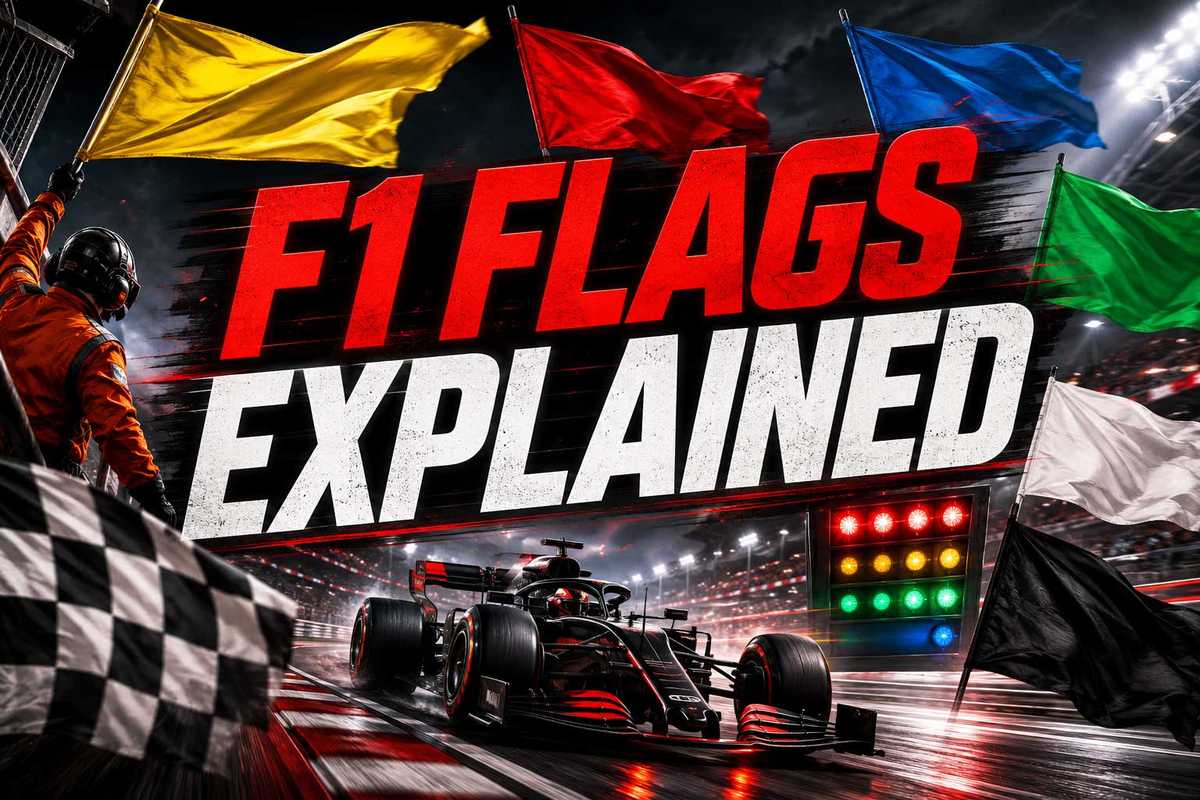
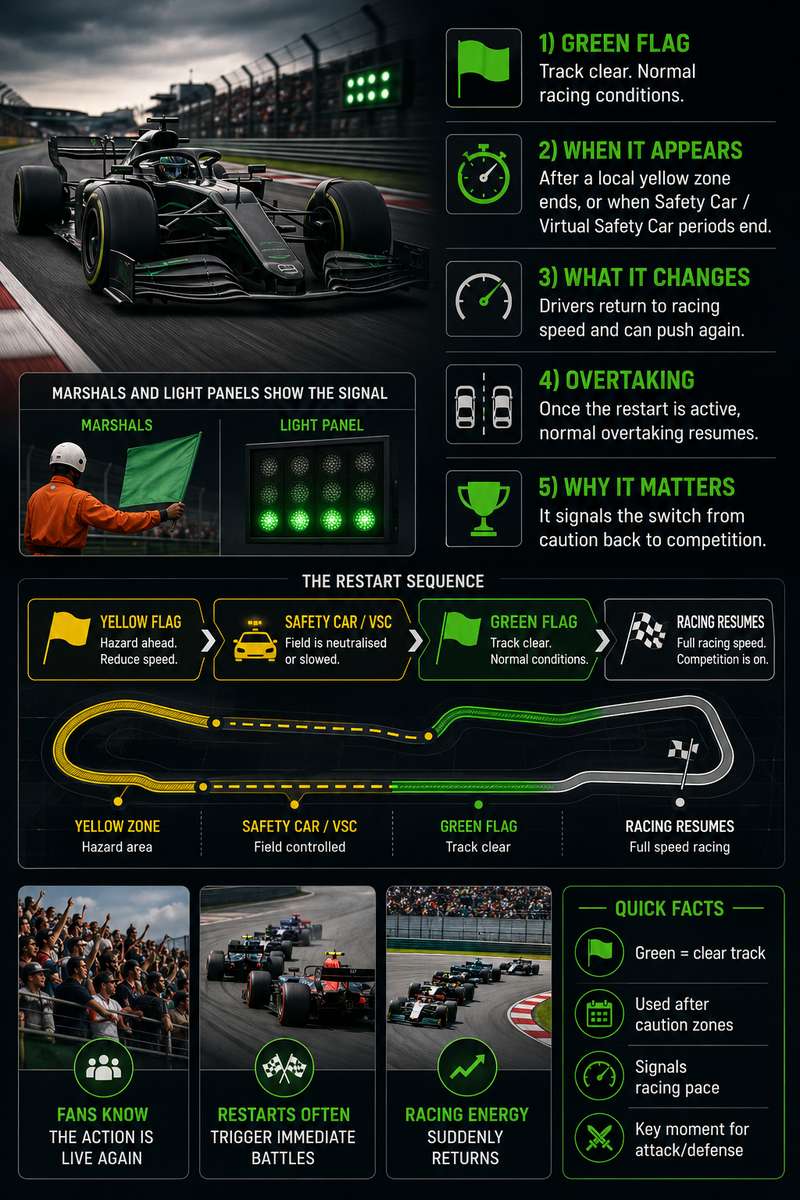
The green flag in Formula 1 is the simple but crucial signal that normal racing has resumed. Whether it follows a local yellow, a Virtual Safety Car, a full Safety Car period or a red-flag stoppage, the green flag (and matching green light panels) tells drivers they may return to racing speed and overtaking where permitted.
Quick summary: The green flag or green lights indicate the track is clear. Marshals wave green flags at posts, and overhead or start/finish panels show green to mark the official point when drivers may resume full racing. This ends yellow-flag zones and safety periods.
Quick access: Definition · How it works · Rules & procedures
CLEAR DEFINITION
In Formula 1 the green flag means the course is in normal racing condition: incidents have been cleared or controlled, and drivers may accelerate back to racing speed and overtake where regulations allow. The same meaning is shown by green light panels at the start/finish line or by marshal posts displaying waved green flags.
HOW IT WORKS
Marshals physically wave green flags at their posts to signal the end of a local yellow-flag zone. For larger interventions the race-control systems use green lights on trackside panels. When the relevant marshal post or the start/finish light panel displays green, that marks the official point at which drivers can resume racing normally.
RELATION TO YELLOW FLAGS, VSC, SAFETY CAR AND RED FLAGS
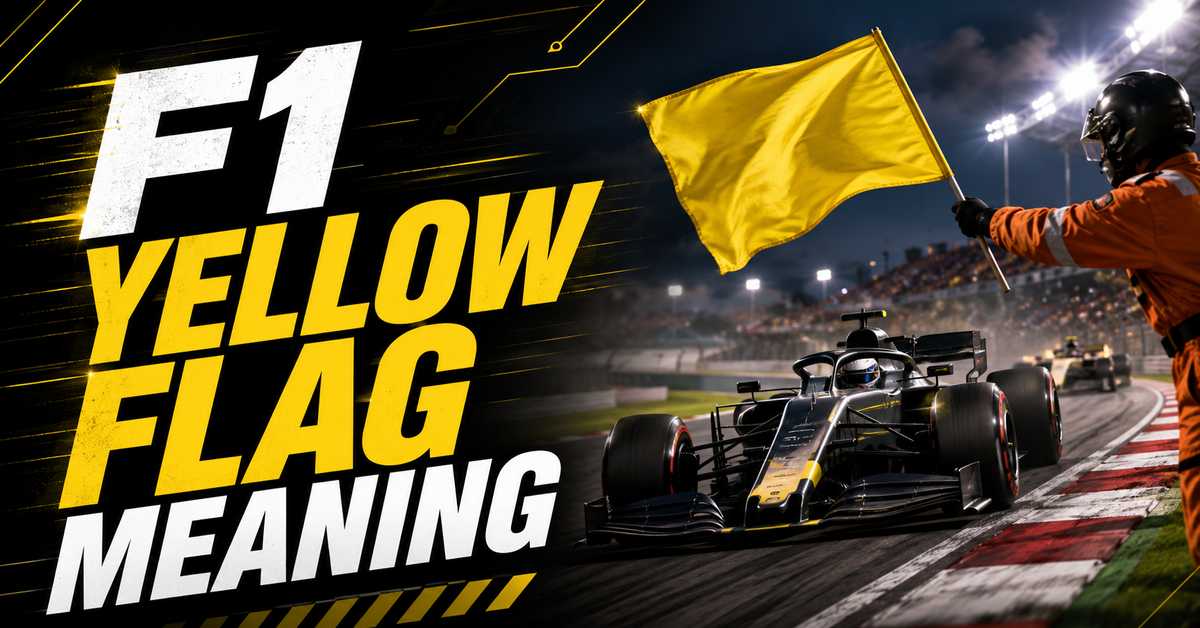
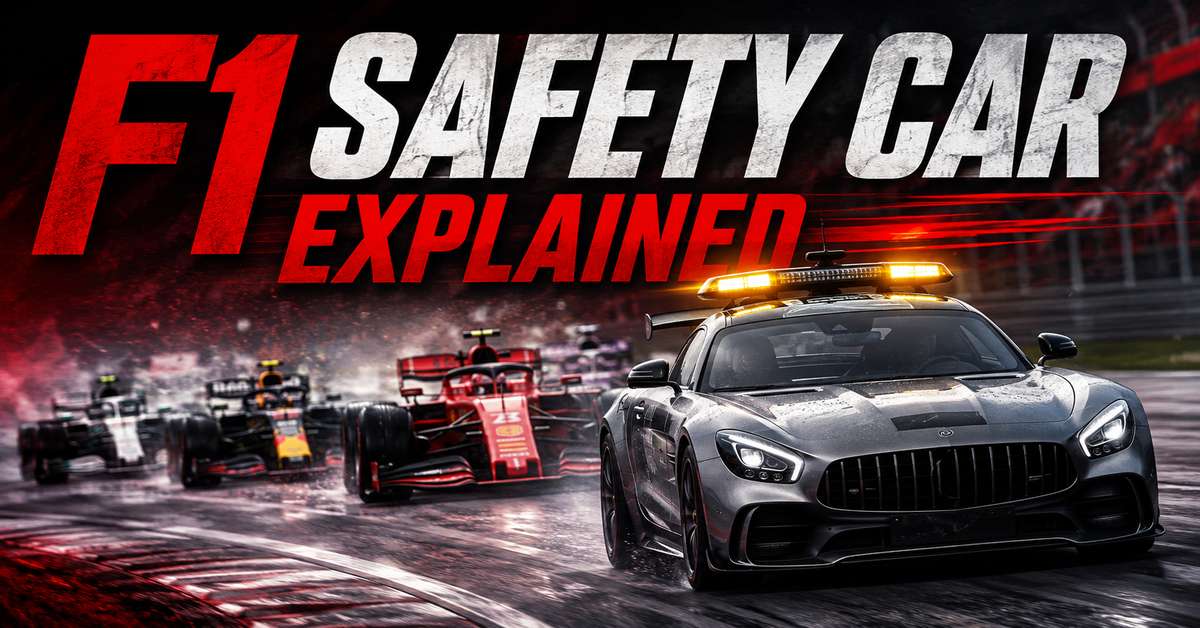
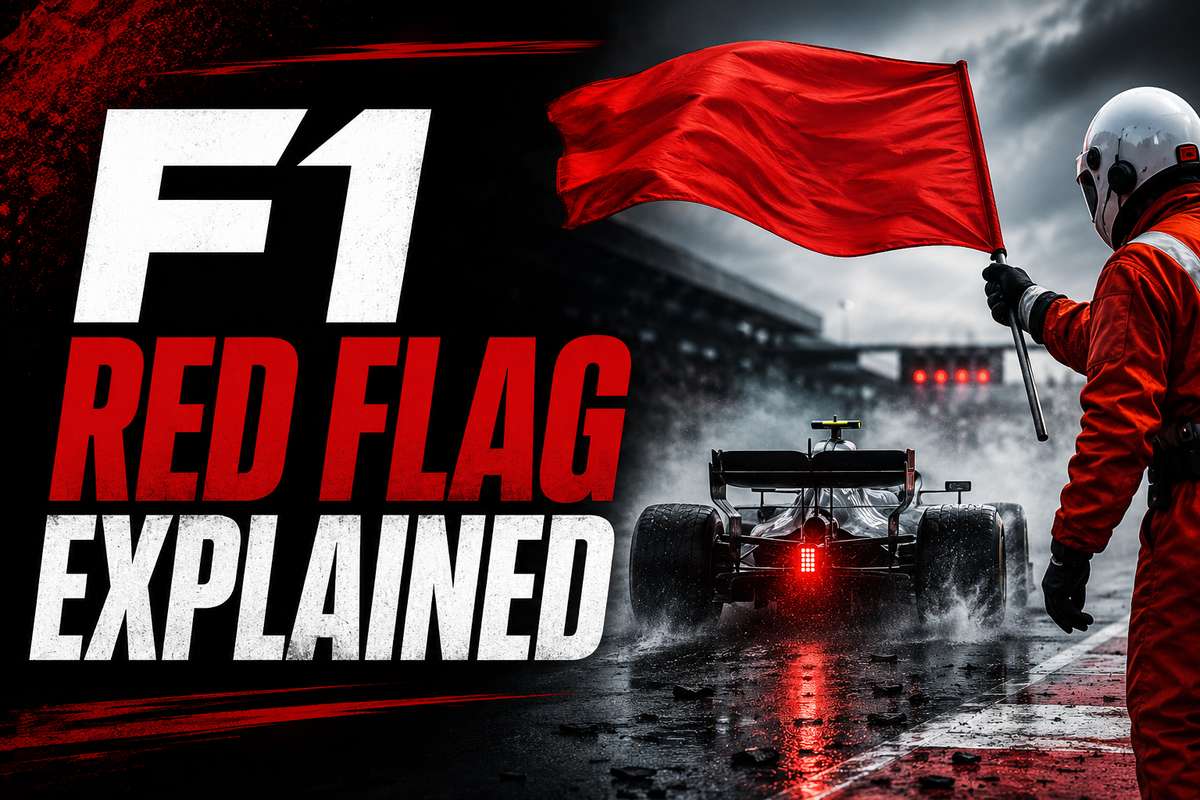
The green flag is the finishing signal for several different caution procedures. It is used after single or double yellow-flag incidents (local warnings), after Virtual Safety Car (VSC) periods, after full Safety Car periods, and when a red-flag suspension ends and the track is declared safe. Across all those cases the green display communicates that whatever restrictions applied have been lifted.
RULES AND FIA PROCEDURES
FIA sporting regulations and official briefings make clear that the withdrawal of yellow flags and the appearance of green flags or green light panels at the start/finish or relevant posts indicate the official resumption of racing. Restart procedures — particularly after Safety Car or VSC periods — are governed by specific timing and light-panel signals set out in the regulations, and the green signals are the final cue for full-speed racing to recommence.
WHY IT MATTERS FOR DRIVERS AND TEAMS
For drivers and teams the green flag determines when to switch from a controlled, conservation mindset back to attack mode. That affects tyre temperature and pressure management, ERS and power-unit deployment strategy, braking preparation and overtaking timing. Knowing the exact marshal post or panel where green will be shown helps teams plan energy deployment, tyre warm-up and pit-timing decisions linked to race position.
STRATEGY AND RACECRAFT
Because the green flag restores overtaking and full-speed running, it can change strategic calculations instantly. A Safety Car that ends with a green signal hands control to the race leader for the restart; teams must anticipate changes in tyre temperature and tyre life from the moment the green appears. Drivers use the green cue to prepare for acceleration, to manage dirty air effects and to time DRS and ERS usage when permitted.
FAN VIEWING GUIDE
On-screen, fans should watch marshal posts and the start/finish light panels for green. Commentary and timing graphics usually mark the end of caution periods, but the green flag or green lights are the definitive visual confirmation that genuine racing and overtaking can resume. Recognising this cue helps viewers understand when lap times will drop and battles will restart.
COMMON MISUNDERSTANDINGS
Beginners sometimes assume the race is automatically back to normal when marshals stop waving yellow flags on the nearest post; in fact the official resumption is tied to the specific post or start/finish light panel showing green. Also, the green flag does not remove any rules unrelated to track status — teams and drivers still must follow restart procedures and any regulatory restart controls until the green is shown.
CLOSING INTERPRETATION
The green flag is a short, clear signal that ties together safety, sporting control and competitive intent. It is the moment when caution gives way to full racing: tyres, aerodynamics, power deployment and split-second decision-making all shift immediately. For fans, drivers and teams alike it is a simple visual sign with wide tactical and safety implications — knowing what it means makes any Grand Prix easier to read and follow.
Author: Cynthia D.