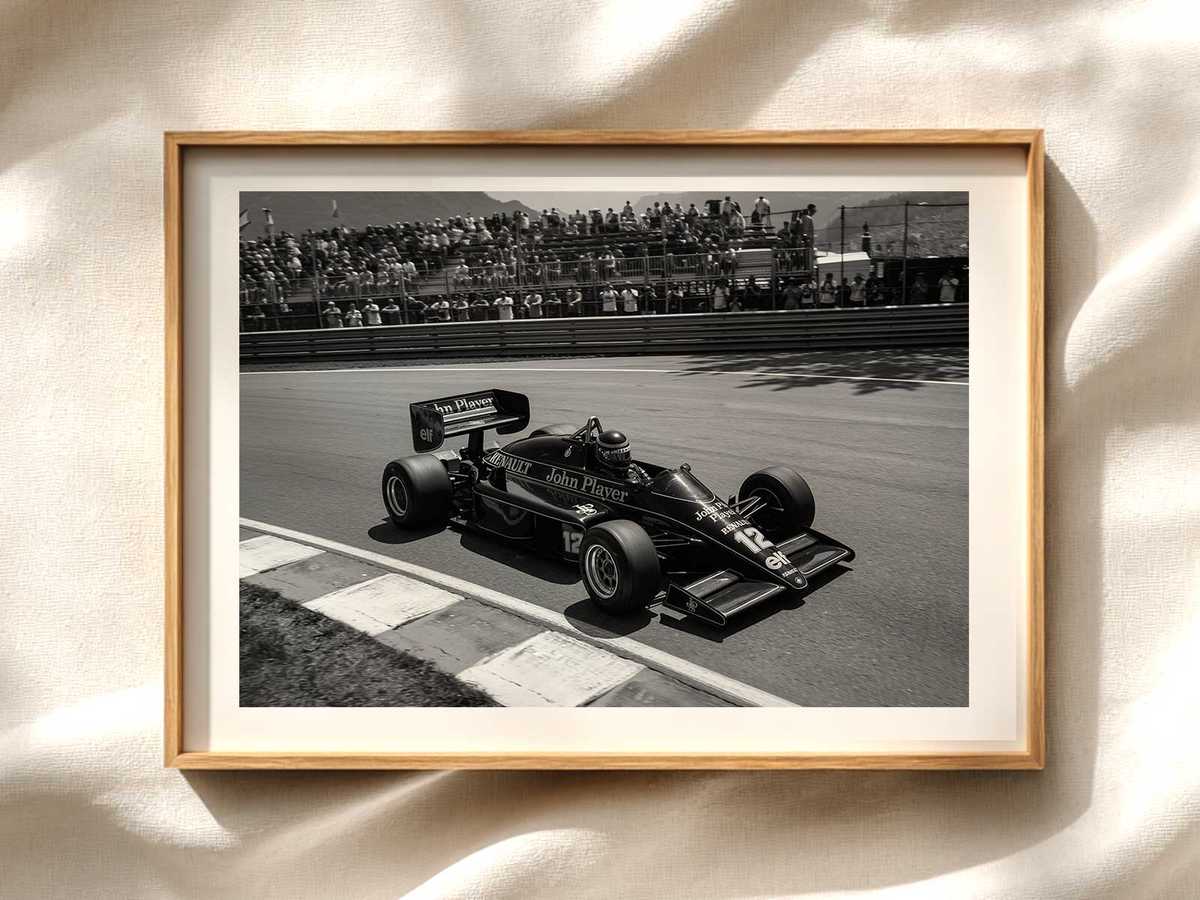
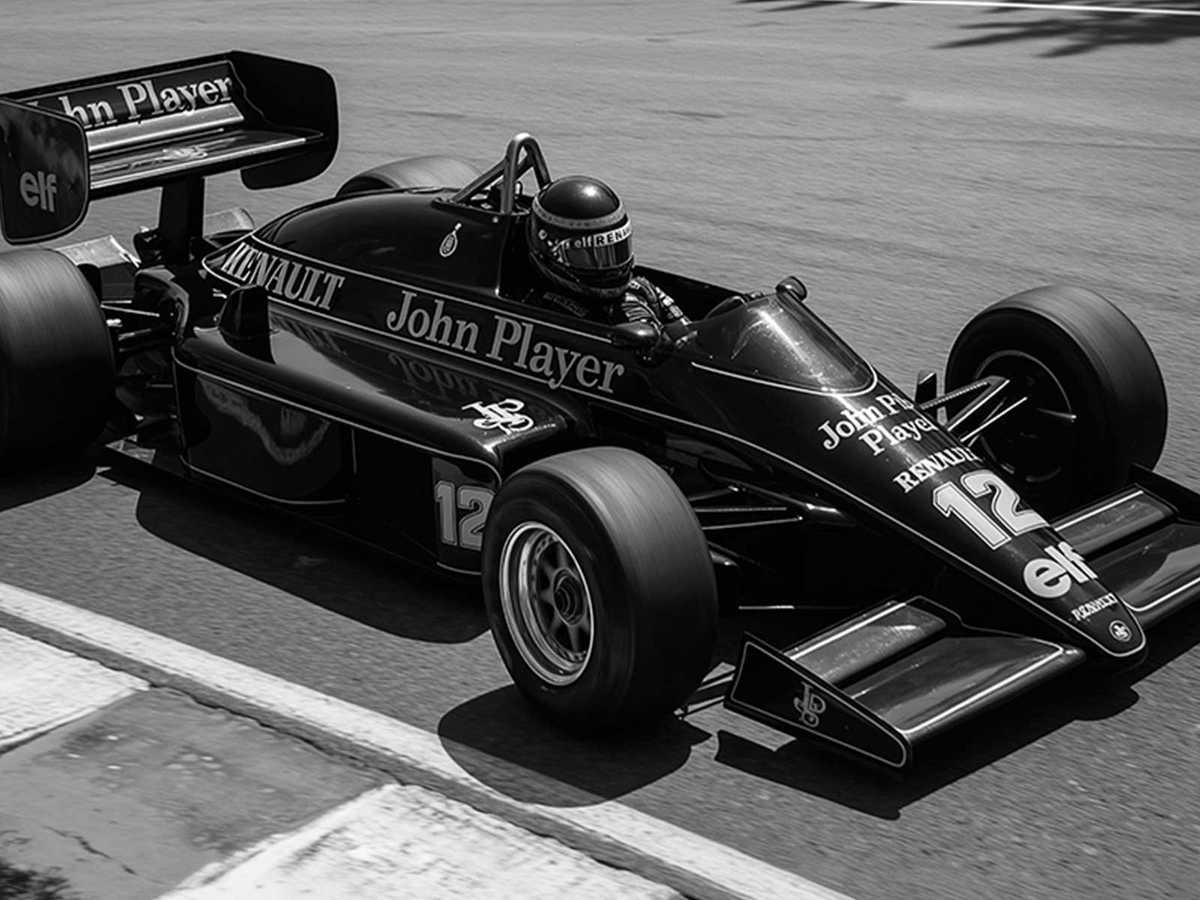
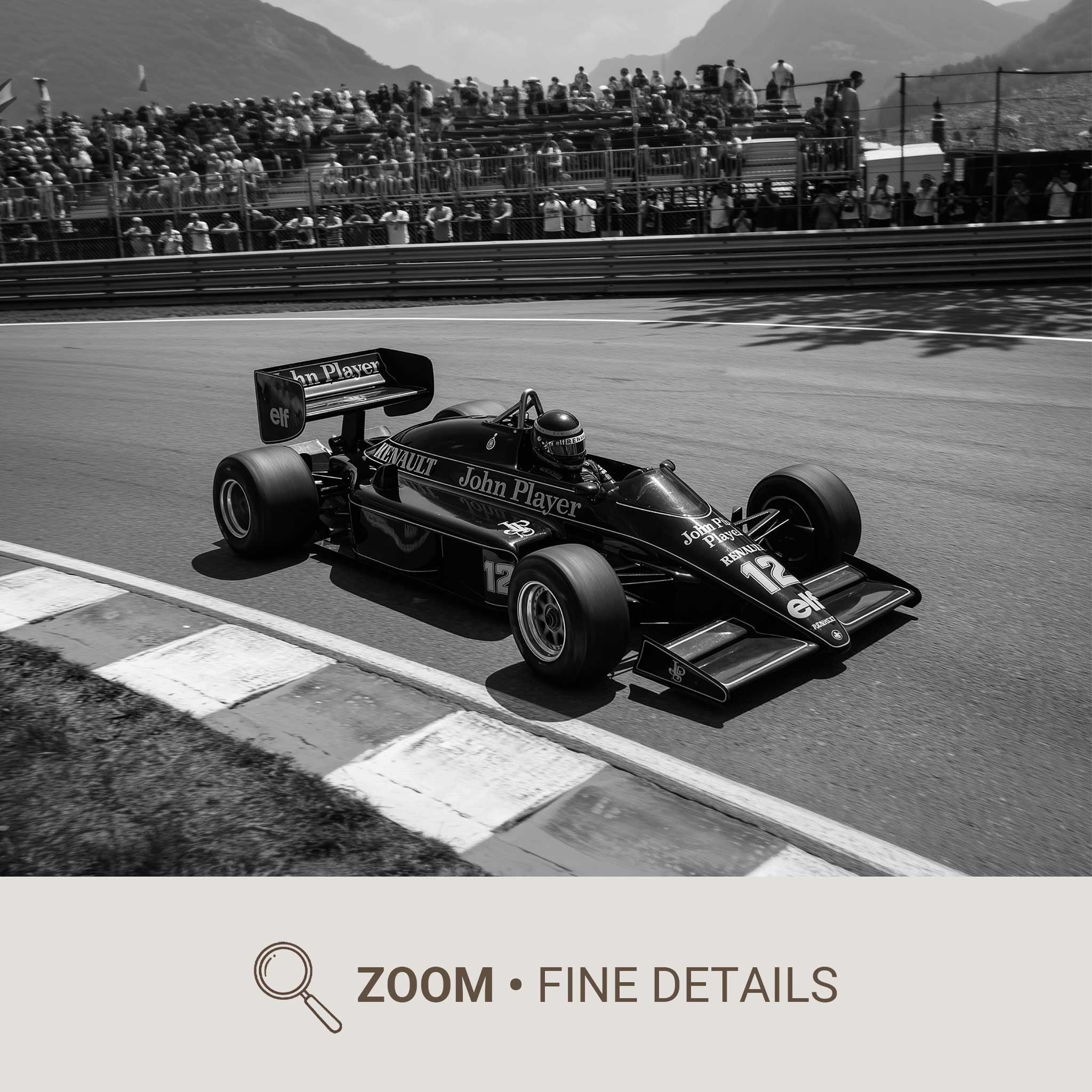
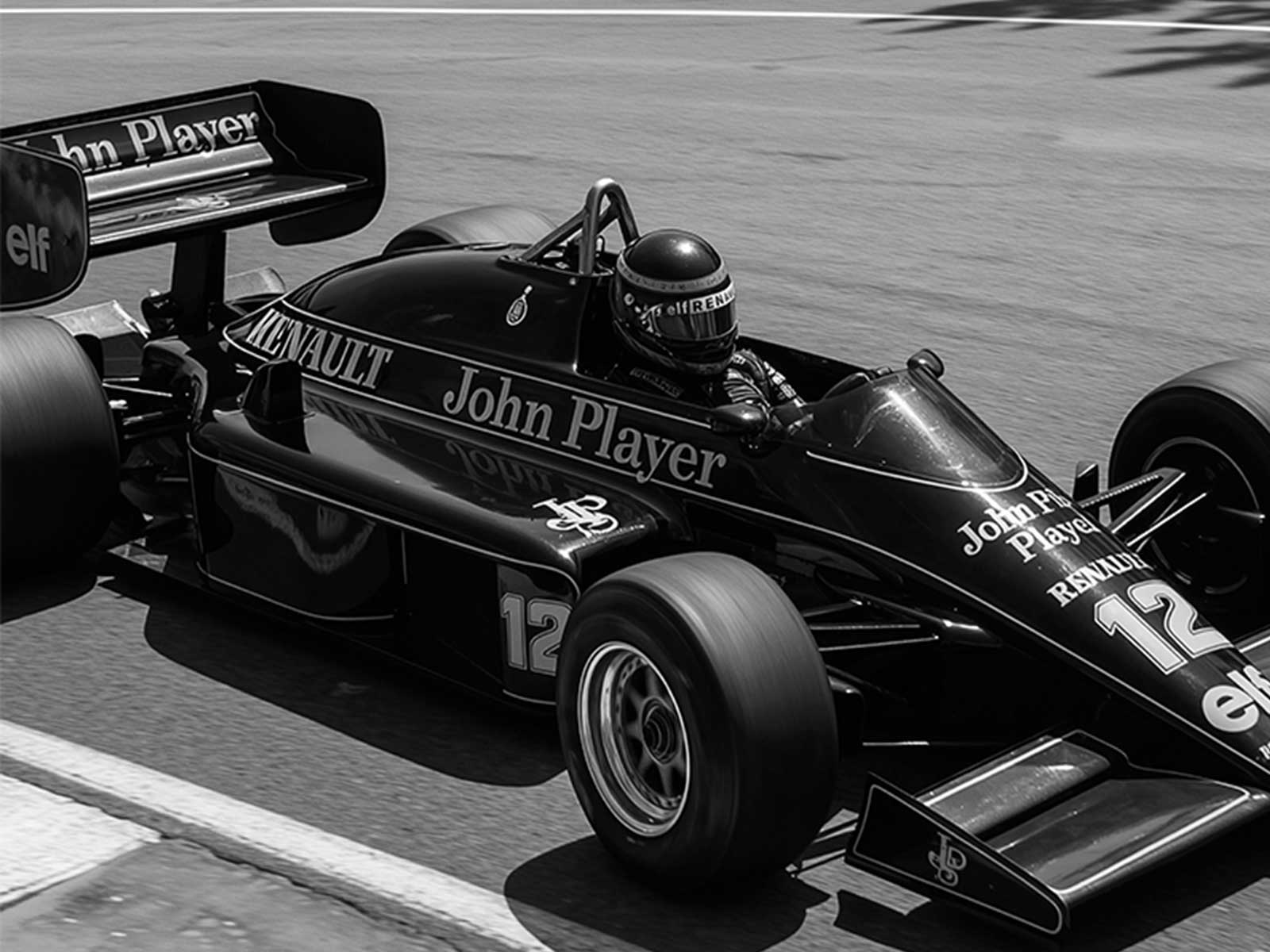
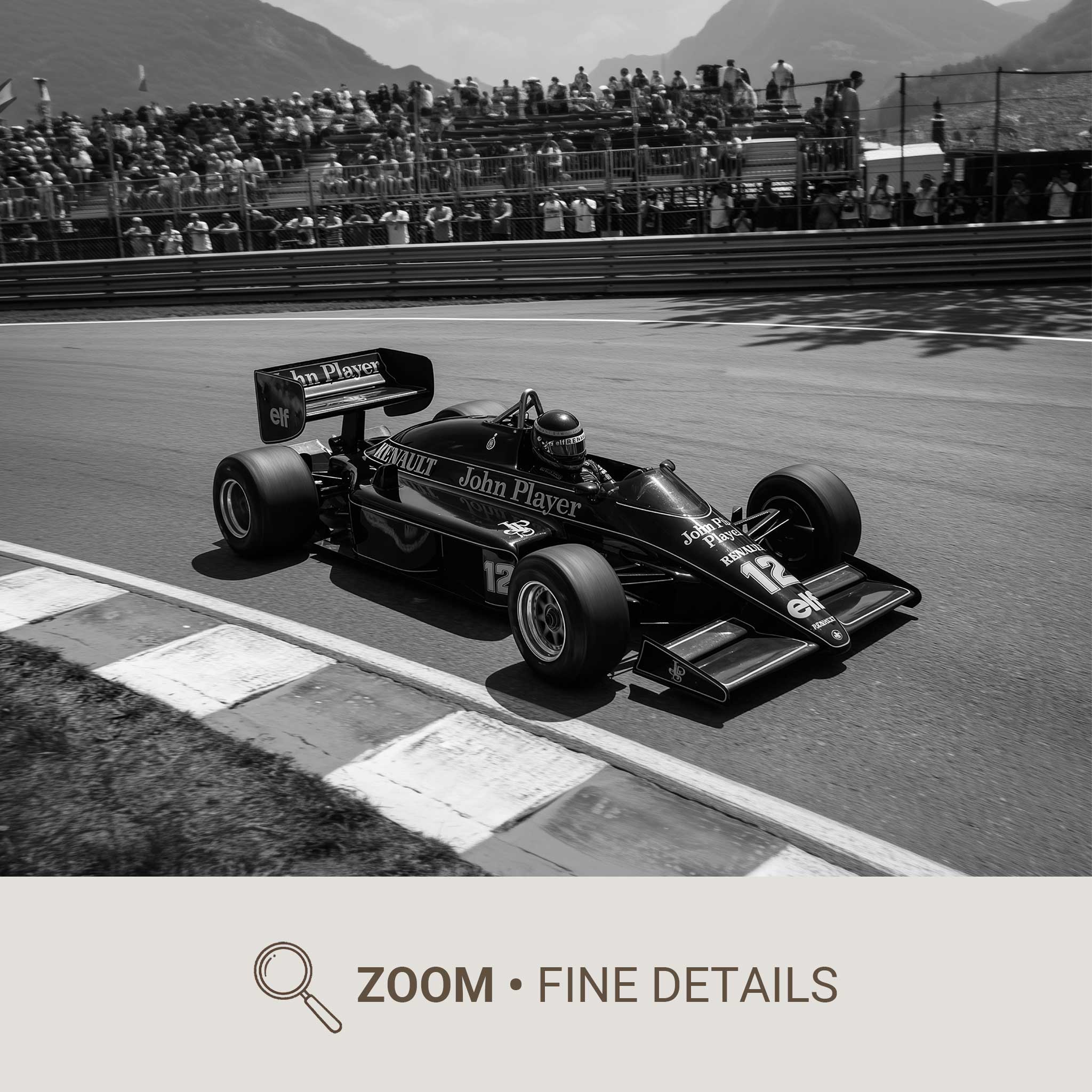
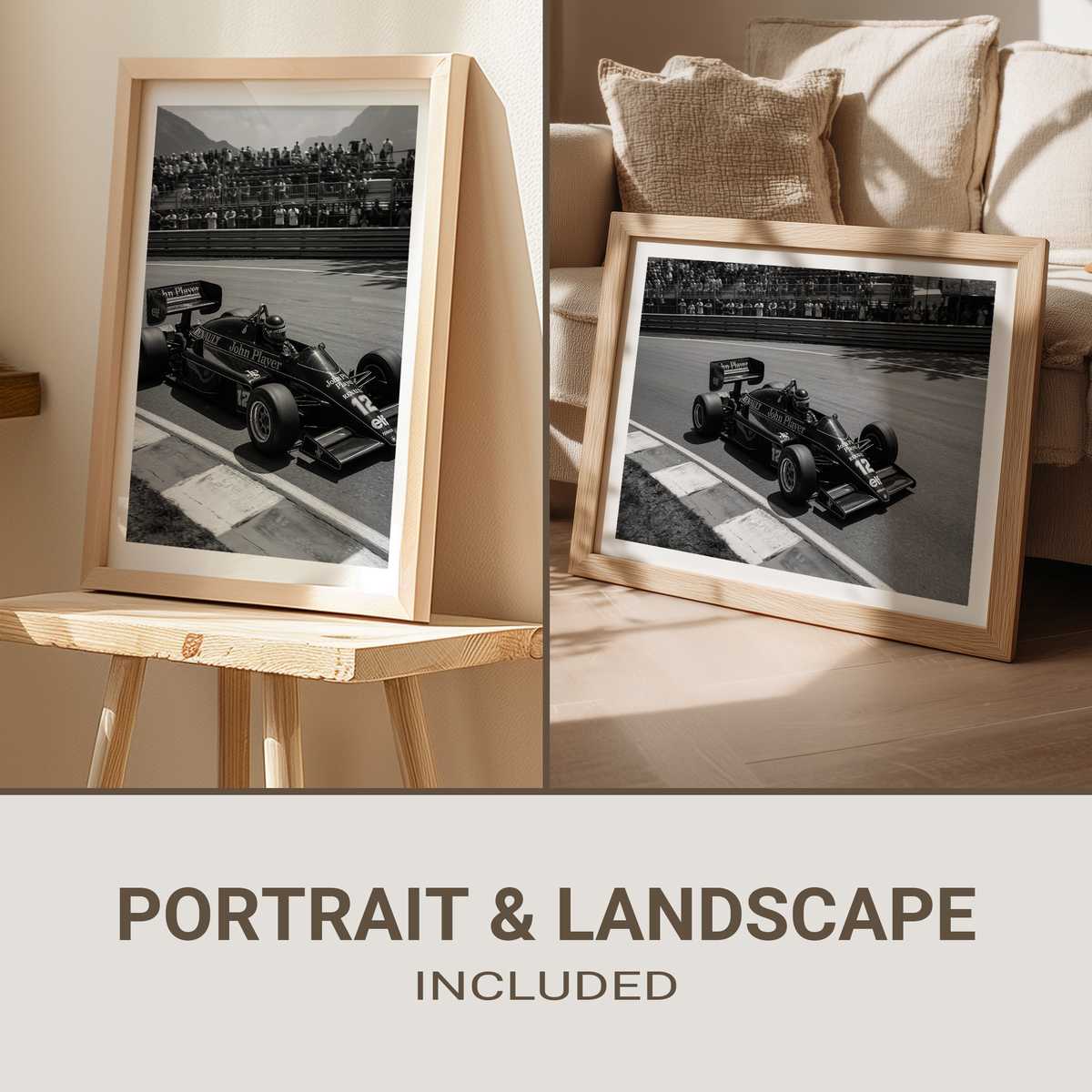
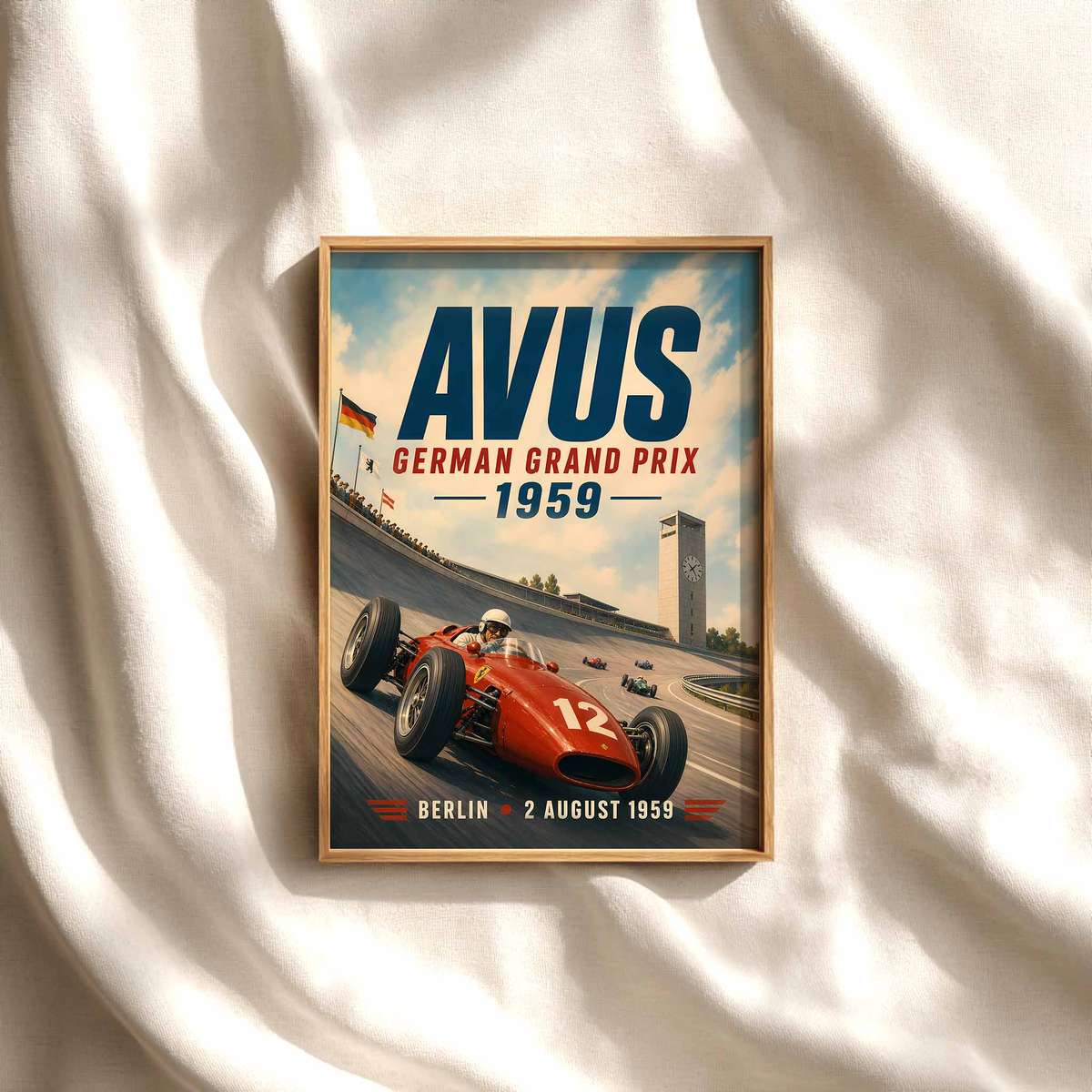
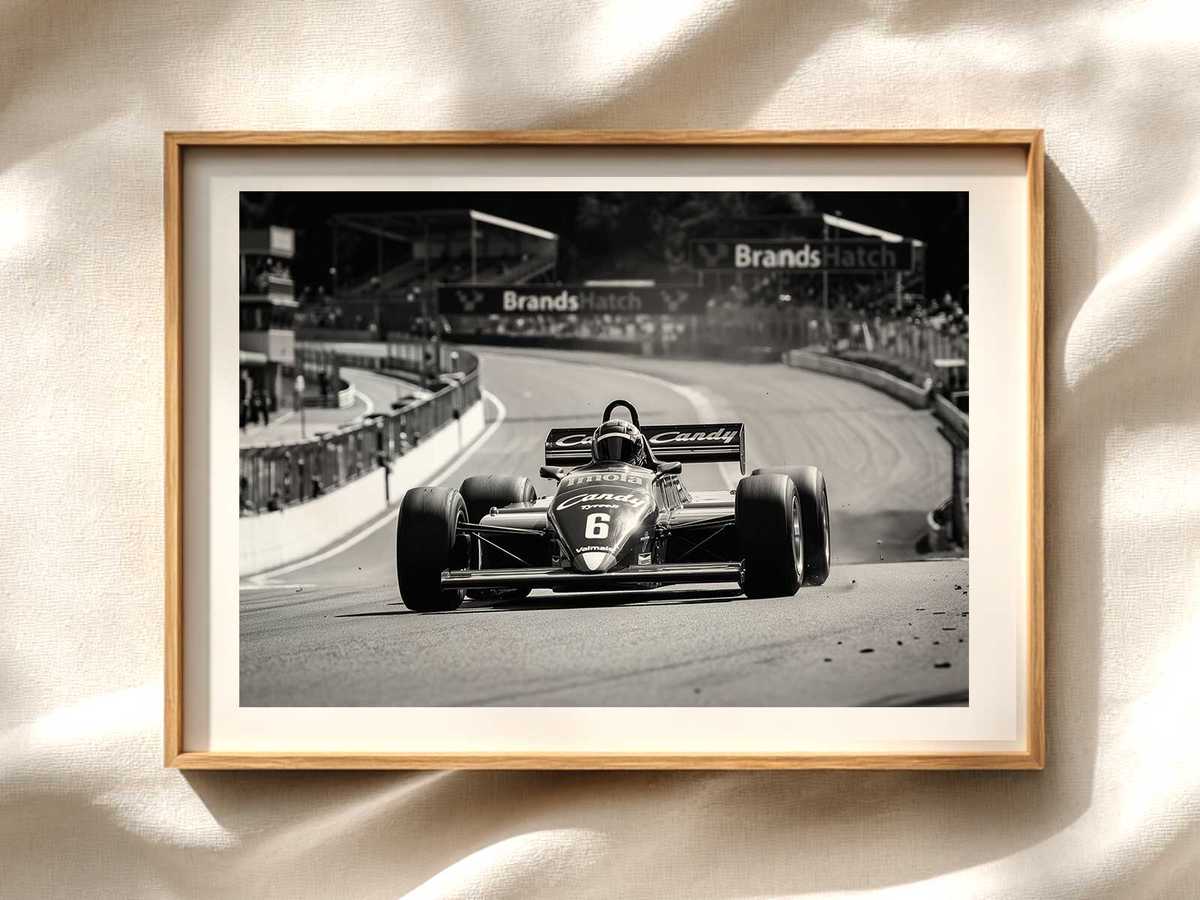
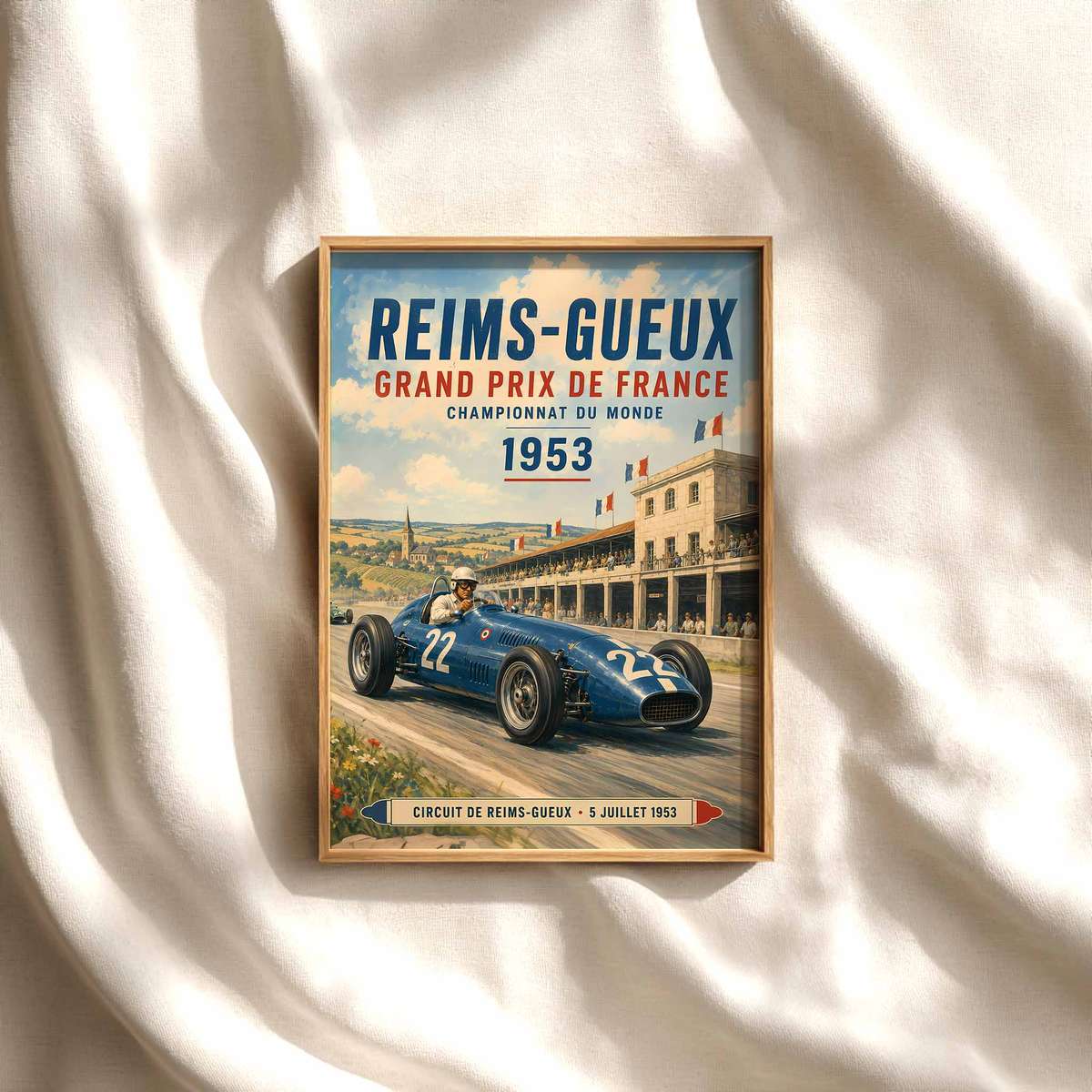
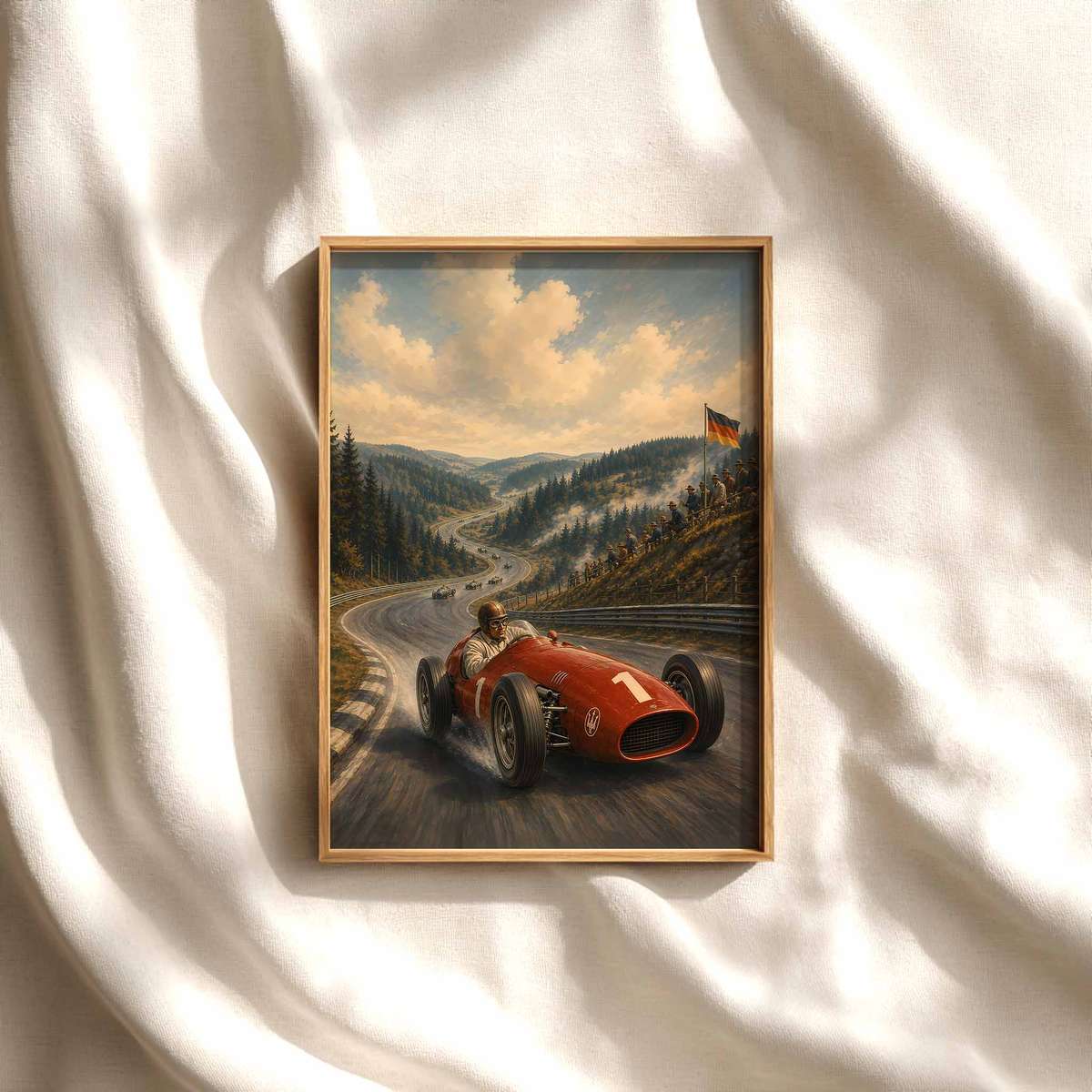
There is a particular tension to Djeddah that reads beautifully in print: the push of asphalt against night-lit sky, the compact theatre of grandstands and barriers, and a long, lean sense of speed. This poster chooses restraint over spectacle, using the svelte silhouette of a Lotus as the visual key. The car’s line—its nose, the flow of bodywork, the poised rear—does the work of place-making. Rather than shouting about results or livery, the image lets form, shadow and environment conjure Djeddah’s weekend atmosphere.
What the eye notices first is the Lotus as a drawn gesture across the page. Rendered with clean, purposeful curves and minimal surface detail, the car acts like a shorthand for motion: it implies acceleration, lateral load and the brief, charged pause of braking. Around that gesture the poster arranges contextual cues—suggestions of floodlit grandstands, a low coastal haze, banded runoffs—just enough to anchor the scene in a city-by-the-sea Grand Prix without overwhelming the composition. The result is an artwork that feels simultaneously modern and timeless.
The palette is an essential part of the effect. Muted night tones punctuated by precise highlights make the Lotus appear almost architectural: a sculpted form folded into the circuit. Darker fields of colour recreate the compressed, almost cinematic light of a race evening, while warm accents echo trackside lamps and hospitality zones. This measured use of colour turns the poster into decor that can sit comfortably in a living room or study: it reads as design as much as it does as motorsport memorabilia.
[IMAGE_INSERT_ARTICLE_01]
Beyond its immediate visual pull, the poster works because it evokes memory without depending on it. Fans recognise Djeddah through atmosphere—speeding straights, contained sightlines, the nervous hum of a temporary track—so even a simplified scene carries memory. The Lotus is a vehicle for recollection: owners, spectators and collectors can project a favourite race weekend onto the print, whether they recall a dramatic overtake, a humid night, or the slow ritual of arrival and departure from the circuit.
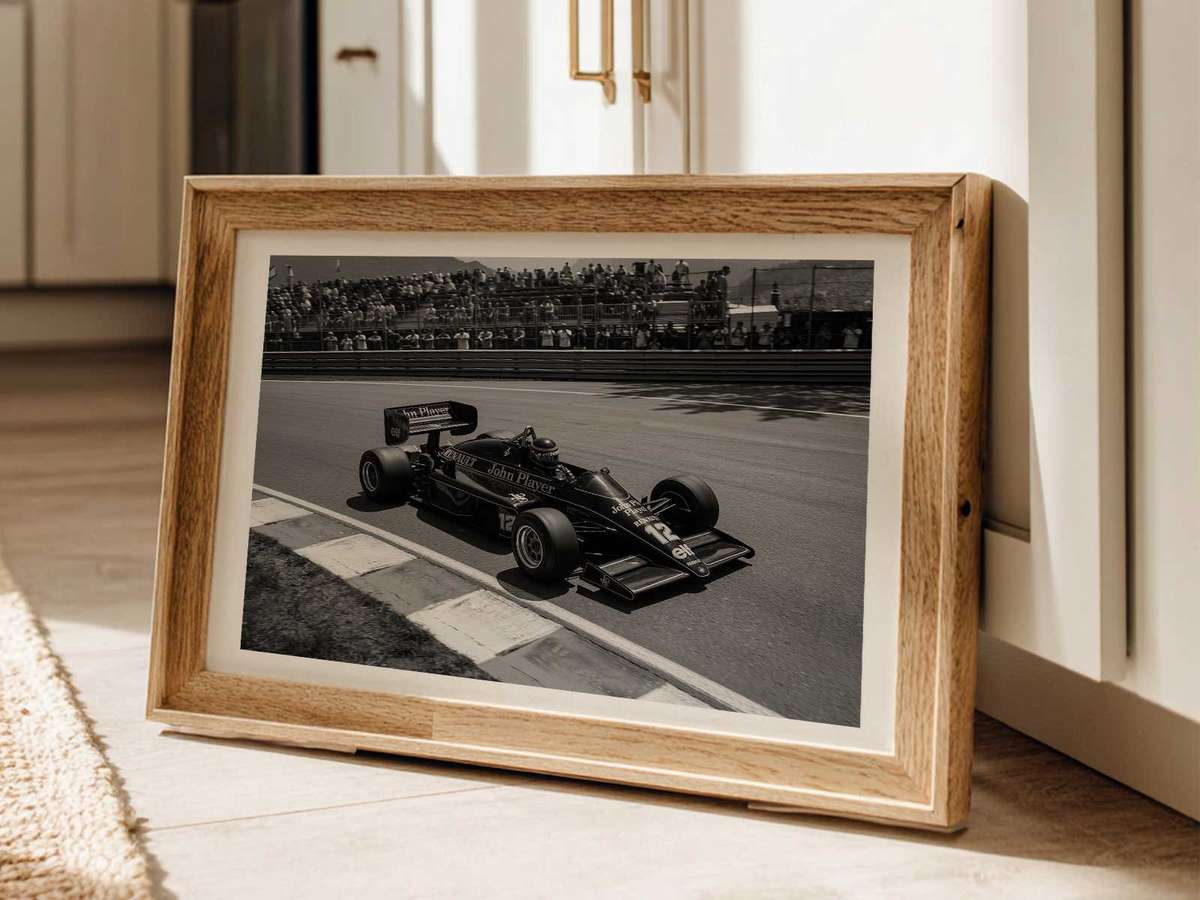
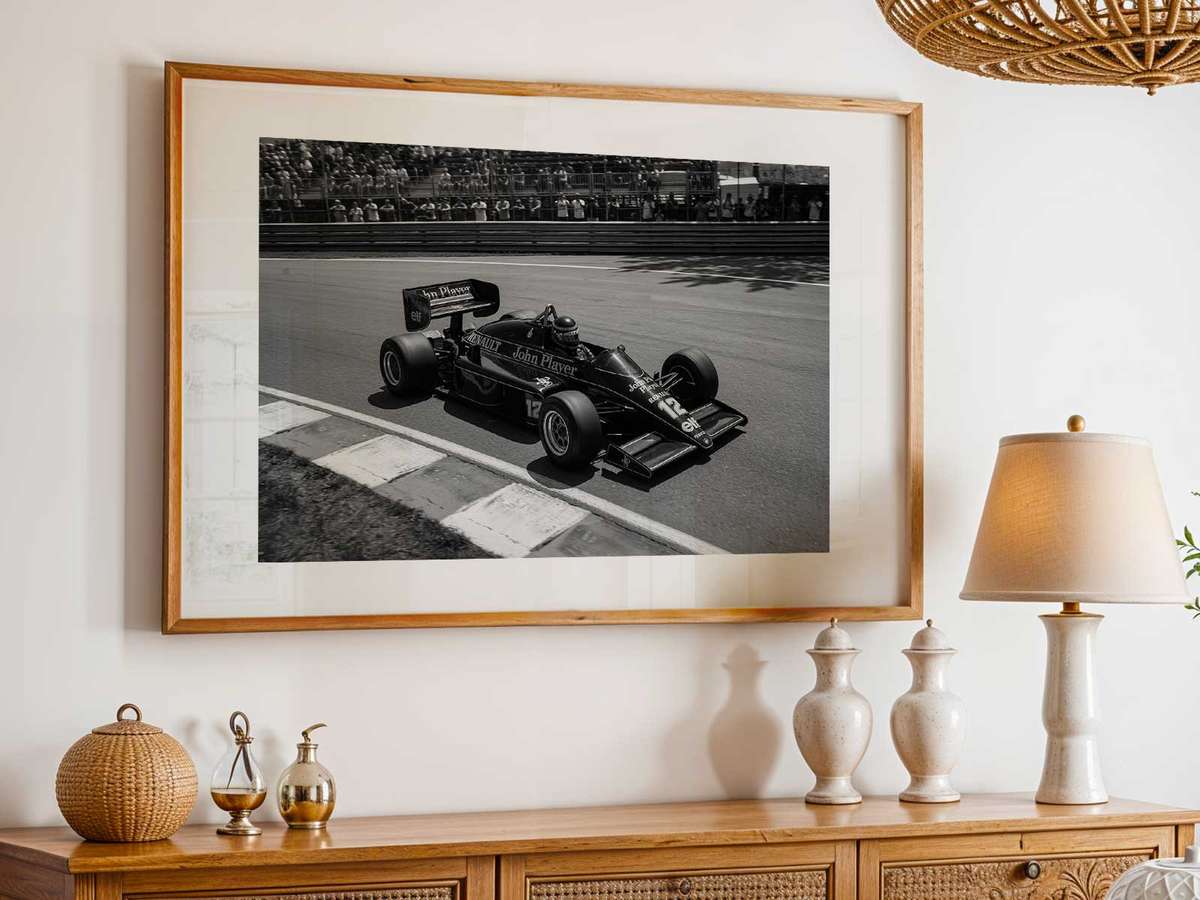
As wall art, this rendering changes the tone of a room. It doesn’t demand attention so much as promise it: placed above a sofa or in an office, the poster becomes a focal point that sets a mood—calmly energetic, subtly dramatic, quietly refined. It’s a choice for the collector who values atmosphere over autograph and for the interior that benefits from a single, confident emblem of motorsport identity.
Finally, the design’s restraint is its collector appeal. By privileging line and place over busy detail, the poster keeps returning the viewer to the essentials: car, circuit, light. It’s a piece that rewards repeated viewing, revealing new balances of shape and shadow each time. For anyone who wants the Saudi Grand Prix’s Djeddah spirit on their wall—without turning a room into a shrine—the Lotus-led composition offers a considered, lasting translation of trackside atmosphere into art.