F1 yellow flag meaning: what it is, what drivers must do and why it matters
The yellow flag is one of the simplest but most important signals in Formula 1. It warns drivers of a hazard on or beside the track and changes what they can do on that part of the circuit. Understanding the F1 yellow flag meaning helps fans follow race radio, timing graphics and key moments when safety matters most.
Quick summary: A single waved yellow warns of a hazard and requires drivers to slow, not overtake and be ready to change direction; double waved yellow signals a more serious danger and requires a greater speed reduction and preparedness to stop. These procedures protect marshals, recovery crews, stranded cars and other drivers.
Quick access: Definition•How it works•Rules & FIA procedures
CLEAR DEFINITION
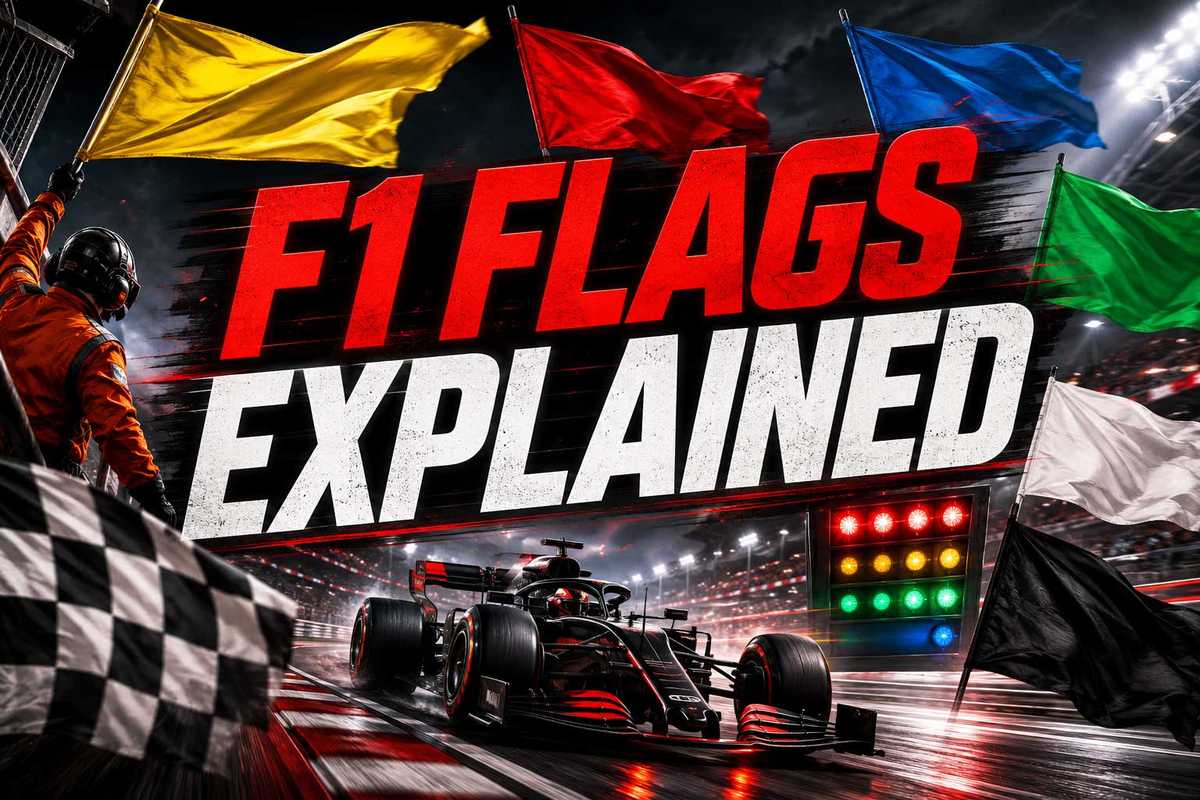
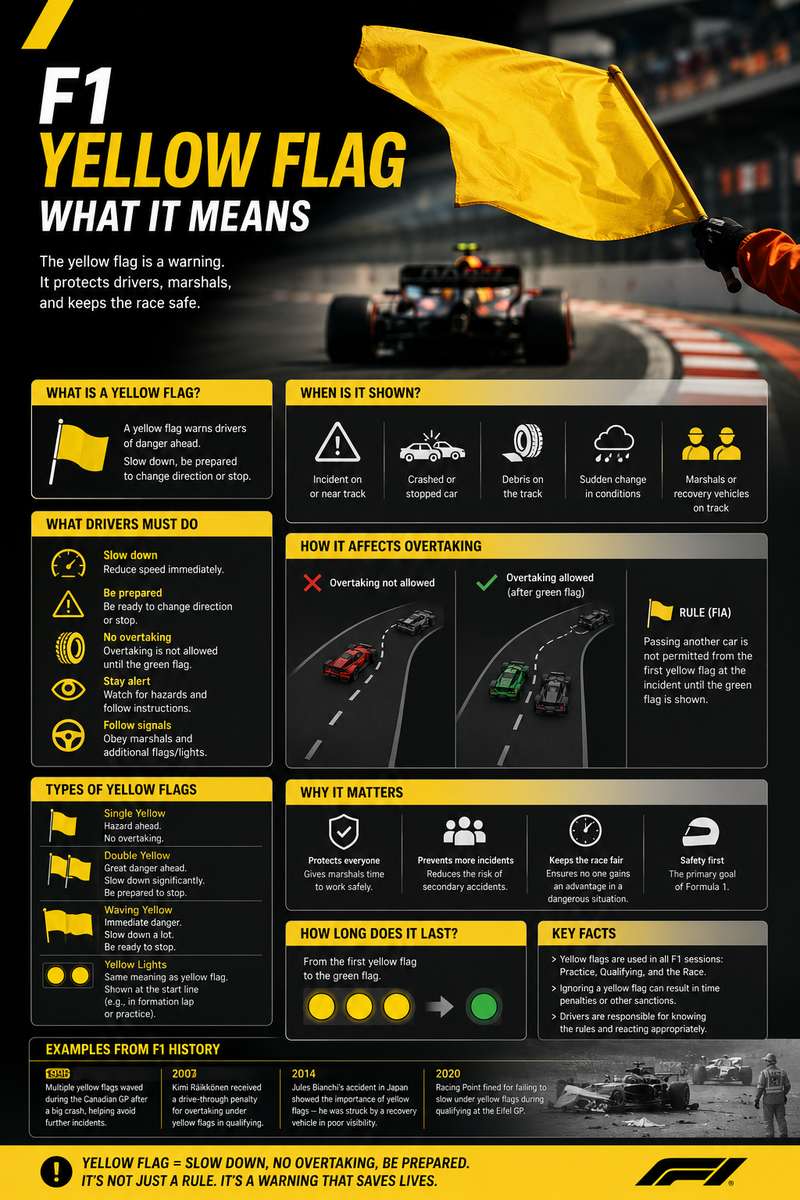
In Formula 1 the yellow flag is a local warning that there is a hazard on or next to the racing surface. A single waved yellow flag tells drivers to reduce speed, not overtake and be prepared to change direction. A double waved yellow indicates a more serious situation — for example marshals working on or very close to the track — and requires a more significant reduction in speed and readiness to stop or take evasive action.
HOW IT WORKS
Trackside marshals display yellow flags at the marshal post marking the start of the affected zone; the prohibition on overtaking applies from that post until a green flag is shown after the incident. In modern F1 this flagging is supported by illuminated flag panels and dashboard or steering-wheel warnings so drivers receive both visual and in-car alerts about local yellow conditions and sector restrictions.
RULES AND FIA PROCEDURES
FIA Appendix H sets out the obligations: under a waved yellow drivers must reduce speed, not overtake and be prepared to take avoiding action. Double waved yellow increases those obligations. Overtaking is prohibited between the marshal post showing the initial yellow and the green flag after the incident; only narrowly defined exceptions exist for unavoidable situations, in line with Appendix H guidance.
Race control can also escalate from local yellow flags to circuit-wide measures when necessary: deployment of the Safety Car, Virtual Safety Car (VSC) or a Full Course Yellow / Code 60 are separate procedures that enforce reduced speed across the circuit or in a zone depending on the severity of the incident.
ENFORCEMENT AND PENALTIES
Stewards monitor compliance with yellow-flag speed requirements using telemetry and sector/time checks. Drivers must be able to demonstrate they slowed appropriately; breaches of yellow-flag rules may lead to penalties. The combination of trackside marshals, illuminated panels and in-car warnings helps ensure incidents are noticed quickly and that evidence exists to confirm compliance.
WHY IT MATTERS IN F1
Yellow-flag procedures exist to protect people and equipment: marshals and recovery crews often work near cars, and a stranded car on the racing line is a major hazard. Slowing cars in the affected zone and forbidding overtaking reduce the chance of secondary collisions and give recovery teams space to operate safely. For drivers and teams, a yellow flag can also interrupt a fast lap, influence tyre temperatures and change strategic choices when it affects a whole sector or triggers a wider control such as a Safety Car.
STRATEGY AND RACECRAFT
Although the primary purpose of a yellow flag is safety, it has tactical consequences. A yellow that appears during qualifying or when a driver is on a hot lap can ruin a flying lap. In the race a local yellow can slow a pack, close gaps and delay undercut or overcut attempts because drivers must reduce speed in the affected zone. If the situation escalates to a Safety Car or VSC, teams may change pit plans, but those measures are governed separately from the local yellow flags themselves.
COMMON MISUNDERSTANDINGS
Beginners sometimes think any yellow means a Safety Car — that is not the case. Single and double waved yellows are local warnings with specific obligations; only when race control deems the hazard circuit-wide will it deploy a Safety Car, VSC or Full Course Yellow/Code 60. Also, overtaking is not simply discouraged: it is prohibited between the starting marshal flag and the green flag, except in narrowly defined unavoidable circumstances.
FAN VIEWING GUIDE
On TV watch for the flag panels around the circuit and for in-car dash warnings; timing screens and live commentary will usually show which sector is under local yellow. Listen to team radio when a yellow appears — drivers often report whether they saw the flag and teams confirm sector times. Knowing the F1 yellow flag meaning helps explain why a lap time is deleted, why a driver slows in one corner, or why a pack bunches up suddenly.
CLOSING INTERPRETATION
The F1 yellow flag meaning is a compact example of how rules, technology and human judgment combine to manage risk in modern racing. It is a simple signal with strict obligations: slow down, do not overtake, and be ready to take evasive action. Understanding it clarifies many on-track moments and reminds fans that safety rules actively shape how races are run and won.
Author: Cynthia D.