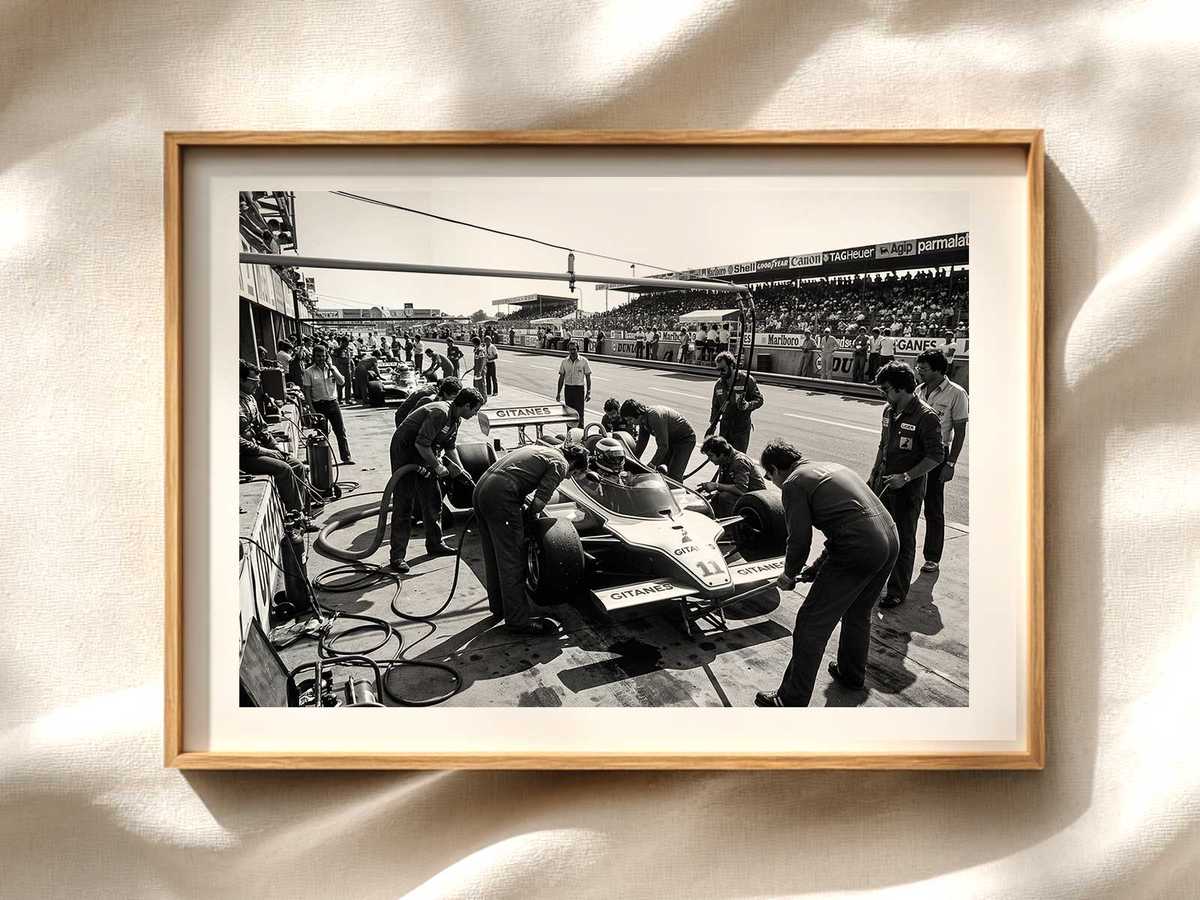
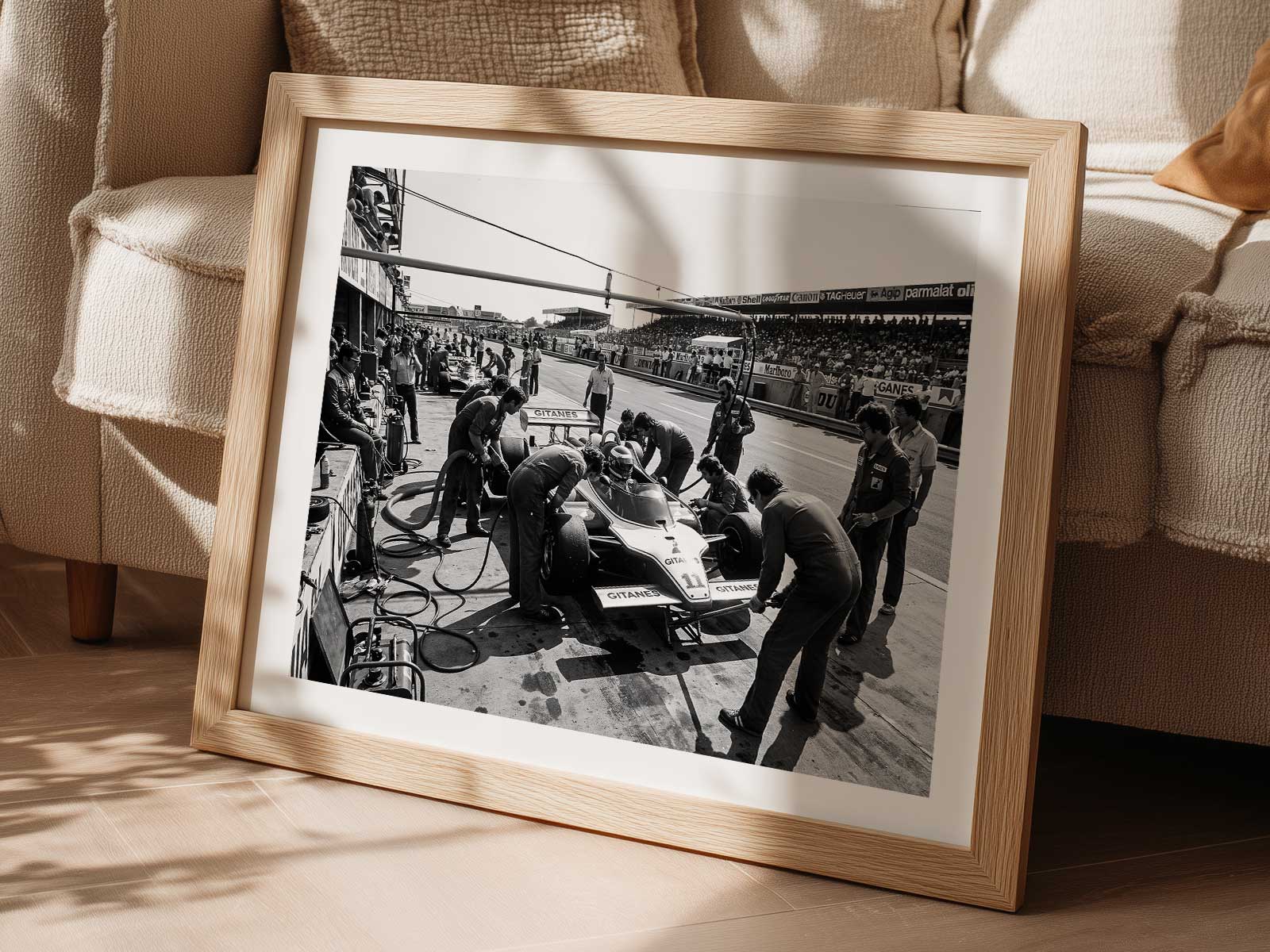
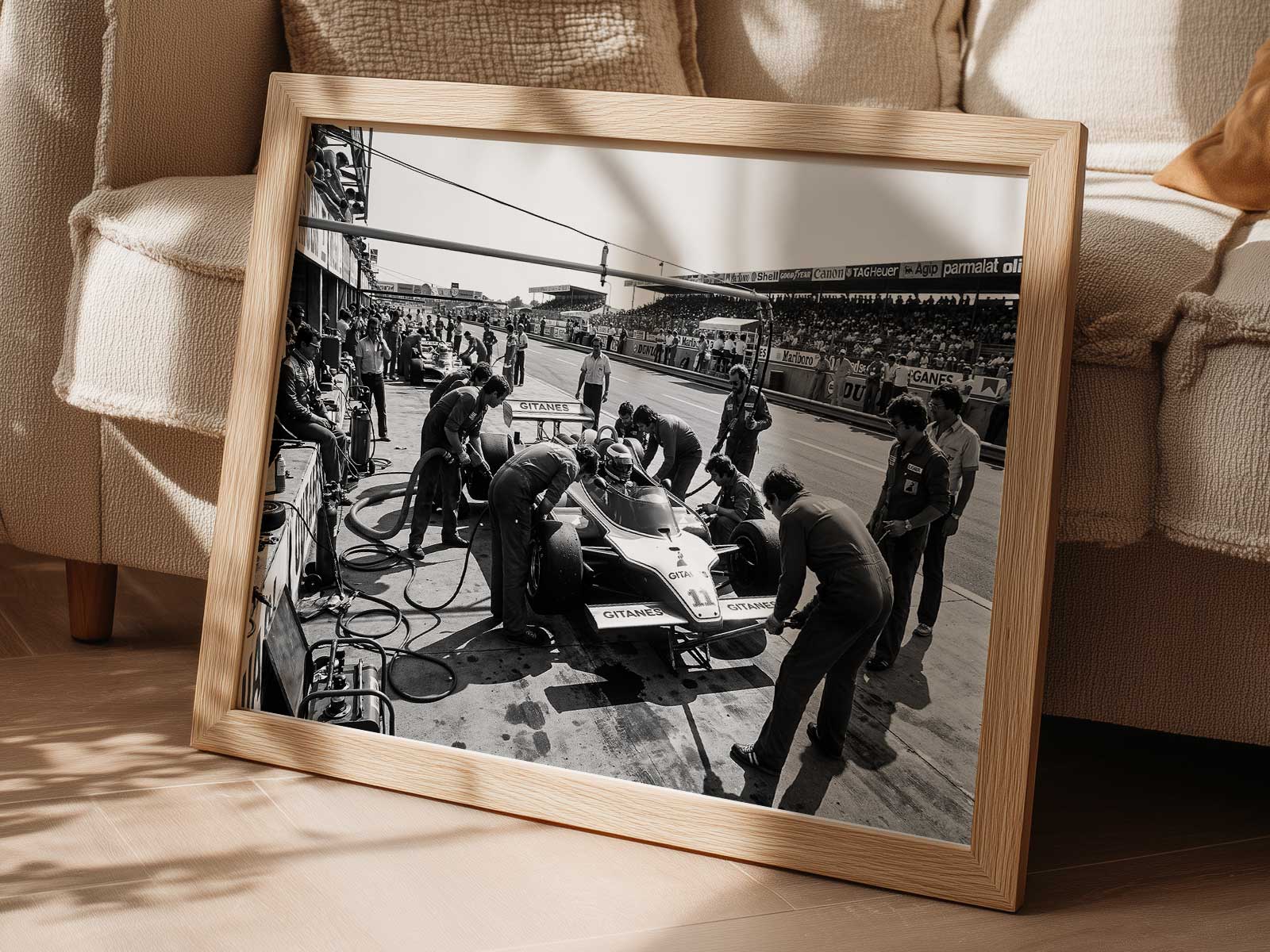
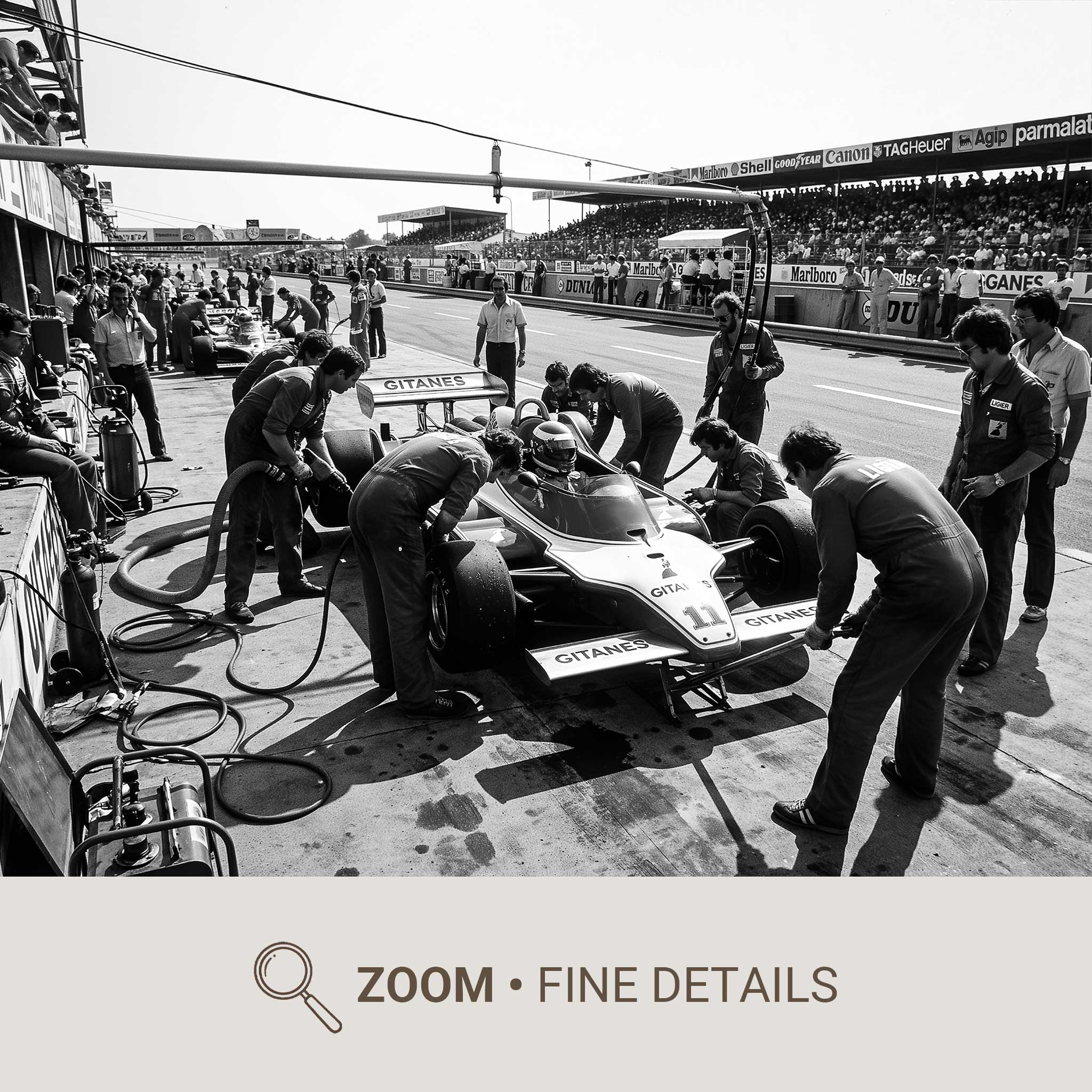
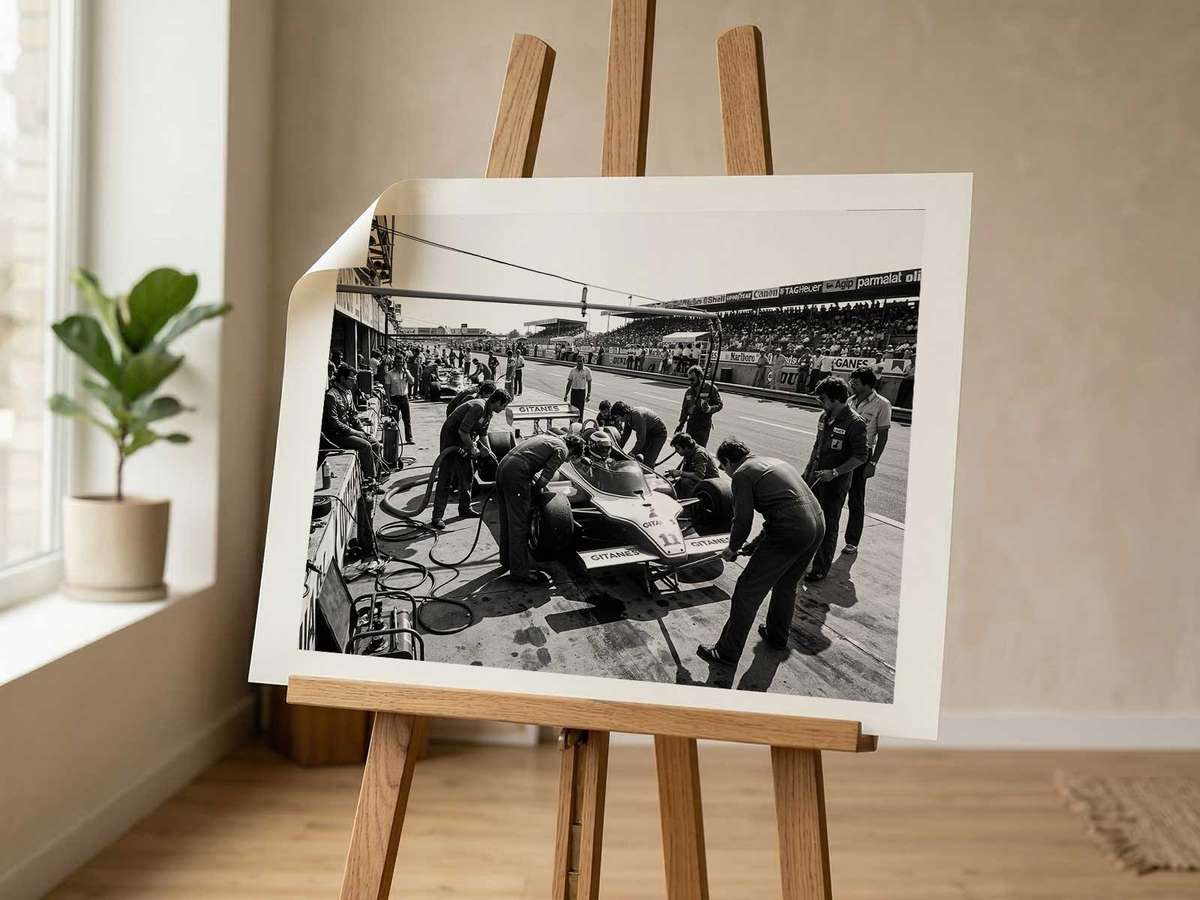
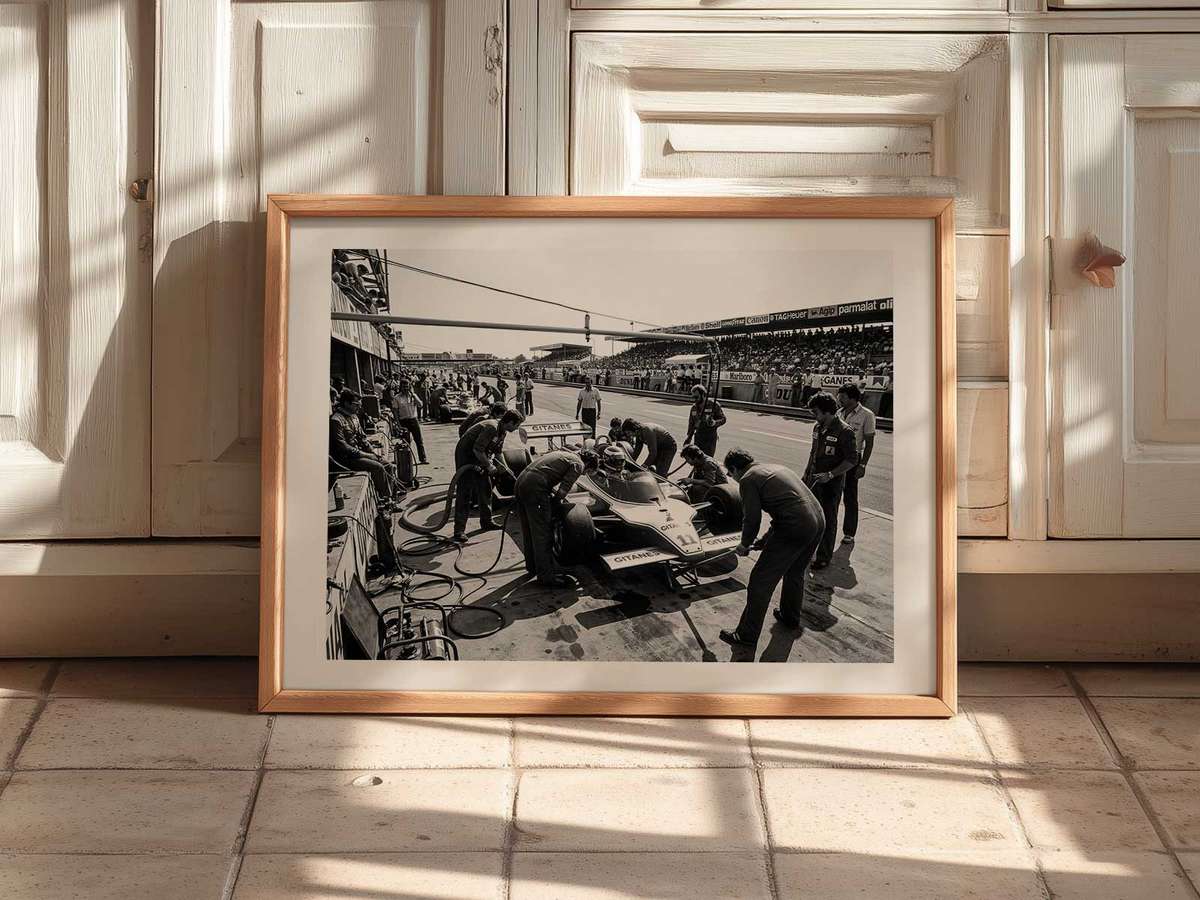
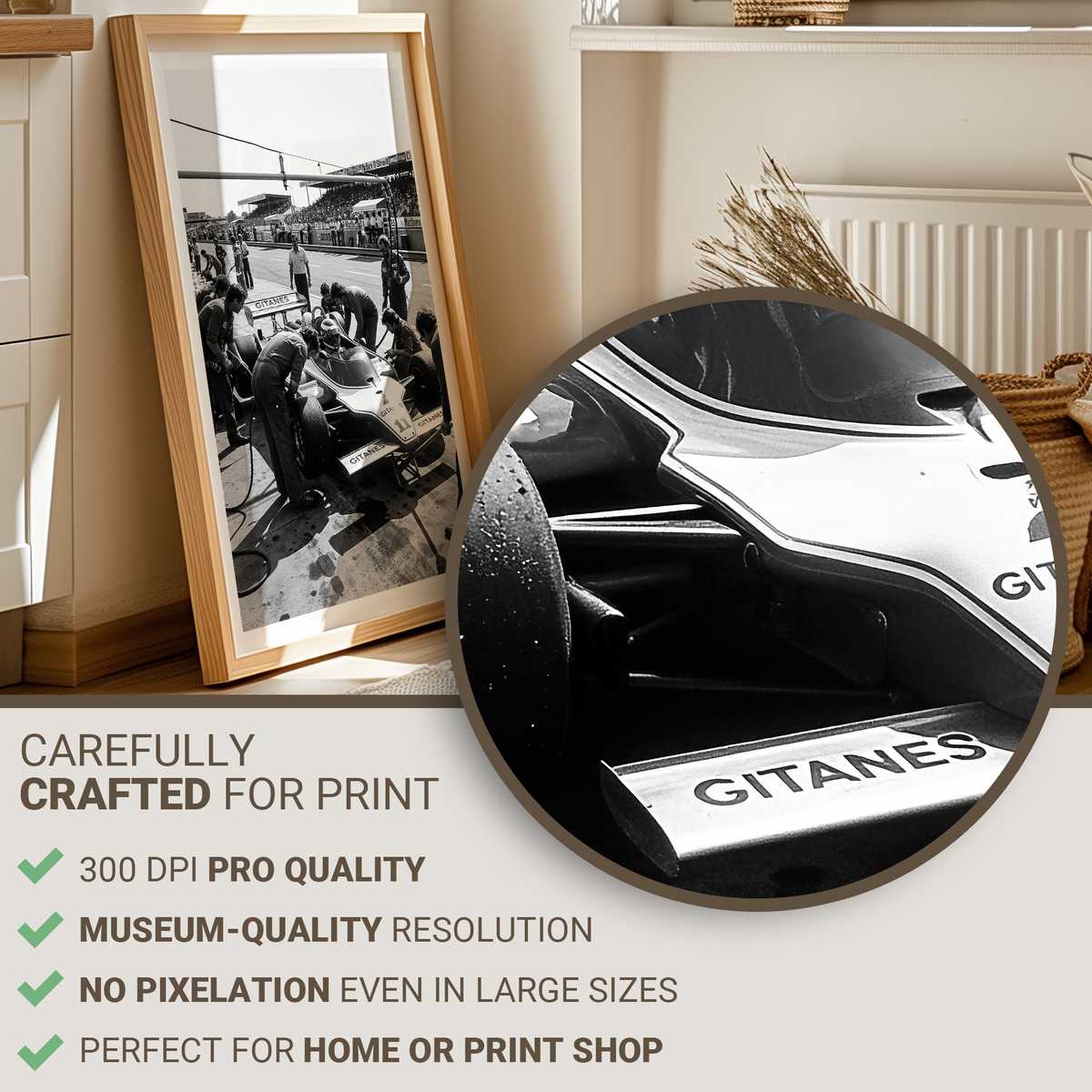
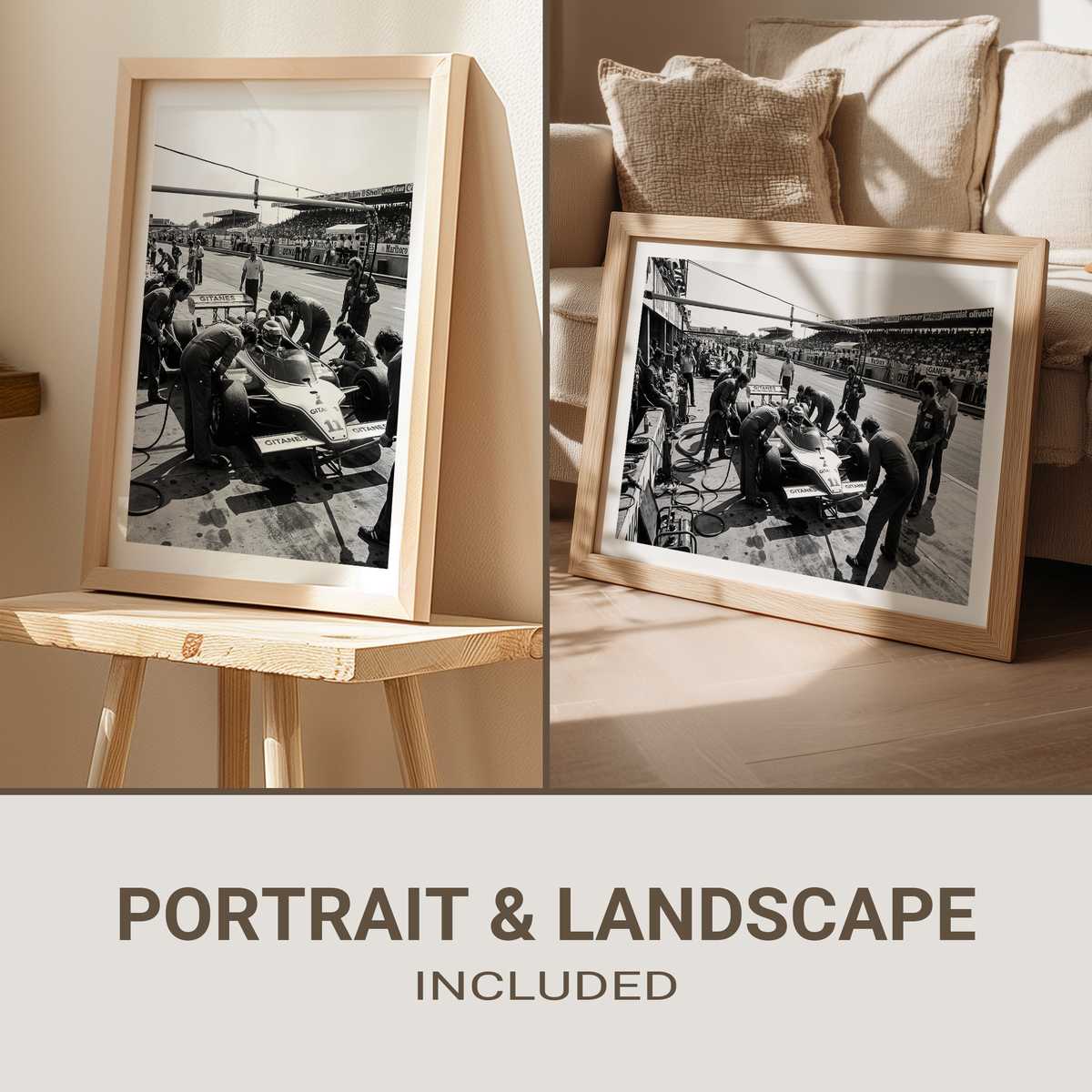
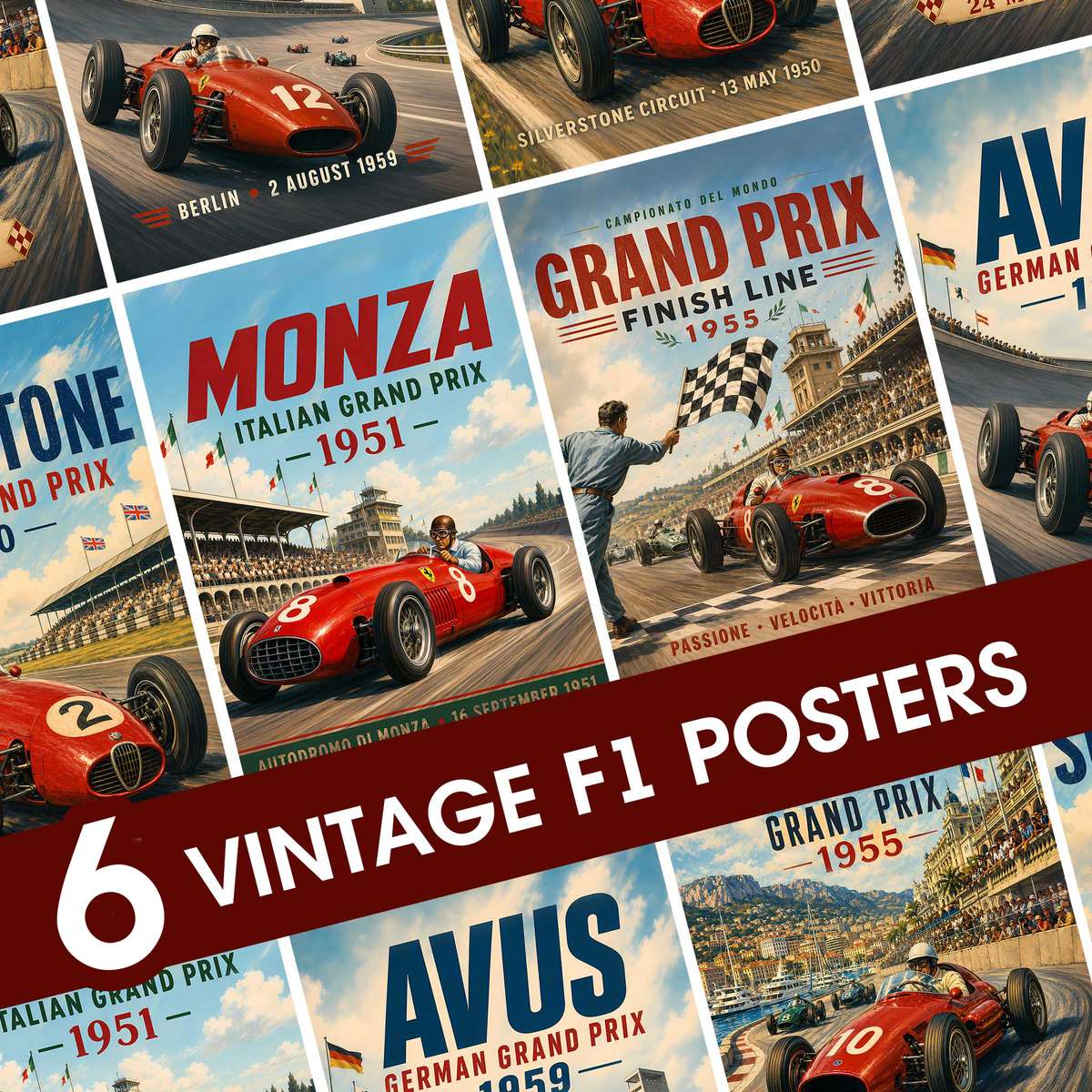
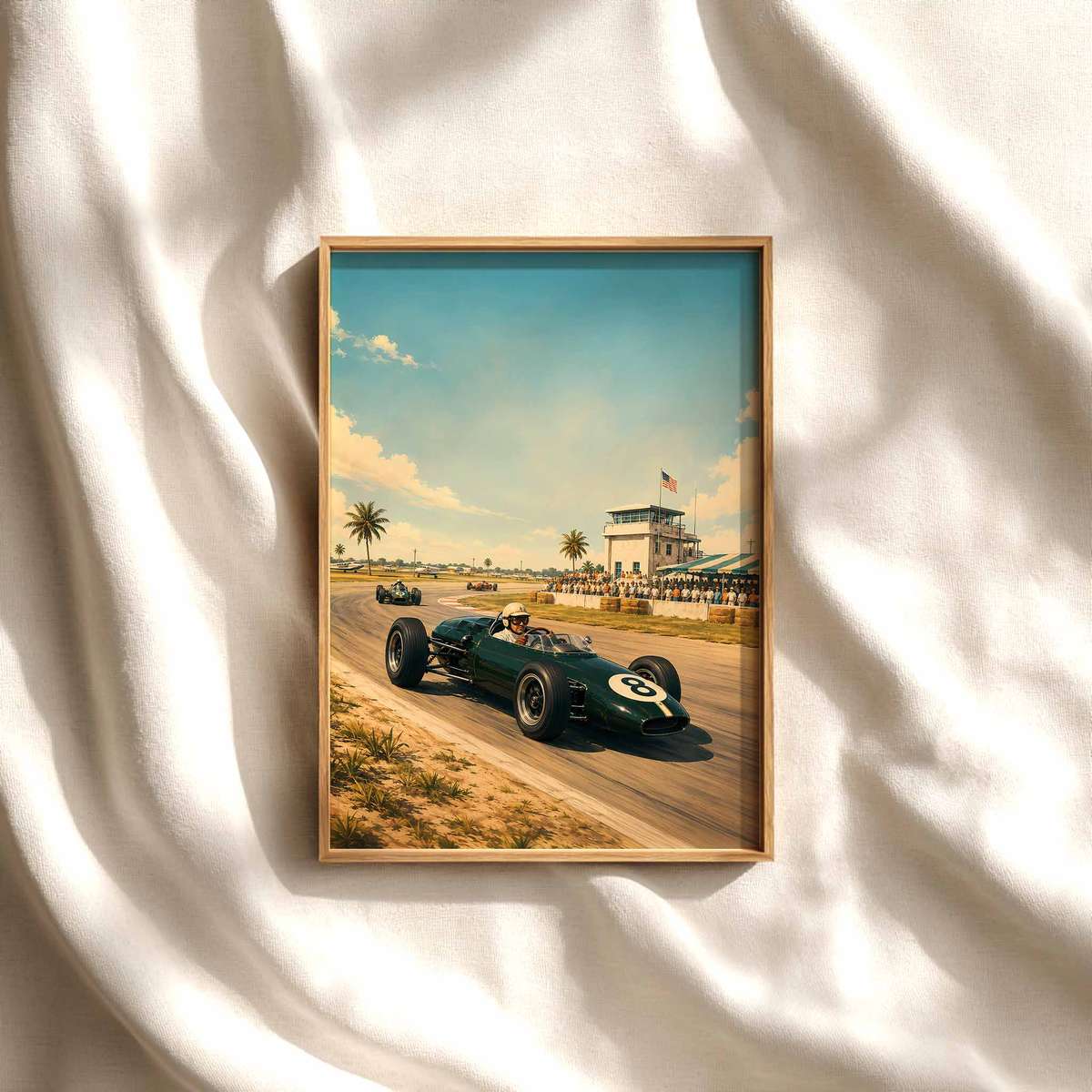
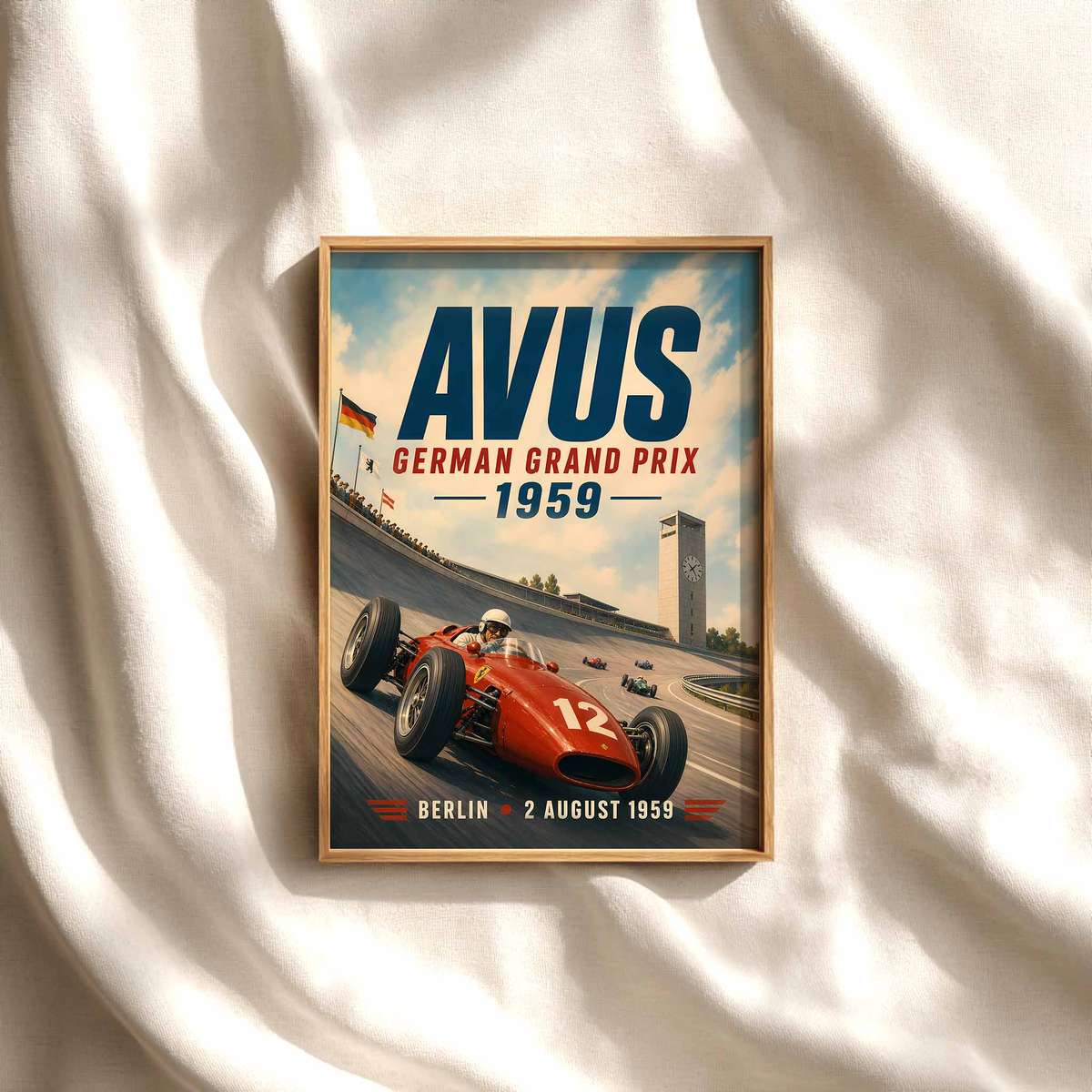
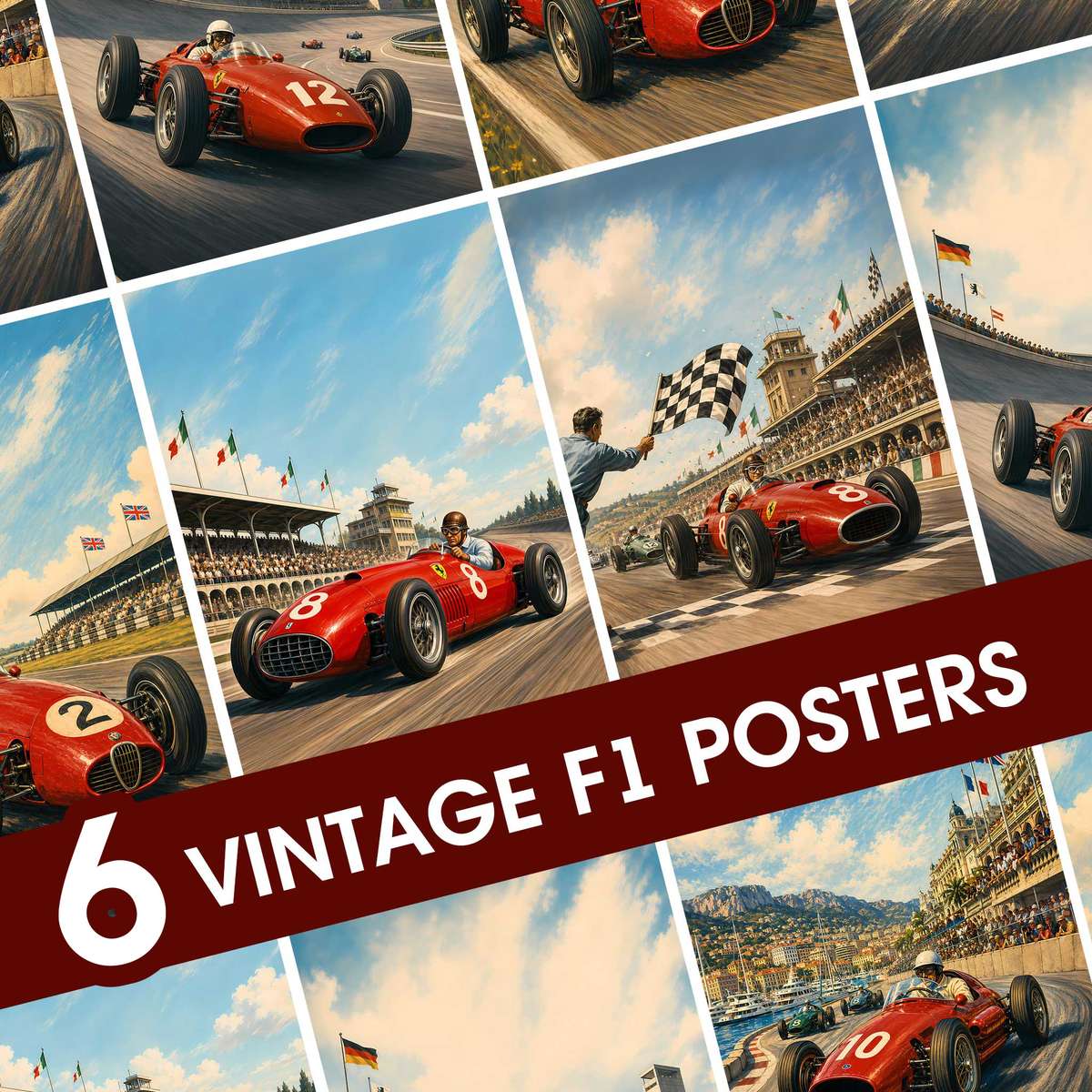
A poster that imagines a Formula 1 pit stop does more than show a car and crew: it captures a concentrated choreography of motion, colour and intent that reads perfectly as premium wall art. The first thing the eye meets is usually a bold shape — a nose cone, a swept wing or the arc of a tyre — set against the human geometry of mechanics bent and poised. That collision of machine and muscle creates an immediate focal point that anchors a living room, office or collector corner without resorting to cluttered detail.
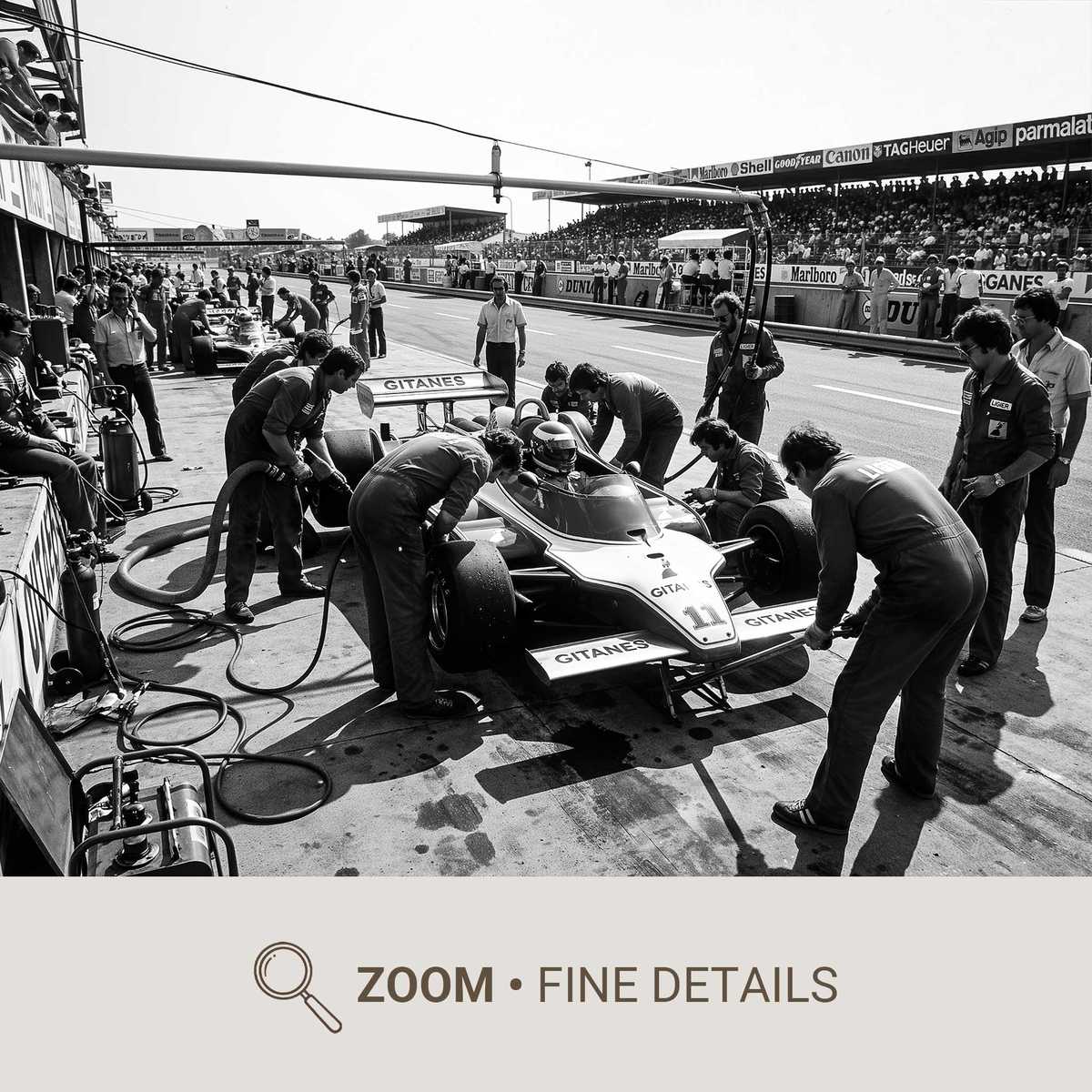
What makes this subject so successful on a wall is its layered identity. At close view the image is about technique — the fast hands, the raised jacks, the set of sockets. From a distance it simplifies into graphic planes: team colour blocked against asphalt, the repetition of helmets, the diagonal thrust of the car suggesting speed even when still. This duality lets the poster speak to two audiences at once: the enthusiast who reads the visual language of racing and the design-conscious owner who wants a powerful composition that complements interiors.
The pit stop scene is uniquely evocative because it holds tension in suspension. Unlike an on‑track blur, a stopped car implies imminent release. That split second—wheels off, hands mid‑motion, eyes fixed—carries narrative: a race strategy, a pit lane gamble, a moment of unanimity between driver and crew. Translated to print, that energy becomes emotional shorthand. It invites viewers to remember races they’ve watched, to imagine the roar when the car leaves the box, and to feel the quiet concentration that precedes explosive acceleration. In a gallery wall or a single framed statement piece this kind of suggestion gives the room a sense of anticipation rather than static nostalgia.
[IMAGE_INSERT_ARTICLE_01]
Colour and contrast are essential to turning F1 imagery into art. Team liveries provide instantly recognisable palettes that read like curated swatches on a wall: a flash of red, a sweep of silver, the neon of sponsor accents. Those elements allow the poster to be matched with furniture and fabrics, acting as both a focal and a complementary object. Thoughtful composition—tight crops on wheel hubs, shallow depth that isolates faces beneath visors, or a low-angle that dignifies the jack operator—elevates the work from documentary to designed artifact.
Collectors and interior curators prize images that carry layers of meaning. A pit‑stop poster delivers identifiable motifs from motorsport culture—team solidarity, mechanical artistry, split‑second decision making—without needing captions. It functions as a conversation starter: guests recognise the ritual even if they don’t know the season or the driver, and fans find the subtle cues that confirm authenticity. Displayed alone, it reads as a confident statement piece; grouped with other motorsport prints, it provides narrative rhythm across a wall, marking moments of tension between full‑speed compositions and quieter studio portraits.
Finally, consider atmosphere: motorsport imagery changes a room by implying motion and precision. The structured lines of a pit lane introduce formality; the human focus introduces warmth. Together they balance the mechanical and the intimate, making the poster suitable for a modern living room, a study, a games space or a boutique office. It’s why an image of a pit stop—charged, composed and visually striking—works equally well as a declaration of passion and as a piece of considered decor.
Whether you choose a photographic print or a stylised interpretation, a Formula 1 pit‑stop poster brings kinetic elegance to a wall: a moment of suspended action that never feels out of place in a refined, motorsport‑minded interior.