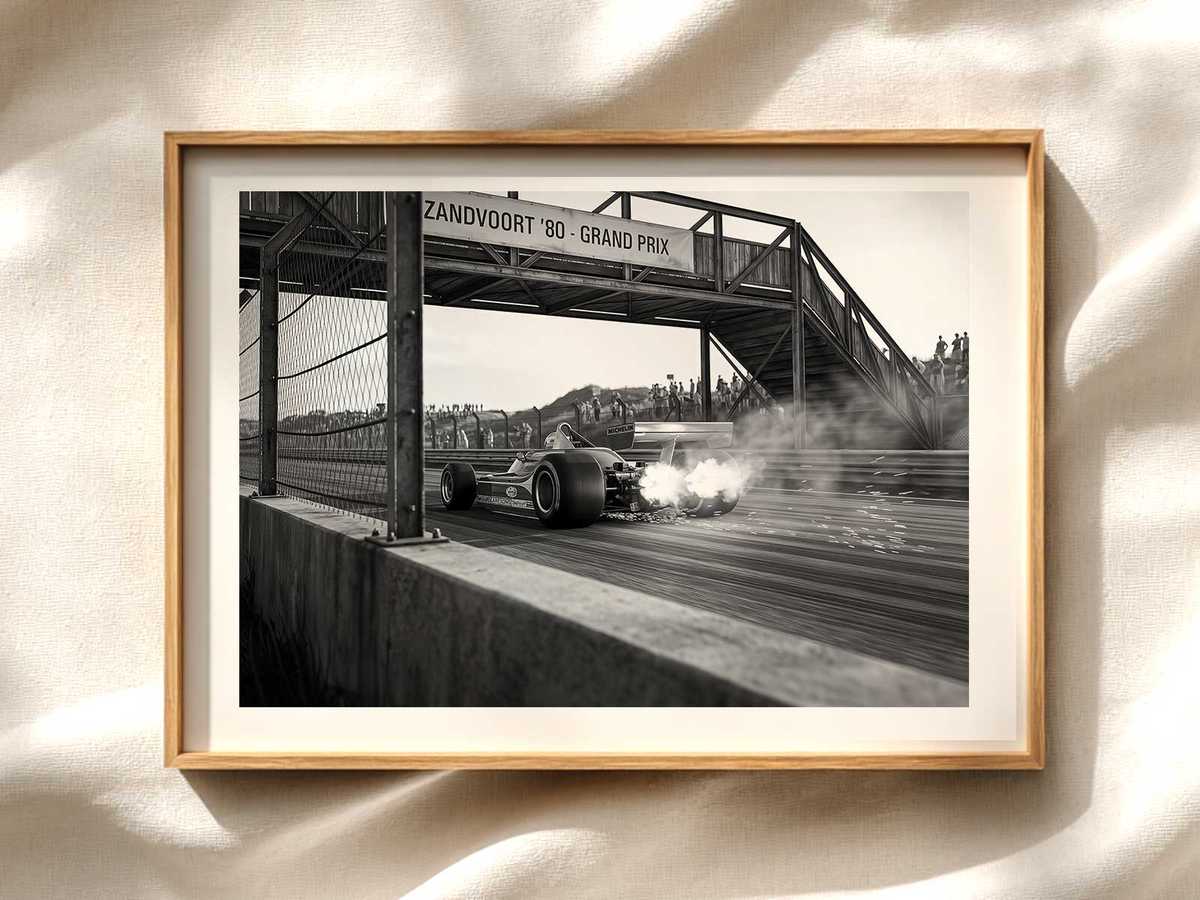
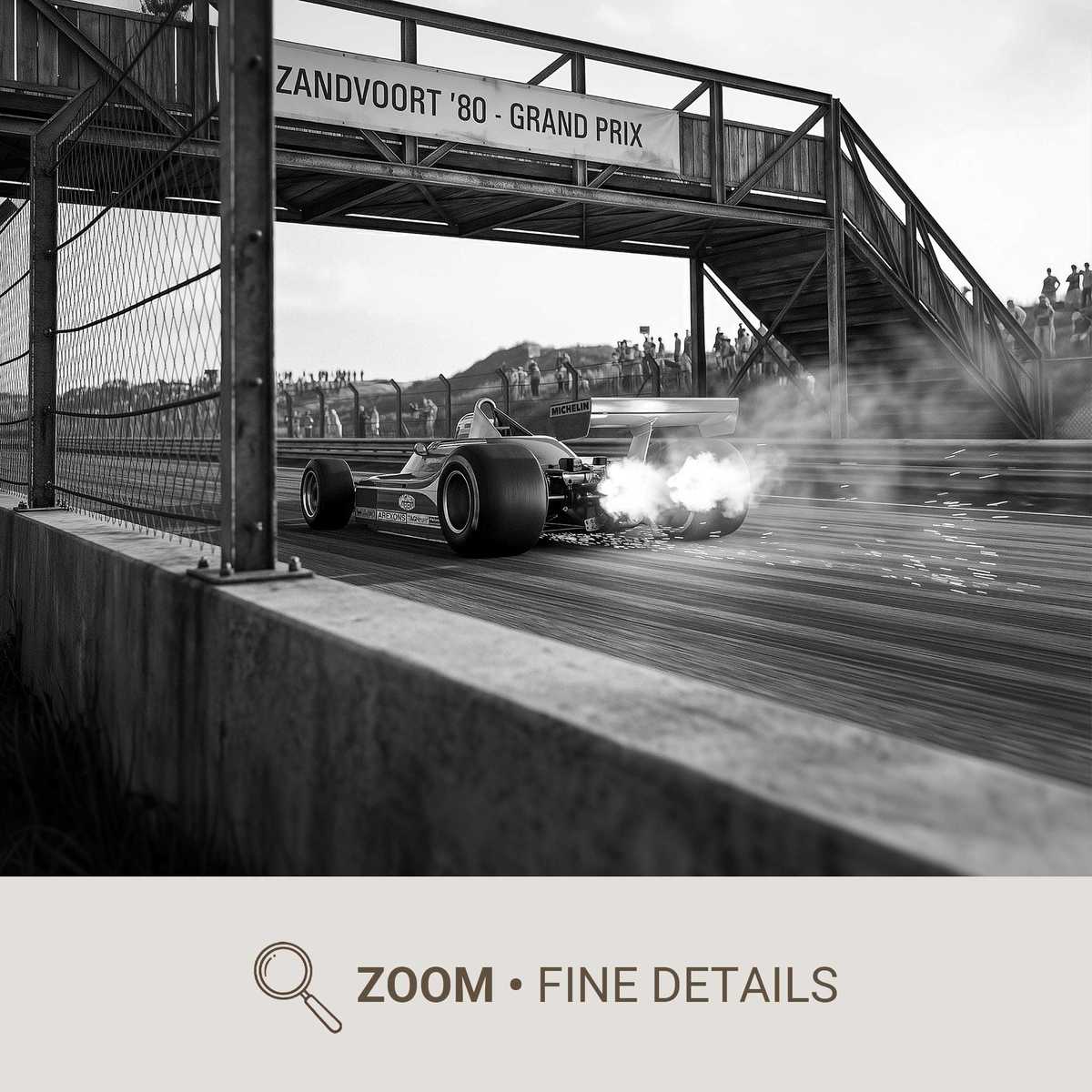
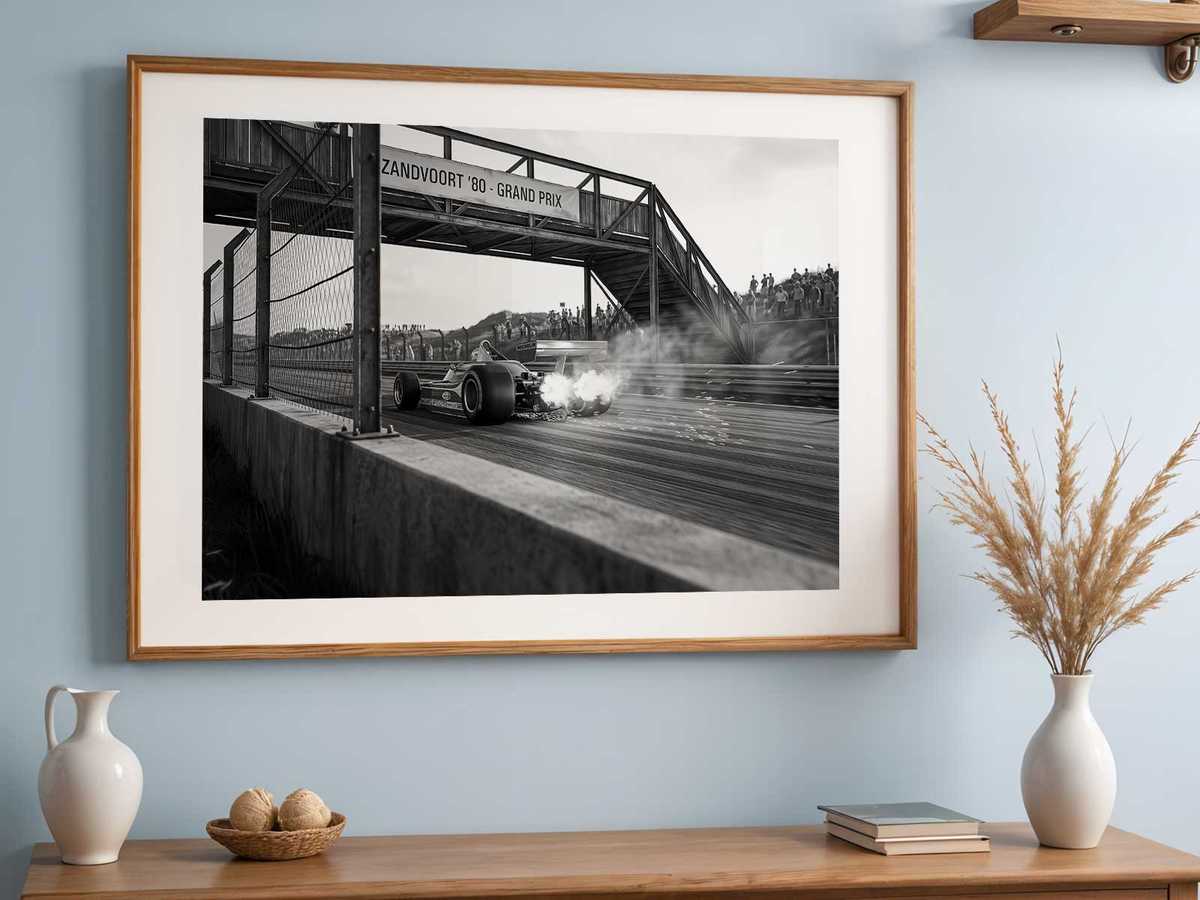
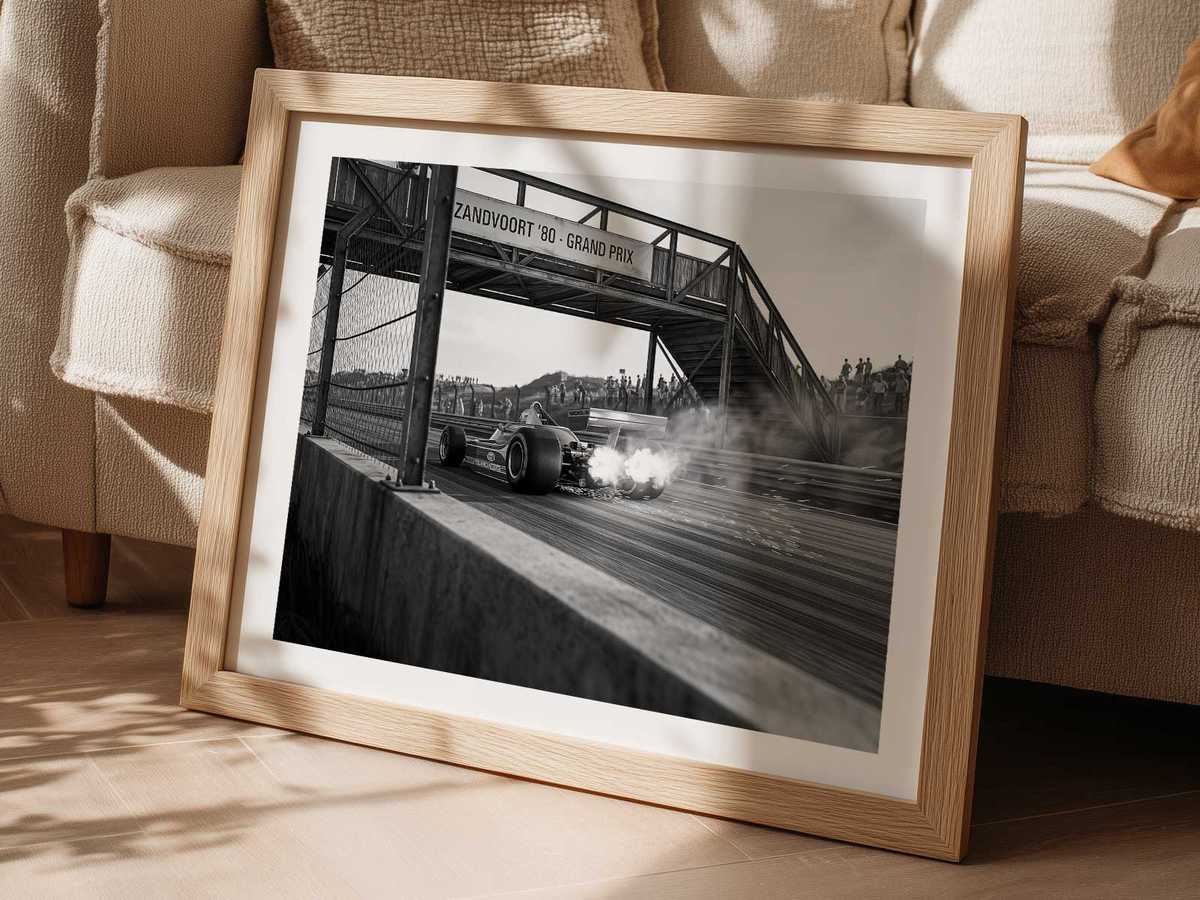
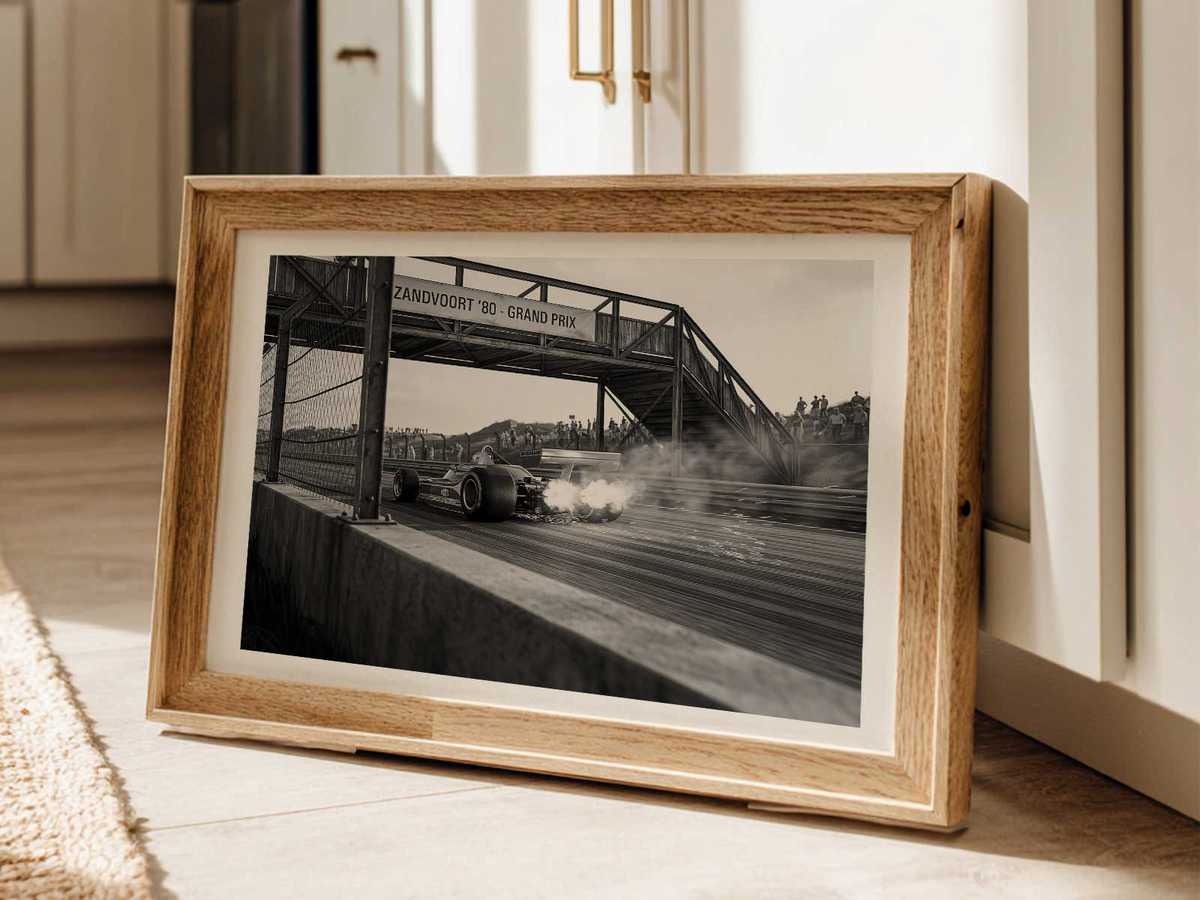
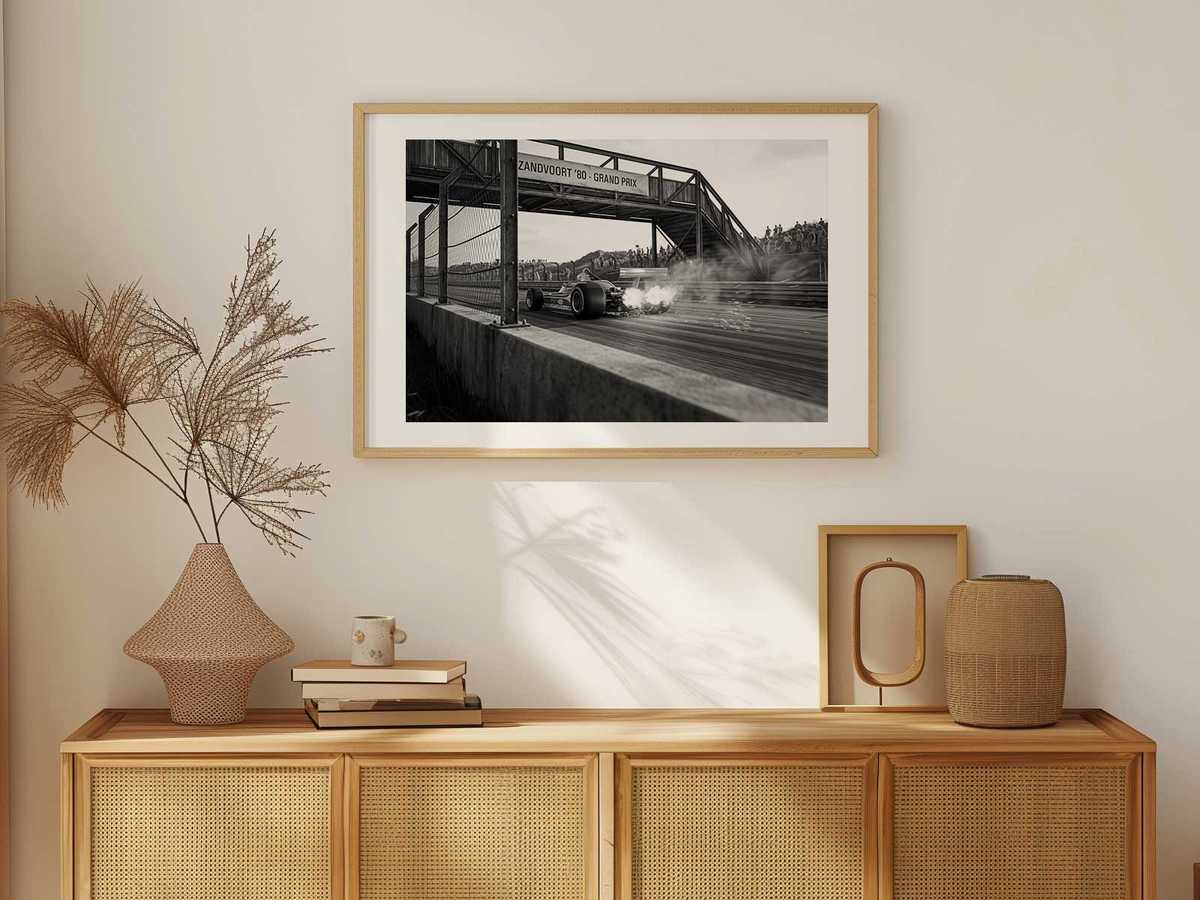
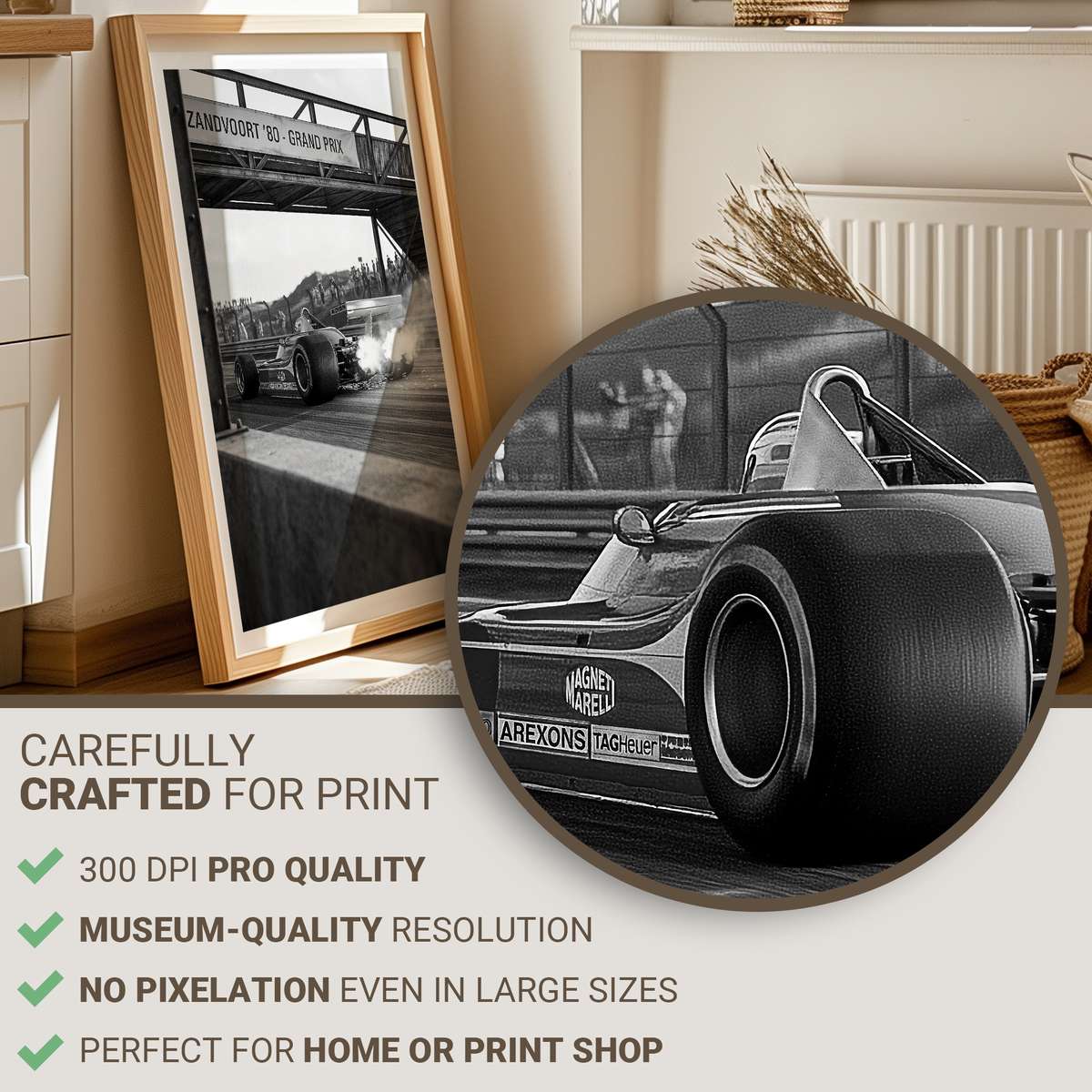
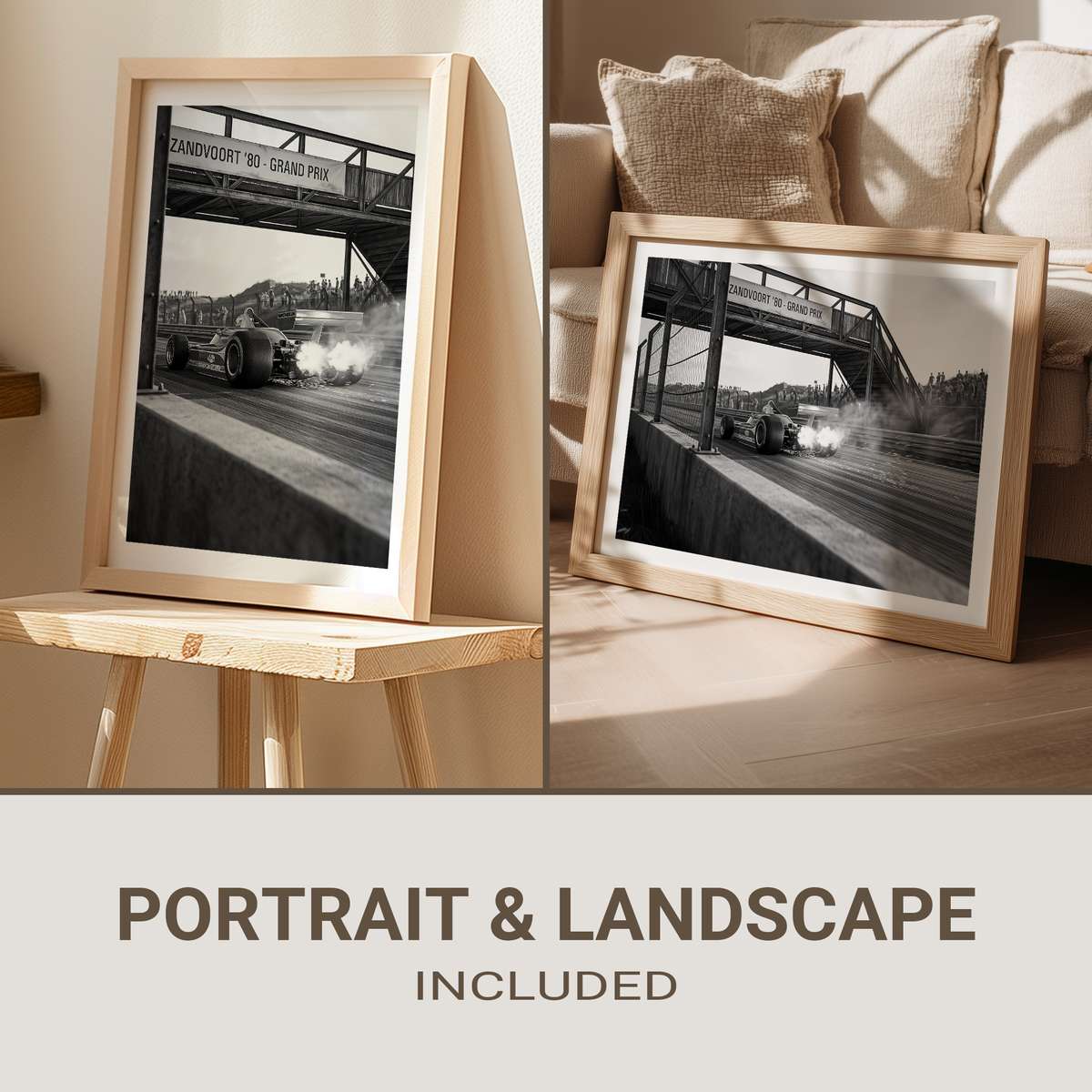
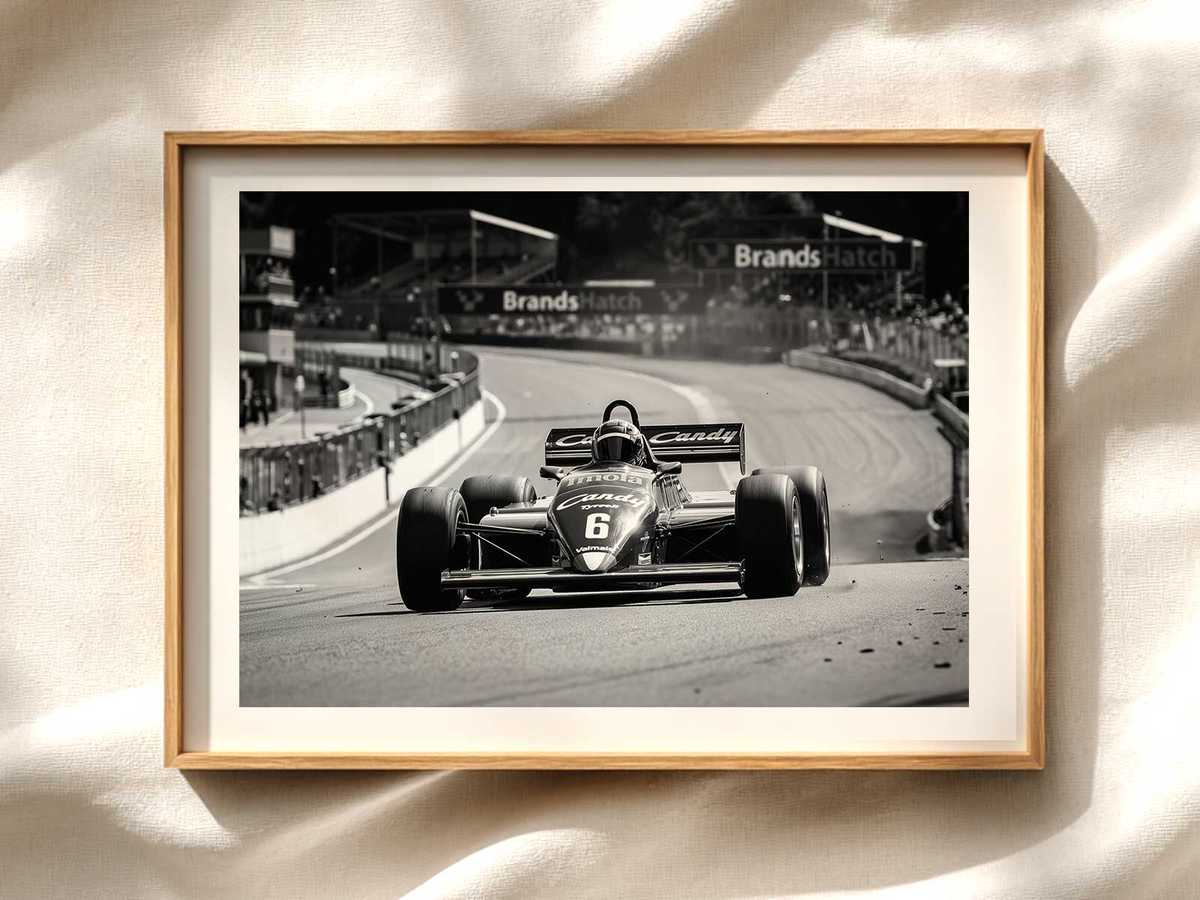
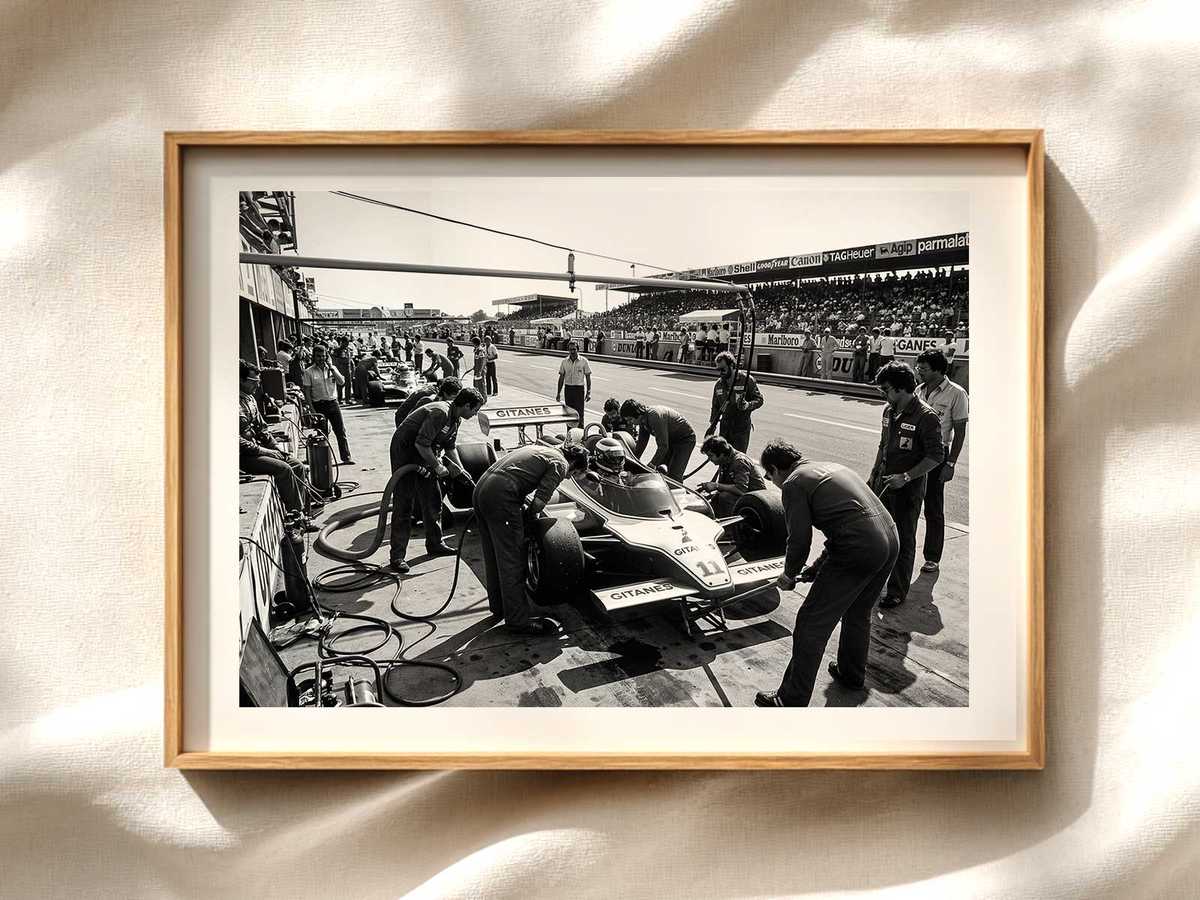
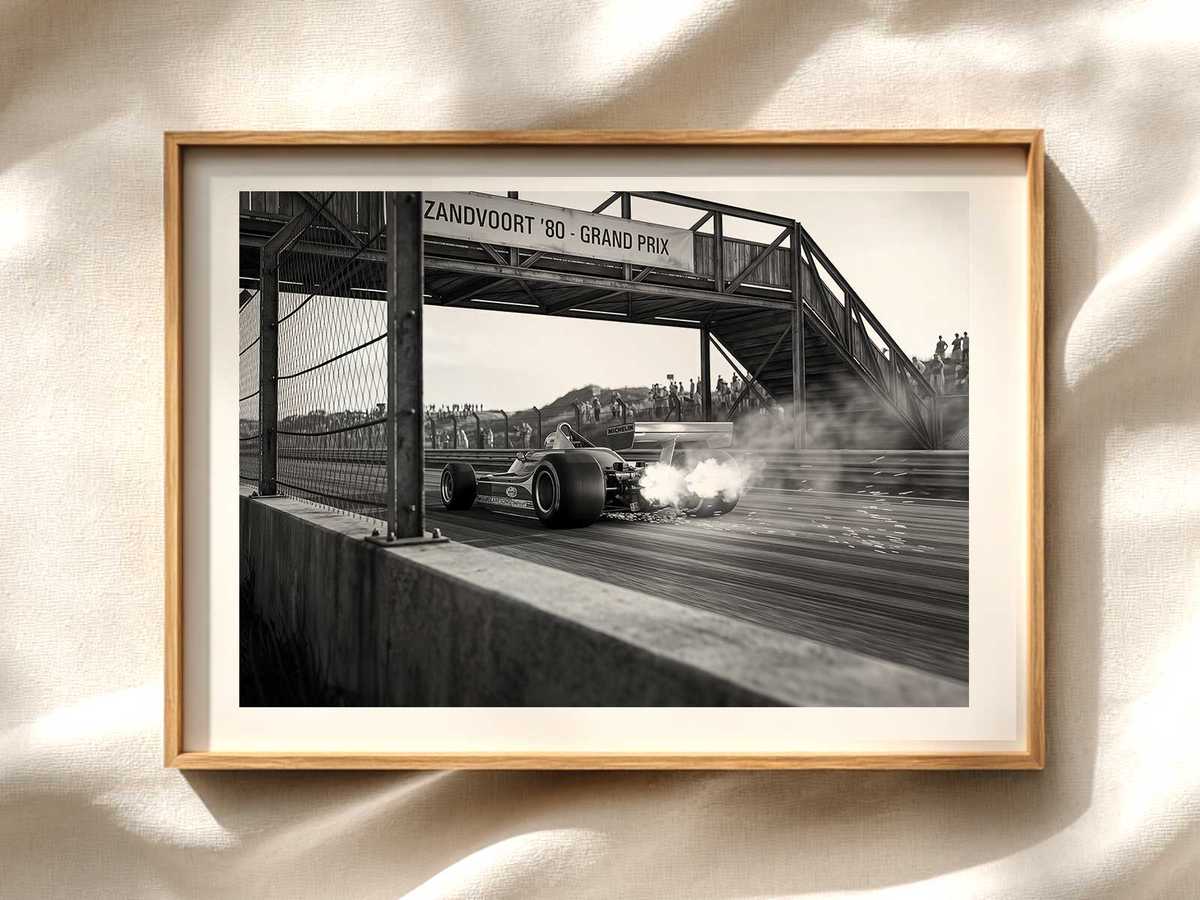
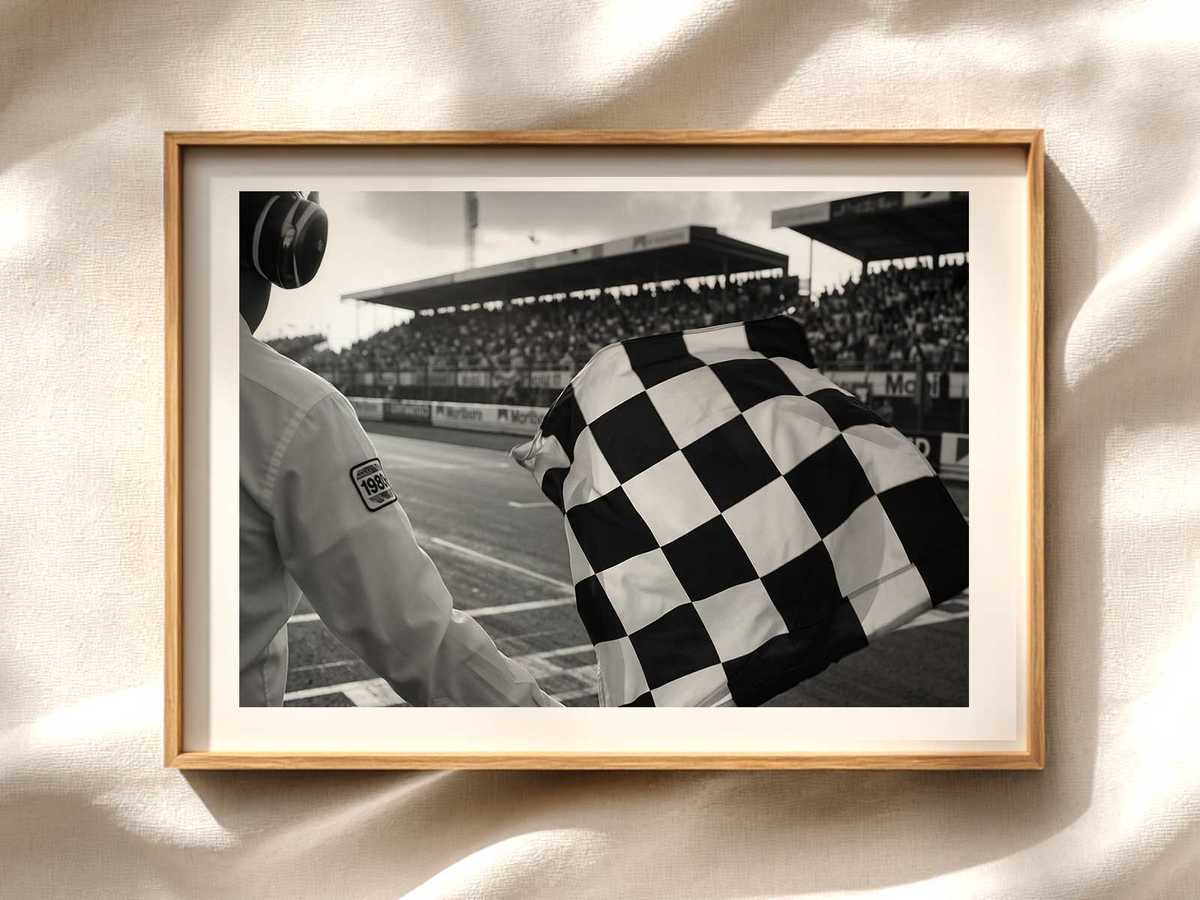
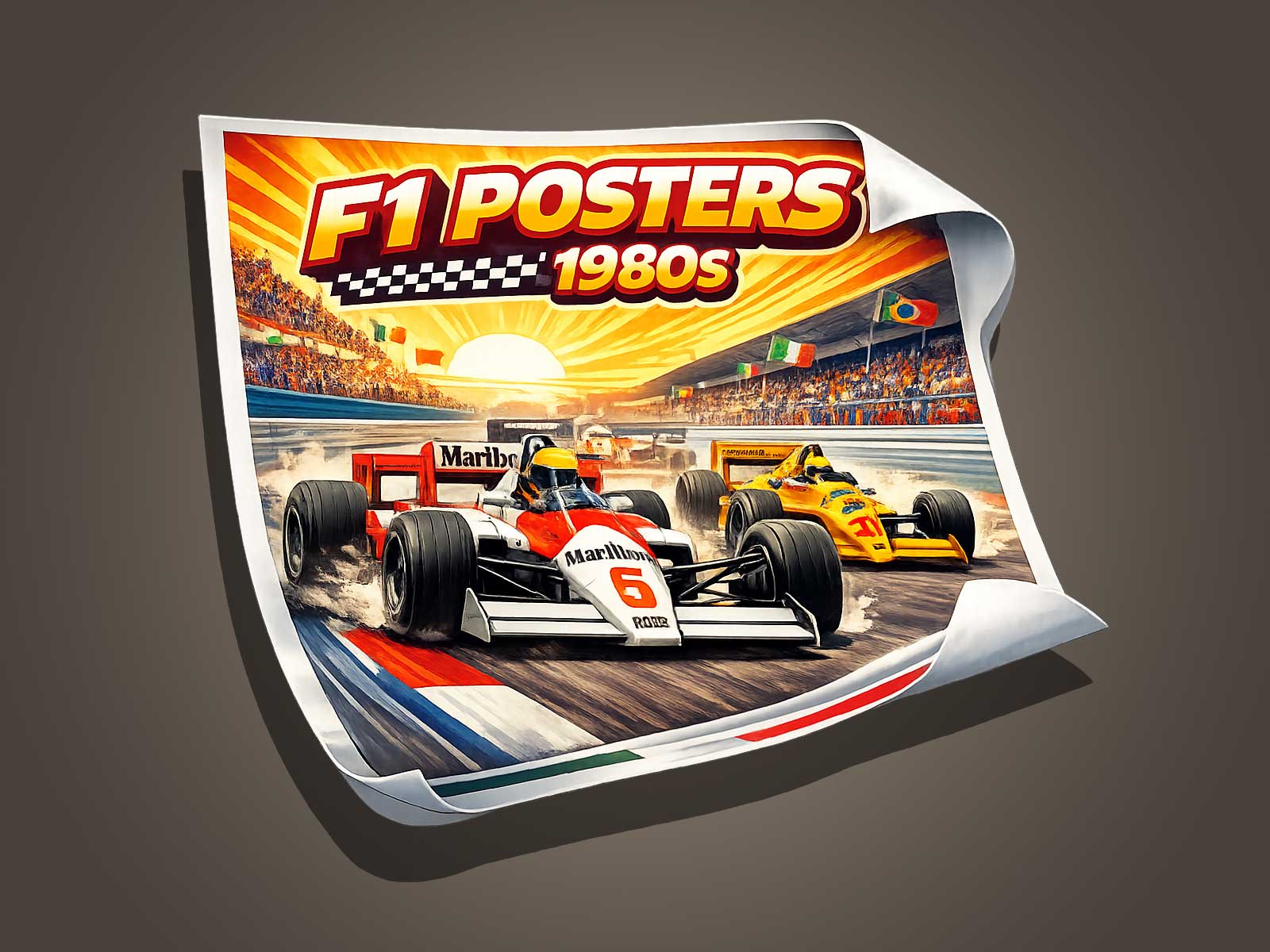
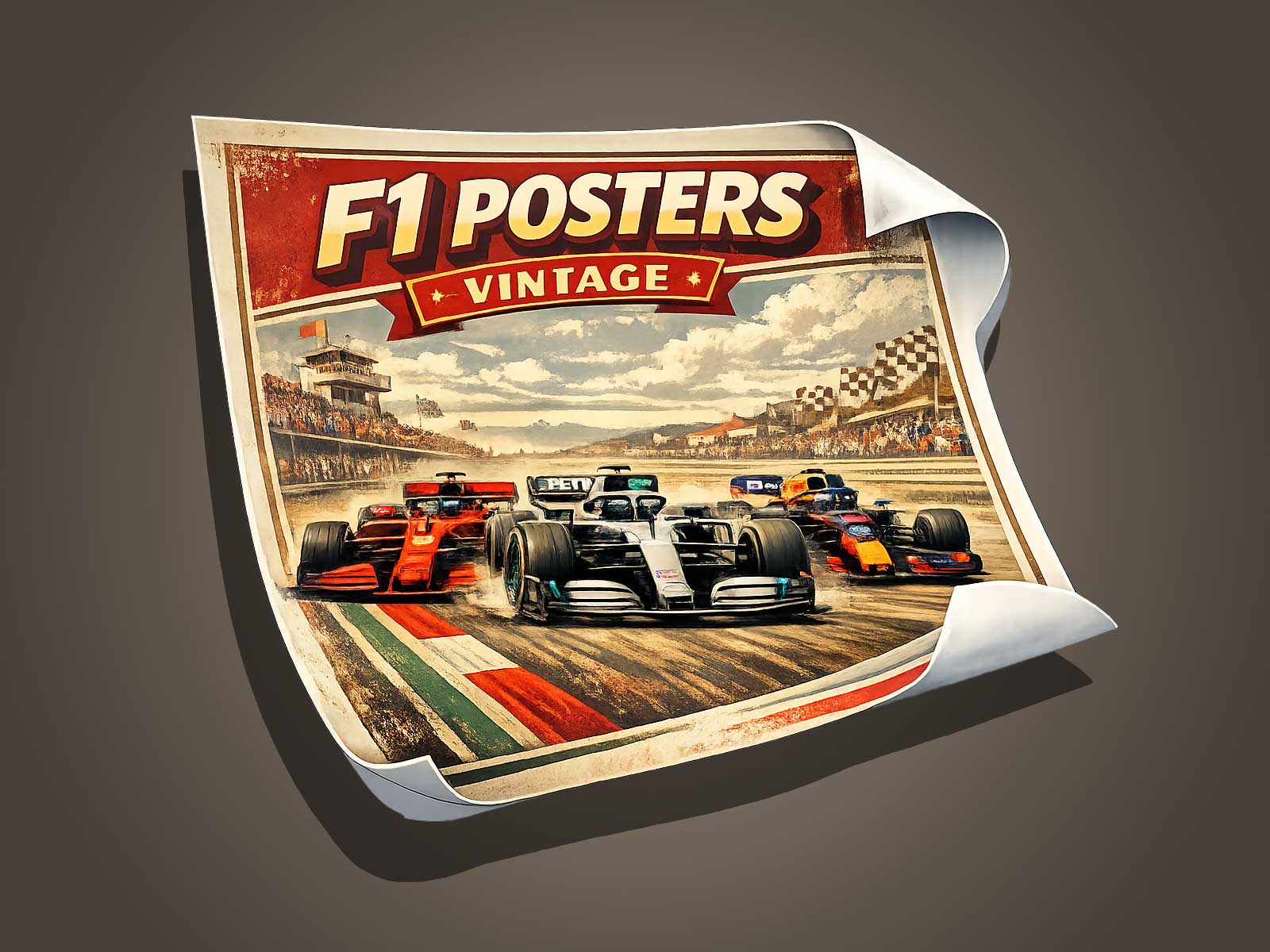
The Ferrari 312 T5 leaves an unmistakable aesthetic trace: low-slung lines, bold red paint, and the mechanical honesty of early 1980s Formula 1. Reinterpreting that image as vintage F1 wall art turns a racing photograph into a vessel of cultural memory. This article examines how a 1980-inspired design amplifies visual memory, adds historical patina, and builds patrimonial value for collectors and fans alike.
How Vintage Design Deepens Visual Memory
Vintage-inspired F1 wall art deliberately uses the visual language of its era—film grain, muted color grading, type treatments and layout choices drawn from period posters—to reconnect viewers with a moment in time. For the Ferrari 312 T5, these cues help the eye read not just a car but a scene: era-specific helmets, slick tires, and the trackside atmosphere. That contextual framing strengthens recognition and emotional recall; viewers familiar with the era experience a layered memory, while newer fans gain a clearer historical anchor.
The Role of Patina in Historical Authenticity
Patina is more than simulated wear. In well-crafted wall art, subtle signs of age—faded highlights, softened blacks, light texture overlays—convey a history the eye accepts as plausible. For a 1980 Ferrari 312 T5 poster, this patina mimics the way photographs and prints from that period have aged, lending authenticity without obscuring the car's defining details. The result is a piece that reads as both artifact and artwork.
Patrimonial Value: From Image to Heirloom
When vintage F1 posters are produced with attention to archival printing techniques and historically informed design, they cross from decorative print to collectible. The Ferrari 312 T5 motif enjoys immediate recognition among motorsport communities, so a poster that respects provenance—accurate livery, era-appropriate typography, and thoughtful aging—becomes an object with lasting value. Collectors often seek works that evoke the sport’s narrative continuity: a visual link between past races, notable teams, and the evolution of engineering.
Design Elements That Make the 1980s Aesthetic Work
Key design choices anchor the vintage effect without feeling contrived. These include:
- Color palette: slightly desaturated reds and warm mids to suggest film stock.
- Texture: light paper grain or fine halftone to imply period printing.
- Composition: off-center framing and negative space reminiscent of 1980s race posters.
- Typography: understated sans-serifs or condensed headline fonts that echo period promotional materials.
Practical Tips for Display and Preservation
To preserve both aesthetic patina and physical quality, choose archival printing on acid-free paper and UV-protective framing glass. Hang vintage-style Ferrari 312 T5 wall art away from direct sunlight and humidity to maintain pigments and printed texture. Proper mounting protects the piece while allowing the intentional aged look to remain the focal point.
Why This Matters to F1 Fans and Collectors
F1 is a sport of technical progress and storied moments. Vintage-inspired wall art condenses those layers into a single, viewable object. For fans, a Ferrari 312 T5 print functions as daily access to racing heritage—an image that recalls circuits, engineers, and races. For collectors, it’s an accessible form of patrimony: a curated, tangible connection to the sport’s visual history that can be cataloged, displayed, and passed on.
Interested in viewing or acquiring a period-inspired Ferrari 312 T5 piece? See a curated listing with vintage design cues and archival printing options here: https://www.etsy.com/listing/4428582100/ferrari-f1-poster-circuit-of-america-f1