F1 red flag explained: what it means, why sessions stop and how teams react
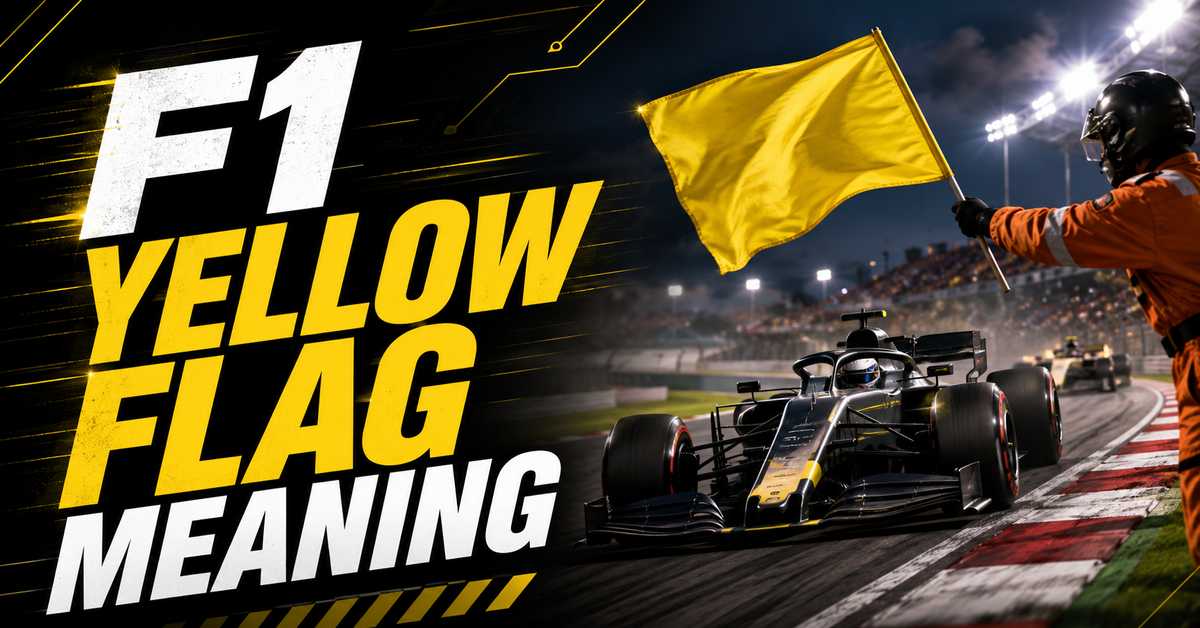
A red flag in Formula 1 means a session — practice, qualifying or the race — has been suspended and all track activity must stop immediately until Race Control allows a restart. This article explains what triggers a red flag, how drivers and teams must behave, how it affects strategy and why safety always takes priority.
Quick summary
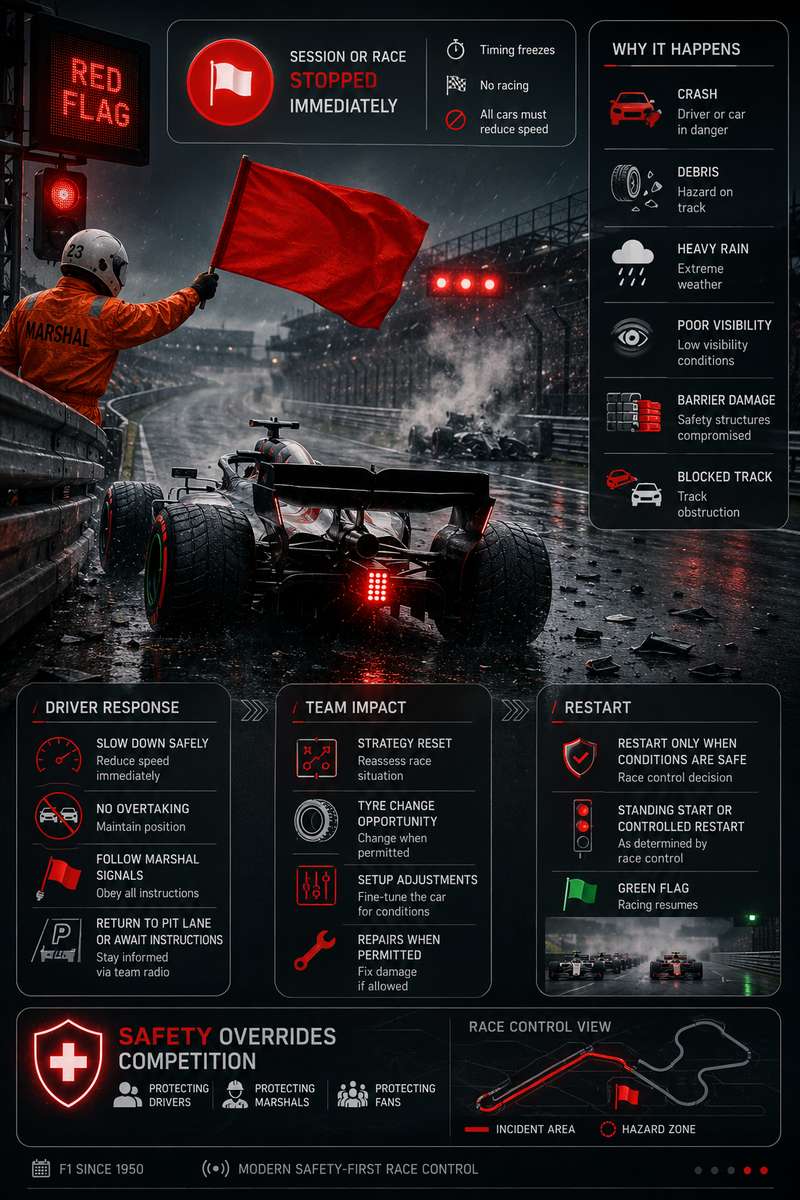
A red flag is issued by the Race Director when the circuit is unsafe. Marshals wave red flags and trackside lights signal drivers. Cars must slow and either return to the pit lane or stop behind the red-flag line to await instructions. Teams may be allowed to work on cars under FIA supervision. Restart procedures and result determination are defined by the sporting regulations.
CLEAR DEFINITION
In Formula 1 a red flag indicates that a session has been suspended and all track activity must stop immediately. The signal is issued from Race Control by the Race Director; marshals wave red flags at posts and trackside lights reinforce the instruction. The order of cars at the moment of the red-flag signal normally determines positions for any restart unless event-specific procedures say otherwise.
HOW IT WORKS
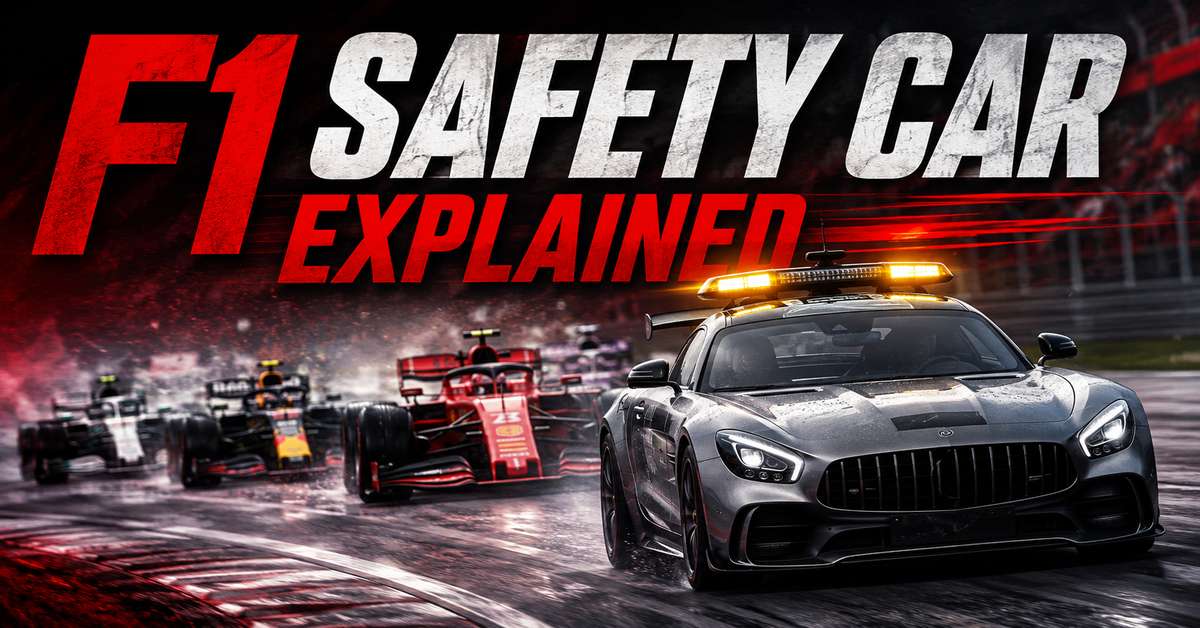
When the red flag is shown drivers must reduce speed, follow marshals' directions and either proceed to the pit lane or stop in a designated area behind the red-flag line. The red-flag line marks the point where cars must stop to be safely attended to or prepared for a restart. Race Control decides when the track is safe to resume and issues the restart method — for example a standing start, a rolling start, a formation behind the Safety Car or another option allowed under the sporting regulations.
RULES AND FIA PROCEDURES
The Race Director has the authority to suspend sessions and to determine restart procedures. The FIA sporting regulations and event notes govern what teams may do to cars during a suspension. In practice, teams are permitted to work on cars under supervision — for example to change tyres or repair damage — but the exact scope of permitted work depends on the sporting regulations and any event-specific notes for that weekend.
STRATEGY AND RACECRAFT
A red-flag suspension can materially affect race strategy. Opportunities to change tyres during the suspension, interactions with tyre-use rules (such as requirements to use different dry compounds during a dry race) and how lap counts or race time are handled can alter pit-stop plans and track position. Because the restart procedure is at the Race Director's discretion, teams must adapt quickly to a standing restart, rolling restart or other outcome.
SAFETY AND RISK
Common reasons for a red flag include a serious accident, a blocked track, large amounts of debris, markedly unsafe weather, fire or a medical emergency that requires immediate access to the circuit. The purpose of the suspension is to allow marshals and medical teams to operate without on-track traffic and to ensure the circuit is safe before competitors return. Safety always overrides competition — the Race Director will not restart a session until those safety checks are satisfied.
COMMON MISUNDERSTANDINGS
Beginners sometimes assume red flags are only for crashes; in reality they cover any situation that makes the circuit unsafe, including weather, debris or medical incidents. Television images or timing screens can also mislead viewers about the exact running order at suspension time — the official order is the one recorded by Race Control at the moment the red flag is shown, subject to any specific event procedures.
CLOSING INTERPRETATION
A red flag is one of the clearest examples of how safety overrides competition in Formula 1. It temporarily removes the race from the hands of drivers and strategists so marshals, medics and officials can restore safe conditions. For fans, understanding the red flag helps explain sudden strategy swings, pit-lane activity during a suspension and the sometimes-complex restart choices made by Race Control — all controlled by the single principle that nobody races until the circuit is safe again.
Author: Alex R.