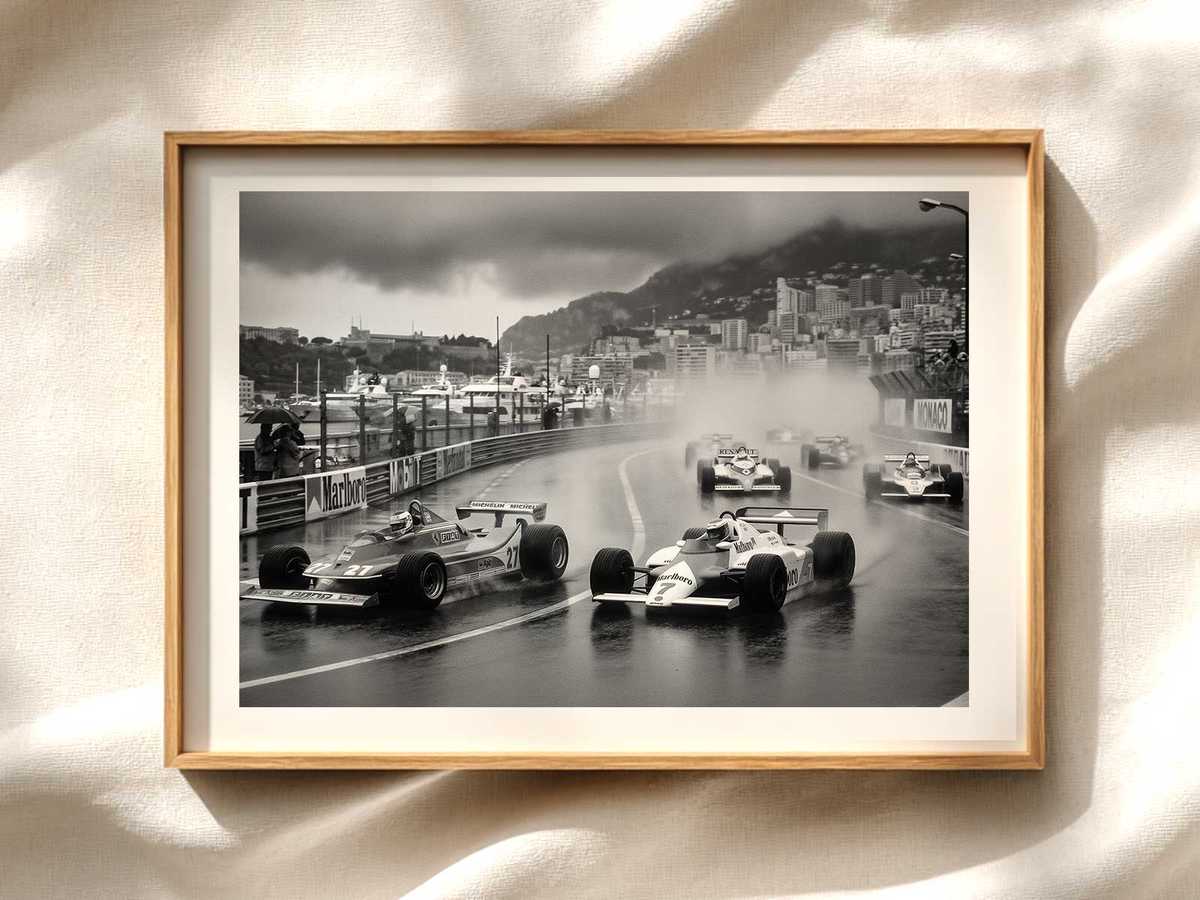
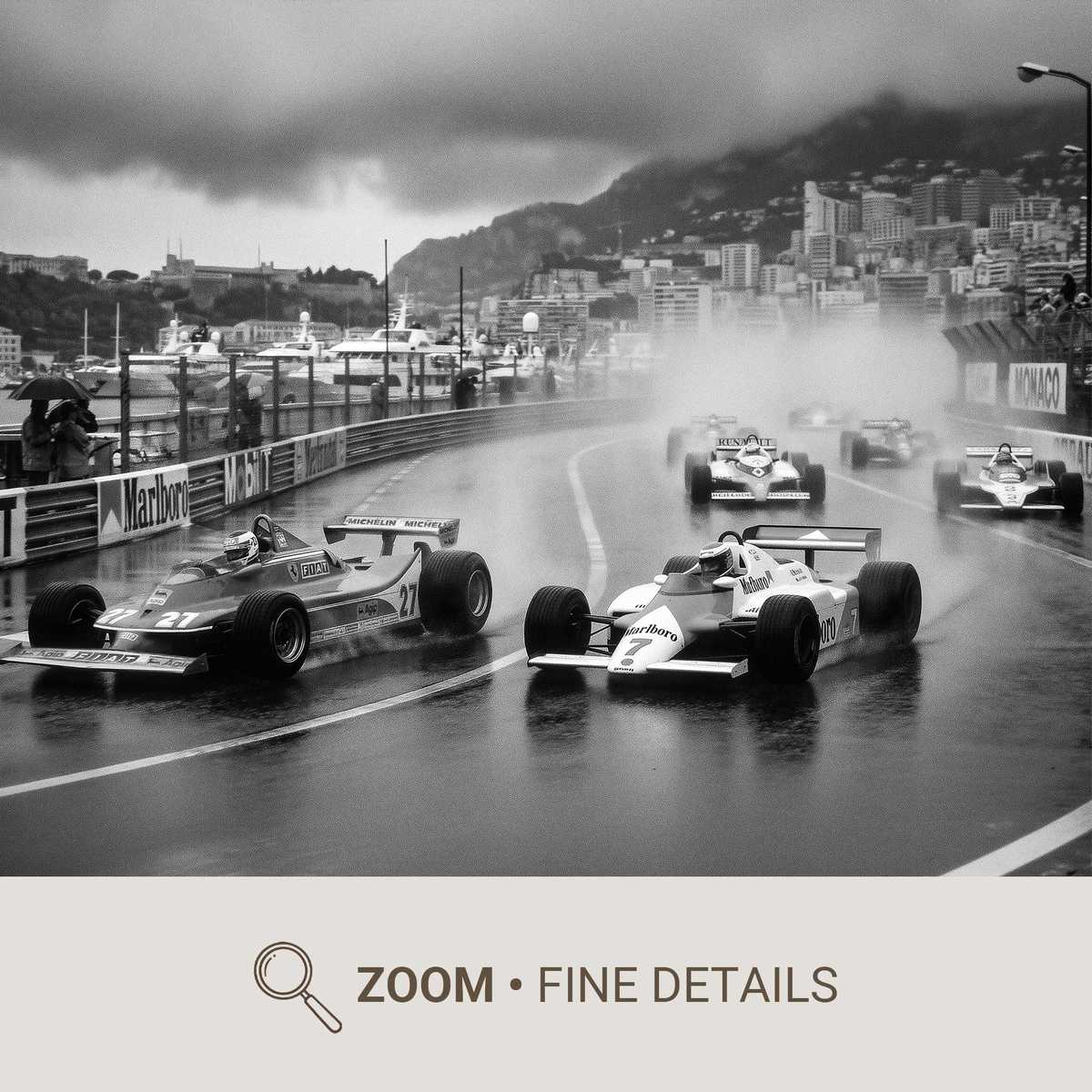
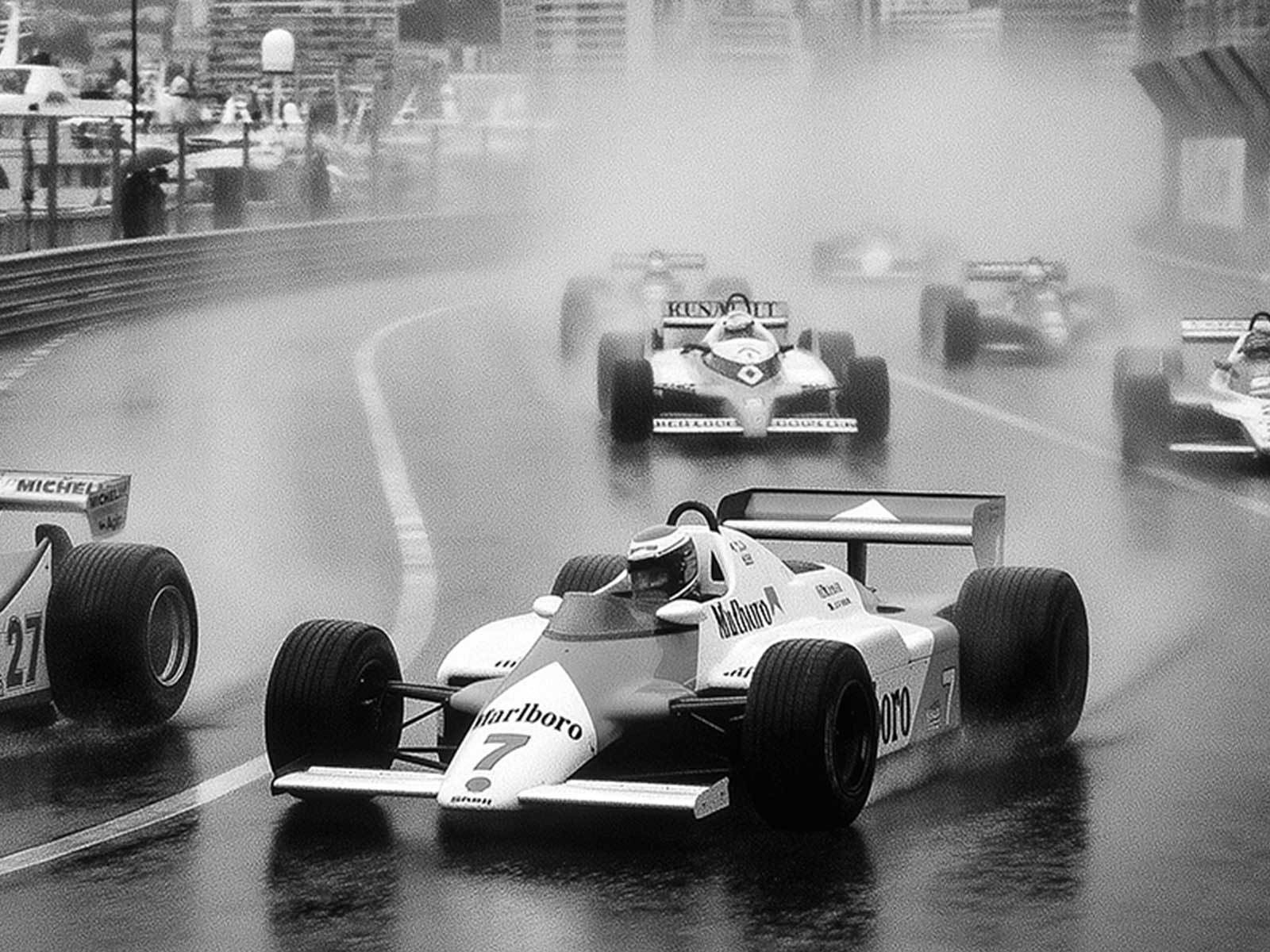
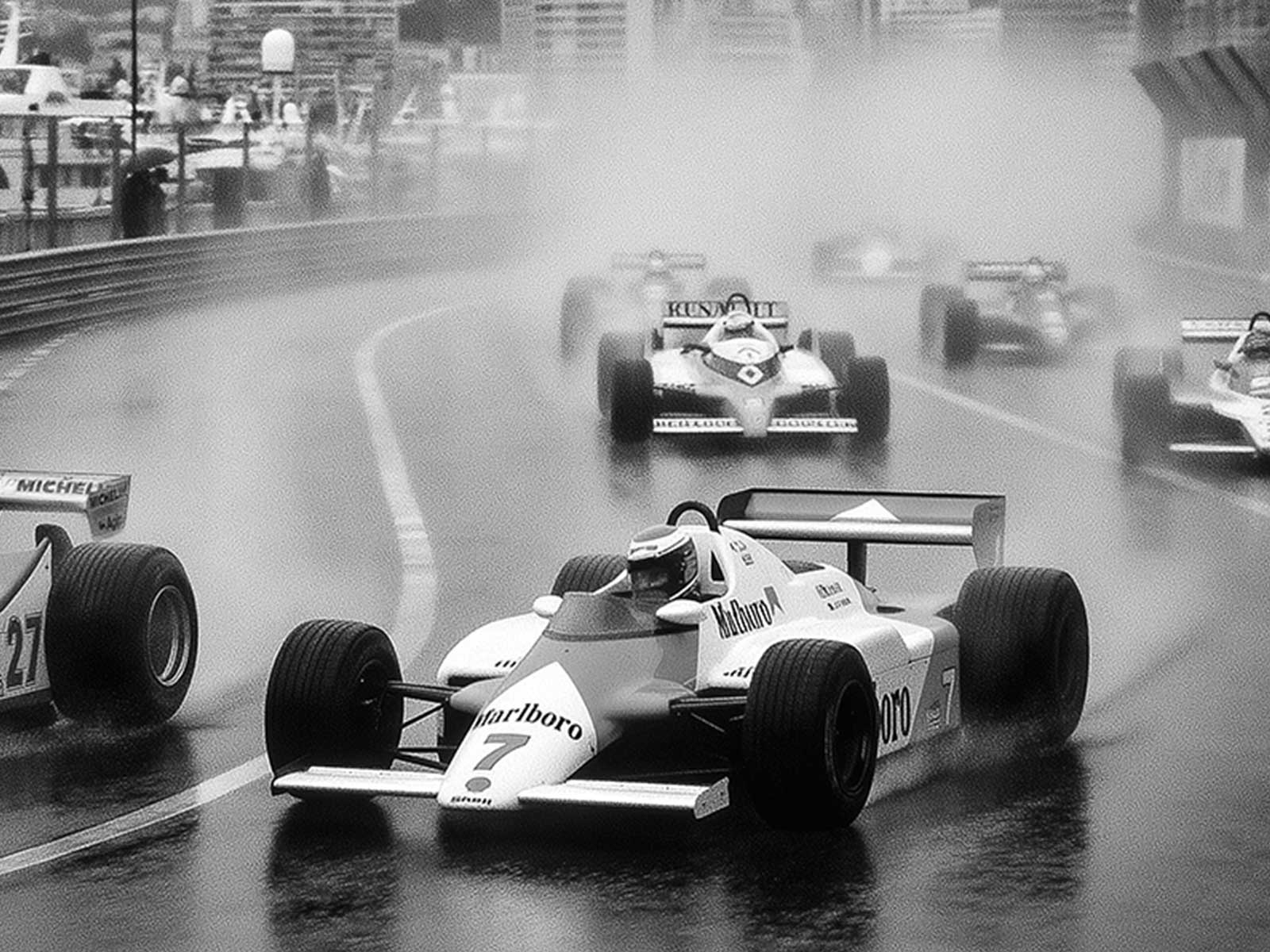
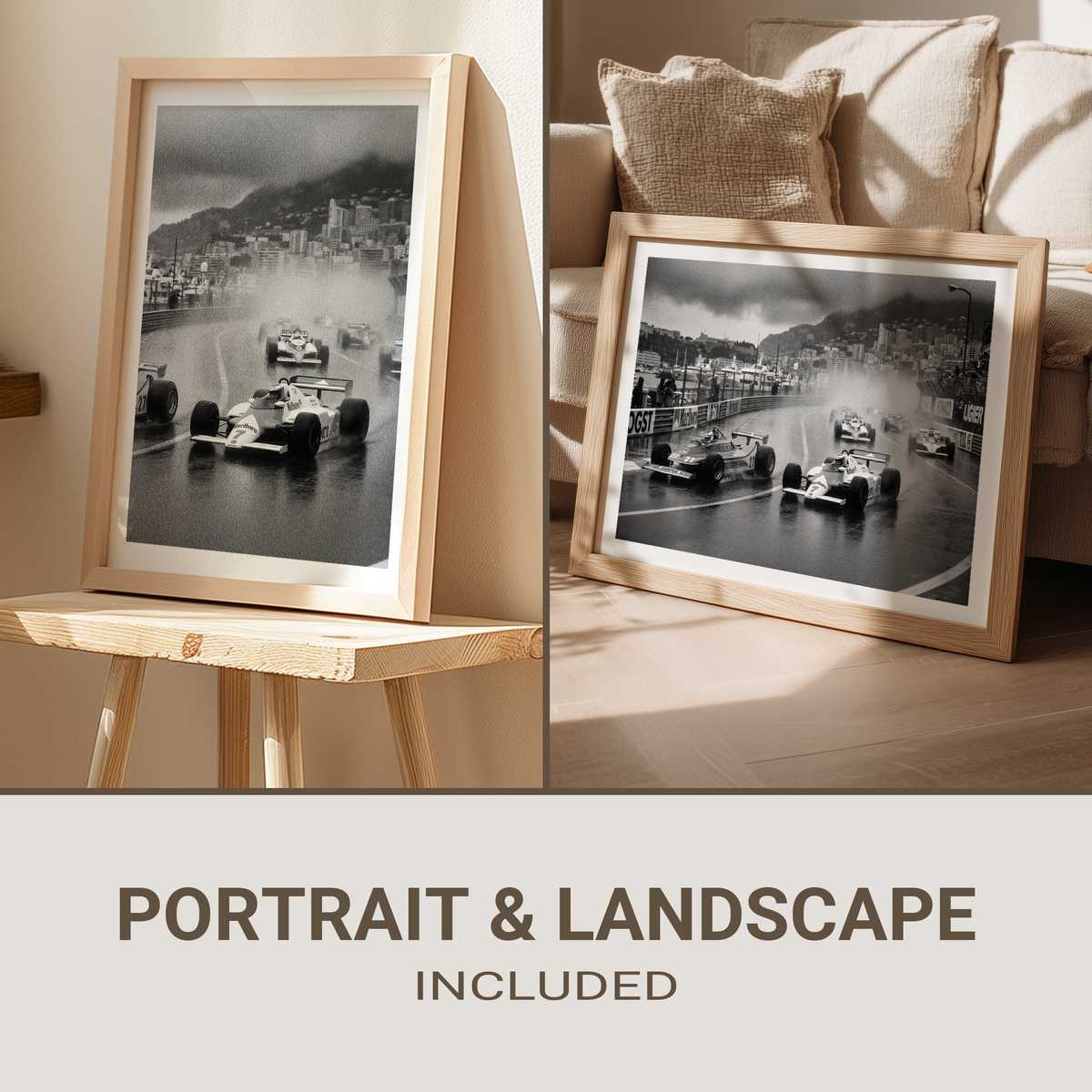
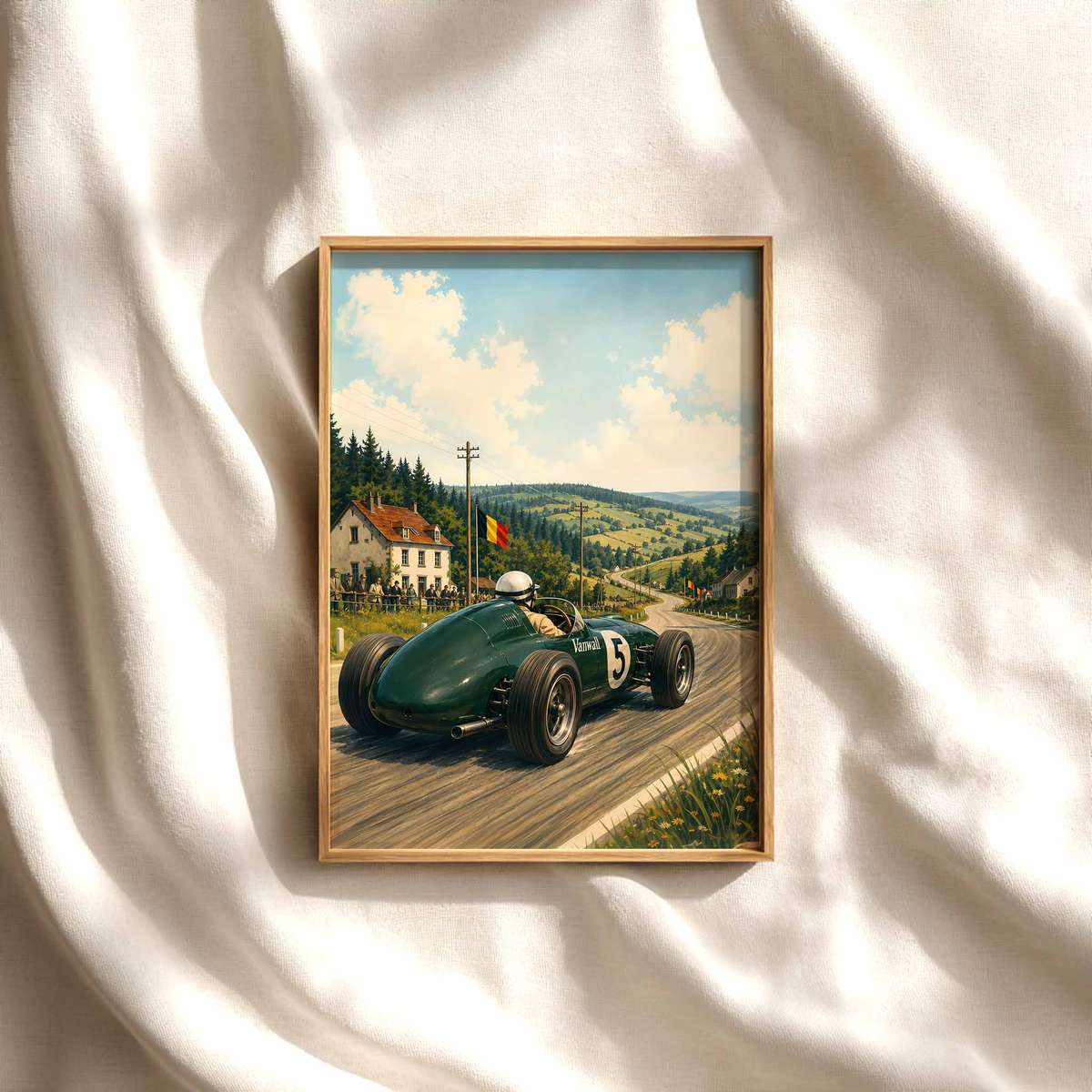
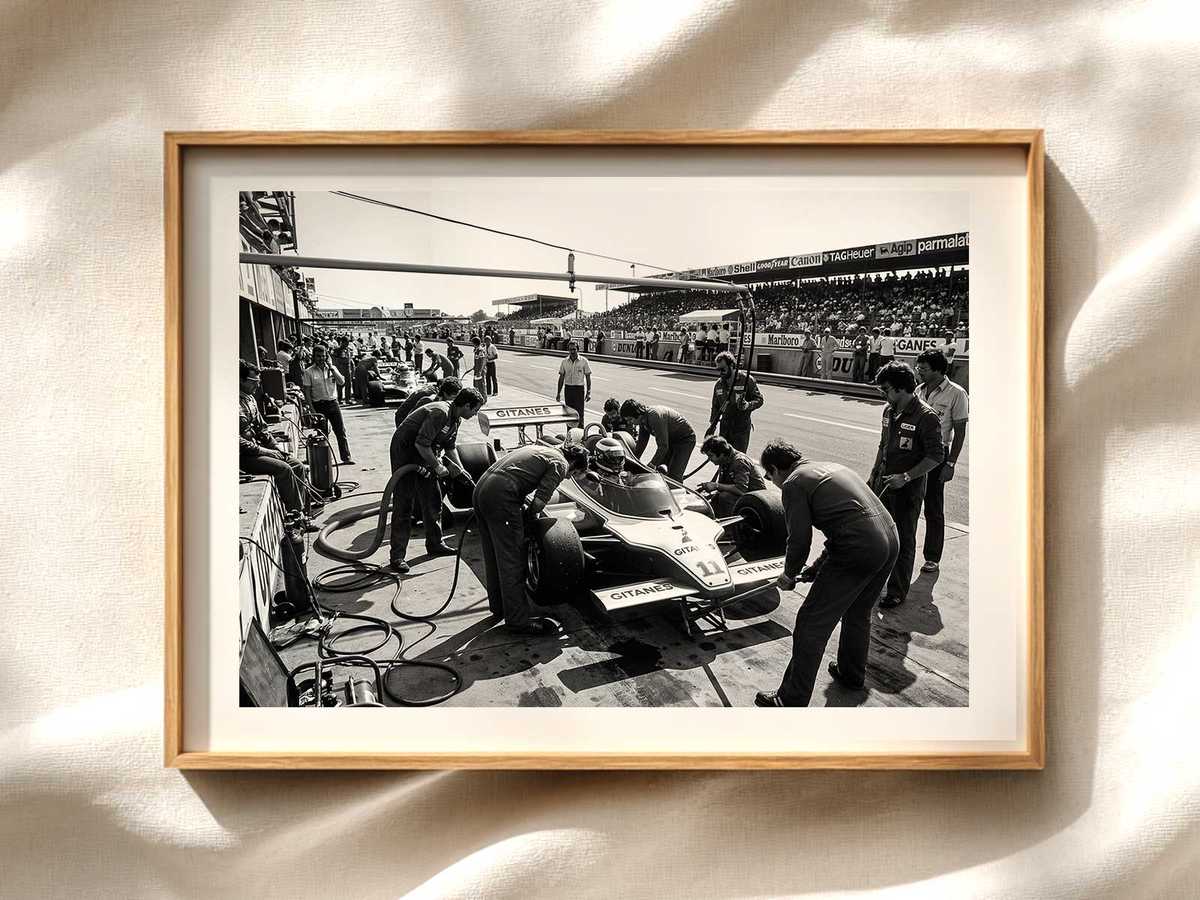
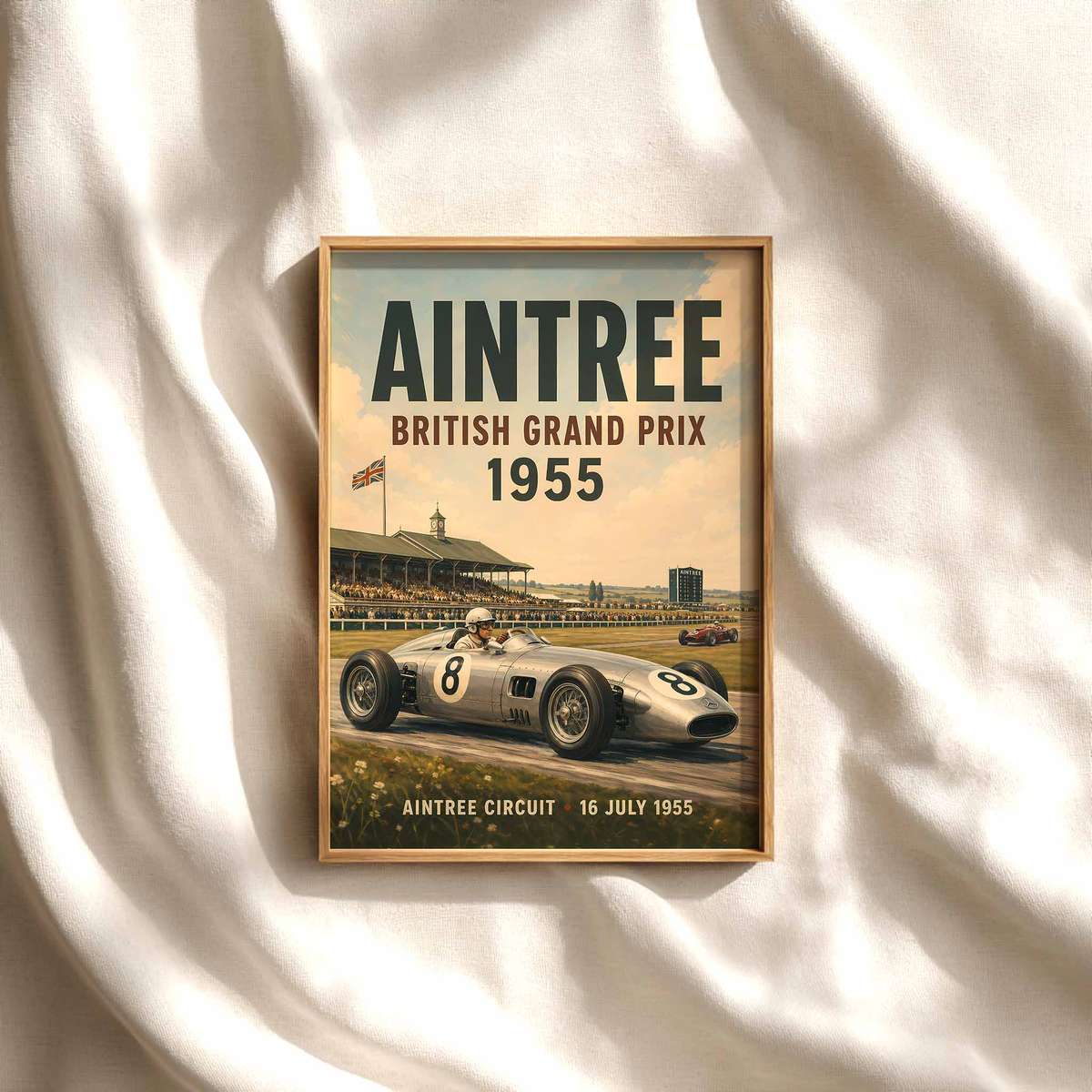
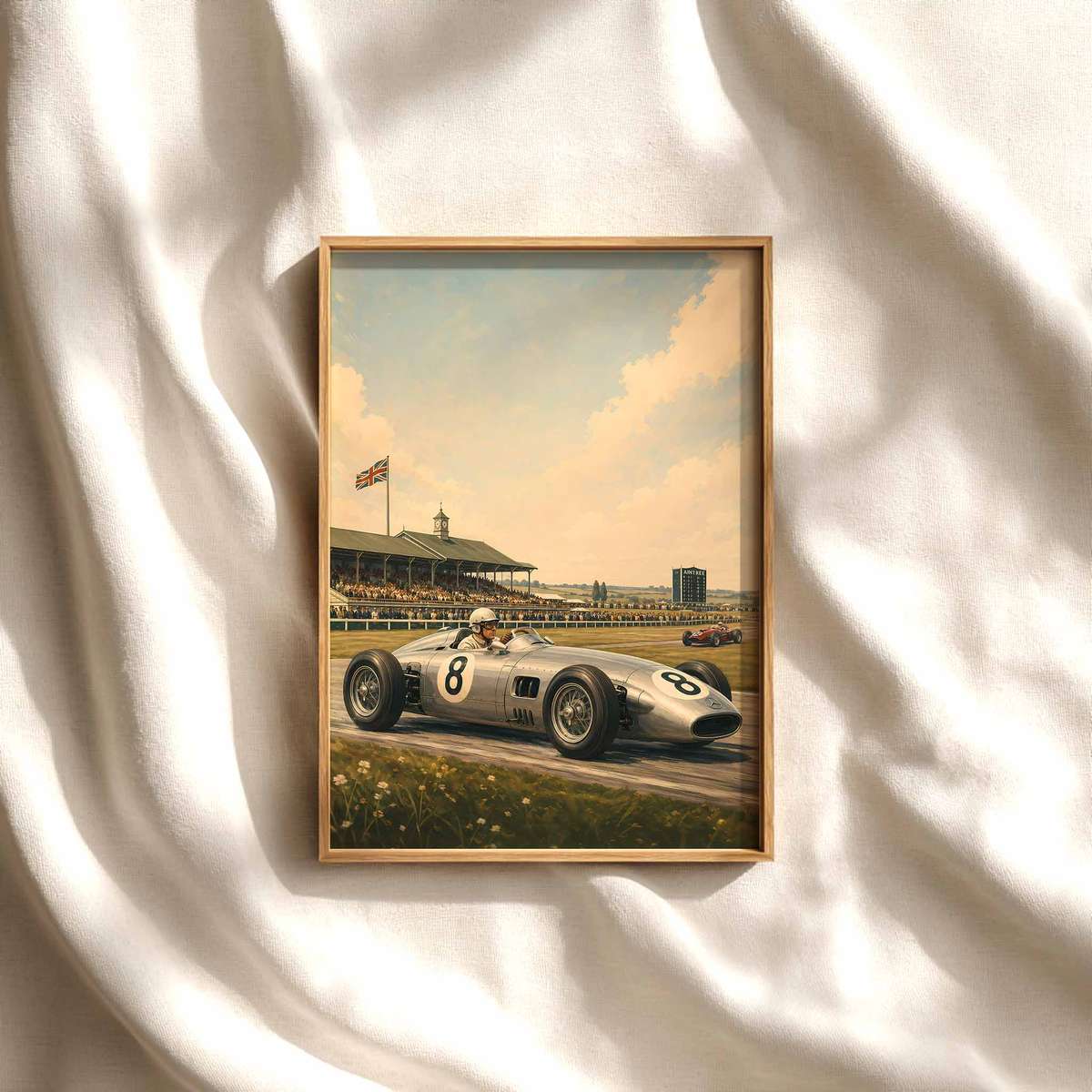
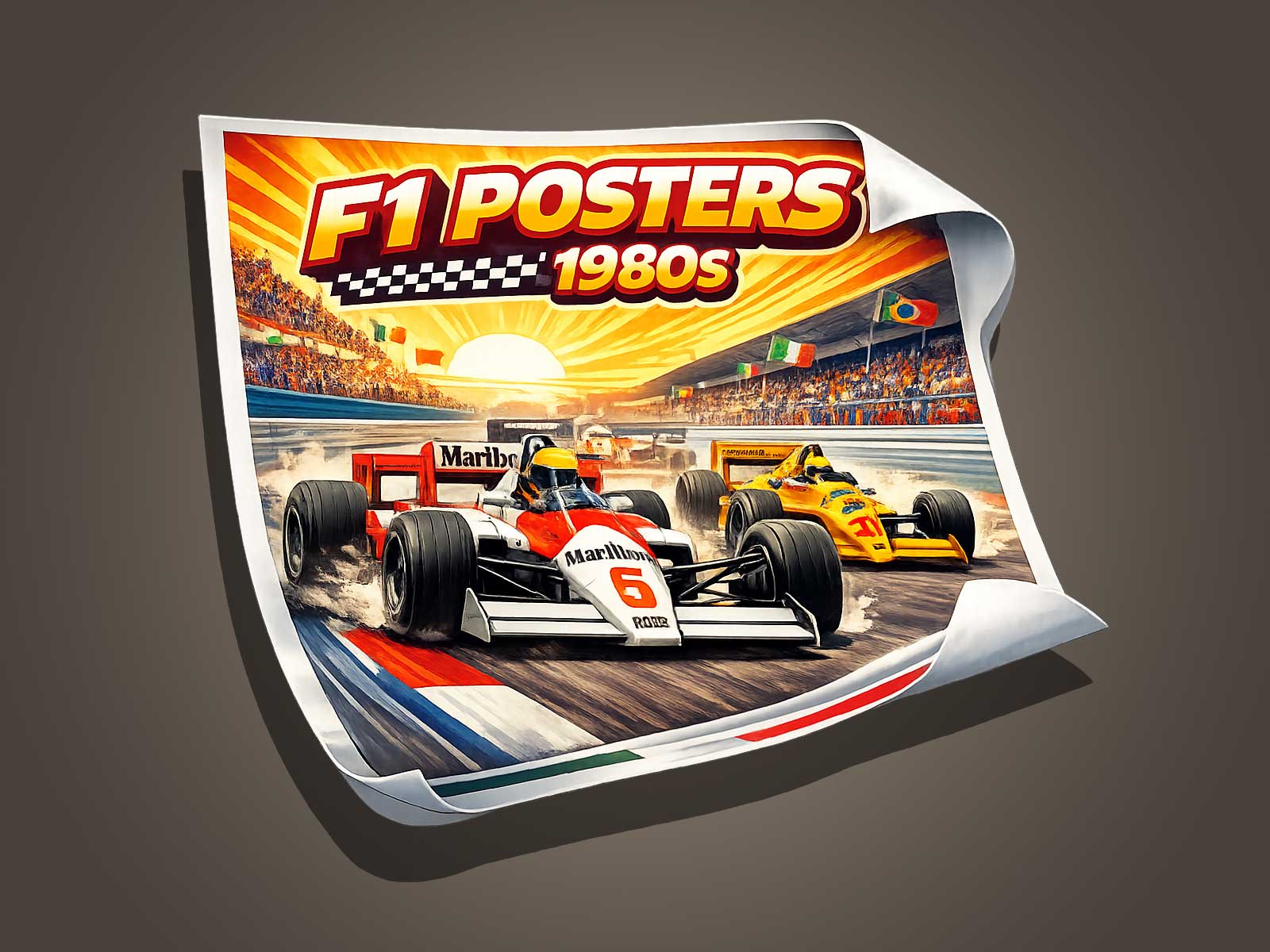
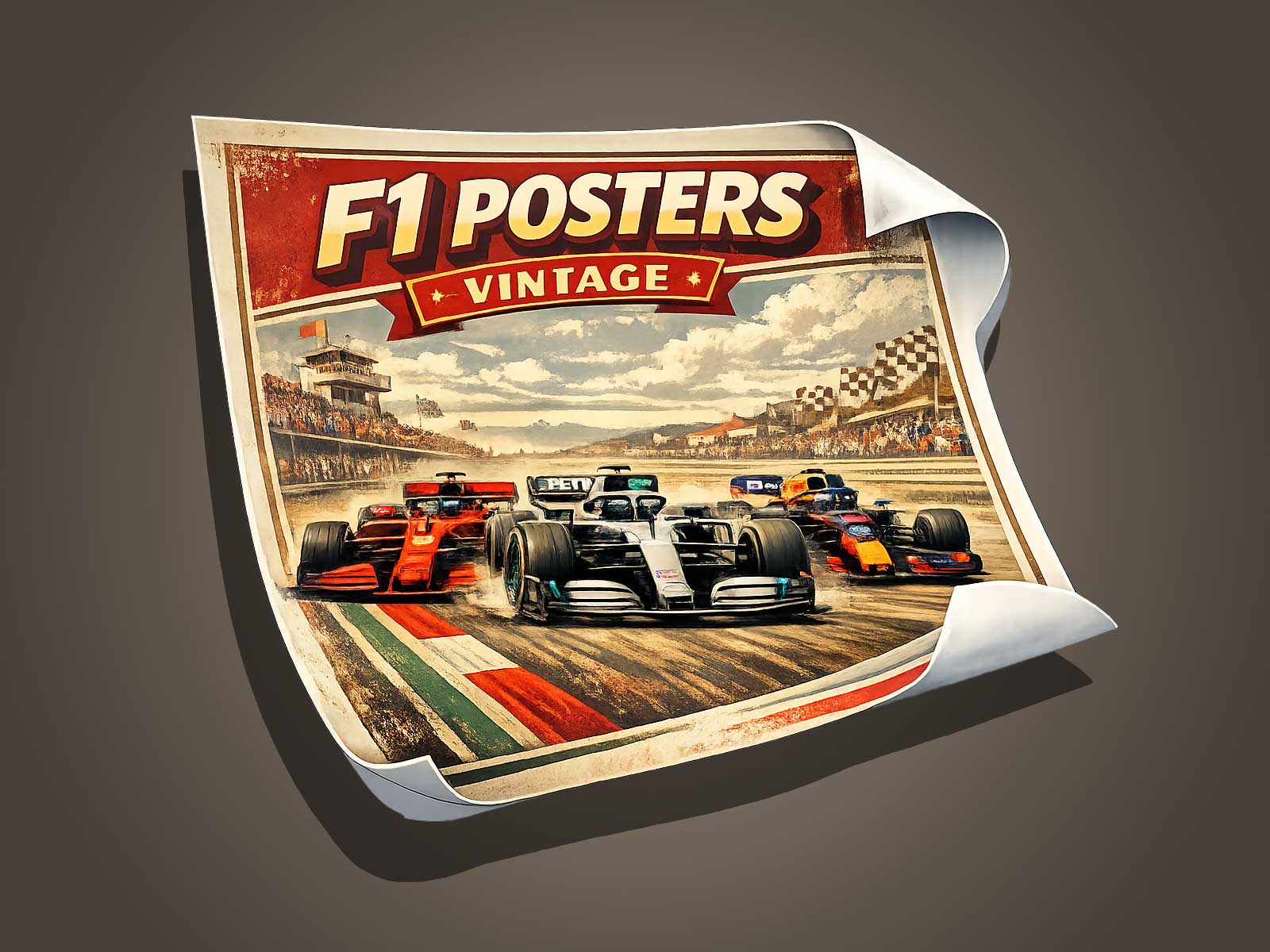
There is a particular spell cast by a Formula 1 scene rendered as a poster: a moment where engineering, human courage and weather combine into an image that reads like an emblem. A retro Formula 1 poster showing a peloton under rain does more than reproduce a race photograph; it distils the sport’s identity into a single visual argument. The first thing the eye meets is the contrast—sheened track, spray rising in filigree, taut silhouettes of wings and helmets cutting through grey light. That contrast delivers immediate drama and, crucially for wall art, a strong focal point that anchors the room.
At the heart of this poster concept is visual rhythm. A pack of cars in wet conditions forms repeating shapes: noses, rear wings, tyre arcs, and rain arcs that read as a dynamic pattern rather than a static scene. Retro styling—muted tones, grain, simplified colour blocks or period typography—transforms high-speed chaos into a composed graphic. Those choices let the poster sit comfortably in a living room, study or office because the visual language is both cinematic and restrained: it signals passion without domination.
Identity is central. Each car silhouette, each team colour flash, carries recognition for fans: a shoulder of livery glimpsed through spray is enough to evoke an era, a team personality, a driver’s presence. The wet race amplifies identity rather than blurring it—water becomes a filter that isolates form and colour, making badges, helmet motifs and sponsor shapes read like insignia. That concentrated identity makes the poster work as premium décor: it’s not merely an image of speed, it is a condensed statement about racing heritage and taste.
Emotion in motorsport imagery often comes from narrative compression. A rain-soaked peloton suggests tension, bravery, and uncertainty: the viewer understands the stakes without needing captions. This evocative power is why such posters move beyond memorabilia into collector art. They speak to memory—the scent of oil and wet tarmac, the sound of spray on visors—and to imagination: you can place yourself on the grid or remember a favourite race. As an art object, the poster invites repeated looking; each glance reveals new details, from tyre spray textures to the negative space between cars that implies speed.
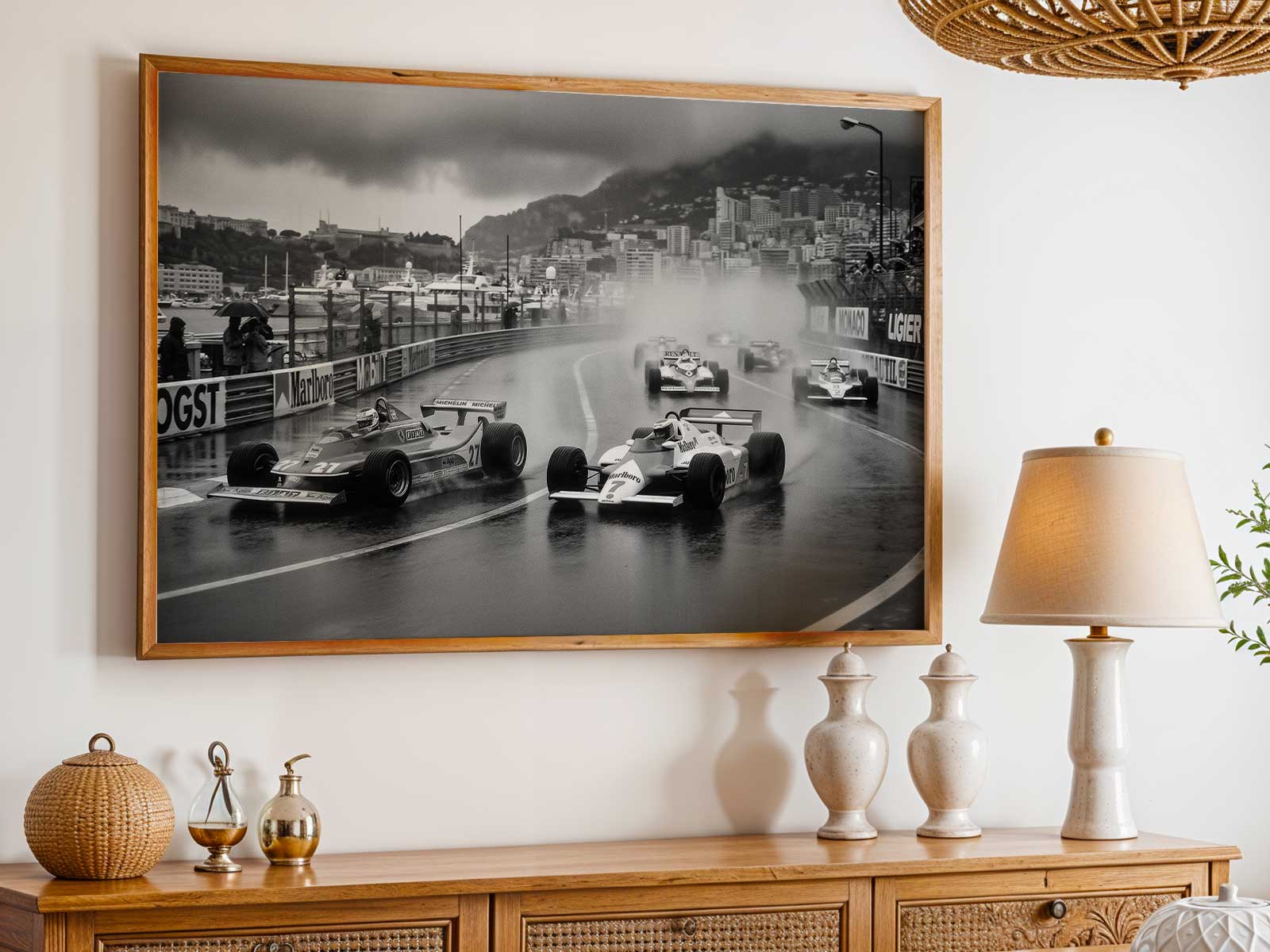
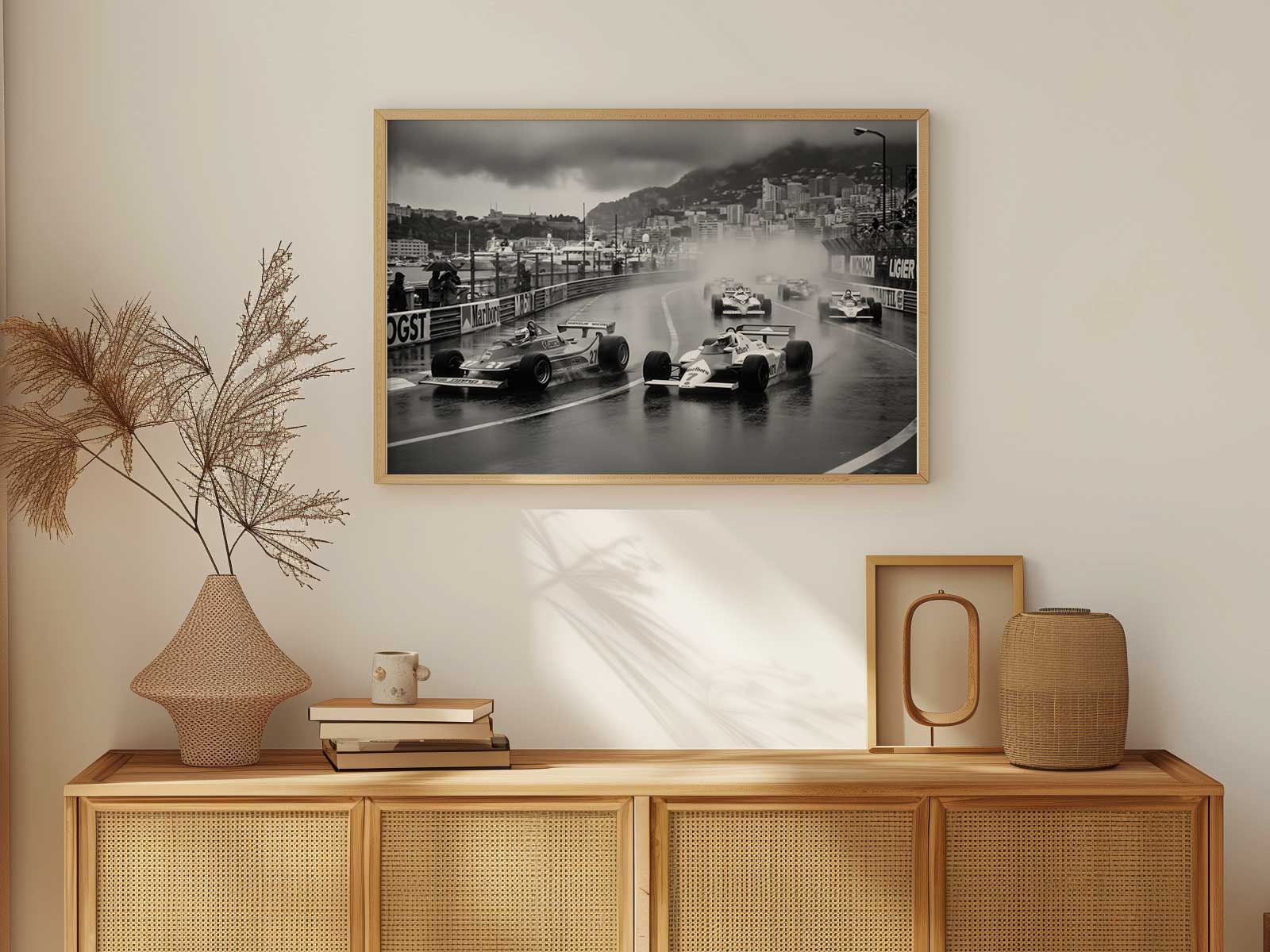
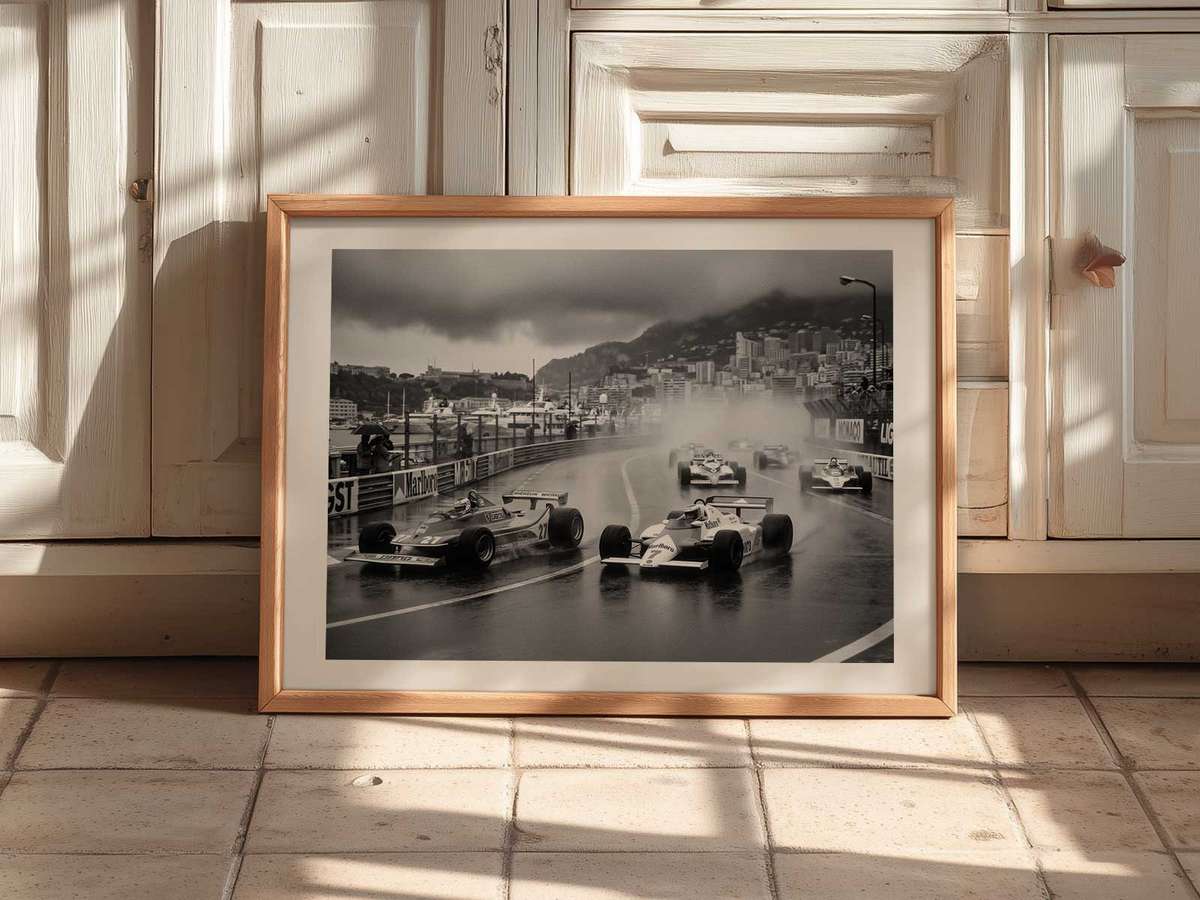
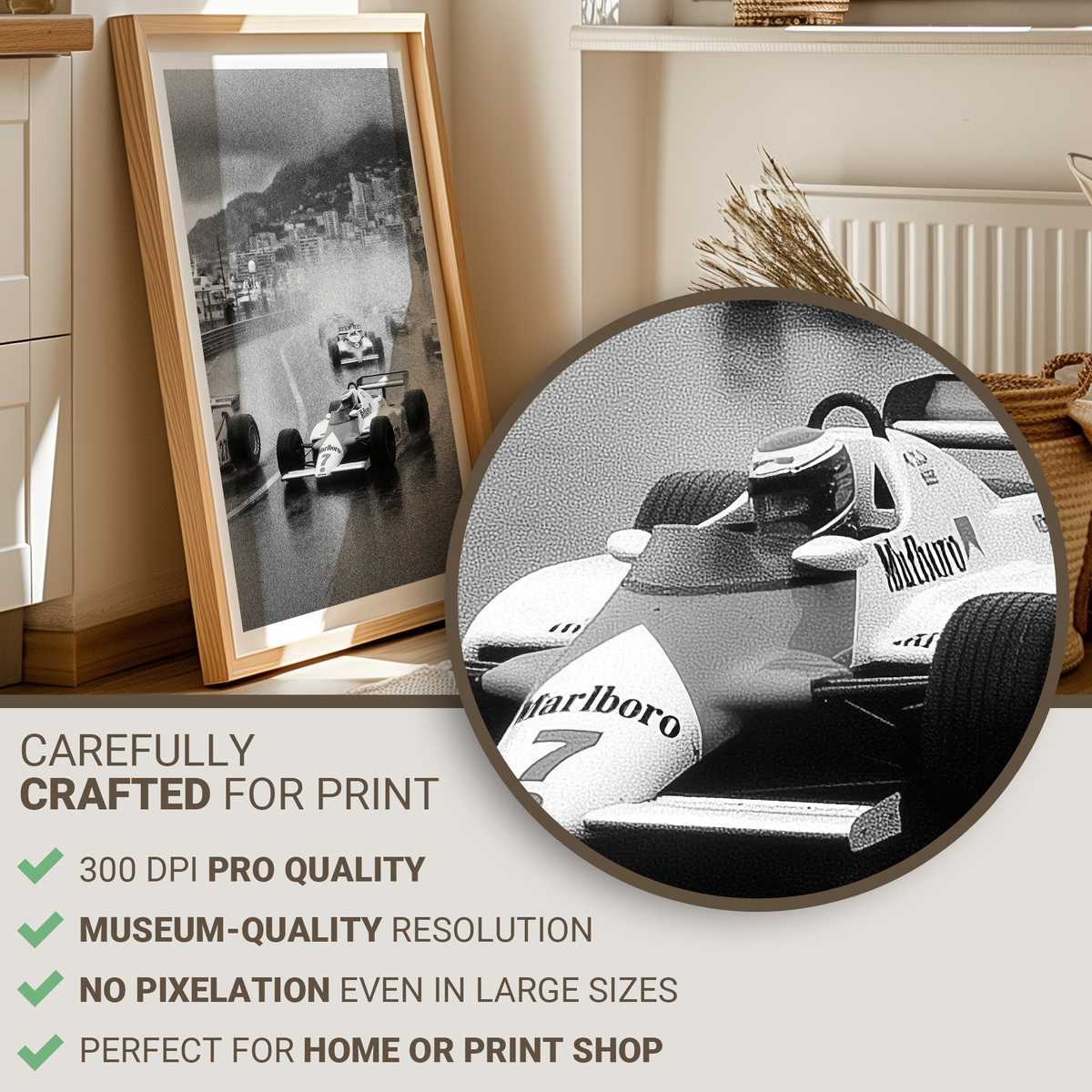
In interior terms, a well-crafted retro F1 poster changes room atmosphere subtly but decisively. Hung above a desk it lends an air of focus and intent; in a lounge it becomes a conversation piece that suggests cultivated taste in motorsport culture. The palette of a rain scene—smoky greys, saturated team tones, reflective highlights—pairs well with wood, metal and leather, materials commonly used in automotive-inspired interiors. The result is decor that feels curated rather than themed: an authentic nod to racing rather than a kitsch souvenir.
Finally, the lasting appeal of this imagery lies in its timelessness. Races are ephemeral, but the visual grammar of a pack chasing through rain—the angles, the spray, the human silhouettes—remains iconic across eras. A retro treatment amplifies that quality by framing the scene as memory and myth rather than as a dated document. For collectors and buyers seeking a piece that functions both as premium wall art and as an emblem of automotive passion, a poster of an elegant, chaotic peloton in the rain is a rare convergence of form, feeling and identity.