F1 blue flag explained: what it means, how it’s shown and why it matters
The blue flag in Formula 1 tells a driver that a faster car is about to lap them. It’s a simple signal with big sporting and safety consequences: if a backmarker doesn’t yield, the leader or faster car can be unfairly slowed or put at risk. This article explains how the blue flag is shown, what the driver must do, and why the rule exists.
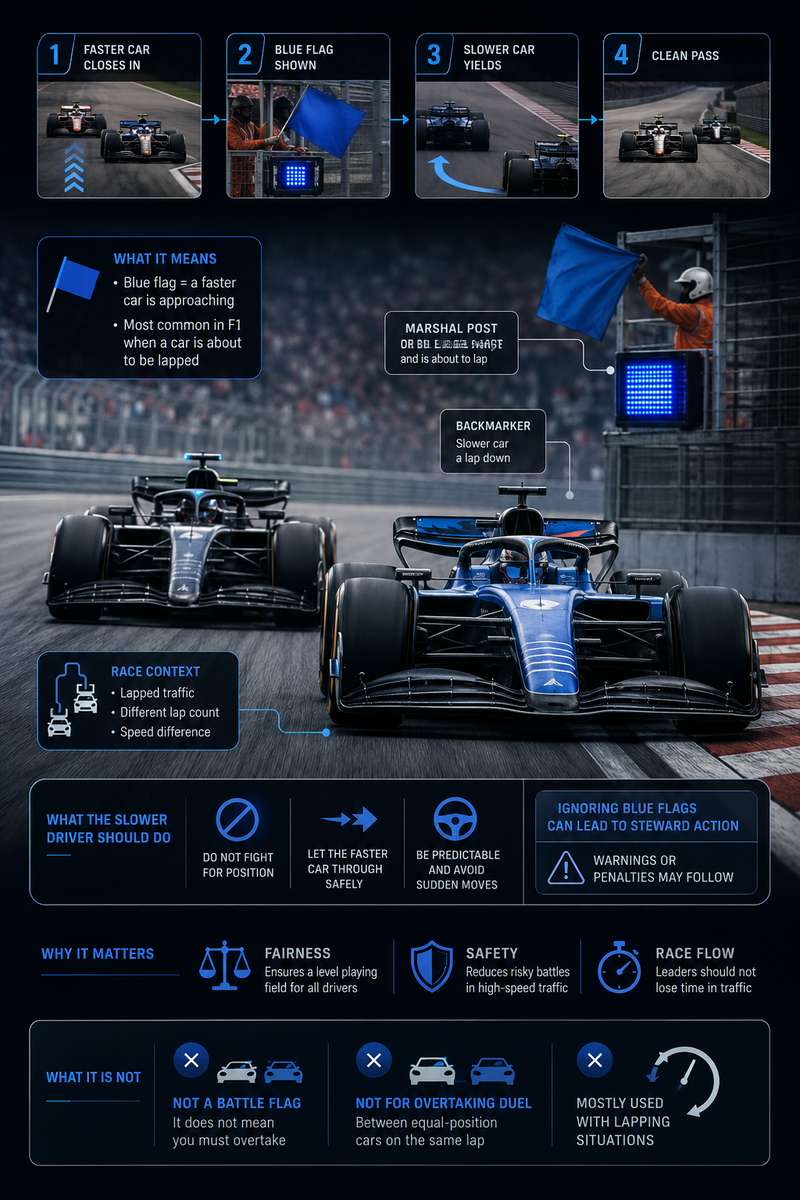
Quick summary: The blue flag is displayed to a backmarker to indicate a faster car will overtake. It is shown by marshals and on trackside or cockpit light panels; the lapped driver must allow the pass and must not intentionally impede.
Quick access: Definition | How it’s shown | Rules & enforcement
CLEAR DEFINITION
In Formula 1 the blue flag is shown to a driver who is about to be lapped — commonly called a backmarker — to indicate that a faster car is approaching and will overtake. For beginners: it’s a polite but mandatory instruction to get out of the way so the faster car can continue without being delayed.
HOW IT'S SHOWN
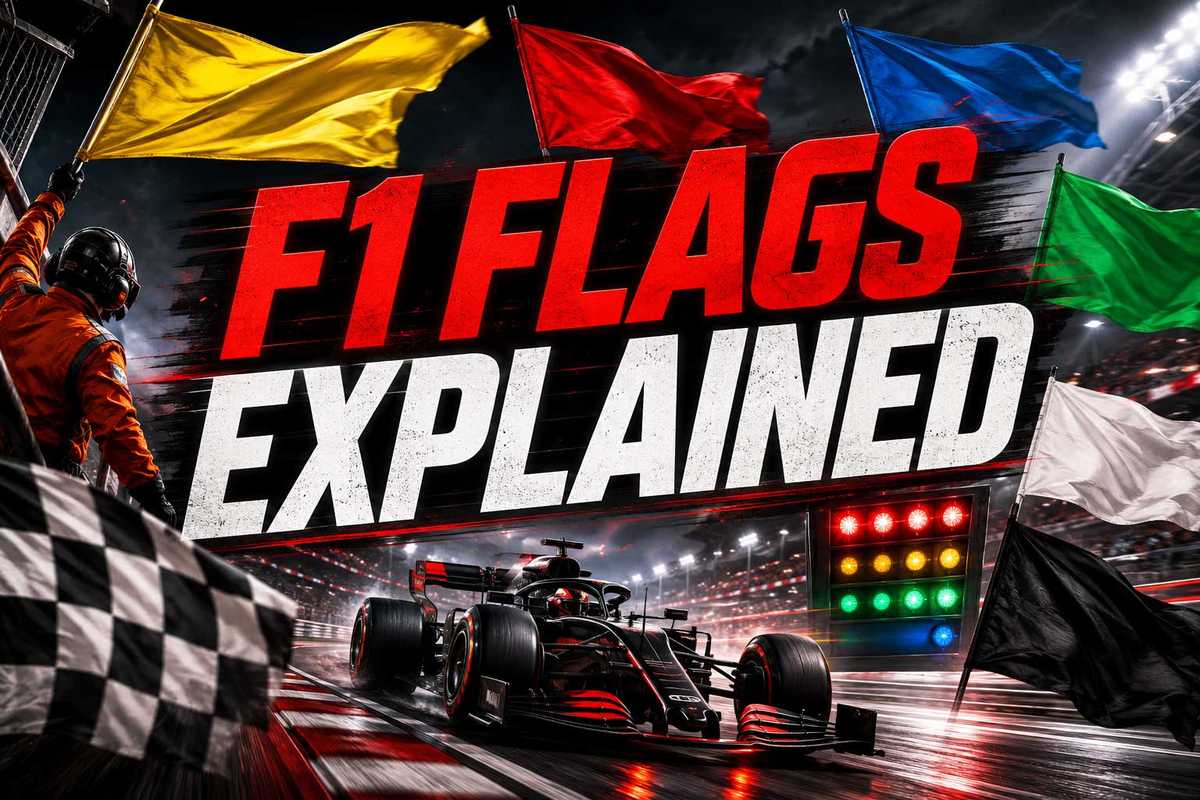
The blue signal is presented in two main ways during a Grand Prix weekend. Marshals physically wave a blue flag at the driver from the signalling posts around the circuit. In modern F1 the same instruction is also displayed on trackside or cockpit light panels, which can flash and may include the car number to identify which driver must yield.
RULES AND FIA PROCEDURES
The sporting documents and FIA signalling guidance set out that a driver shown the blue flag must allow the faster car to pass and must not intentionally impede it. The FIA also advises that marshals should normally show the blue flag if the lapped driver appears not to be using their mirrors, so the instruction reaches the appropriate driver. Failure to obey can lead to penalties; stewards may use timing and GPS data to determine whether a driver ignored blue flags and apply penalties such as time or drive-through penalties.
WHY IT MATTERS IN F1
The blue flag protects both fairness and safety. Fairness: leaders and faster cars should not lose position or time because they encounter traffic on a different lap. Safety: cars on different laps often carry different speeds, tyre temperatures and race intentions; reducing prolonged close encounters between a leader and a backmarker lowers the risk of hazardous interactions.
STRATEGY AND RACECRAFT
Respecting blue flags affects strategy and racecraft indirectly. A lapped car that yields promptly avoids creating a gap that could force the faster car into a risky overtaking manoeuvre or disrupt its tyre warm-up and race rhythm. Teams and drivers must balance being legally defensive with the obligation to let the quicker car by, so race engineers monitor radio and timing to ensure compliance without compromising a competing stint unnecessarily.
SAFETY AND RISK
On-track safety is a core reason for the blue flag. A leader encountering a slower car unexpectedly — particularly when braking zones and corner exits are involved — creates sudden speed differentials. Those differentials can produce incidents when tyre temperatures and aerodynamic conditions differ between laps; the blue flag reduces the chance of these dangerous interactions by requiring lapped cars to make way.
COMMON MISUNDERSTANDINGS
Beginners sometimes think a blue flag is optional or purely advisory. In Formula 1 it is not: it is a formal signal carrying a driver obligation. Another common confusion is assuming the flag always appears only from marshals; modern practice often uses light panels and numbers to ensure the right driver receives the instruction even if they miss a waved flag.
FAN VIEWING GUIDE
On TV look for marshals waving blue flags at the trackside posts, and check the timing graphics or light panels for a flashing blue signal and car numbers. Team radio snippets and onboards may reveal whether the lapped driver acknowledged the instruction — broadcasters often explain when blue flags have been ignored and whether stewards are investigating.
CLOSING INTERPRETATION
The blue flag is a small piece of signalling with outsized impact: it preserves the integrity of the race order and reduces risk when cars on different laps meet on track. Understanding the blue flag makes race broadcasts clearer — when you see it, you know a tactical moment is underway that blends sporting fairness, driver responsibility and race-control oversight.
Author: William L.