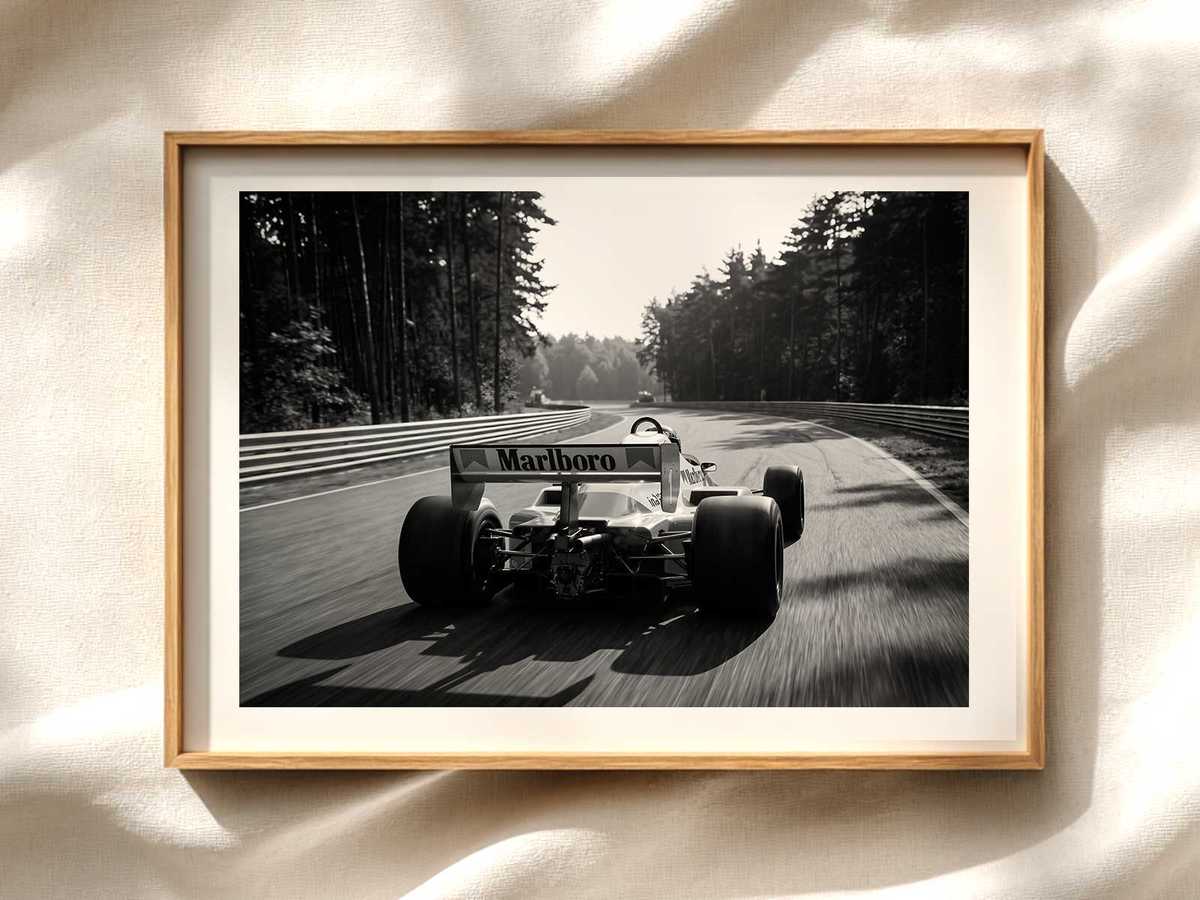
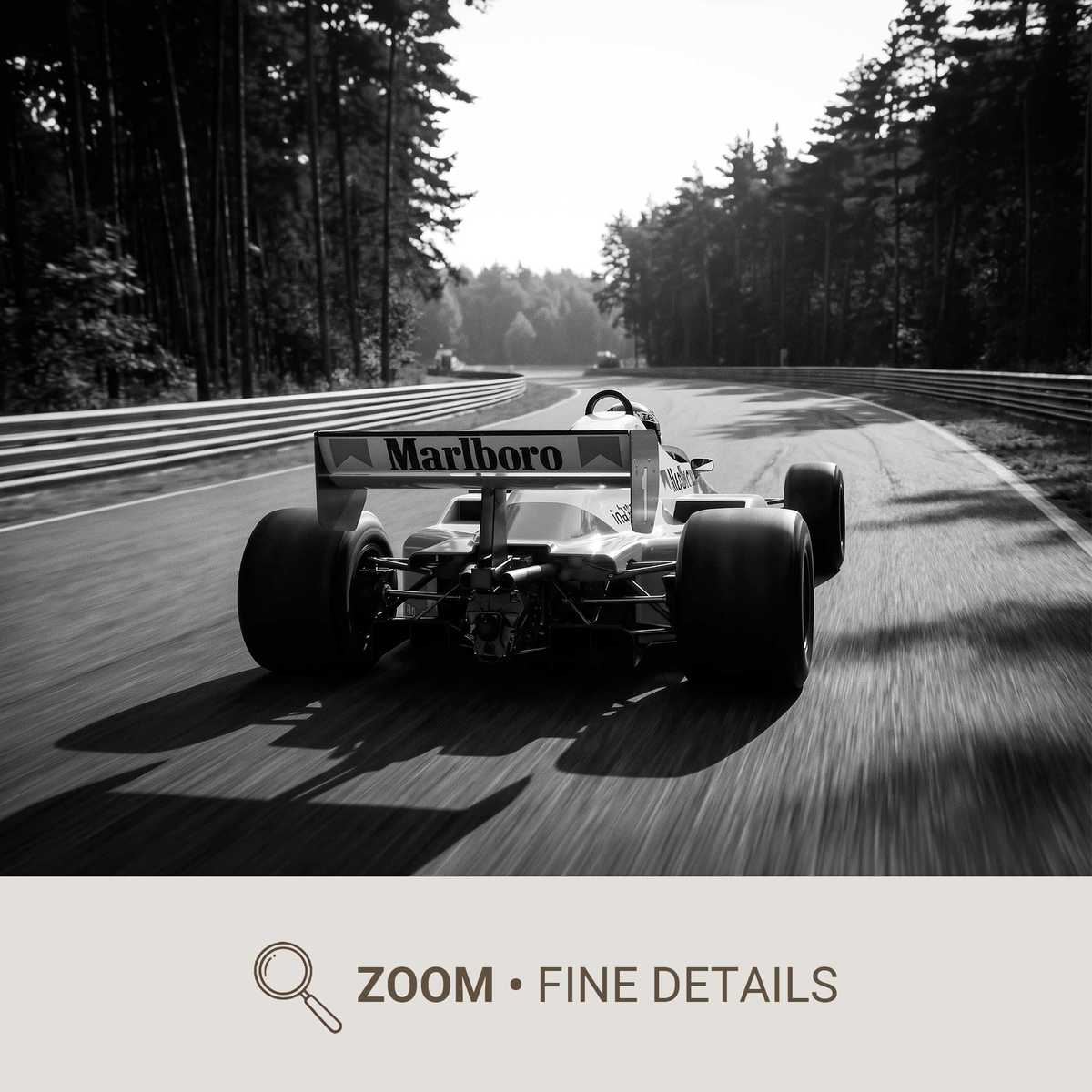
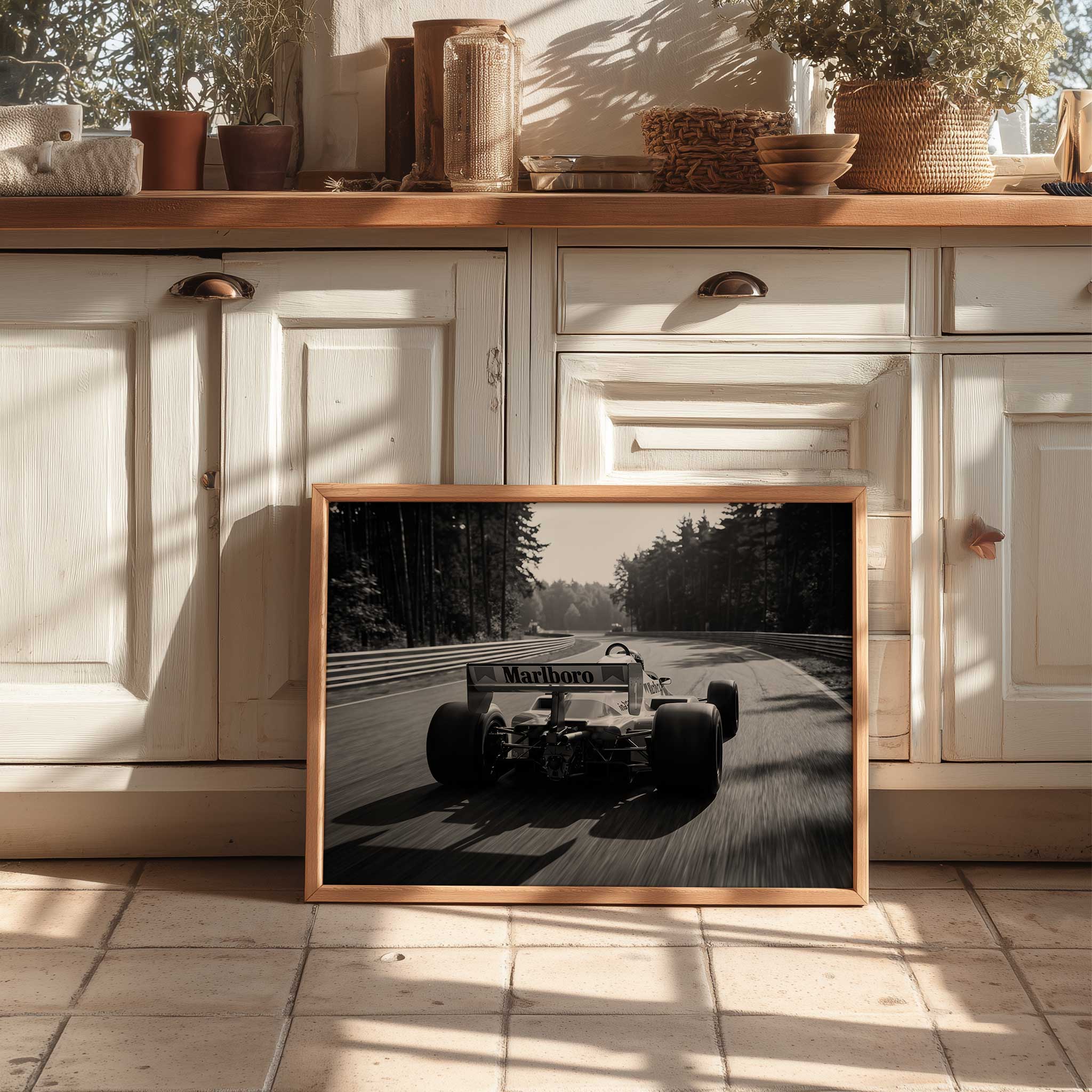
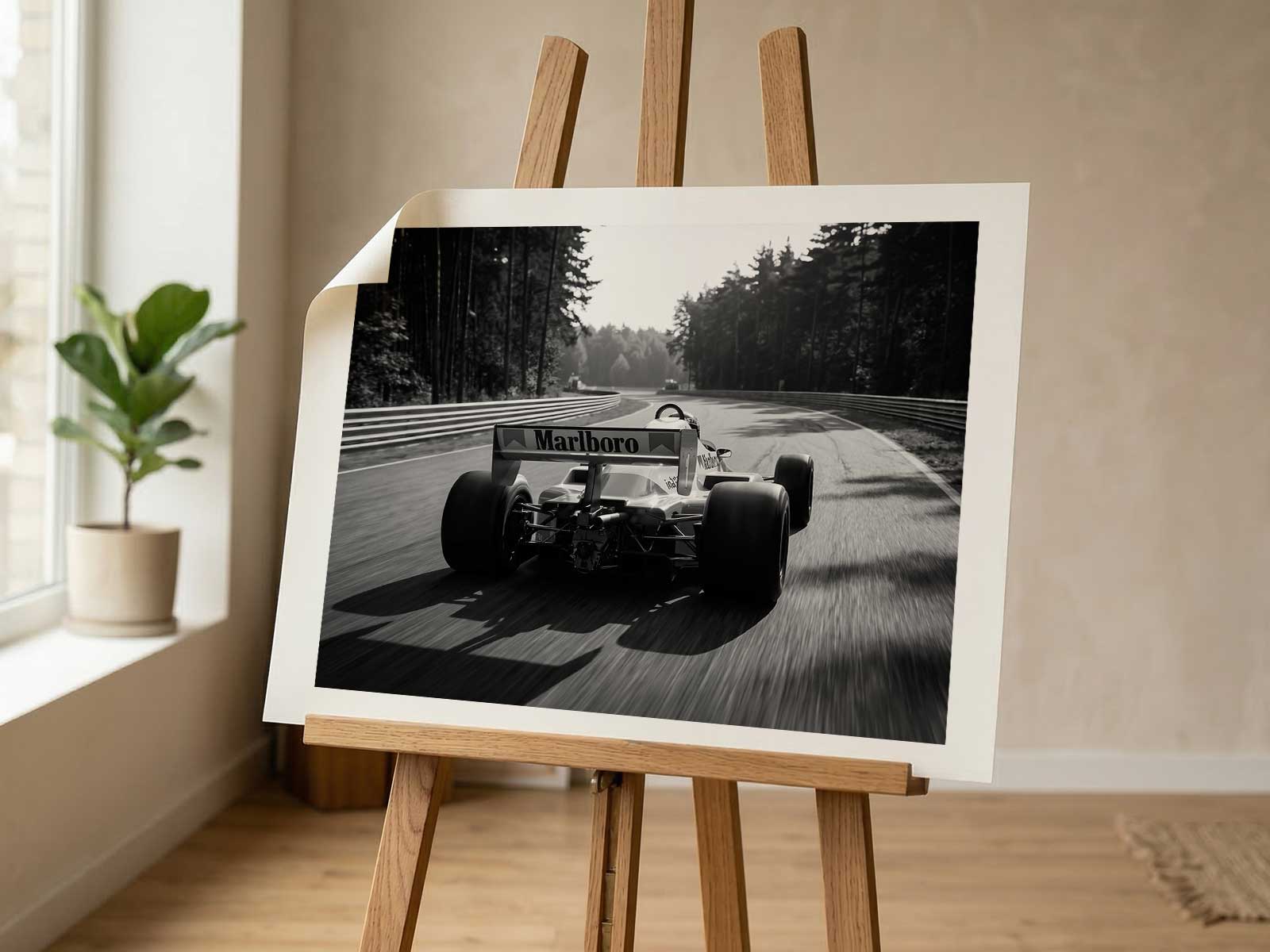
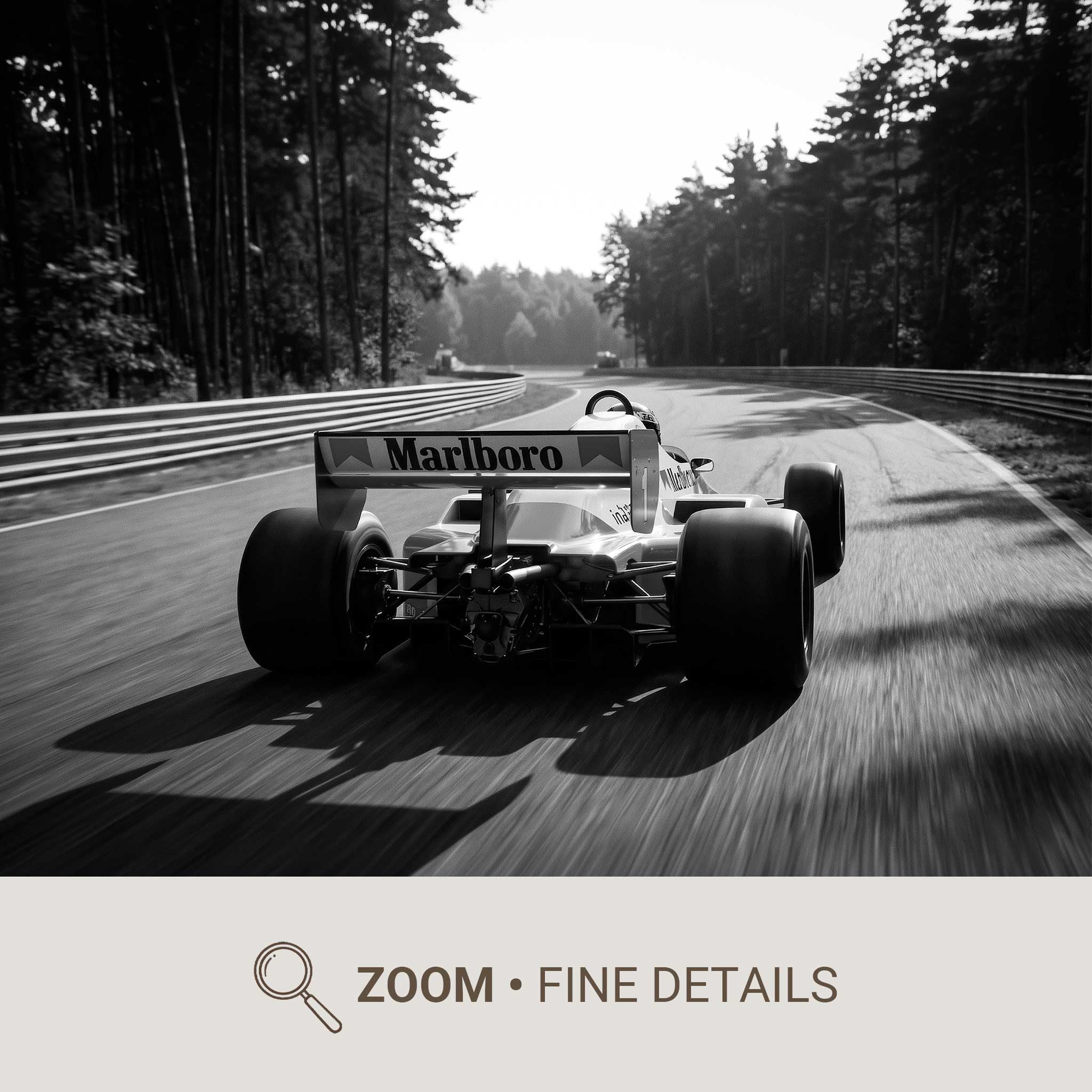
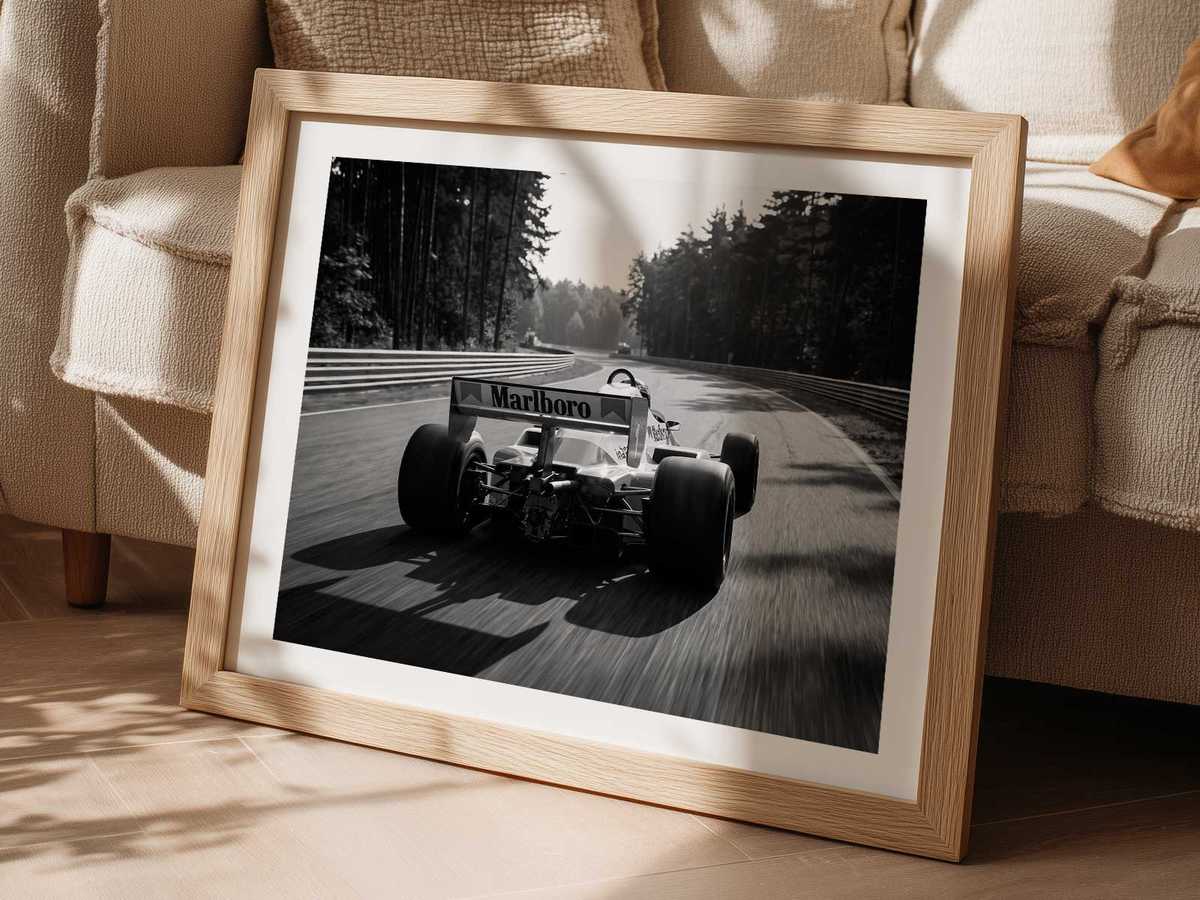
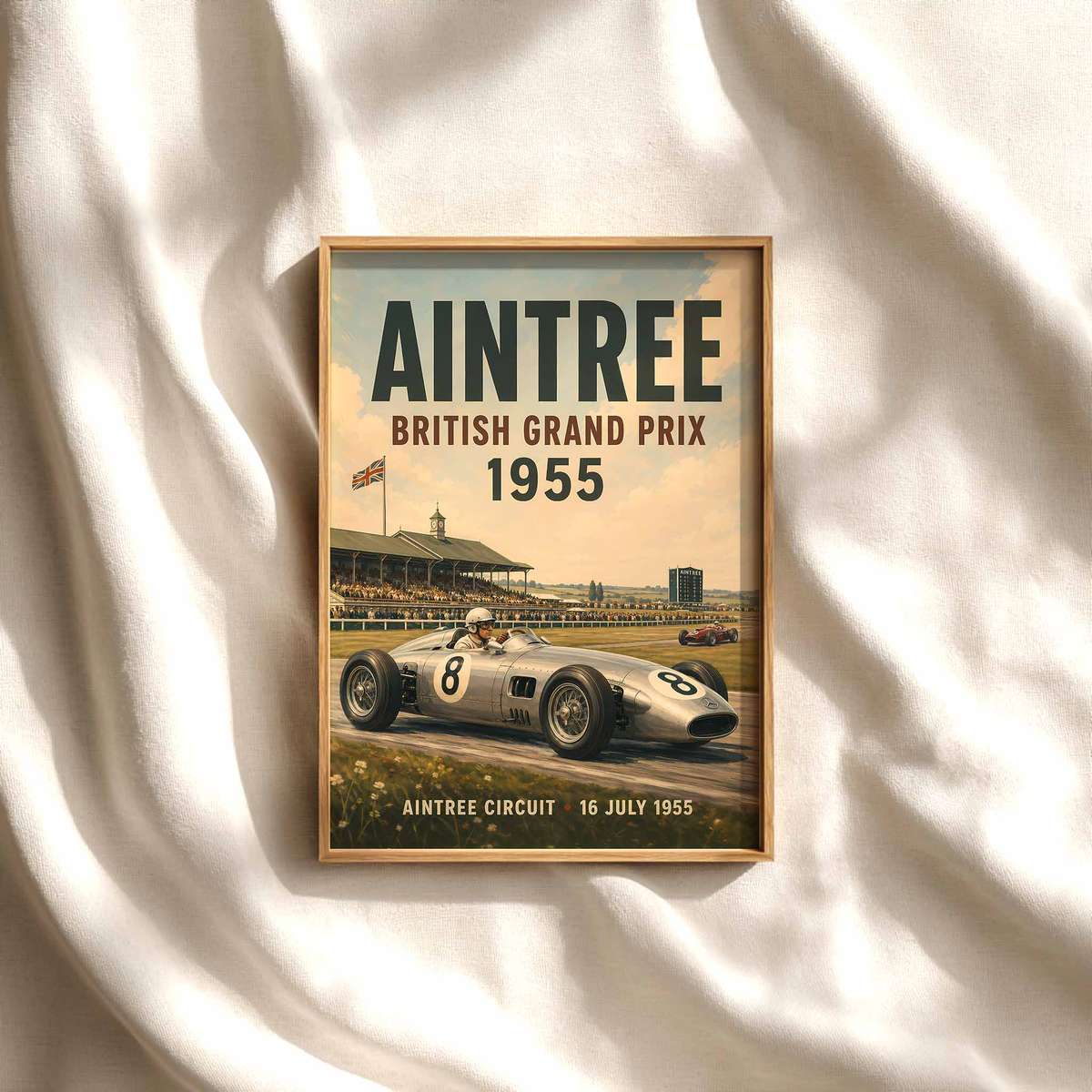
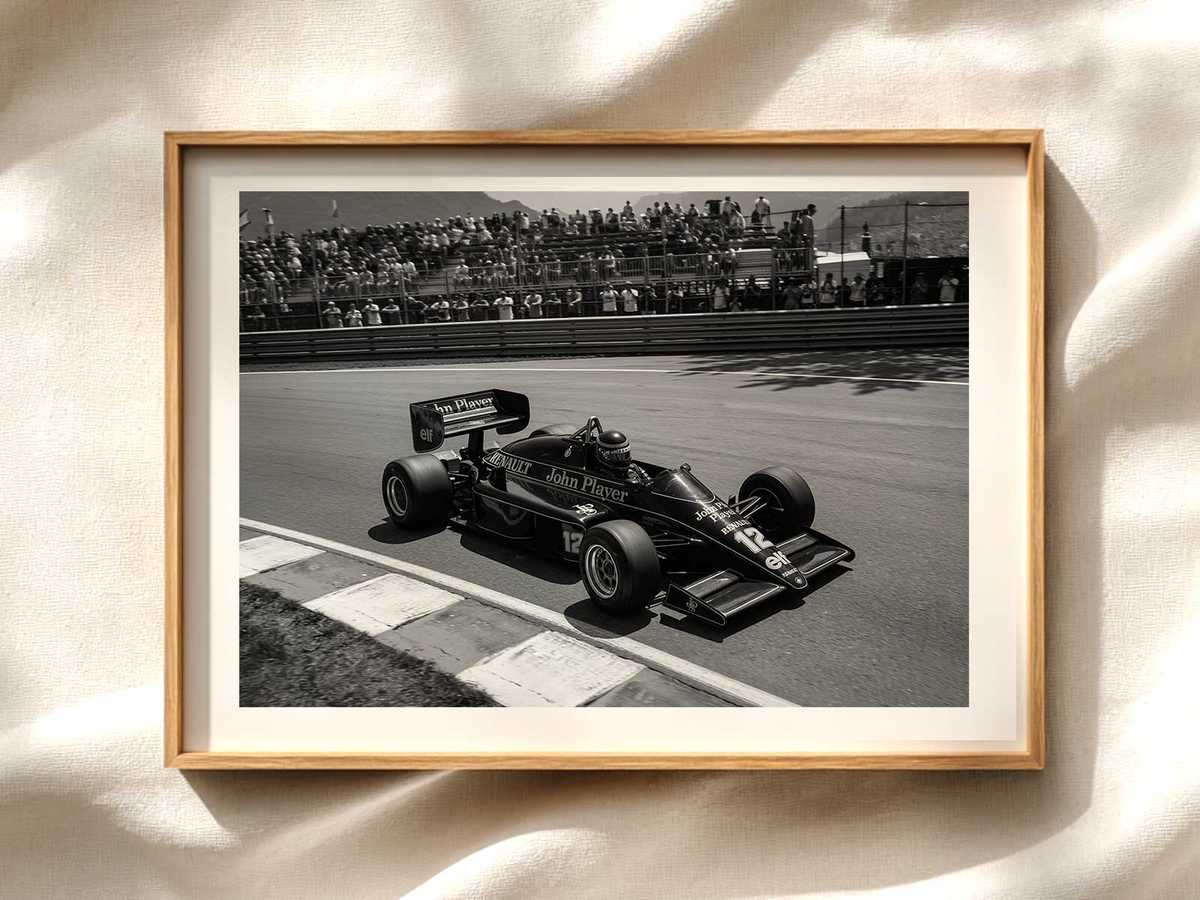
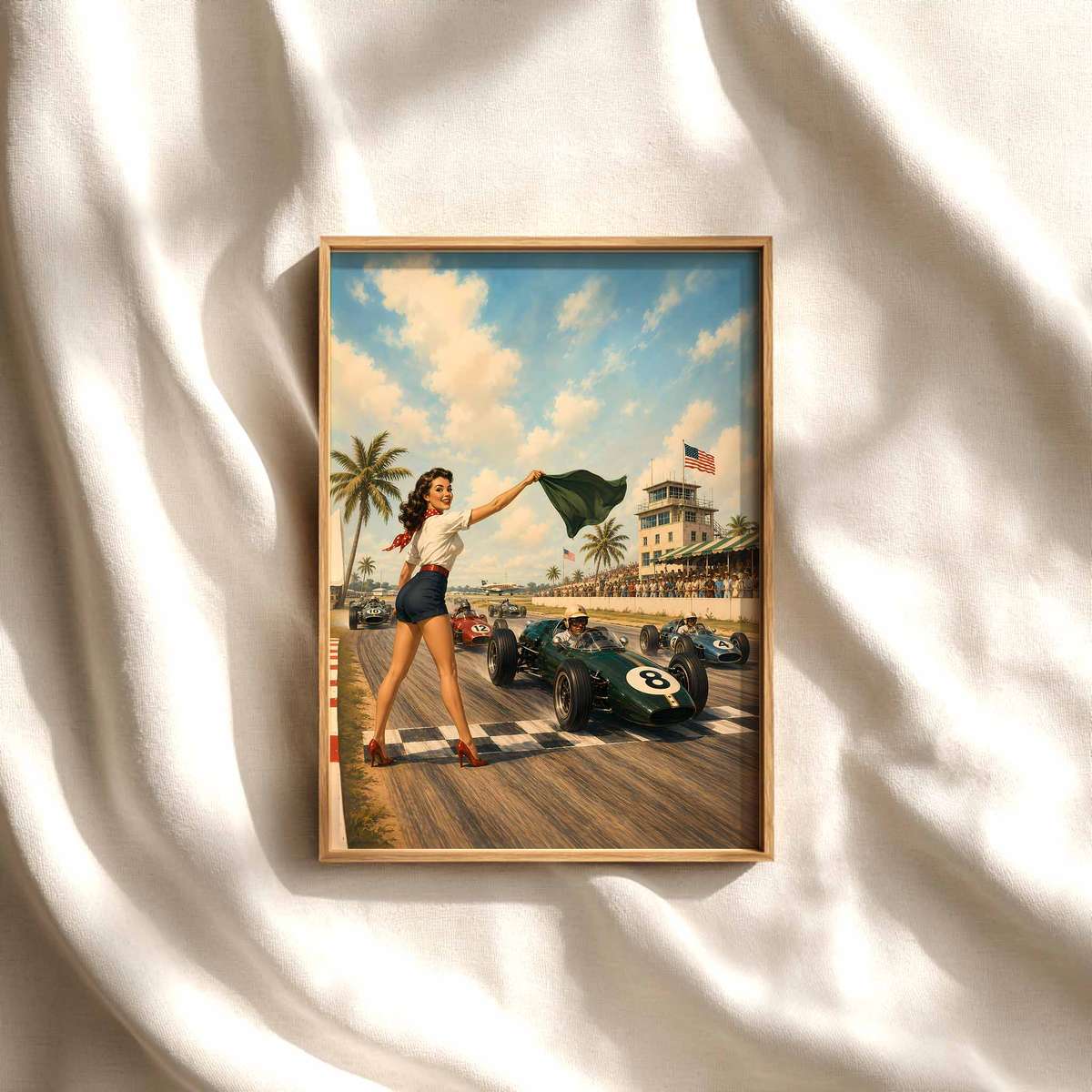
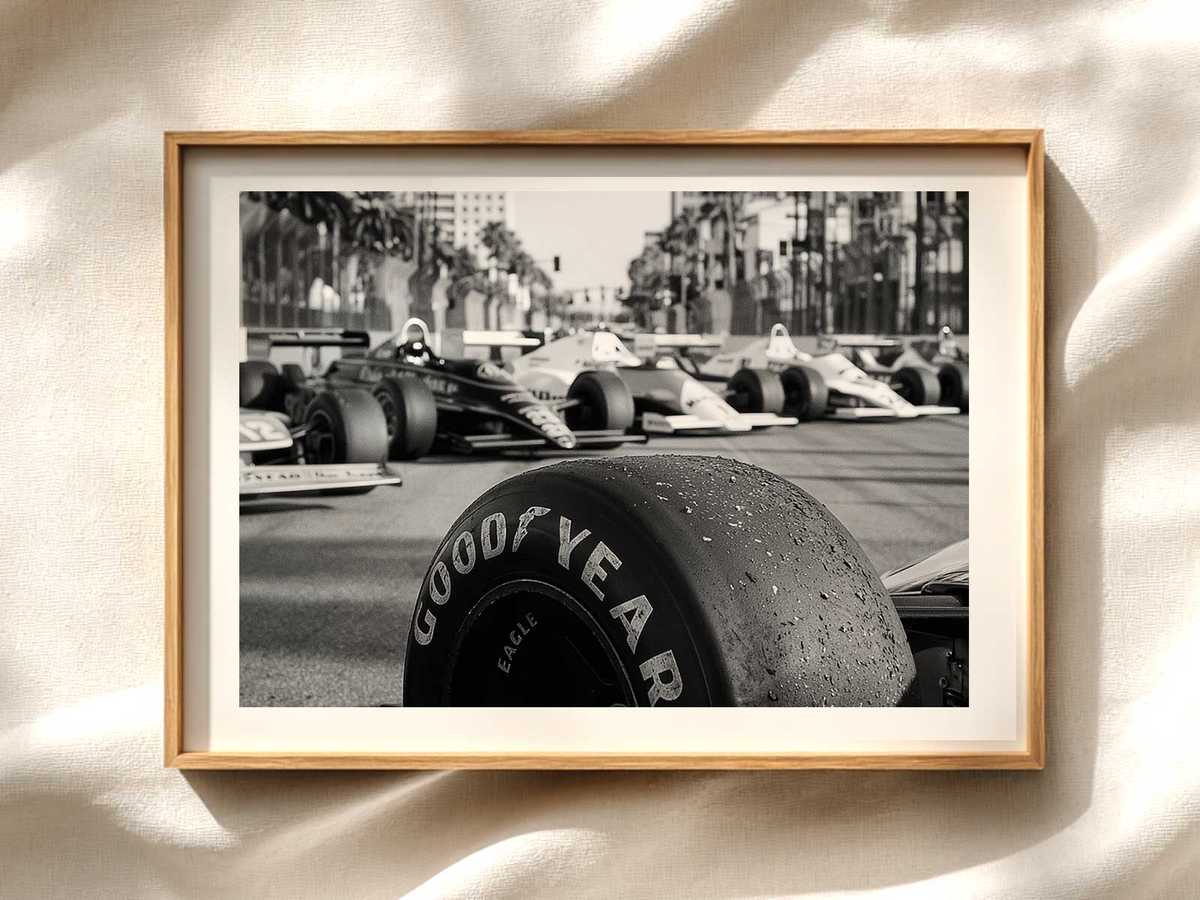
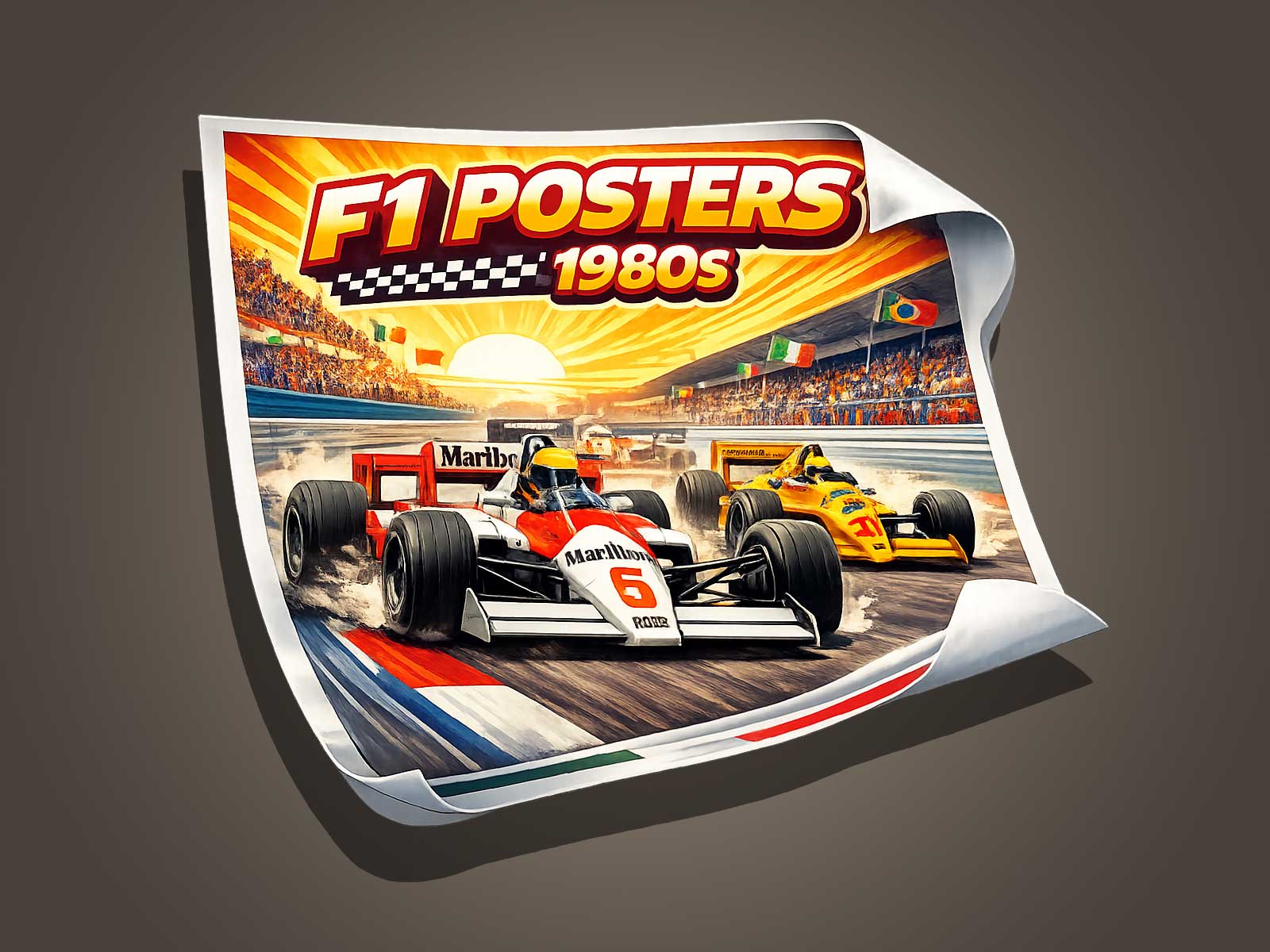
An image of the Montreal F1 race anchored by a McLaren of the 1980s translates effortlessly into premium wall art because it offers an instant visual shorthand: colour, shape and motion that register before you even read a caption. The first thing a viewer notices is the livery—an immediately legible block of colour that turns a racing car into a graphic object. In a room, that vivid palette becomes an organizing accent, drawing the eye and setting tone without shouting. It is exactly the kind of confident visual statement collectors and interior designers prize.
Beyond colour, the poster’s compositional cues carry racing identity. A McLaren from that era is not merely a car; it is an emblem of design language—low nose, exposed suspension lines, the sculpted profile that conveys forward thrust. Captured in mid-corner or on a long Montreal straight, the car’s angles create a rhythm across the print: a directionality that suggests acceleration even on a static wall. This implied motion is crucial for a Formula 1 poster to work as art: it turns speed into a visual tempo that enlivens a study, lounge, or office.
The Montreal backdrop adds another layer of meaning. The circuit’s mix of urban architecture, sweeping turns and memory-stitched kerbs provides a cinematic stage that complements the car. Even when the photograph is cropped tightly on the vehicle, the viewer senses place—cobblestone-like textures, cool track tones, and the subtle presence of grandstands or trees. That contextual hint makes the poster feel specific and evocative rather than generic, so it reads equally well as a motorsport homage and a refined decorative piece.
[IMAGE_INSERT_ARTICLE_01]
Emotional recall is a powerful reason these posters succeed. For many collectors the sight of an unmistakable McLaren livery triggers layered associations: era, driver mythos, and the smell of hot rubber imagined from memory. Those associations are not contingent on a result or statistic; they live in the viewer’s personal archive. A well-made poster invites that reminiscence without dictating it, allowing the image to function as both personal talisman and public artwork.
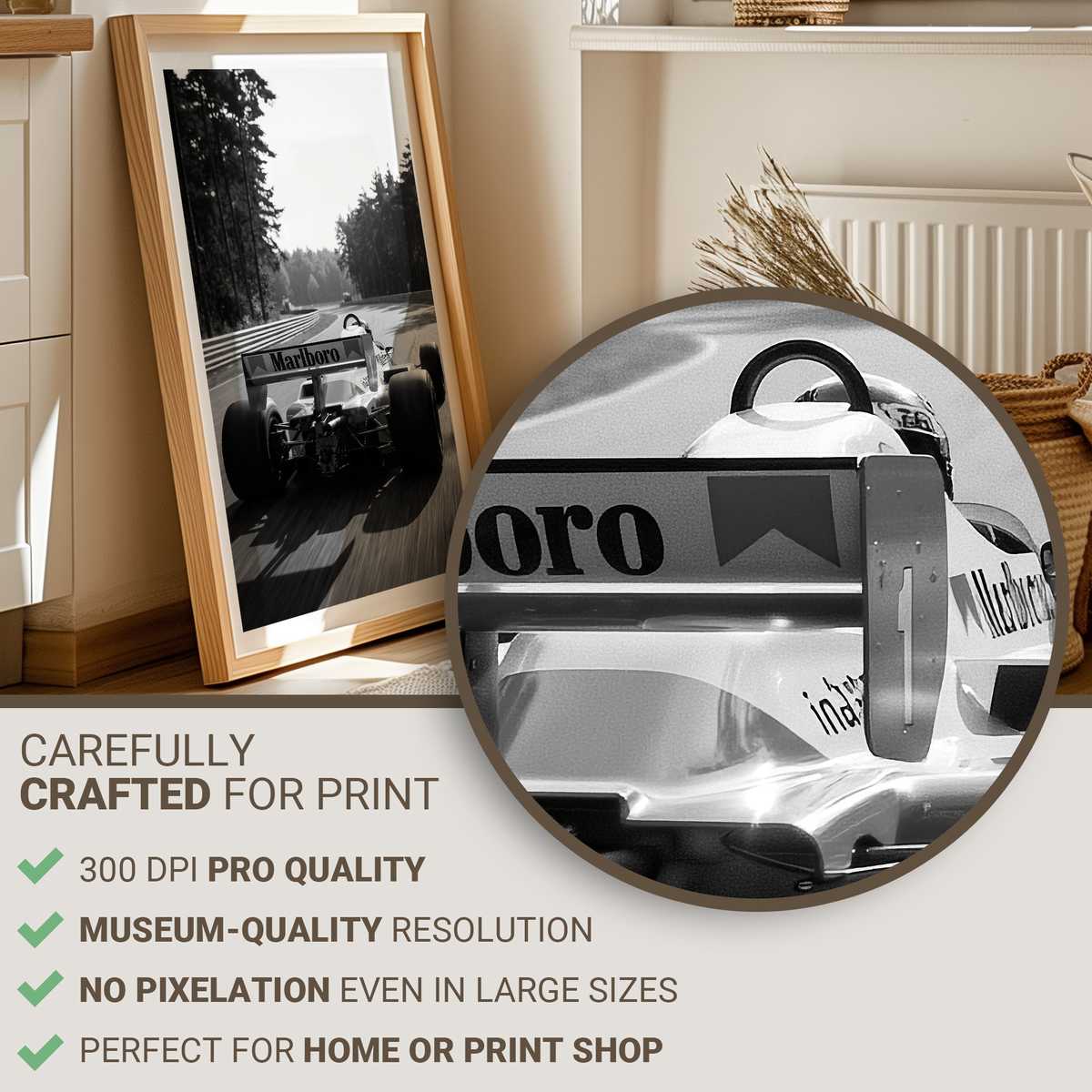
Technically, strong posters respect visual hierarchy—foreground vehicle, midground track, background context—so the eye moves naturally. High-contrast light, wet track reflections or a halo of heat haze can be used sparingly to produce depth without clutter. Printed at scale with attention to paper or canvas texture, these details become tactile cues that elevate the piece from photograph to objet d’art, reinforcing its status as a premium décor item.
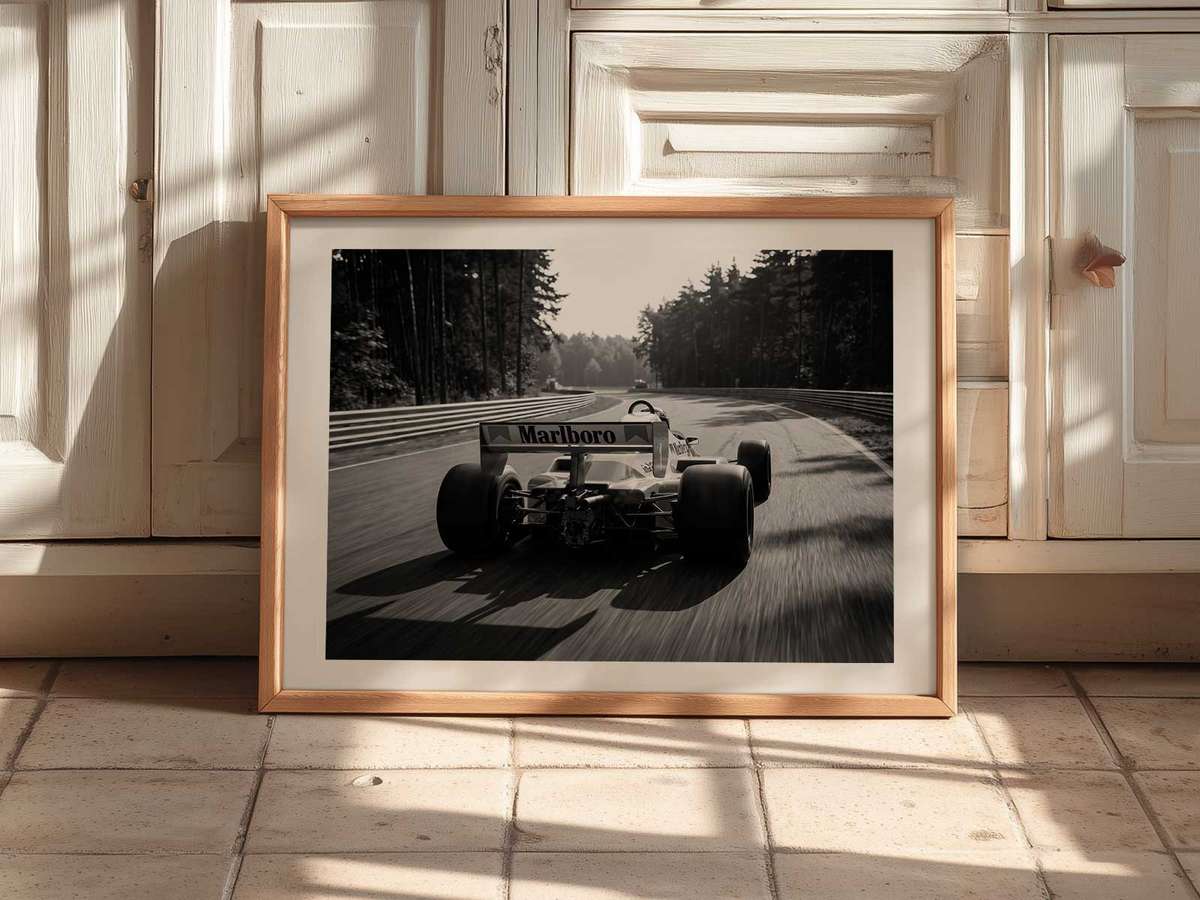
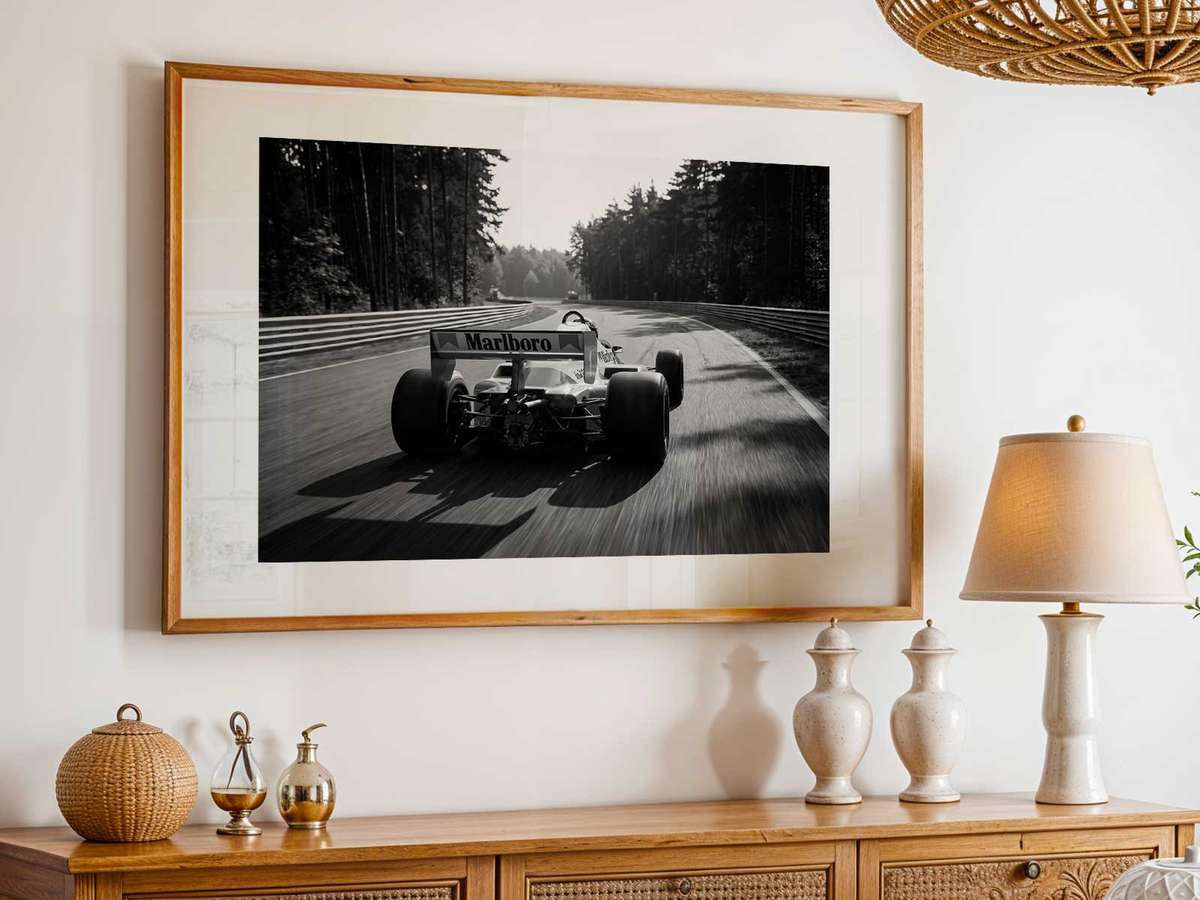
Finally, consider how motorsport imagery changes a room’s atmosphere. A Montreal F1 poster with a classic McLaren introduces energy and narrative: a horizon line that suggests possibility, a diagonal of speed that animates furniture arrangements, and a cultural reference that signals taste to guests. It works in a minimalist apartment as a single focal point, in a study as a source of daily inspiration, or in a mancave as part of a layered collection. Because the image speaks both to graphic design and to racing passion, it occupies an elegant middle ground—artful yet authentic, decorative yet deeply resonant.
Whether you are curating a motorsport wall or choosing one standout piece, a Montreal poster centered on an 80s McLaren reads as a confident design choice. It brings together colour, form and memory in a way that feels timeless: not only a tribute to a race, but a lasting object of visual desire.