Are F1 drivers born talented or trained? What really creates elite speed
Which matters more: raw, natural speed or years of focused training? The short answer is: both. Elite Formula 1 drivers are shaped by extensive, targeted practice and by early exposure and personal attributes that make that practice effective.
That answer is simple—and incomplete. Behind it sits a complex mix of childhood karting, repeated deliberate practice, structured coaching and the opportunities that let talent and work surface against strong competition.
The realistic answer
Deliberate practice is a core driver of elite performance, but early karting exposure, coaching infrastructure and individual physical and psychological traits also play decisive roles—so F1 drivers are neither purely born nor purely made.
What this article explains
- Why deliberate practice matters and what it looks like in motorsport.
- How early karting and structured development create an advantage.
- Which traits and opportunities influence which drivers reach the top.
The direct answer: yes—and here’s how to read it
The scientific literature on expertise shows that extensive, focused practice—often called deliberate practice—is strongly linked to world-class performance. At the same time, motorsport evidence and industry practice point to early karting and formal development systems as critical building blocks. Put together, this means elite drivers typically combine intensive deliberate practice with early exposure and support. One without the other is far less likely to produce a Formula 1-level result.
Define the real target: racing versus reaching Formula 1
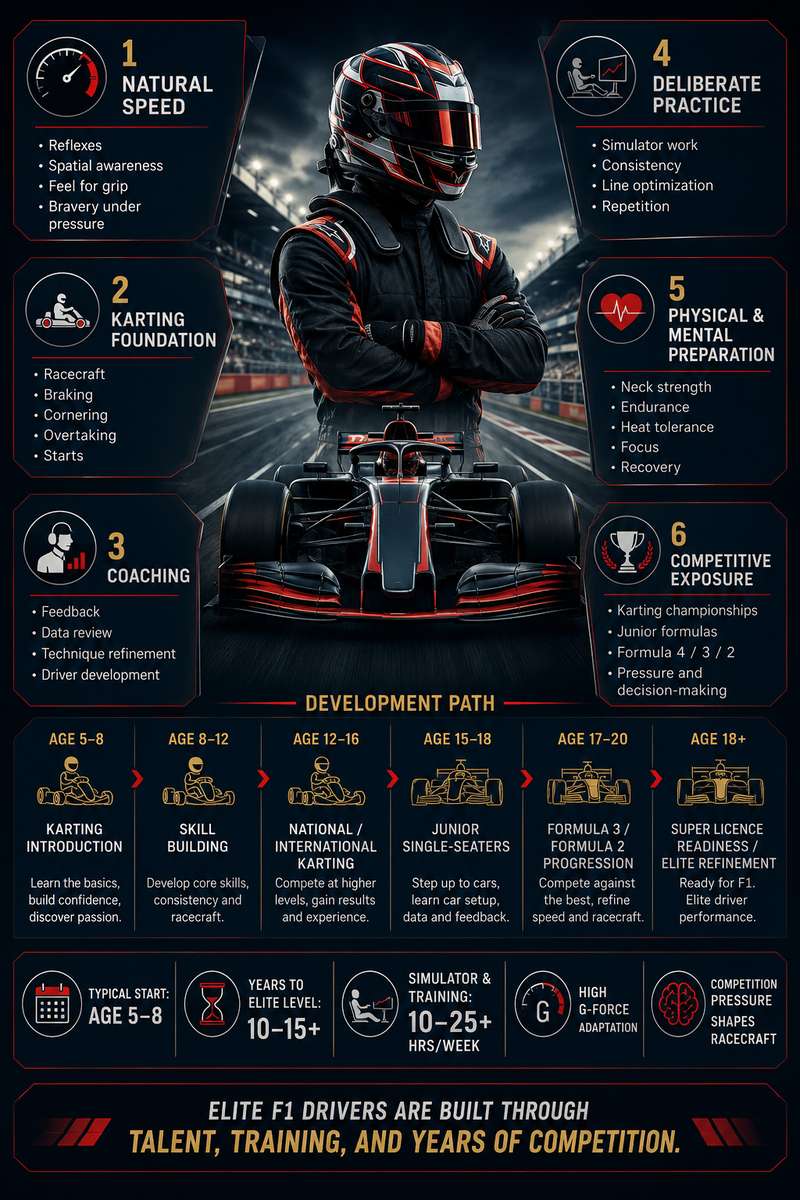
It’s important to separate enjoying competitive driving from the very specific, narrow achievement of becoming an F1 driver. Motorsport governing bodies and industry commentators recognise karting as the primary grassroots route into single-seaters. Many top drivers began karting very young and progressed through junior ranks—early exposure gives more time for deliberate practice to accumulate and for racecraft to mature against peers.
The abilities that deliberate practice can build (and what it cannot fully replace)
Deliberate practice—focused, goal-directed training with feedback—helps drivers develop precise braking, consistent lap-to-lap repeatability, tyre management instincts and the technical feedback language engineers need. Scientific reviews emphasise that accumulated, structured practice strongly correlates with expert performance across domains. However, practice interacts with other factors: early exposure, physical and psychological traits, and the quality of coaching and competition.
Why karting and early exposure matter so much
Karting is widely recognised by governing bodies as the grassroots foundation for single-seater careers. Starting young in karting does more than teach steering and race starts: it provides repeated, high-pressure race situations where deliberate practice can act on sensory processing, spatial judgement and racecraft. Because many current F1 drivers began karting between early childhood and pre-teen years, that early window is a common feature of elite pathways.
Development systems, coaching and structured pathways
Teams, national bodies and driver programmes run structured development systems that shape careers. Formal coaching and junior programmes provide technical instruction, racecraft coaching, simulator work and access to competitive grids—each multiplies the value of practice by giving purposeful feedback and measurable progression. The industry emphasis on supporting grassroots karting reflects how critical those early systems are to identifying and preparing future single-seater talent.
Opportunity, access and the limits of practice alone
Even where deliberate practice is present, opportunities and access matter. The scientific consensus notes that practice is necessary but not always sufficient: differences in access to quality coaching, competitive environments and resources change outcomes. In motorsport, early karting entry, quality opposition and structured programmes are part of that access—so two drivers with similar work ethics can diverge based on exposure and environment.
The talent funnel: why many promising drivers don't reach F1
Because the pathway narrows at each step, talent and training must align with timing and opportunity. The combination of early karting, deliberate practice and structured development raises a driver’s chance of reaching the upper ladder, but there is no single causal formula. The scientific literature also highlights that non-practice factors—physical traits, psychological resilience and the chance to compete against strong rivals—contribute meaningfully to which individuals advance.
What coaching and programmes can change—and what they cannot fully create
Coaching can accelerate learning: it focuses practice, corrects technique and exposes drivers to racecraft situations they may not face in club racing. But certain initial conditions influence how effectively a driver can absorb coaching—early motor-learning opportunities from karting, innate perceptual strengths, or psychological traits. The literature’s balanced conclusion is that practice is powerful, yet individual variation and context still shape elite outcomes.
Practical next steps for an aspiring driver (realistic and evidence-aligned)
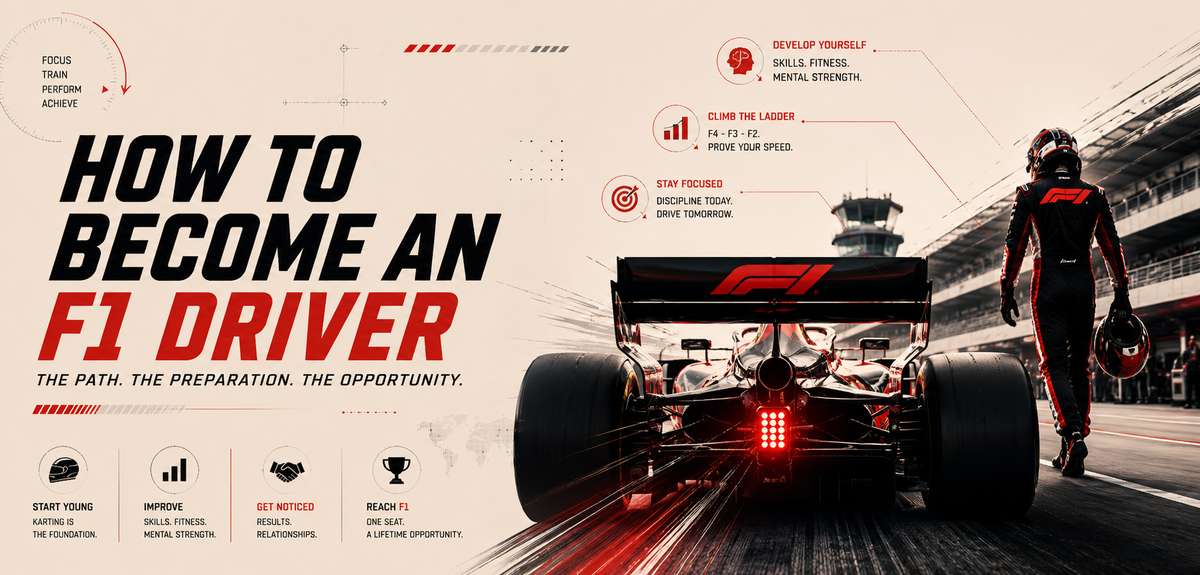
If you’re serious about testing this for yourself, the realistic progression is to seek early, competitive karting exposure, find coached, structured seat time and pursue environments that emphasise measured, purposeful practice with feedback. The industry’s focus on supporting grassroots karting reflects the value of starting in settings where you can accumulate targeted practice against strong opposition.
Final verdict: neither born nor made—both, shaped by opportunity
The honest, evidence-grounded verdict is that F1 drivers are not simply born with an immutable gift, nor are they created by practice alone. Deliberate practice is an essential engine of expertise, but it typically needs the early window of karting, structured coaching and opportunity to act on potential. In other words: top-level speed is an emergent property of practice, exposure and individual traits working together—so the route to elite performance is both developmental and conditional.
Author: Alex R.