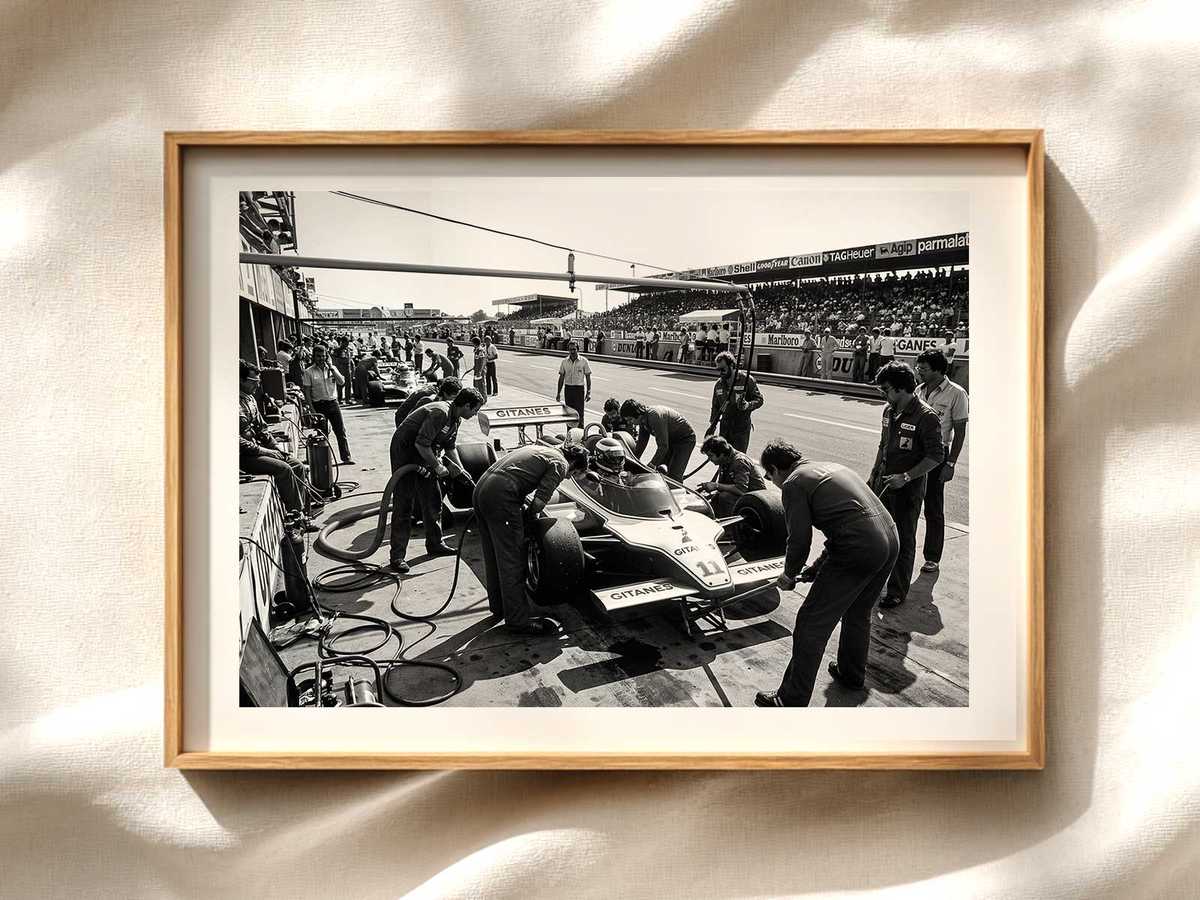
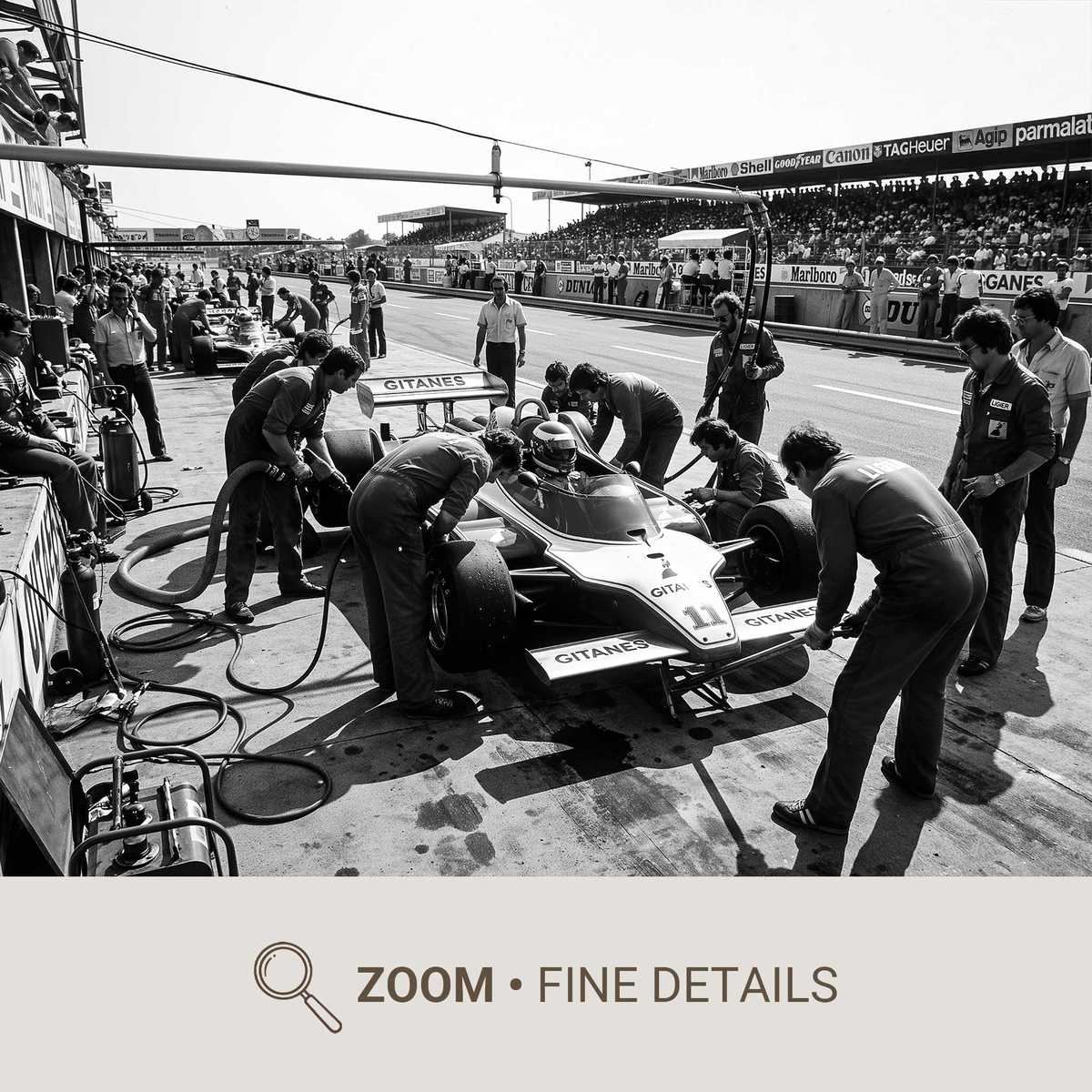
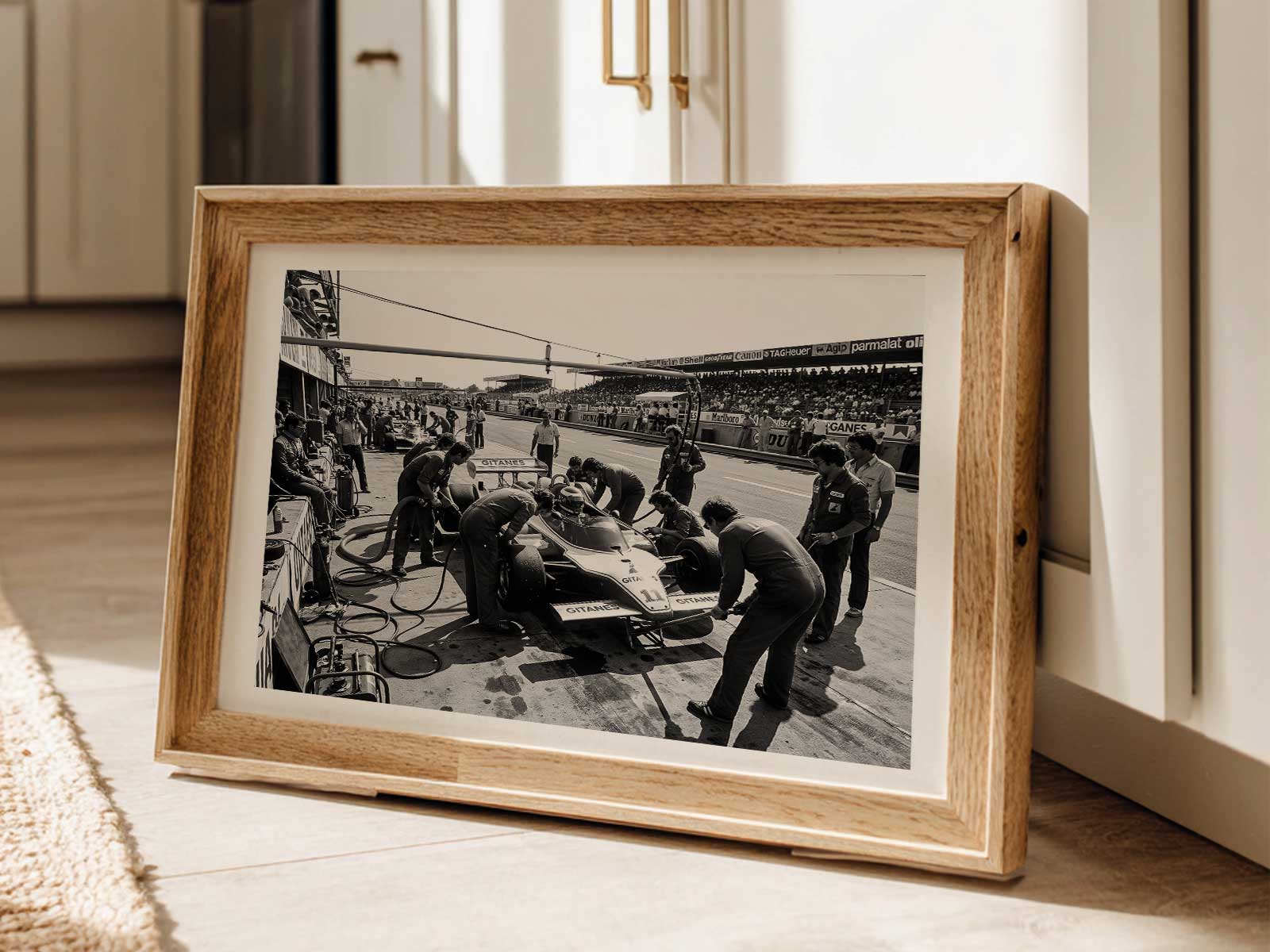
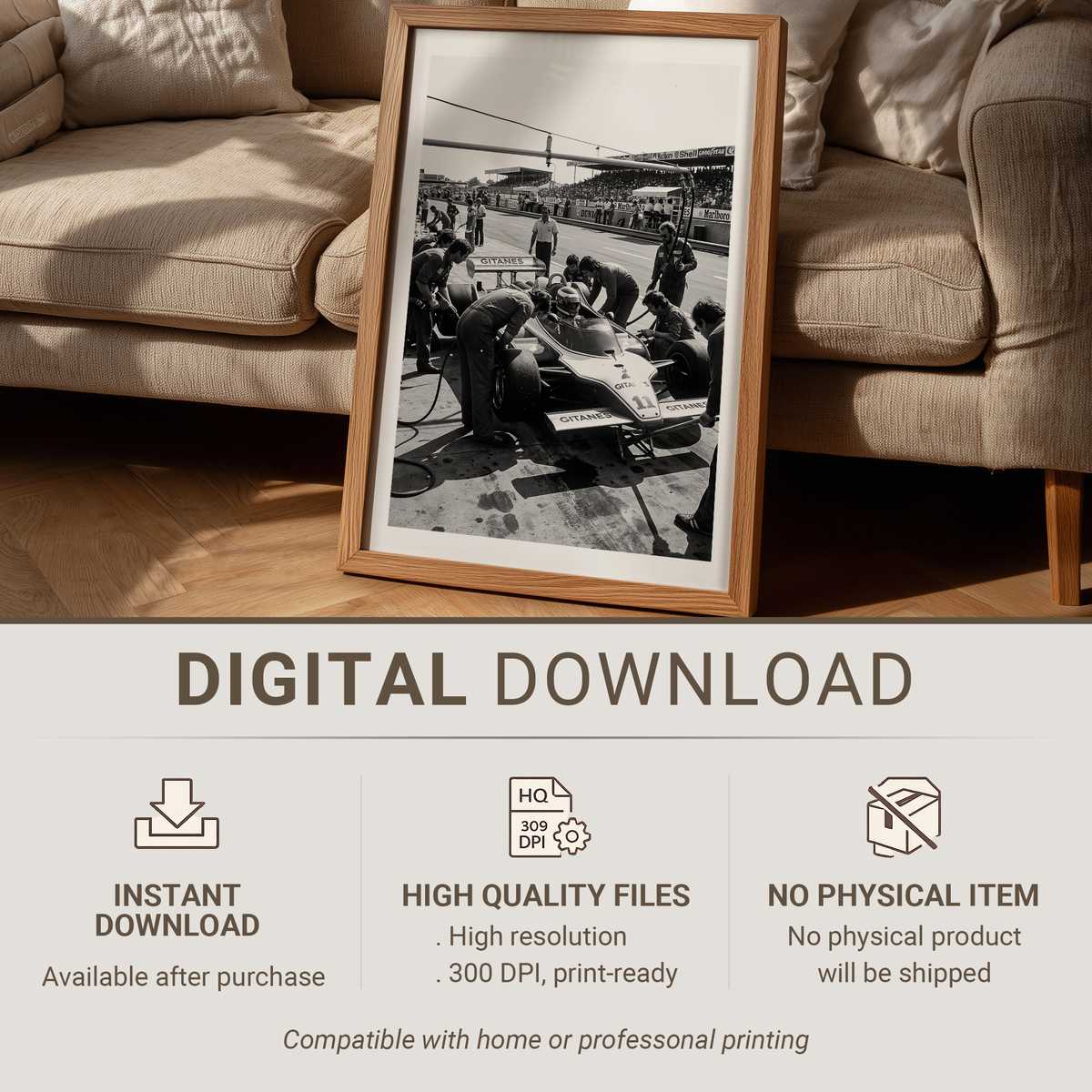
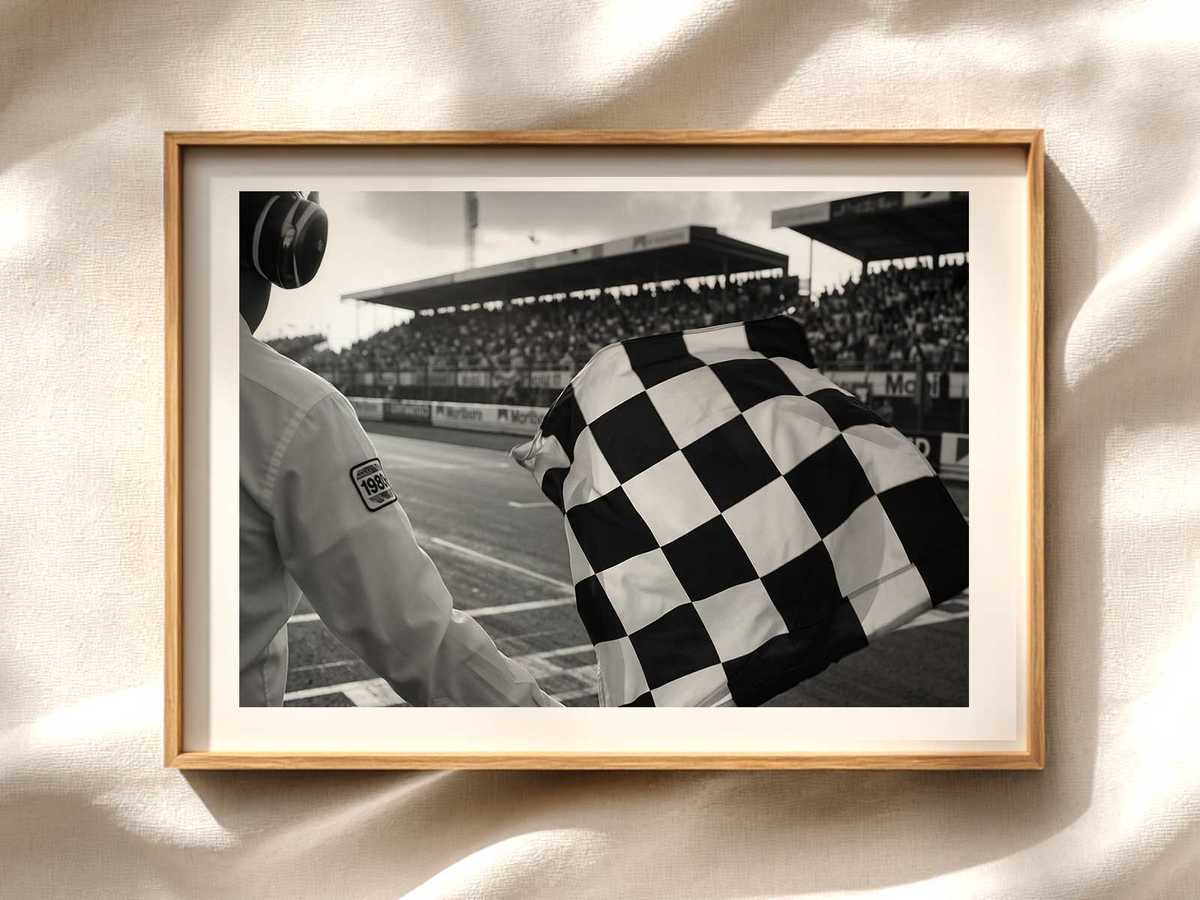
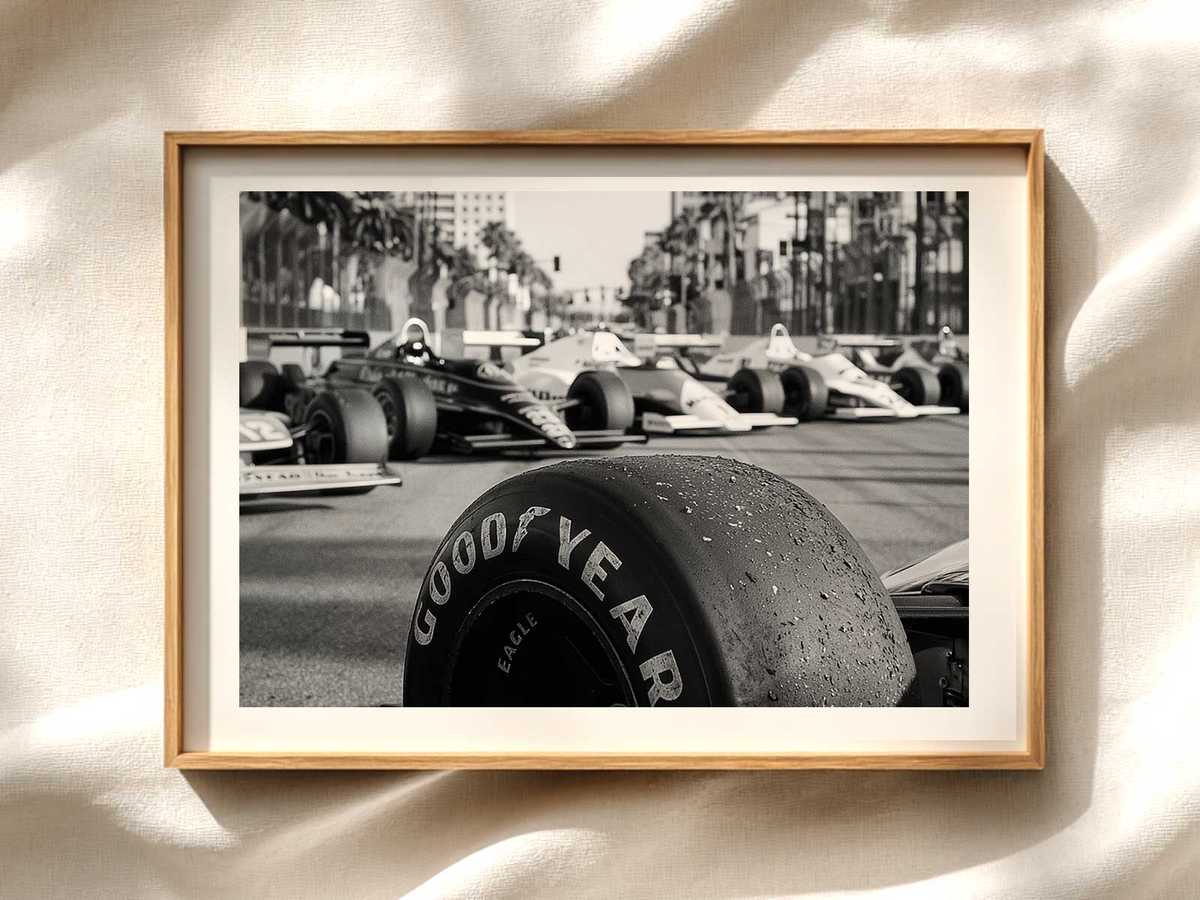
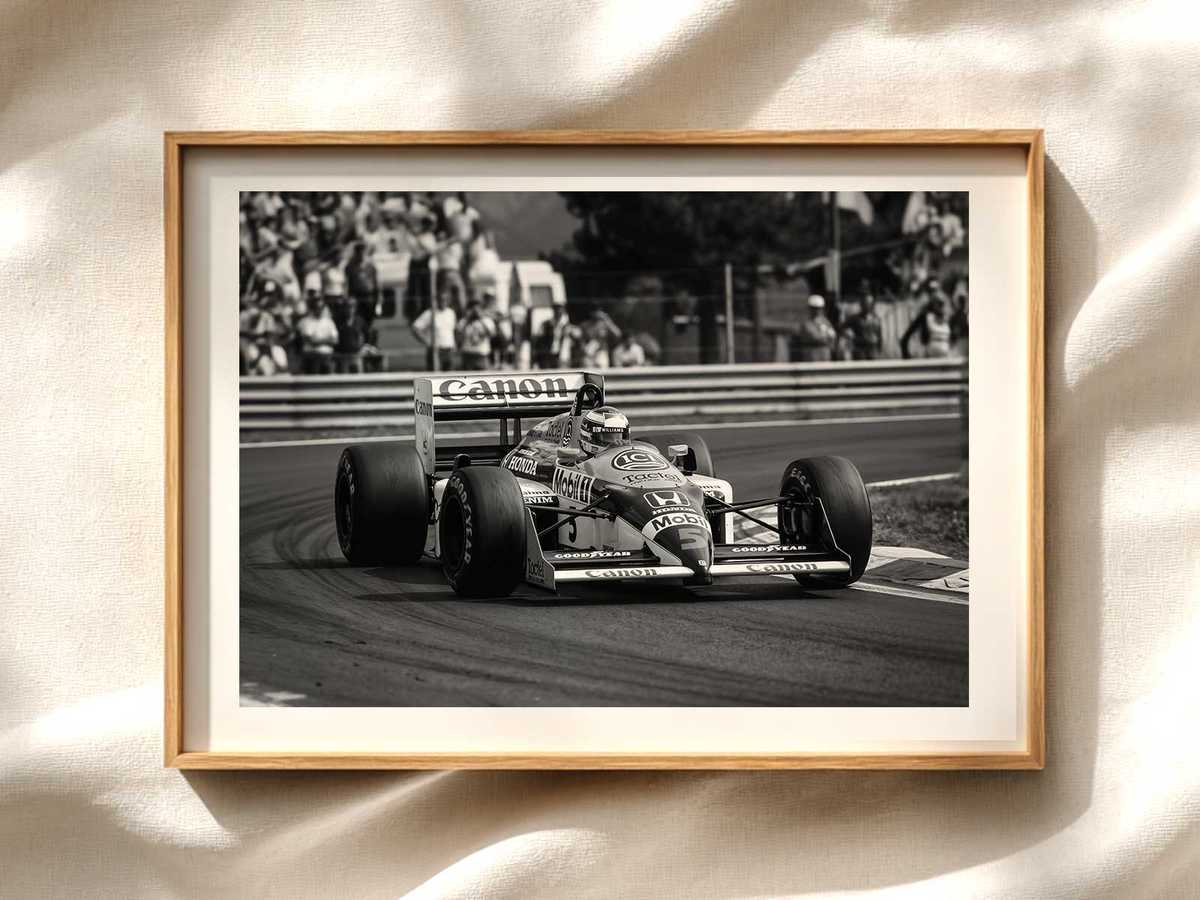
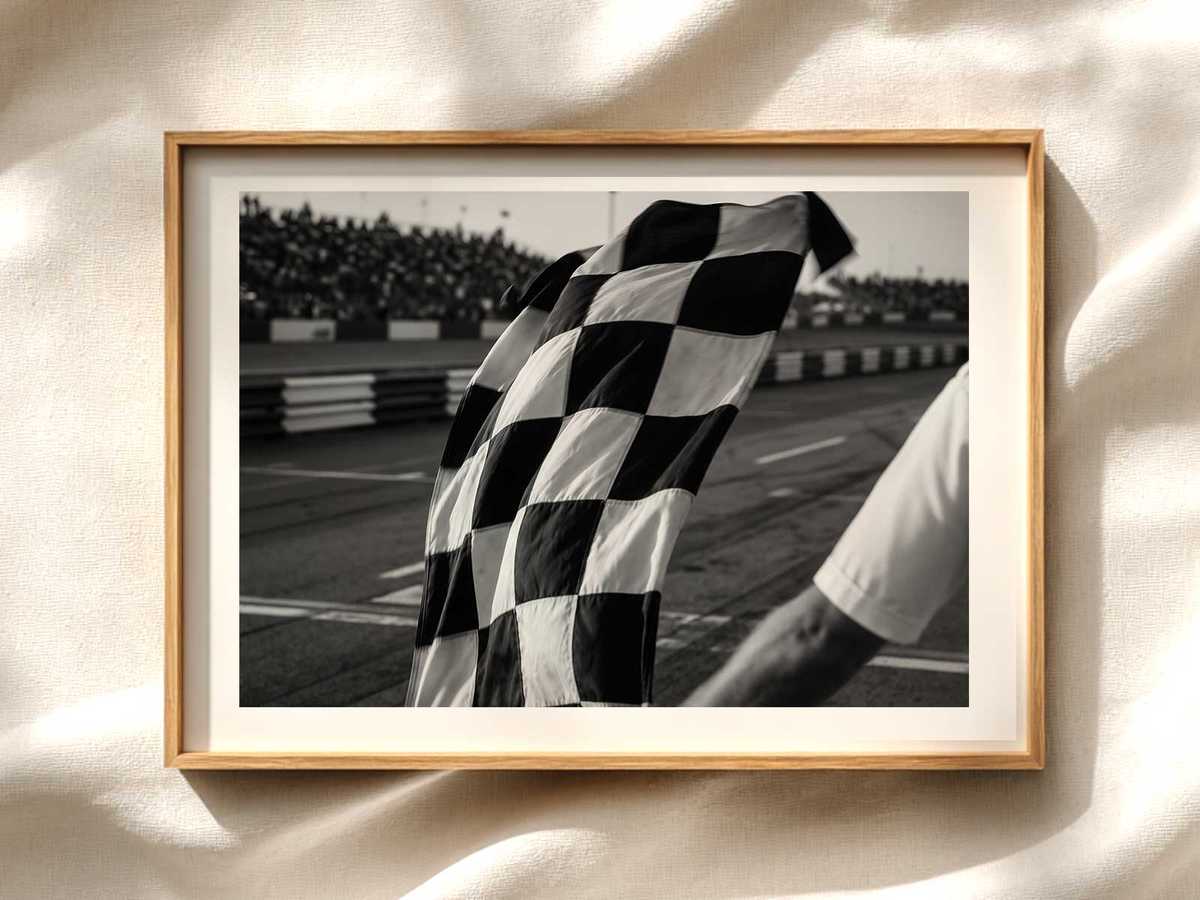
Great circuit posters do more than show a car or a lap time; they capture the sense of place that makes a Grand Prix live in memory. This artwork is built around a single, cinematic idea: the choreographed tension of a pit stop. Freeze that moment and you have everything a collector needs—speed implied by stillness, human precision, and the textures of a venue that feel instantly familiar even without a headline result.
When you look at a pit-stop-centred poster, the eye meets three things first: the geometry of the pit lane, the bodies and tools arranged like dancers, and the light falling across asphalt and coloured run-off. Those elements tell a story about the circuit even if the track name is absent. A skyline hint, a distant gantry, the wash of grandstand colour or the way shadows stretch across painted curbs all work together to suggest inland heat, seaside breeze, stadium intimacy or a night-race glow.
Translating a Grand Prix’s atmosphere for wall art asks the designer to choose what to keep and what to simplify. A poster leans into recognisable cues—the texture of the tarmac, the contrast between fluorescent pit helmets and muted concrete, the smear of tyre marks—to let fans identify the place by mood rather than by map. This is why a scene of a perfectly timed tyre change can read as “Monaco glamour” or “high-speed pit choreography” without naming the circuit: the composition speaks in visual shorthand that resonates beyond the race weekend.
[IMAGE_INSERT_ARTICLE_01]
Collectors respond to that shorthand because it connects to memory. A framed print that emphasises the ritual of the pit stop triggers recollections of suspense: the countdown on the radio, the crowd’s hush, the sudden burst of sound as the car leaves. The artwork therefore functions as a memory object—not a statistic, but a mood. It makes the venue present in a room, lending a corner the pace and focus of a race garage or the quiet spotlight of an evening pit lane.
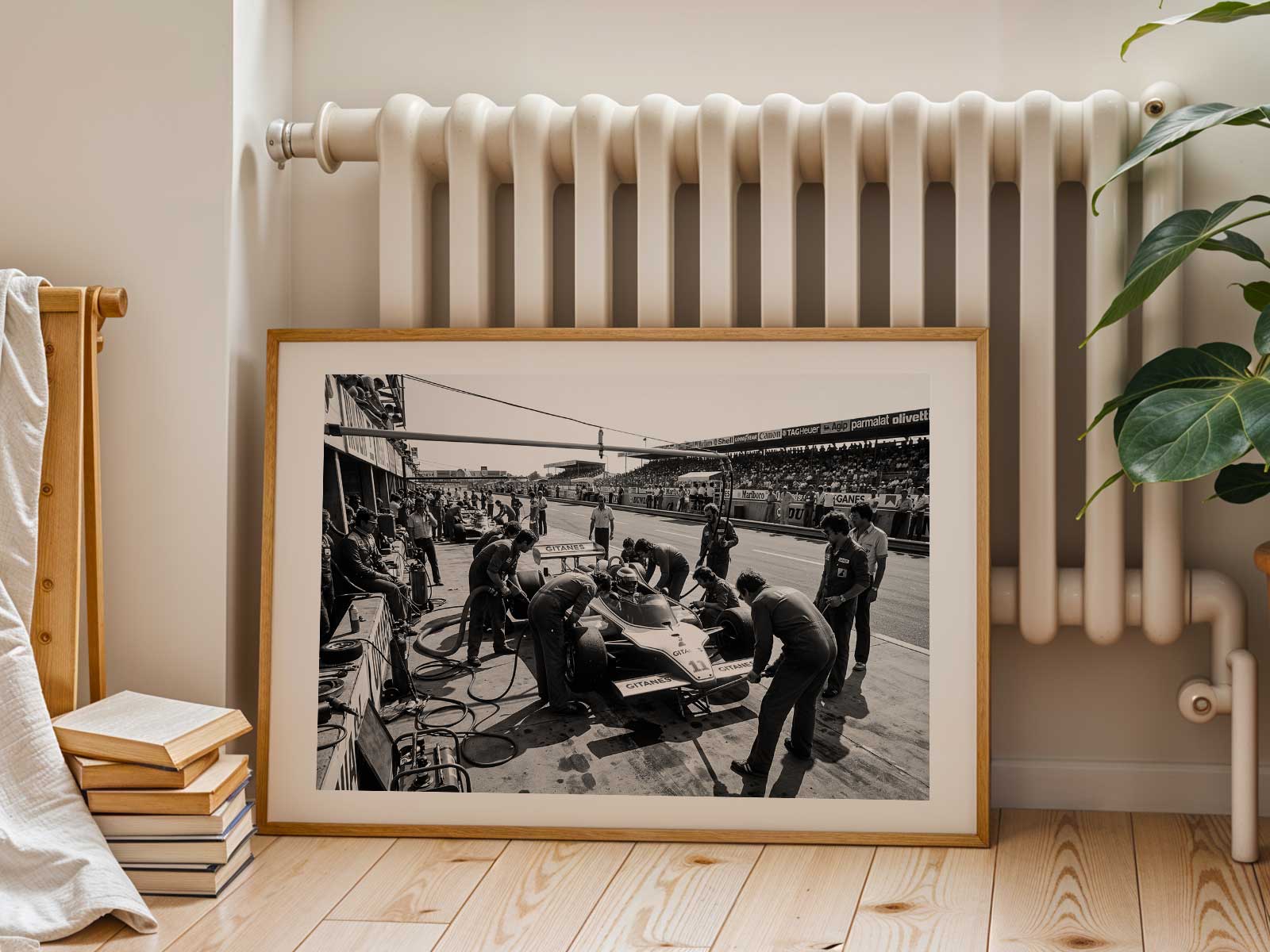
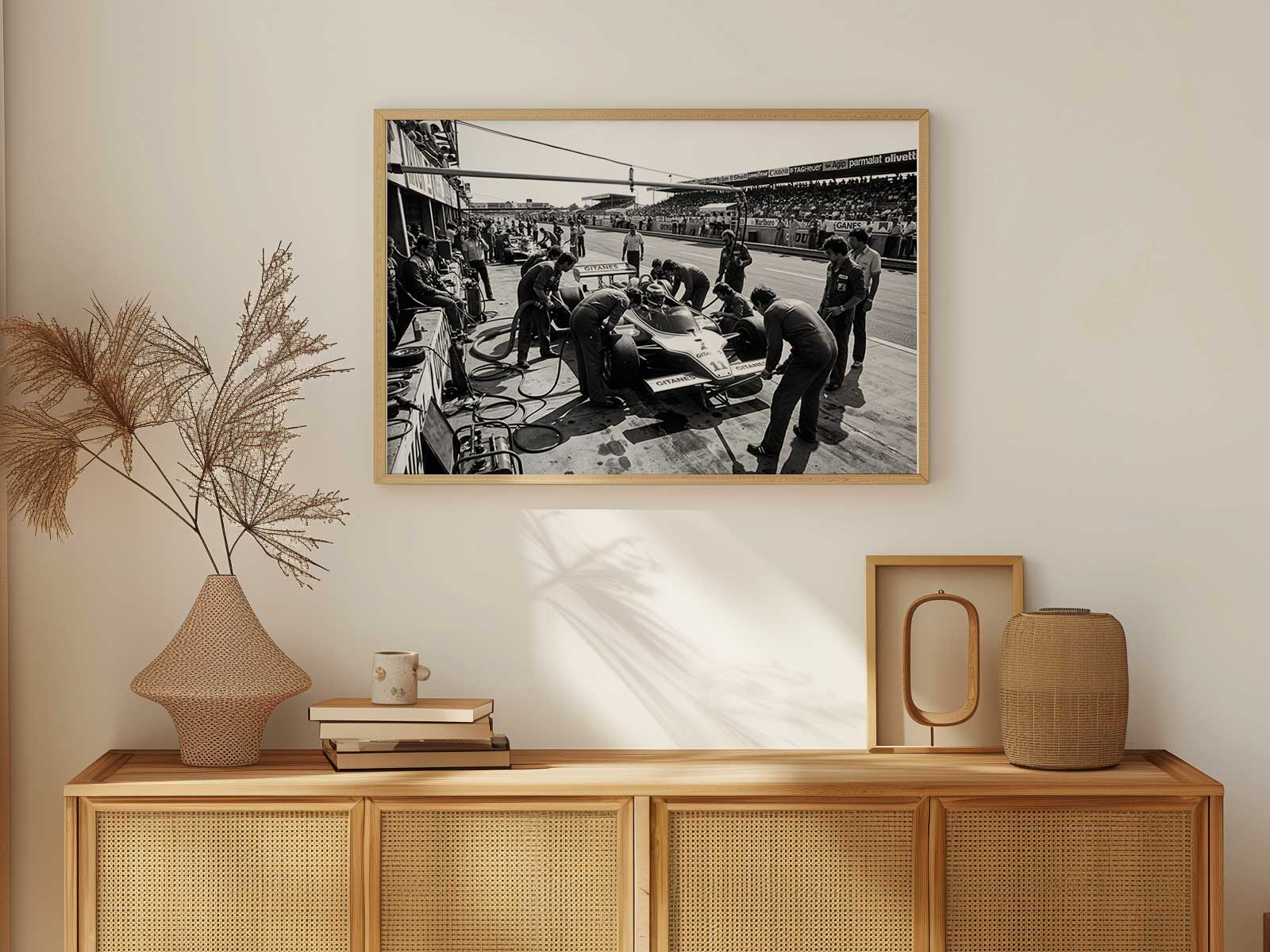
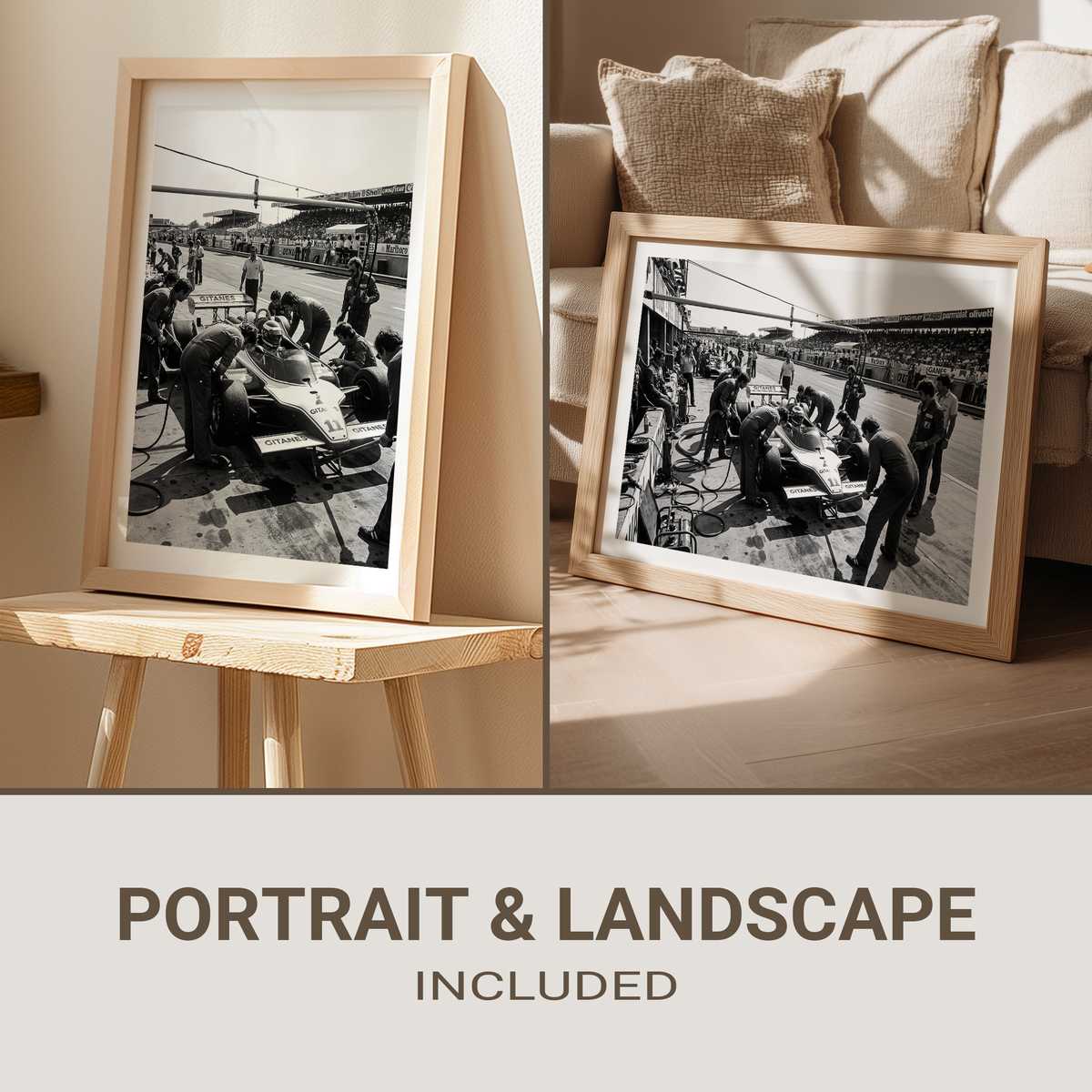
Decor-wise, a circuit-led image shifts how a room feels. In an office it becomes an emblem of precision and focus; in a living room it introduces movement and narrative; in a games room it heightens competition and drama. Colours matter: muted asphalt tones ground a space, while accents—helmet neon, team liveries, or pit-board reds—provide focal points that draw the eye and catch the light on different walls and frames. The result is a sophisticated, motorsport-aware object that complements rather than overwhelms other decor.
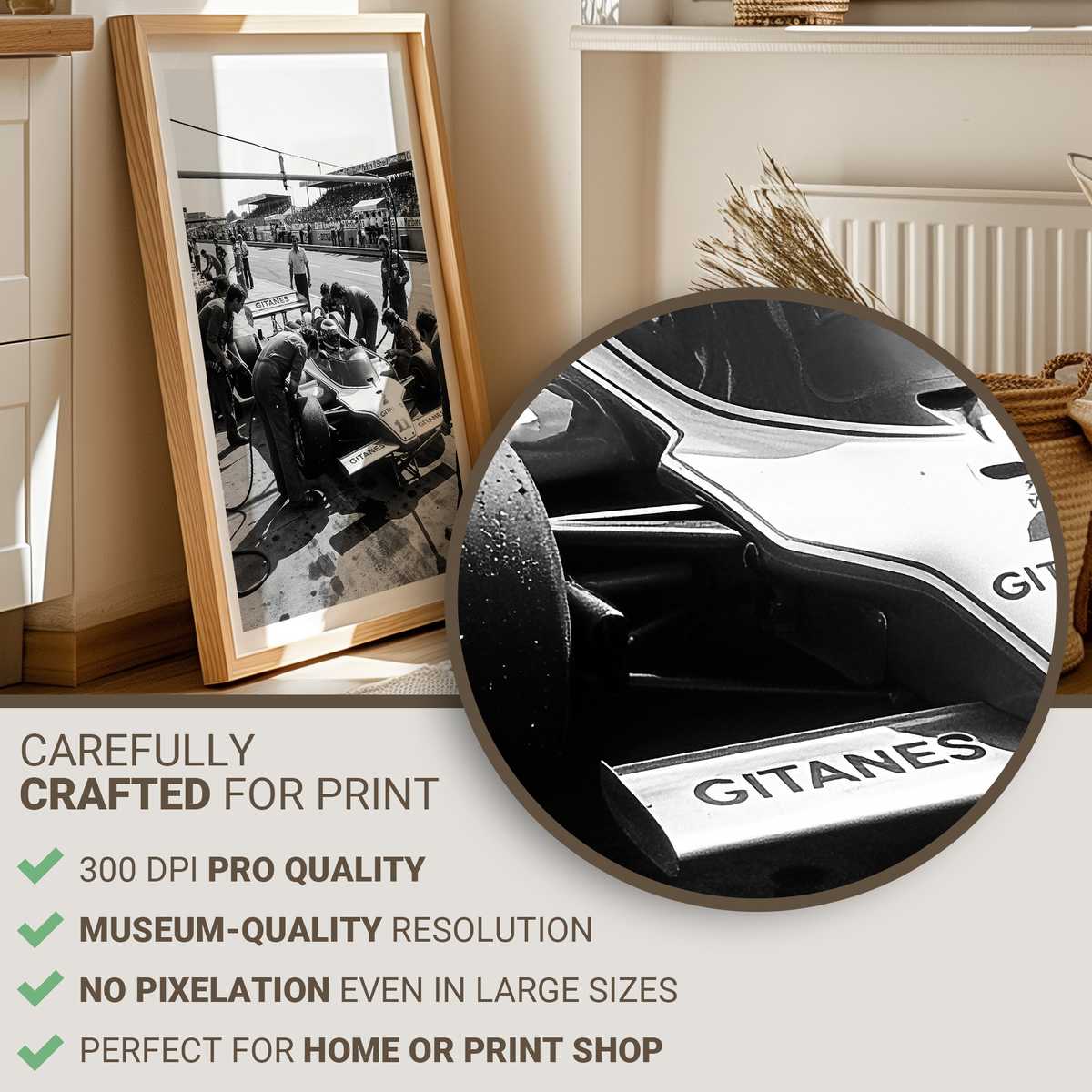
When choosing a poster, look for pieces that prioritise atmosphere over chronology. The best prints avoid crowding the viewer with logos or scoreboard data; they give you a stage set for the imagination. A pit stop motif is particularly effective because it combines human scale with technical drama—the hands, jacks and wheels create a rhythm that reads beautifully in print and keeps the image rooted in the specificity of place.
In short, a poster that translates Grand Prix atmosphere through the choreography of a pit stop offers a refined way to display Formula One racing. It honours the weekend’s tension while making the venue itself the star: a fragment of sky, a stretch of tarmac, the precise angle of a light flare. Those details invite recognition, conversation and repeat looking—the qualities that turn a print into a treasured piece of collector art.