Do you have what it takes to be an F1 driver?
Short answer: maybe — but only if a specific set of measurable conditions comes together. You need the right racecraft, exceptional task‑specific perceptual and cognitive skills, elite physical conditioning, strong competitive results in recognised junior series to earn an FIA Super Licence, and often the financial or academy backing to reach and sustain the ladder.
The simple checklist—be fast, start karting, win—misses the decisive realities. Speed alone won’t carry you past medical standards, the Super Licence requirements, the physical collapse that comes with heat and sustained g‑loads, or the gatekeeping of scarce seats and rising costs. Read on to see what the early “maybe” really depends on.
Direct answer
To be eligible for a Formula 1 Grand Prix you must hold an FIA Super Licence and satisfy its criteria, and to be truly competitive you must combine elite physical conditioning, specialised perceptual-cognitive skills and strong single-seater results. All of these are necessary; none alone is sufficient.
What this article explains
- Which abilities teams and regulations actually require.
- How physical and cognitive demands shape performance over a race distance.
- What the Super Licence pathway demands in competitive terms.
- Where talent and funding interact—and where careers commonly stall.
Define the real target: racing a car vs. reaching Formula 1
Many readers use “be an F1 driver” as shorthand for “race at the highest professional level.” Those are related but different goals. Driving an F1 car for a demonstration or a single test is not the same as meeting the formal eligibility, medical standards and championship performance needed to hold an FIA Super Licence and race in a Grand Prix. The pathway combines competitive results in recognised junior categories with fitness and licensed status; every step matters.
The abilities that matter most
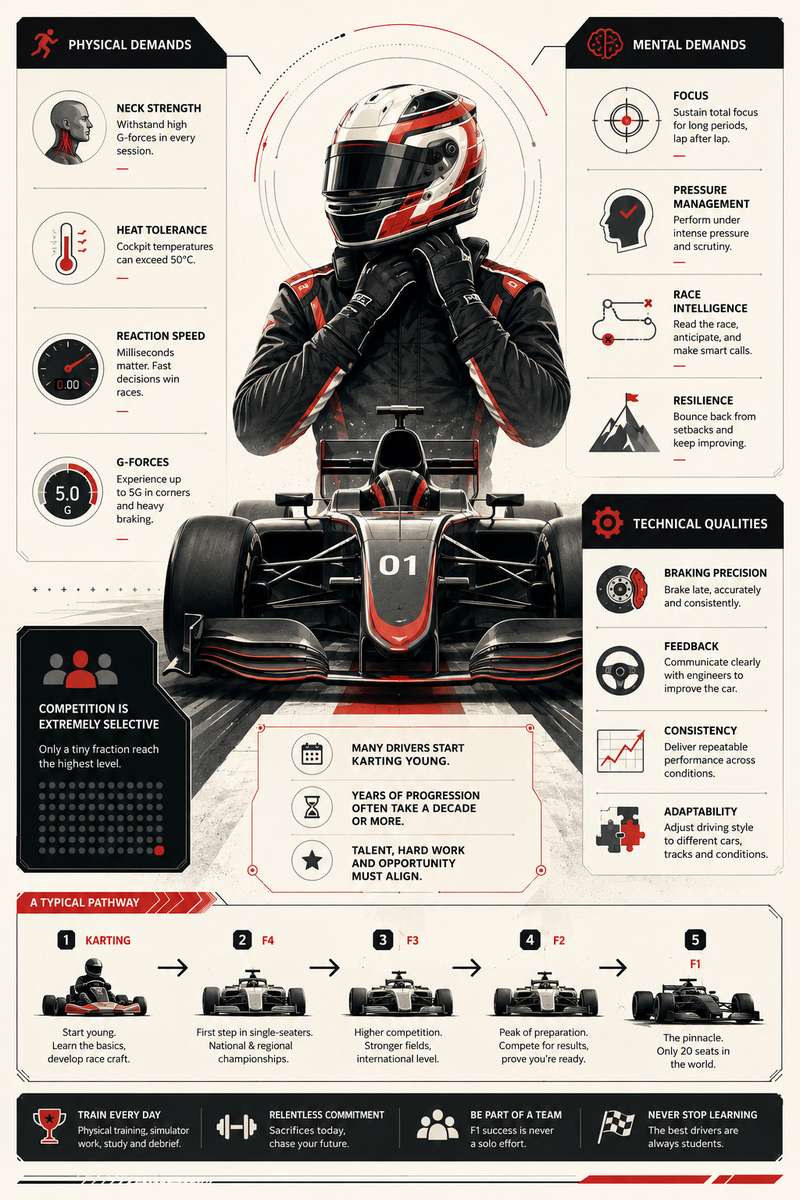
Teams reward repeatability as much as one‑lap speed. The evidence-based qualities that separate elite single-seater drivers from good club racers include:
- Task-specific perceptual and cognitive skills — trained visual scanning, fast decision-making at high speed and domain-specific judgment under pressure.
- Consistent braking precision and tyre sensitivity — the ability to reproduce braking points and manage degradation across stints.
- Car-control feel and technical feedback — being able to describe handling changes accurately to engineers and adapt driving style to setup and tyres.
- Racecraft and qualifying execution — overtaking judgement, qualifying pace, and championship-level consistency.
Research shows that expert racing drivers differ from novices primarily in domain-specific perceptual-cognitive abilities rather than general cognitive scores, so training in realistic race contexts is decisive.
Physical and mental load: why fitness is more than neck strength
Modern single-seater racing places high physiological demands on drivers. Peer-reviewed studies and recent reviews document the combination of factors teams train for:
- High lateral and longitudinal g‑forces that demand exceptional isometric neck strength and strong core and shoulder stability.
- Sustained cardiovascular load and heat stress across long stints, requiring high VO2peak and low body fat for endurance and recovery.
- Mental endurance: prolonged, high-consequence decision-making and concentration; fatigue and heat directly reduce precision and judgement.
These are not abstract fitness goals — the physiological profile of elite single-seater drivers is distinct and specifically trained. Strength alone or a quick reaction time does not substitute for cardiovascular, heat‑tolerance and task‑specific conditioning.
The development path and the Super Licence requirement
The formal gateway to an F1 race seat is the FIA Super Licence. The licence requires accumulation of points from recognised championships and meeting other conditions. The points system assigns different values for finishing positions in eligible series; champions in some top-level feeder series earn high point totals, and reaching the typical qualifying total requires sustained performance in the junior ladder.
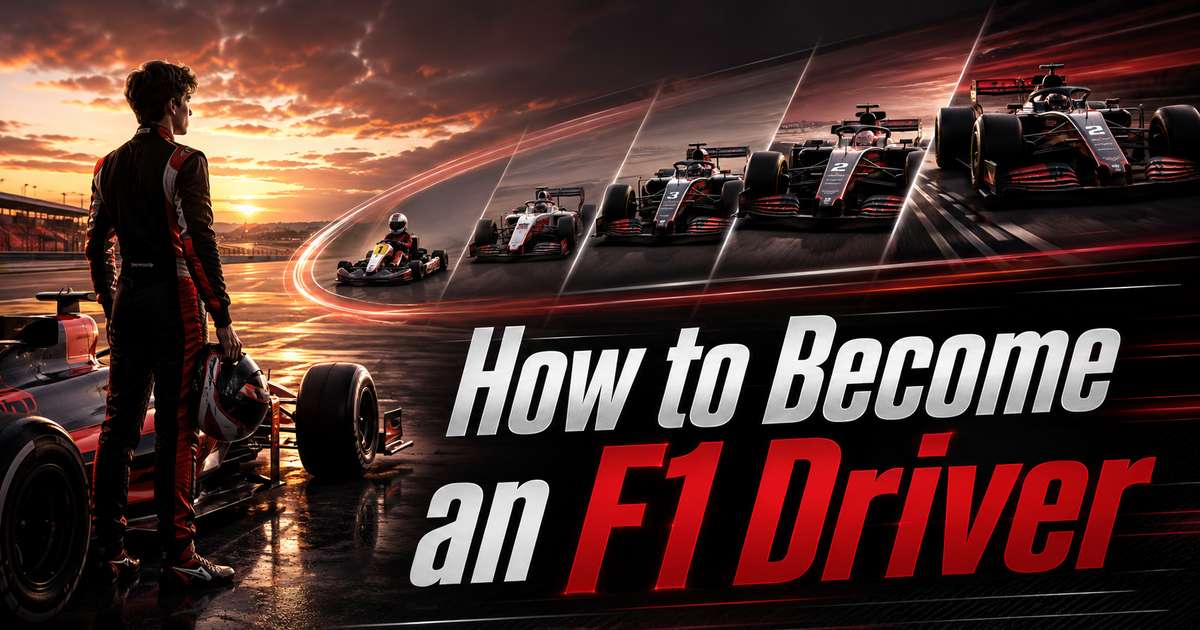
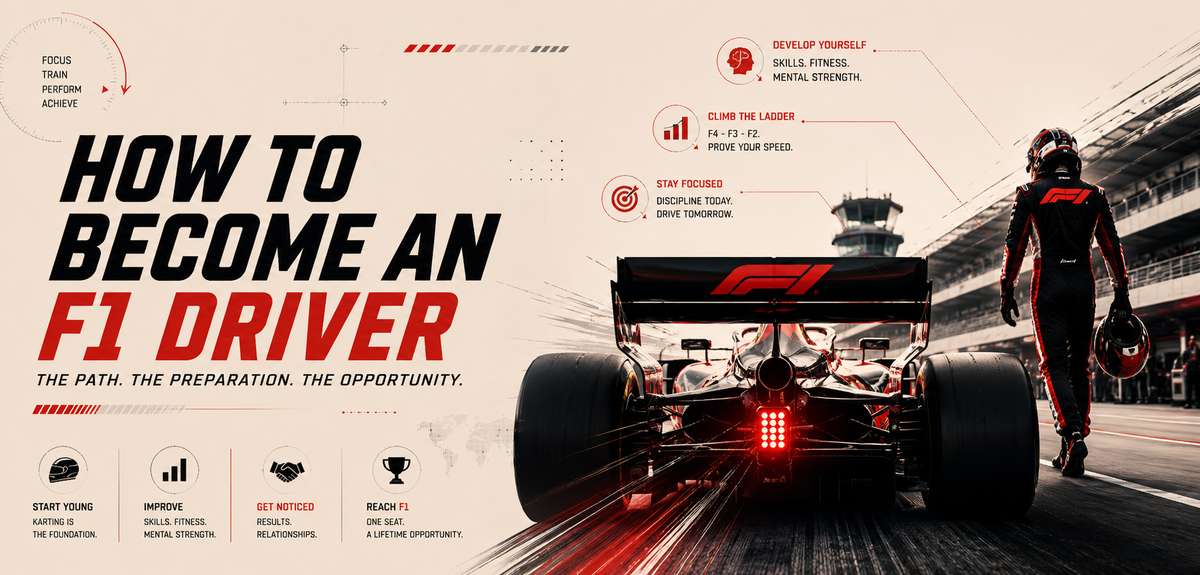
That means the pathway is concrete: karting foundations, competitive single-seater seasons in national and international championships, then strong results in top junior series to accumulate the Super Licence points necessary for eligibility. Sporting bodies and teams often scout and support drivers through these steps, but licence rules and competitive results remain essential controls.
Age, the learning curve and why early karting helps
Starting karting young creates a long window to develop the perceptual-motor skills and racecraft that junior single-seater competition demands. The developmental advantage is real because domain-specific abilities improve with sustained, competitive practice. That said, starting later does not categorically prevent high performance in other forms of motorsport, but the timeline to accumulate single-seater results, Super Licence points and competitive experience compresses as age increases.
Money and access: the practical gatekeepers
Beyond licence rules and fitness, reaching Formula 1 requires access to competitive programmes, testing time and quality engineering support—resources usually paid for by teams, manufacturers, family backing or sponsors. Funding affects the ability to enter top championships, test in simulators, and recover from inevitable setbacks such as mechanical DNFs or crash damage. Financial backing and academy support therefore operate as practical enablers of measurable progress through the ladder.
The talent funnel: why many talented drivers never reach F1
Even with talent, drivers encounter a narrowing funnel. The combination of limited F1 seats, long incumbent careers, the Super Licence gate, funding pressures and timing means substantial attrition. Results across seasons in recognised championships matter because Super Licence points and team interest are earned through performance over time—not a single breakout weekend. Consequently, many capable drivers plateau or exit the single-seater ladder despite technical skill and commitment.
Practical next step: how to test whether you belong on the ladder
If you want to find out whether your raw potential could be shaped into a credible single-seater career, do these three things in sequence:
- Enter structured karting or single-seater coaching and race events to measure repeatability and racecraft under competition.
- Develop a targeted physical programme focused on cardiovascular conditioning, heat tolerance and neck/core strength alongside track time.
- Track competitive results in recognised championships that contribute toward the Super Licence pathway while exploring academy or sponsorship support.
Those steps reveal whether you can meet the combined demands of performance, fitness and regulated progression—not just whether you can drive fast on a single day.
Final verdict: realistic, conditional, and textured
Answering “do you have what it takes to be an F1 driver?” is necessarily conditional. The formal facts are clear: you must satisfy medical fitness standards and hold an FIA Super Licence, which itself requires sustained results in recognised junior championships. The research-backed realities are also clear: elite drivers possess specialized perceptual-cognitive skills and physiological profiles that are trained over years. Funding, timing and seat availability add practical constraints that often eliminate otherwise talented drivers.
So: it is possible, but only when measurable competitive success, defined physical conditioning, domain-specific decision-making and the regulatory milestones line up. If you care enough to test it, structure your development around those measurable criteria—then you will know whether the initial “maybe” becomes a real chance.
Author: Cynthia D.