Romain Grosjean: analysing a Formula 1 career through season-by-season results
Romain Grosjean's Formula 1 career unfolded between 2009 and 2020 across three distinct team eras: a debut with Renault, a productive spell with Lotus F1 Team, and the founding years of Haas F1 Team. Over those years Grosjean never achieved a Grand Prix victory but registered ten F1 podiums and produced his best championship result in 2013.
Quick summary
Grosjean's record is marked by steady development into a regular points‑scorer and occasional race podium contender, peaking in 2013. His F1 passage ended dramatically in 2020 after a high‑impact crash in Bahrain; afterwards he continued his racing career outside Formula 1.
Reader preview
- How Grosjean's seasons built to a 2013 high point.
- What ten podiums and no wins reveal about competitiveness and opportunity.
- Why the 2020 Bahrain crash is inseparable from his F1 finale.
What the full palmarès looks like
Viewed as a whole, Grosjean's Formula 1 palmarès is one of clear progression to a respectable midfield‑to‑front‑of‑midfield level rather than outright victory. The verified totals show ten career podiums — two second places (including the 2012 Canadian Grand Prix and the 2013 United States Grand Prix) and eight third places — but no Grand Prix wins and a best World Drivers' Championship finish of seventh in 2013. Those figures point to a driver who could convert a competitive car into top‑three results on occasion, but who never occupied a sustained championship‑contending envelope.
The early F1 years
Grosjean made his Formula 1 debut with Renault in 2009. Those formative seasons established him in the sport and led to a move that defined his next phase: joining Lotus F1 Team. Early years in Renault and transition to Lotus set the scene for improved results as Grosjean adapted to race craft and the demands of full championship campaigns.
The season‑by‑season climb
Across the Lotus years (2012–2015) Grosjean's results matured. The verified record highlights that two of his best individual race results — a second place in the 2012 Canadian Grand Prix and another in the 2013 United States Grand Prix — fell inside this period. His best championship placing, seventh in 2013, also came during this phase, which the data identifies as his high point in terms of season classification and podium frequency.
Wins, podiums and competitive shape
Statistically speaking, Grosjean's F1 profile is that of a frequent points finisher and occasional podium threat rather than a race‑winner. Ten podiums across an 11‑year full‑time F1 span underline consistency at the level required to capitalise when machinery and circumstance aligned, but the absence of a victory marks a gap between strong weekend performances and the final step onto the top step. The two noted second places punctuate a record dominated by third places, reflecting many competitive finishes but limited opportunities to convert into wins.
The Haas era and late‑career development
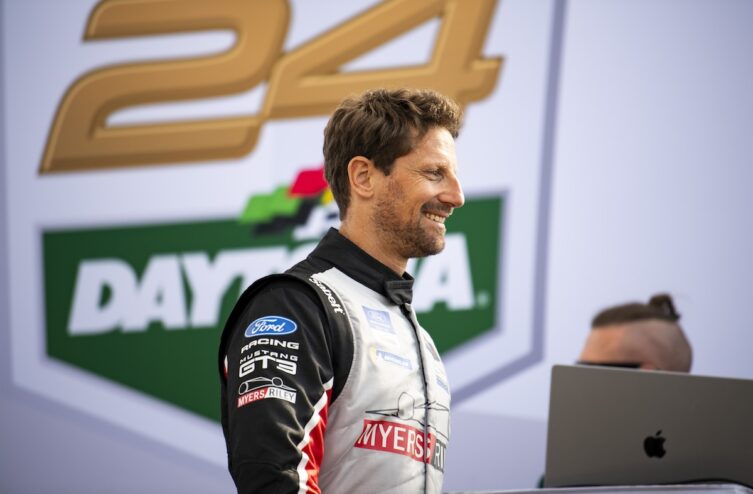
From 2016 until his final Formula 1 season in 2020, Grosjean drove for Haas F1 Team. That period represents a reinvention as part of a new team project: delivering consistent results and helping establish a team on the grid. While Haas provided moments of competitive performance, the verified facts do not record further wins or a return to his 2013 championship standing; instead, this era consolidated Grosjean's role as an experienced race driver within a fledgling constructor.
Difficult seasons, interruptions and the 2020 finale
Grosjean's Formula 1 chapter closed after the 2020 Bahrain Grand Prix, when he suffered a dramatic opening‑lap crash on 29 November 2020. The verified sources detail how the car split and caught fire; Grosjean escaped with relatively minor burns and credited the halo safety device with helping to save his life. That incident is an unavoidable final note in his F1 record and effectively ended his full‑time participation in the series.
What the palmarès reveals about his standing in F1
In broader context, Grosjean's career sits among drivers who achieved meaningful results without reaching title contention. A best championship finish of seventh, ten podiums and no wins define a competitor who could challenge for top‑three results in competitive weekends but who never occupied the championship picture at the front. His trajectory—from rookie seasons at Renault, through a peak period with Lotus, to a stabilising role at Haas—shows both adaptability and the limits imposed by machinery and team context.
Closing interpretation
Romain Grosjean's Formula 1 palmarès is a study in steady development, punctuated highs, and an abrupt ending. The verified facts show a driver who reached the podium ten times and recorded a strongest season in 2013, yet who never secured a race win. That combination suggests a career of tangible achievement and durability: able to extract strong results when circumstances allowed, to help build new teams, and to leave the sport with an unmistakable final chapter that underlined advances in driver safety. After F1, Grosjean continued racing outside the series, but his statistical record in Formula 1 stands as the definitive measure of his place in the championship's recent history.
Author: Cynthia D.