Alpine F1 Team: From Enstone Lineage to a Championship Project
The Alpine F1 Team is the Enstone-based works team that emerged when the Renault F1 Team rebranded to Alpine for the 2021 Formula One World Championship. More than a change of badge, the move tied a historic technical base and documented championship lineage to Groupe Renault’s strategy to build motorsport credibility for the Alpine sports car brand.
Quick summary: Alpine is the rebranded Enstone works team with a deliberate brand-and-performance brief from Groupe Renault. Recent public moves include a multi-pillared technical leadership model and senior appointments intended to accelerate development of championship-capable projects.
Quick access
First reading of the constructor
At first glance the Alpine F1 Team is identifiable by three linked facts: it is the Enstone-based works team with technical continuity from the Renault/Enstone lineage; the rebrand took effect for the 2021 season; and the project sits explicitly inside Groupe Renault’s strategy to raise the Alpine brand through motorsport. Those anchors matter because they place Alpine in the category of manufacturer-backed works teams that combine brand activation with long-term technical investment.
Technical philosophy and car logic
Public material from Alpine and its press packs show the team frames its F1 programme as both a sporting effort and a technology showcase for the Alpine marque. The verified record does not publish internal design manuals, but the team’s approach can be read through its public messaging: project choices are presented as targeted toward building championship-capable cars under a coherent Alpine identity.
Specific technical concept statements are not publicly available in full detail, however Alpine’s car launches and press kits (for example recent press material around 2025/2026 car launches) demonstrate that the team links concept evolution directly to regulation cycles and to the goal of producing a competitive package under new rules. This is consistent with a works team that must align chassis, aerodynamics and broader engineering decisions with a defined competitive brief from the factory.
Organisation, factory culture, and decision flow
Alpine operates from the historic Enstone facility known as Team Enstone. That continuity carries institutional knowledge and past championship experience into the Alpine era. Public sources confirm the team has restructured its technical leadership into a multi-pillar model—separating performance, engineering and aerodynamics reporting lines—under senior appointments such as the hiring of David Sánchez as Executive Technical Director.
Those changes were described in official releases and media coverage as intended to sharpen decision flow and accelerate development. The use of a three-pillared structure mirrors broader paddock trends and was reported as inspired in part by similar organisational models used by other constructors. Alpine’s public reorganisation announcements in 2024 and senior appointments in 2024–2025 are factual markers of that shift.
Regulation response and development direction
Alpine has publicly indicated that it concentrates development effort around new-regulation cars and programmes. Official press kits around 2025 and statements tied to the 2026 car presentation show the team communicating strategic shifts and concentrated resource allocation toward cars developed for new regulation phases. Those public actions indicate a deliberate alignment of development rhythm with rule-change opportunities—a common strategy for works teams seeking to maximise performance step-changes when regulations reset design constraints.
Power unit integration, packaging, and system coherence
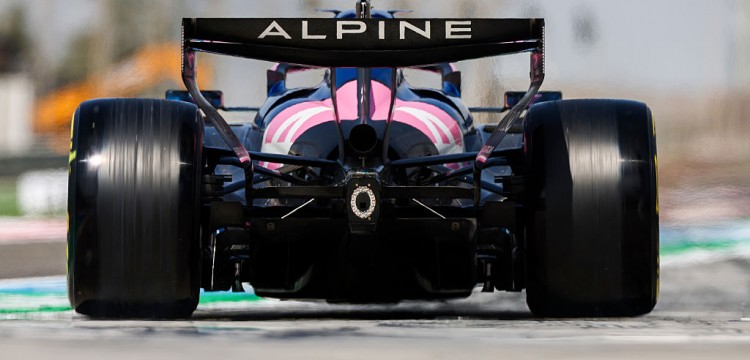
The verified sources for Alpine emphasise the team’s place inside Groupe Renault and the link between Enstone chassis activities and Renault’s broader motorsport capabilities. While precise resource splits between Enstone (chassis) and other Renault facilities are not public, official communications present Alpine as leveraging Renault’s motorsport heritage. That means packaging and system coherence are communicated as factory priorities even if detailed component-level philosophies are not published.
Because power-unit specifics and budgetary allocations are not publicly disclosed in the verified materials, the factual account confines itself to the documented relationship: Alpine is the works project connected to Groupe Renault and uses brand and technical heritage as part of its development proposition.
Strengths, limits, and recurring patterns
From the available public record, Alpine’s strengths are structural: a historic technical base at Enstone, direct backing from Groupe Renault, and a willingness to reorganise leadership to improve development velocity. These are factual, documented elements that support the ambition to build championship-capable programmes under the Alpine name.
Limits in public knowledge are also factual constraints: internal technical philosophies at the component level, exact R&D budgets, and exhaustive personnel chronologies are not published in the verified sources. Where those details are absent, it is appropriate to assess Alpine through its demonstrable organisational moves and public strategic statements rather than inferred internal practices.
Closing interpretation
Alpine as a Formula 1 constructor is best understood as a rebranded, Enstone-based works team carrying Renault’s technical lineage into a program explicitly tied to the Alpine road-car brand. The team’s recent documented actions—a rebrand in 2021, public press packs and car launches, and a deliberate technical leadership reorganisation culminating in senior appointments—show a project that treats organisational architecture and regulation-aligned development as levers for competitive progress.
That combination—heritage, factory backing, and a documented pivot in technical leadership—defines Alpine’s current identity in the paddock: a constructor aiming to translate a brand-driven brief into technically coherent, championship-oriented projects while remaining transparent about the limits of public disclosure on internal engineering detail.
Author: Eric M.