alpha tauri f1: The car's technical identity, floor logic and Red Bull link
The phrase "alpha tauri f1" describes more than a livery: it names a lineage and a technical identity that have evolved under changing regulations and a close relationship with Red Bull. From the 2020 rebrand that produced the AT01 — itself derived from STR14/RB15 architecture — to the ground-effect era and the AT03/AT04 development story, the team's cars reveal a consistent focus on underfloor aerodynamics and measured technical alignment.
A concise take: AlphaTauri’s F1 machines moved from independent designs toward tighter Red Bull alignment, with the floor becoming the primary battleground under the 2022 regulations. Key upgrades on the AT04 late in 2023 targeted forward/central floor load.
First technical reading · Aero platform · Suspension & ride · Development path · Hard facts · Closing interpretation
First technical reading of the alpha tauri f1 car
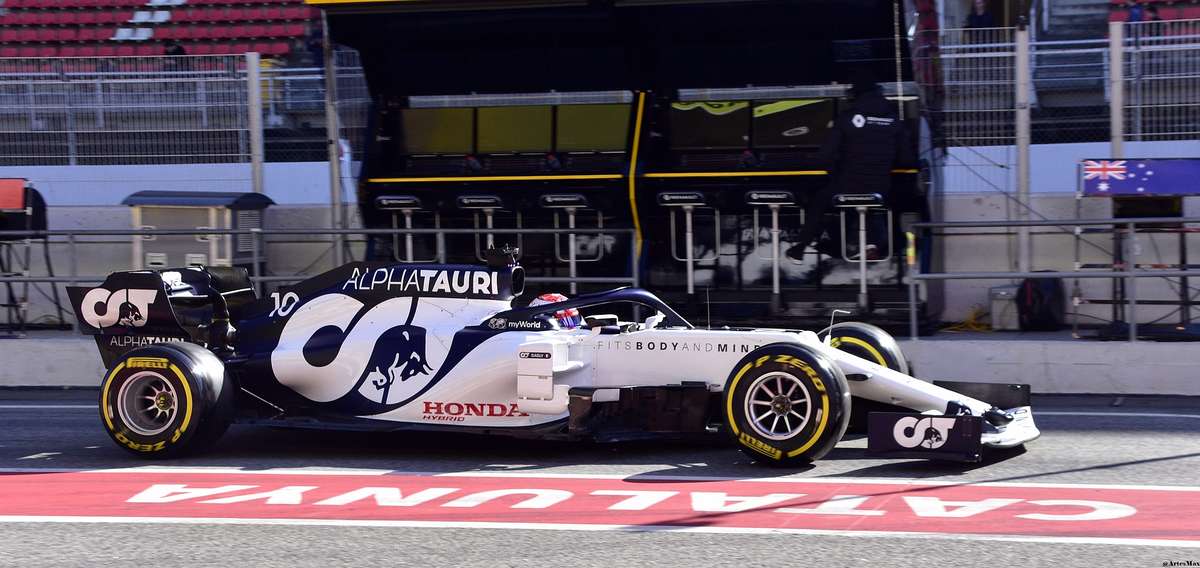
At first glance the AlphaTauri machines are recognisably a satellite of Red Bull engineering while preserving independent design choices. The 2020 rebrand to Scuderia AlphaTauri came with the AT01, which official team documentation describes as being derived from the STR14 / RB15 architecture; that origin establishes a technical DNA tied to Red Bull engineering approaches.
When the 2022 regulations reintroduced ground-effect underfloor aerodynamics as the primary source of downforce, AlphaTauri’s visible design language adapted but retained its own flavour. Contemporary technical photography and commentary documented distinctive features on the AT03 — mid-floor cutouts, specific edge-wing arrangements and sidepod-to-floor packaging — signalling a team interpreting the same rules in its own way rather than copying outright.
Aero platform and downforce character
The regulatory return to Venturi-based underfloor loading in 2022 made the floor the main development battleground; the FIA regulations and contemporary analysis explain why teams concentrated effort on floor geometry, fences and edge wings. For AlphaTauri this manifested as a steady sequence of floor-focused solutions rather than an emphasis on large top‑wing changes.
Evidence from late‑season 2023 underlines that priority. The team’s AT04 received an extensively revised floor package for Abu Dhabi: FIA submissions and paddock reports list a floor body rework, a new keel vane, modified mid‑floor ('canoe') surfaces, re‑spaced fences and a reprofiled floor edge wing. The stated intent was to increase local load generation on the forward and central floor — a targeted attempt to change where the car produces downforce under the 2022‑era rules.
It is important to note the limits of what is public. Top‑side photos, FIA technical notes and independent technical commentaries provide reliable clues about external and edge geometry, but the complete internal 3D shape of venturi tunnels and the teams’ CFD or wind‑tunnel pressure maps are proprietary and not published.
Suspension, ride, and platform control
AlphaTauri’s search for a consistent aero platform led to mechanical changes as well as aerodynamic ones. During the AT04 programme the team adopted a Red Bull rear‑suspension architecture as part of a mid/late‑season development package; paddock reporting links that change to a wider sequence of aggressive floor upgrades.
That documented transfer of suspension architecture is one example of how mechanical hardware and underfloor aerodynamics are coupled: a different rear suspension layout alters how the car controls ride height and pitch, which in turn affects the effectiveness of floor devices. Public reporting also records that AlphaTauri and Red Bull legally shared and transferred components such as suspension and gearbox/trackside parts within regulatory allowances, which explains how hardware convergence became possible.
Development path and technical evolution
Across 2022–2023 AlphaTauri’s trajectory shows two clear patterns. First, the team concentrated upgrades around floor geometry and related underbody devices, reflecting the era’s aerodynamic priorities. Second, there was a progressive operational shift toward closer technical alignment with Red Bull: the AT04 mid/late‑season programme explicitly incorporated Red Bull hardware and a focused sequence of floor updates that the team and observers describe as delivering measurable uplift.
That institutional shift continued into 2024. Public statements from team leadership outlined a more measured development approach and an intention to take more customer components from Red Bull rather than rely solely on ad‑hoc, all‑out upgrade packages. In January 2024 the commercial rebrand to RB (Visa Cash App RB) was confirmed and the VCARB 01 was publicly launched in February, changes that coincided with senior management turnover and reinforced the message of tighter operational links to Red Bull engineering.
Hard facts and defensible clues
What we can say with confidence, from official pages and reputable technical reporting, is compact: the 2020 AT01 traces to STR14/RB15 architecture; the 2022 regulations reintroduced ground‑effect underfloor aerodynamics and made floor devices a central development focus; photographic and technical analysis documented specific AT03 design elements; the AT04 later adopted a Red Bull rear suspension and ran extensive floor revisions at Abu Dhabi in 2023; and the team signalled a deliberate move to take more customer parts and to structure development more consistently for 2024.
What we cannot reconstruct from public material are the internal venturi cross‑sections, CFD pressure maps or precise performance deltas each upgrade produced. Those internal datasets and quantified team metrics are proprietary and were not published; independent reports therefore base interpretation on visible geometry, FIA technical notes and paddock reporting rather than on internal wind‑tunnel numbers.
Closing interpretation
Viewed together, the verified facts paint a clear editorial picture: the AlphaTauri F1 car in this era is a floor‑first machine shaped by regulatory change and by an increasingly close technical relationship with Red Bull. The team’s visible choices — mid‑floor cutouts on the AT03, the concentrated AT04 floor revisions, and an adopted Red Bull rear suspension — all point to a programme that prioritised underfloor load generation and platform stability while pragmatically using permitted component sharing to accelerate progress.
Understanding the alpha tauri f1 car therefore means reading both its external geometry and its organisational signals: in a ground‑effect era the floor is the language of performance, and AlphaTauri’s evolution shows a team aligning hardware and development strategy to speak that language more fluently.
Author: Alex R.