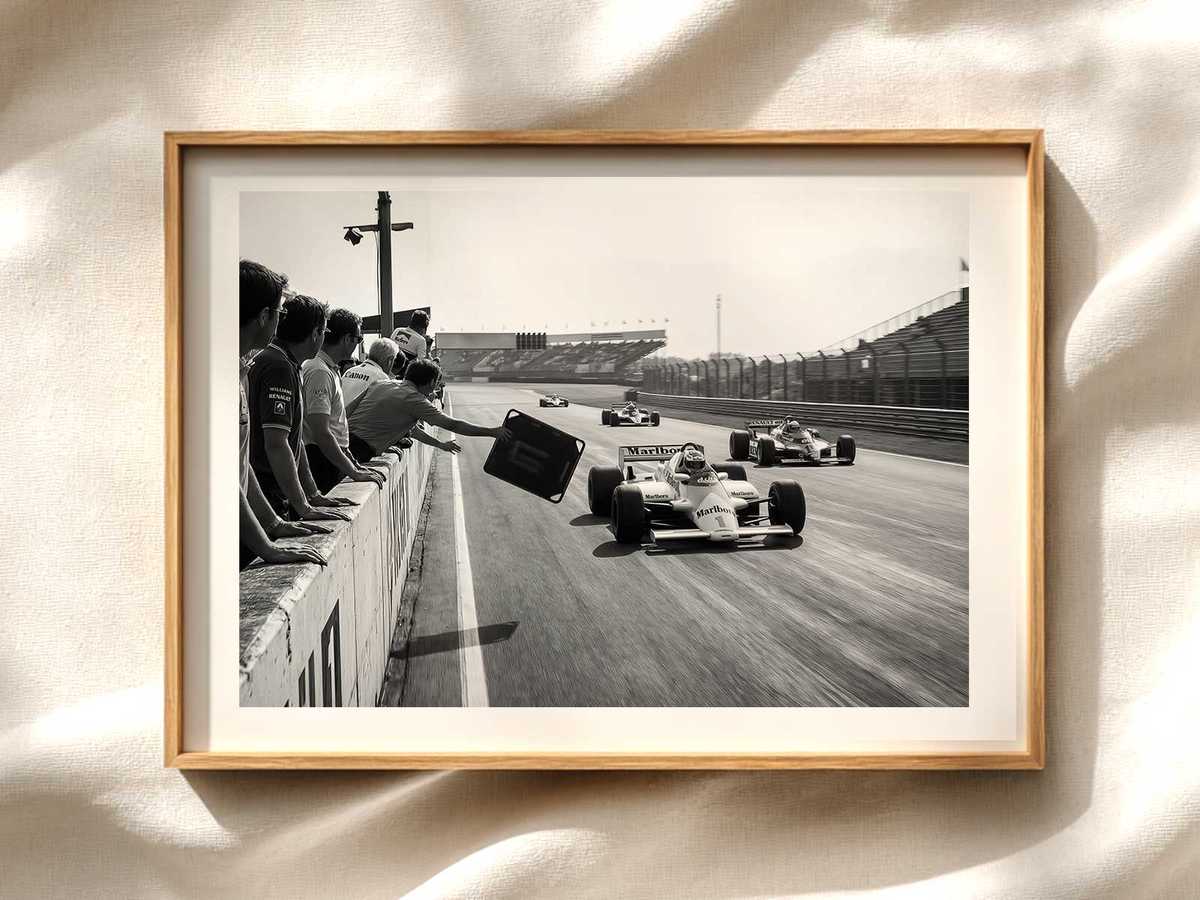
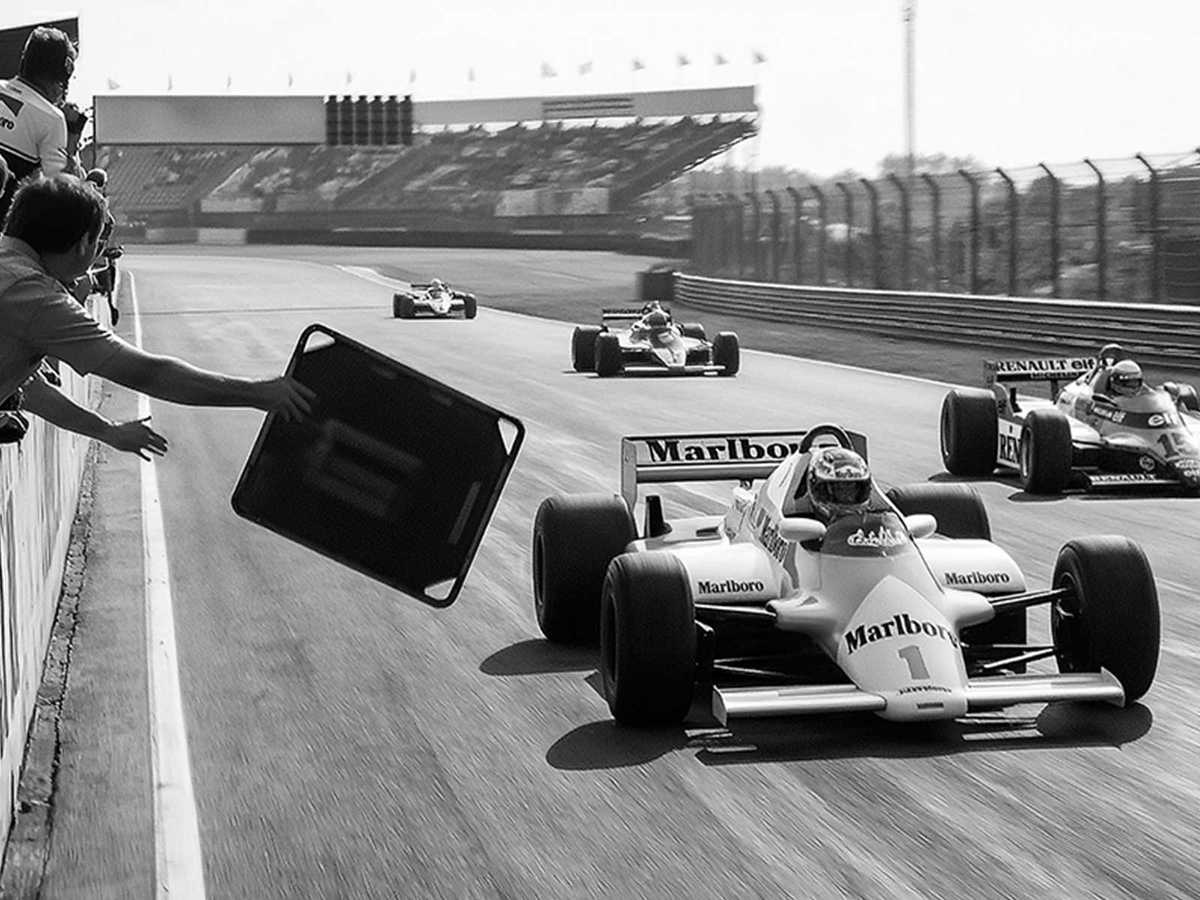
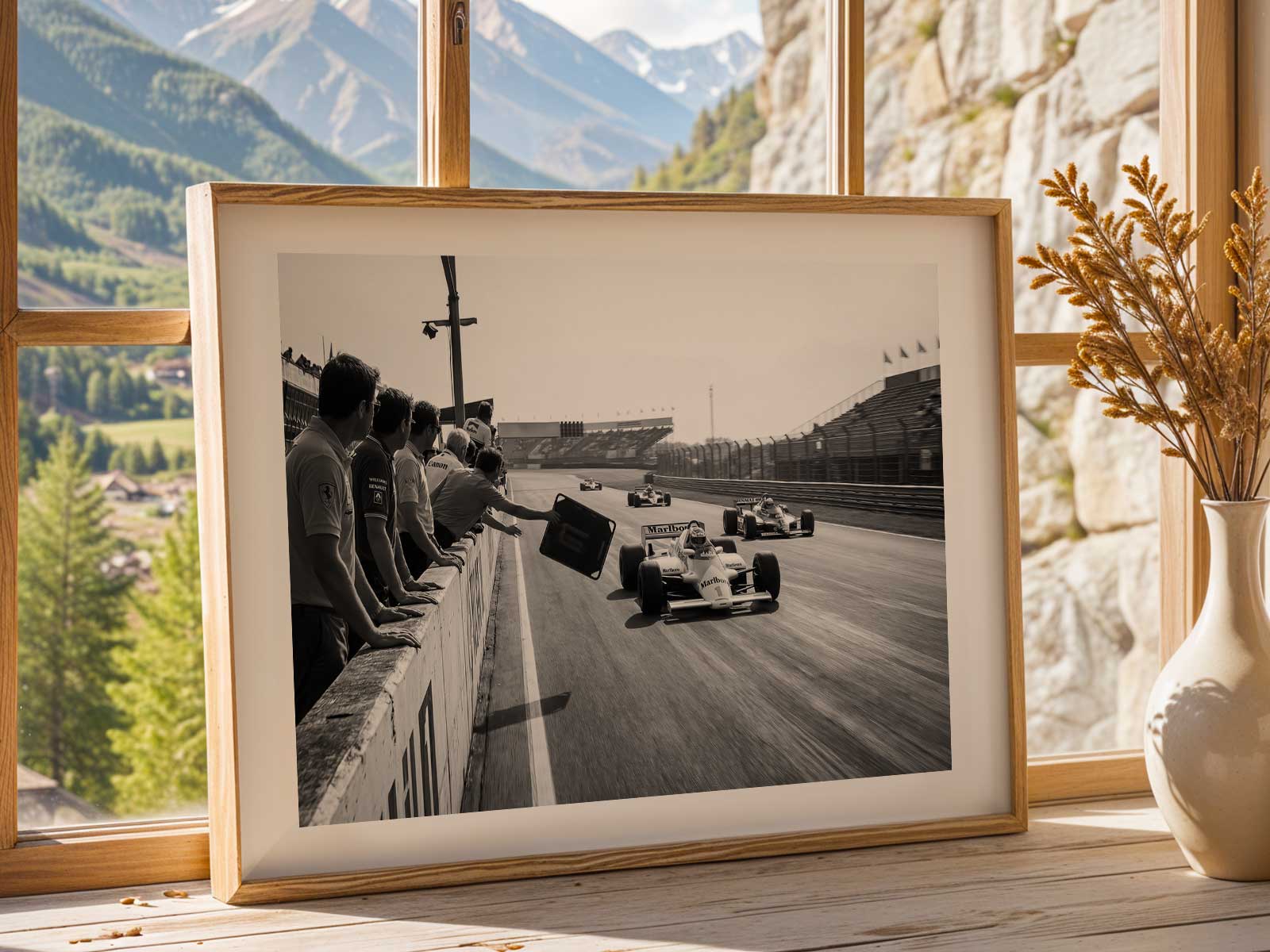
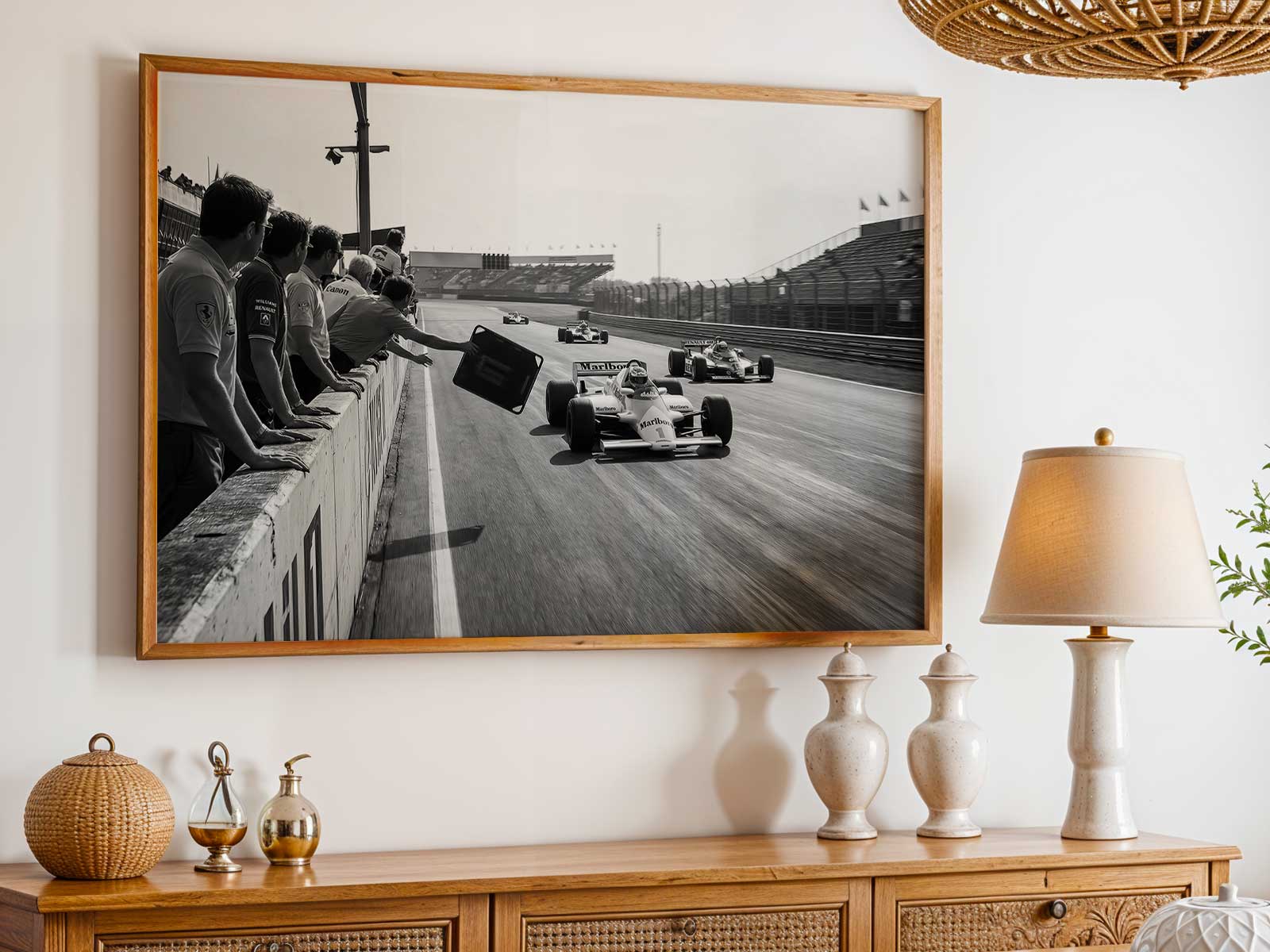
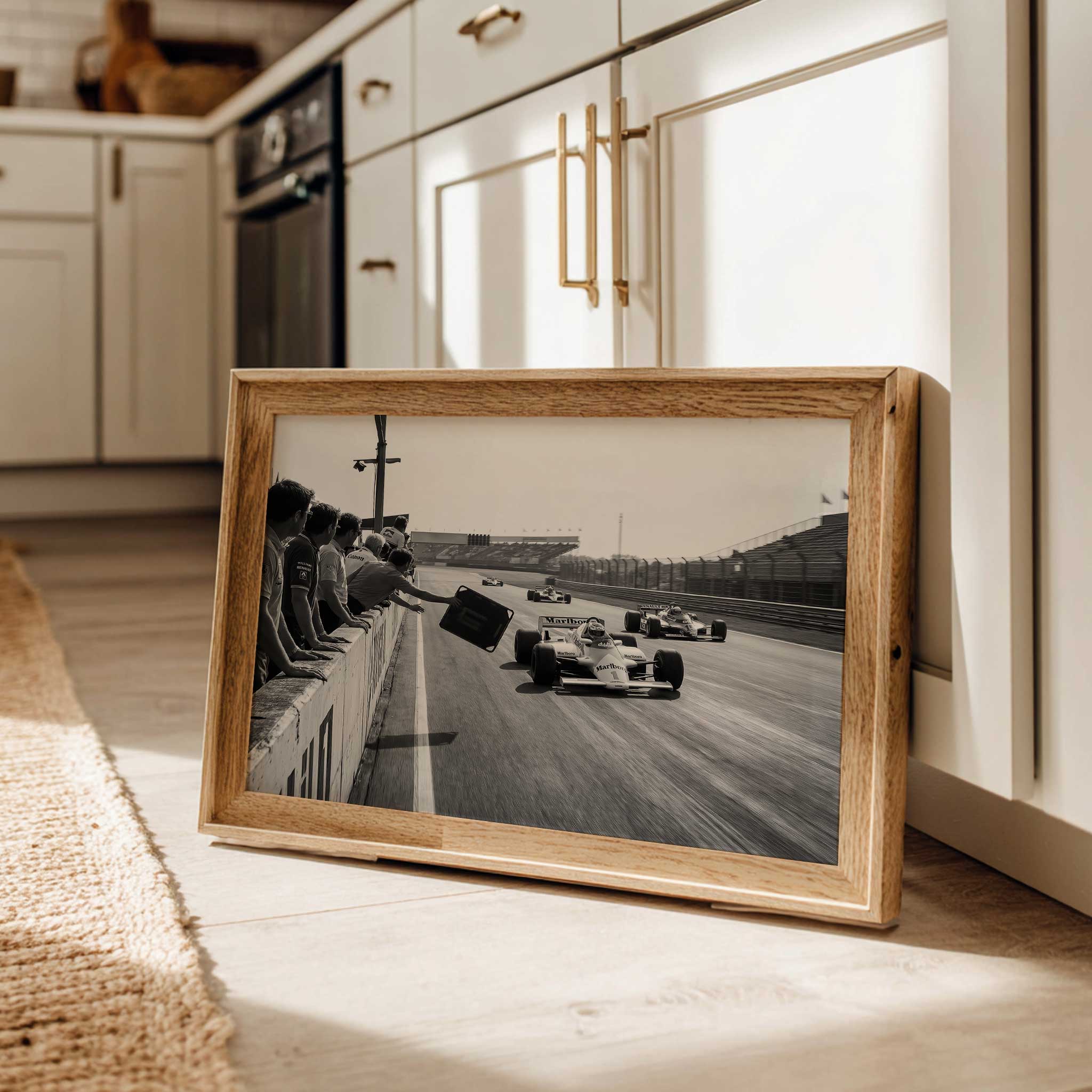
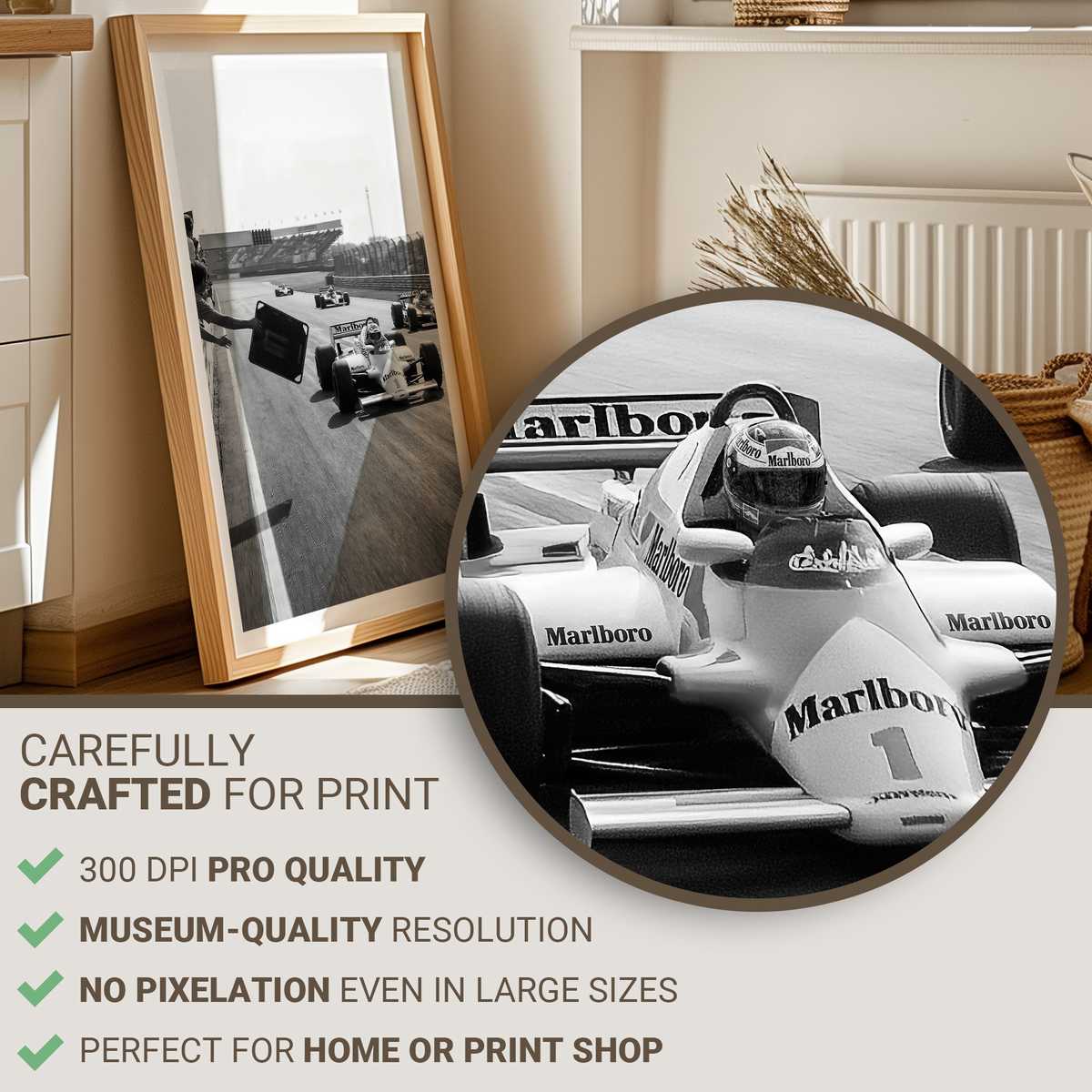
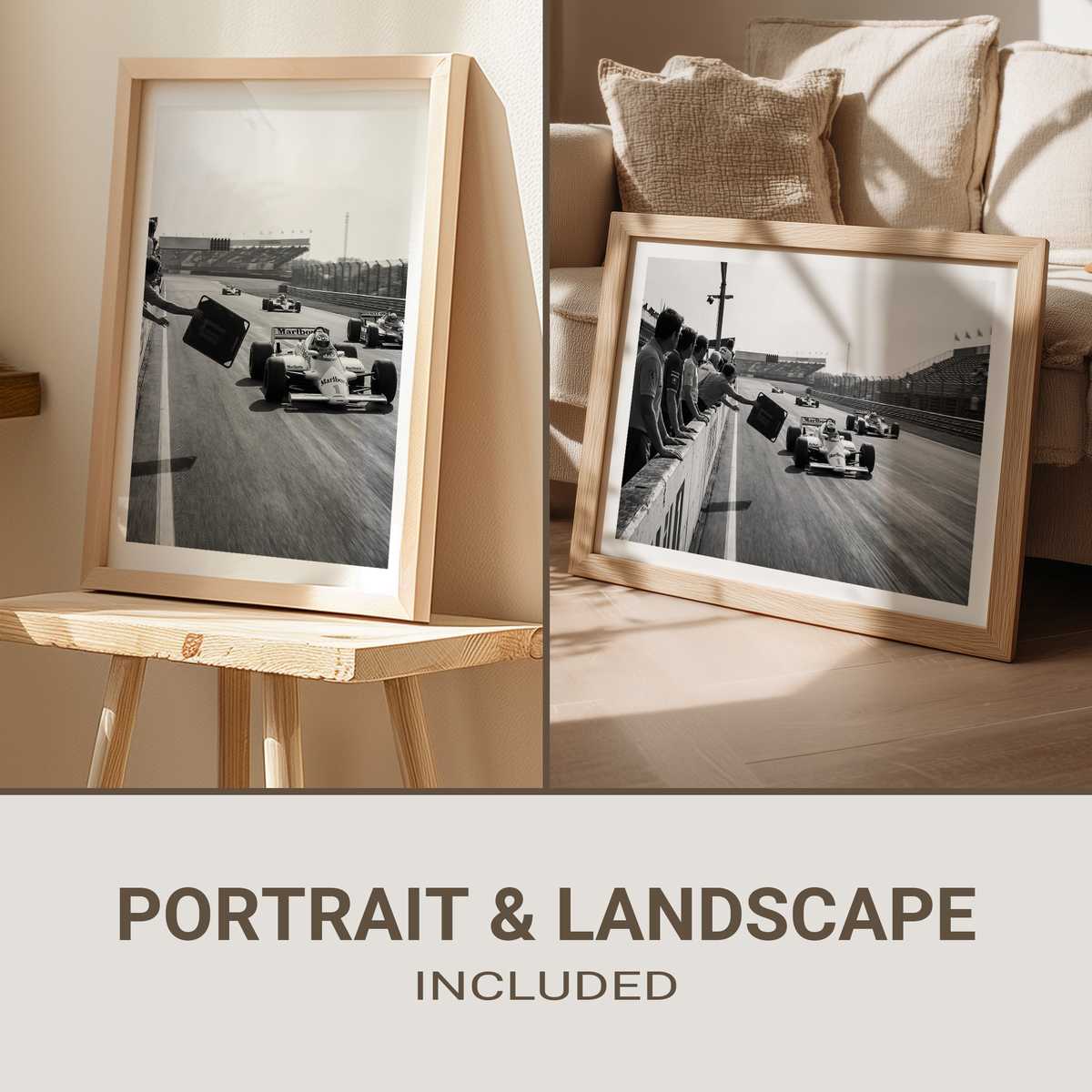
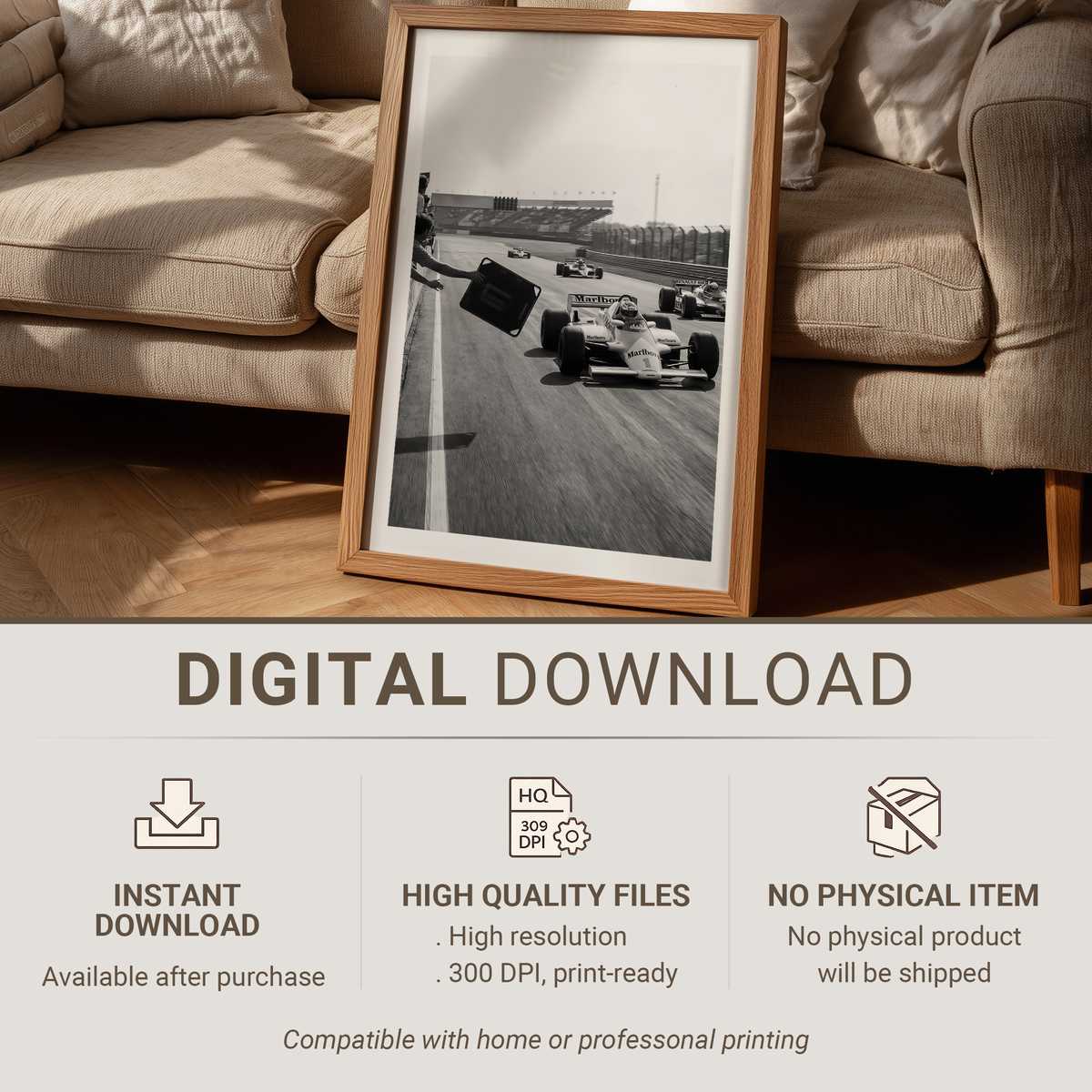
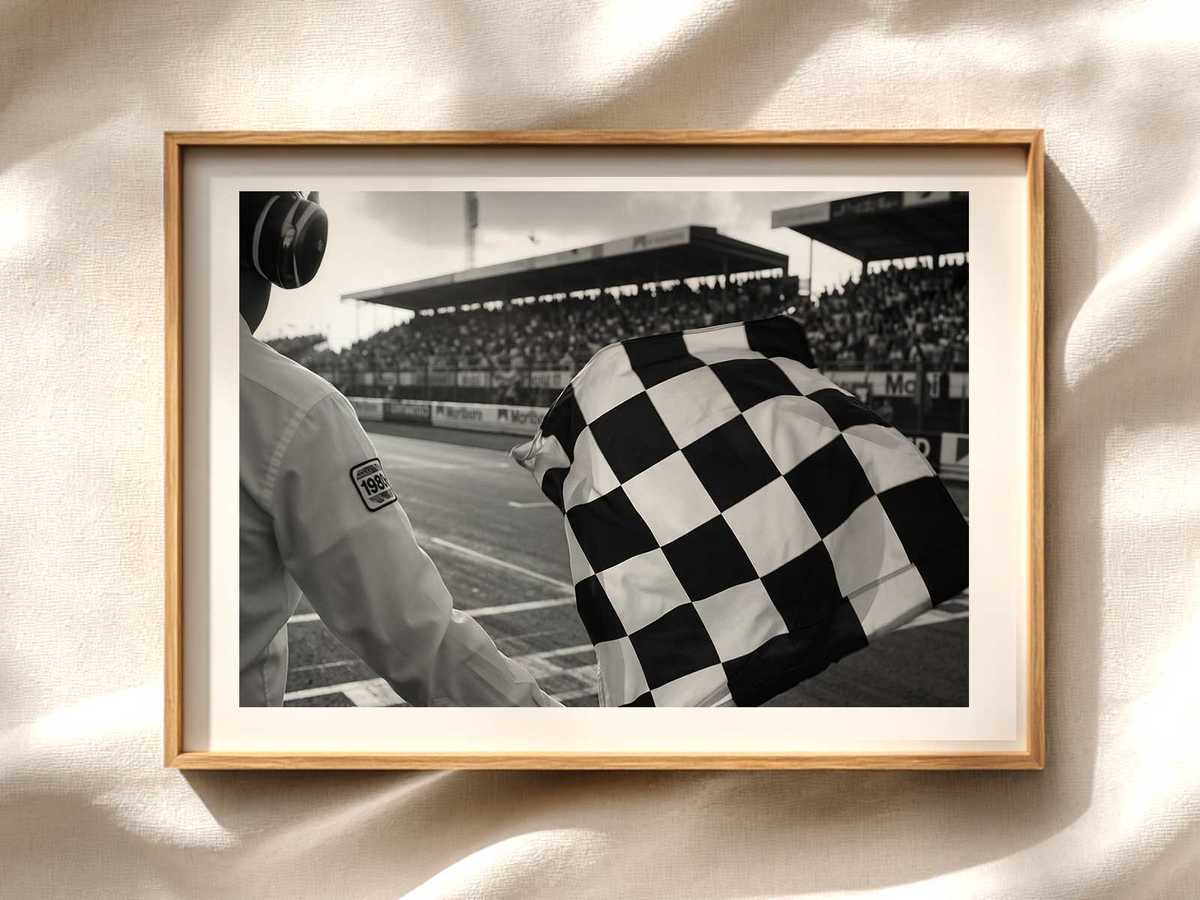
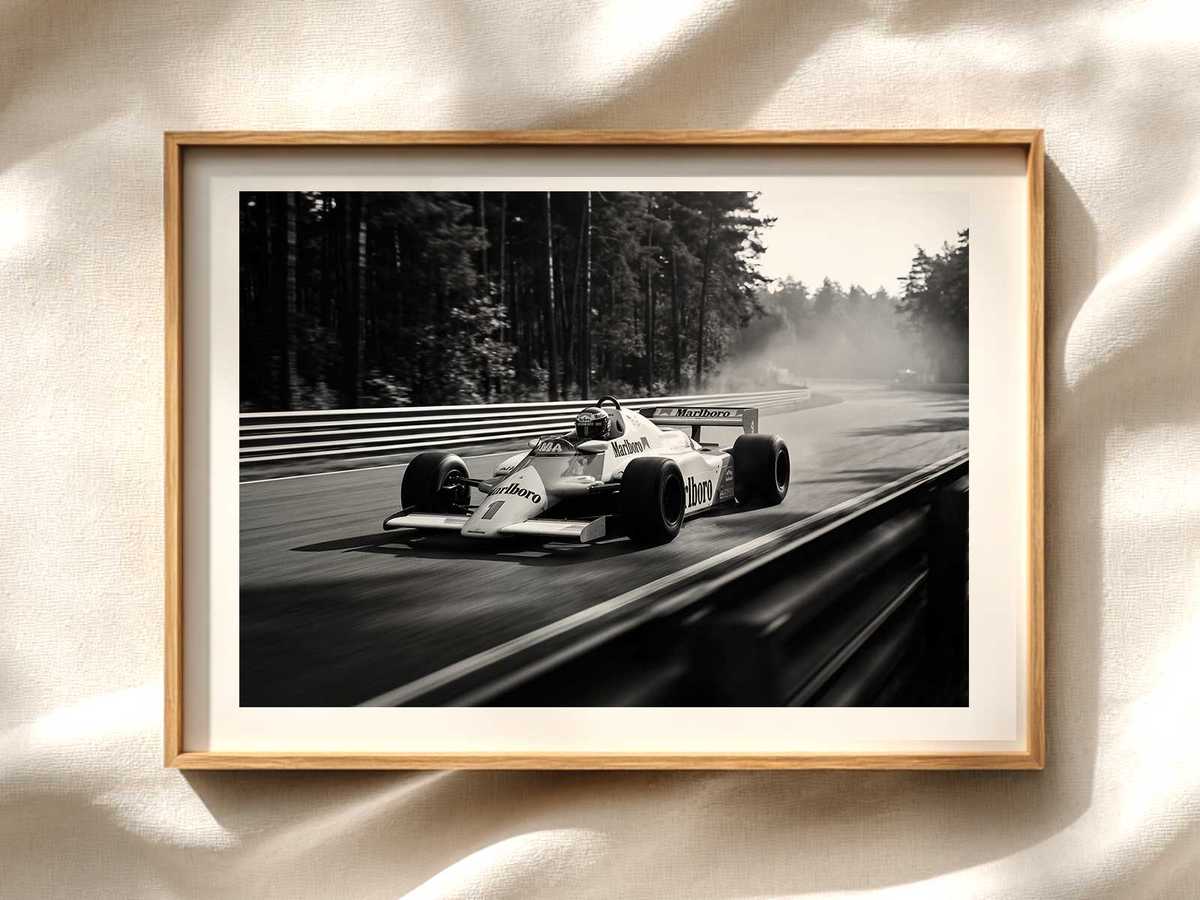
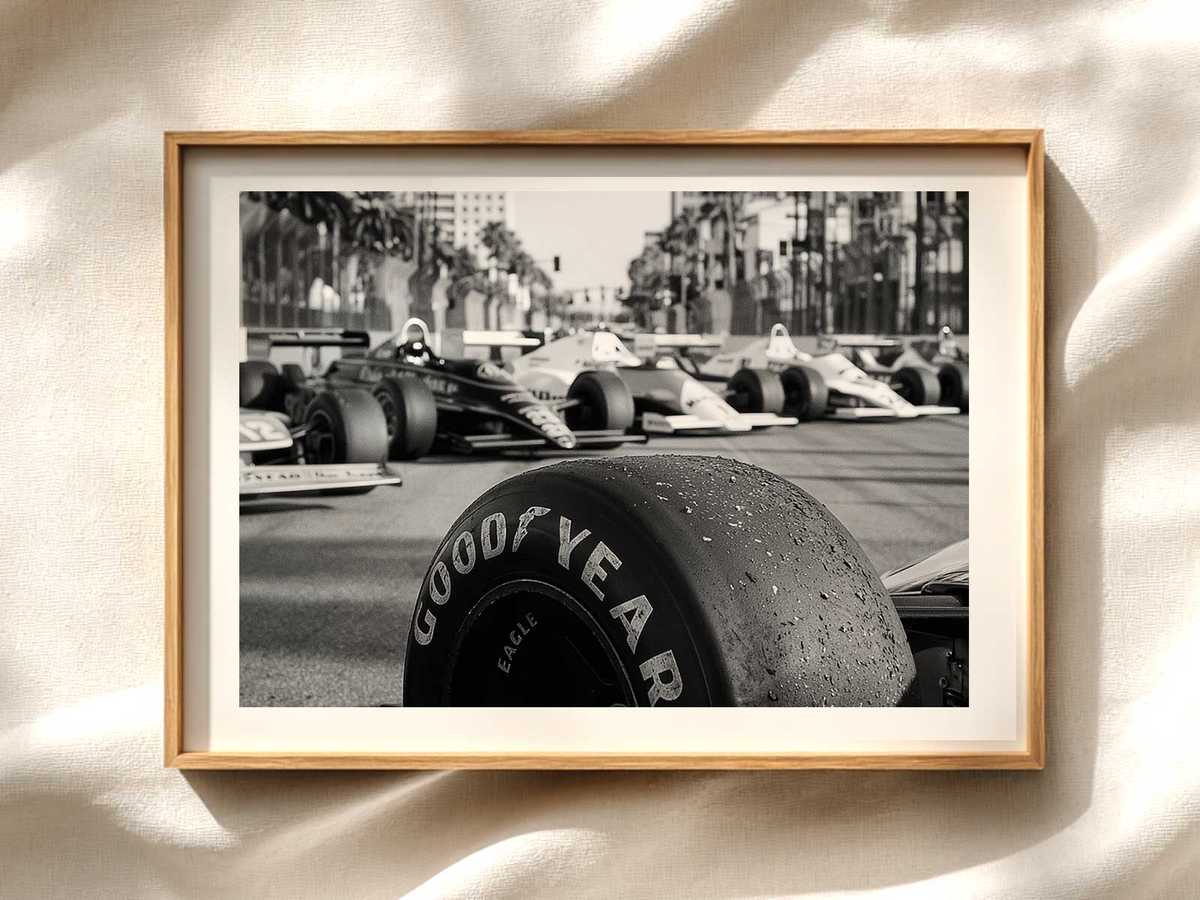
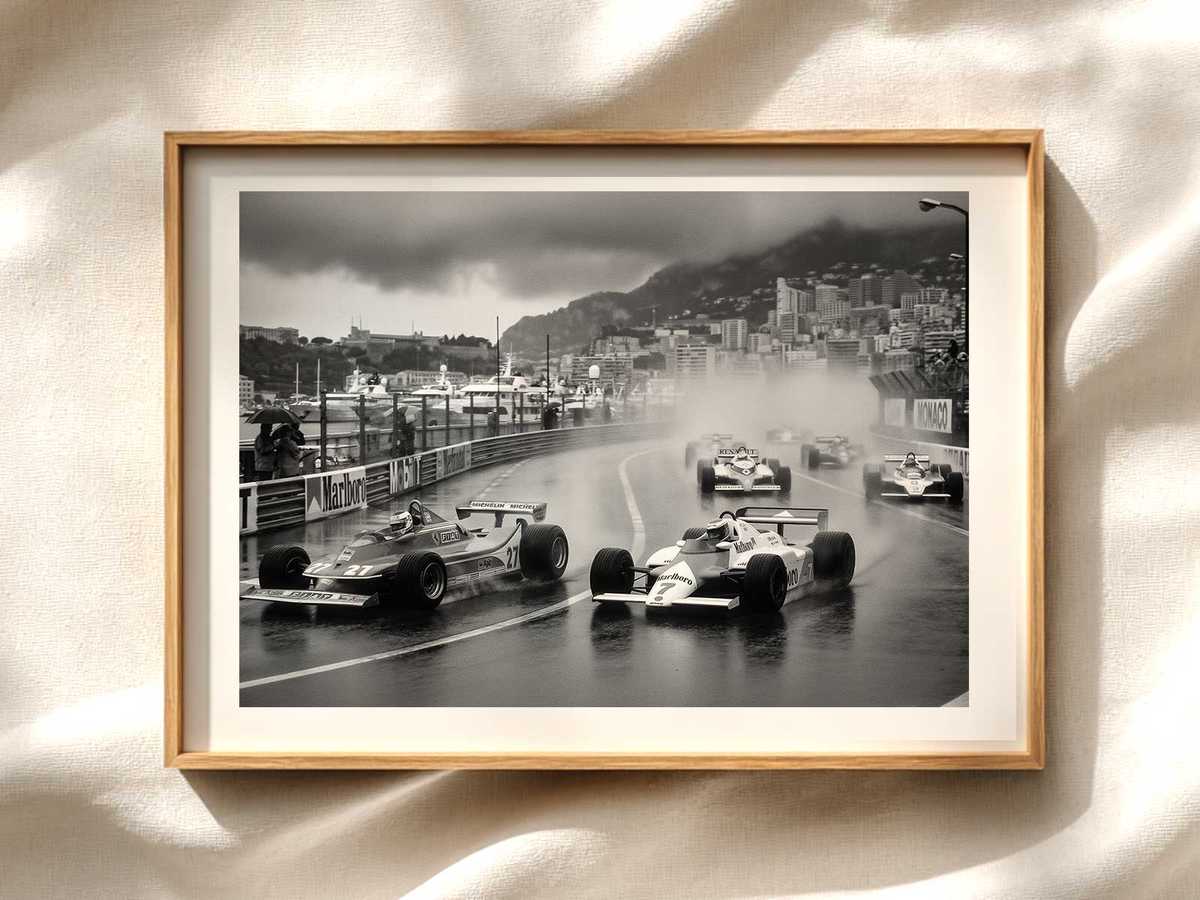
An F1 poster that draws on the sport's imaginary — a lone car at the edge of a grey sky, a driver silhouetted under a canopy of team colours, a pit lane frozen between motion and preparation — succeeds because it speaks to two instincts at once: the appetite for dramatic visual composition and the collector's desire for identity. The first moment you look at the print is rarely about facts; it's about a cut of light, a curve of bodywork and the implicit speed that the image promises even when everything is still. That visual promise is what turns a photograph or illustration into a piece of premium wall art.
Visually, Formula 1 is built from bold, recognisable shapes — the sharp silhouette of an open-wheel car, the shoulder line of a rear wing, the negative space of a tyre. These forms translate beautifully to large-format prints because they hold up at distance and reward close inspection. Colour plays a decisive role: team liveries and helmet motifs act like brand shorthand, anchoring the viewer instantly in a racing identity without needing labels. A carefully lit scene from a practice session — low-angle light catching metallic paint, heat haze softening background garages — becomes an evocative study in contrast and texture that reads as art rather than documentation.
The power of the practice-session atmosphere is especially compelling for wall art. Unlike the chaos of a race, an open practice lap or a slow roll through the pit lane offers an arrested moment — tension suspended. Mechanics move with purpose, engineers confer under umbrellas, and a solitary car carries the weight of expectation while remaining approachable as an object. This suspended quality lends itself to contemplation: viewers can imagine sound without hearing it, smell fuel and rubber without being present, and feel the precise calm before speed. A poster that captures that pause invites repeated looking, each time revealing a new detail or emotional tone.
Collectors and decorators prize Formula 1 prints that carry identity as much as atmosphere. A driver’s helmet design, a distinctive nose cone, or a team’s colour palette provides instant recognition and a personal anchor for the owner. In interiors, these prints operate like a statement piece — they can set the tone for a room, lending it a sleek, purposeful energy. Hung above a desk, in a study, or as the focal point of a living room, an F1 poster reframes the space: it makes contemporary lines feel sportier, and neutral palettes acquire momentum through contrast and scale.
[IMAGE_INSERT_ARTICLE_01]
Great motorsport imagery balances realism and suggestion. Too much technical detail can anchor a piece to a single moment or season; too little, and the image risks becoming anonymous. The most successful prints strike a middle ground: they offer enough expert cues — a vented bodywork silhouette, a wet-weather spray, or the tension of a pit-stop stance — to reward an informed eye while remaining visually accessible to anyone who appreciates form, light and motion. That balance is what elevates a poster from memorabilia to artful décor.
Finally, the emotional appeal of Formula 1 prints comes from memory and aspiration. Even for those who do not follow every race, the image of an F1 car implies a narrative of speed, precision and modern craft. For fans, it evokes seasons, circuits and moments; for newcomers, it signals a lifestyle: audacious, refined and kinetic. Whether you are curating a dedicated motorsport wall or choosing a single statement print to refine a room, a poster that leans into the sport’s visual language — light, silhouette, colour and the hush of a practice session — will feel both personal and timeless.
A Formula 1 print is more than an image: it is an atmosphere captured on paper. It can assert team identity, animate a room, and offer a quiet, repeatable thrill every time someone stops to look.