Dutch Grand Prix: How Zandvoort Imposes a Specific Reading of Performance
Circuit Zandvoort is a compact, undulating track whose flowing medium‑ and high‑speed sequences and limited run‑off create a distinct technical test for drivers and engineers. The Dutch Grand Prix demands a clear reading of performance across lap rhythm, tyre management and setup compromise — the venue rewards commitment in qualifying and disciplined tyre work in the race.
Quick summary: Zandvoort’s short lap and banked final corner force teams to prioritise high downforce and careful tyre thermal control, while heavy loads on the front‑left create one‑sided wear that shapes strategy and race craft.
Quick access:
Circuit identity • Corner rhythm & speed • Tyres & thermal management
FIRST READING OF THE CIRCUIT
At first glance Zandvoort reads as an "old‑school" technical circuit: compact, undulating and narrow, with flowing medium‑ and high‑speed corners rather than long straights. That visible DNA sets the priorities for a race weekend — aerodynamic stability through transitions, precise mechanical balance and a single, committed driving line through complex sequences because run‑off is limited and errors are punished.
CORNER RHYTHM AND SPEED PROFILE
The lap is built from connected arcs and blind crests where momentum and rhythm matter more than raw top speed. The mid sector and the technical cluster around Turns 8–10 are especially influential: these sequences demand continuity of speed and amplify small setup or steering errors into measurable lap time loss. The final banked corner (the Arie Luyendykbocht) allows higher cornering speeds and closes the lap with a high‑commitment exit that links directly to lap time on a short circuit.
BRAKING ENERGY AND TRACTION DEMANDS
Zandvoort’s layout has relatively few extended straights and more medium‑speed entries, which shifts the penalty away from repeated maximal braking zones toward precise trail‑braking and traction control out of mid‑speed corners. Exits from slow‑to‑medium turns and the transitions into faster sequences are where traction and rear stability decide how effectively a car converts lateral load into lap time. Because the track is undulating, the way the car settles under braking and the driver’s ability to commit early matters for drive out of the subsequent corners.
KERBS, SURFACE, AND TRACK EVOLUTION
The surface and narrow profile concentrate tyre usage along a well‑worn racing line; kerb use is limited by the need to preserve tyre life and avoid unsettling the car on the undulations. Across sessions the track builds grip, but the compact nature of the circuit means thermal and rubbering effects can change tyre behaviour quickly between runs. Teams monitor how tyres adapt to the surface to refine stint plans and qualifying windows.
TYRES, THERMAL LOAD, AND STINT SHAPE
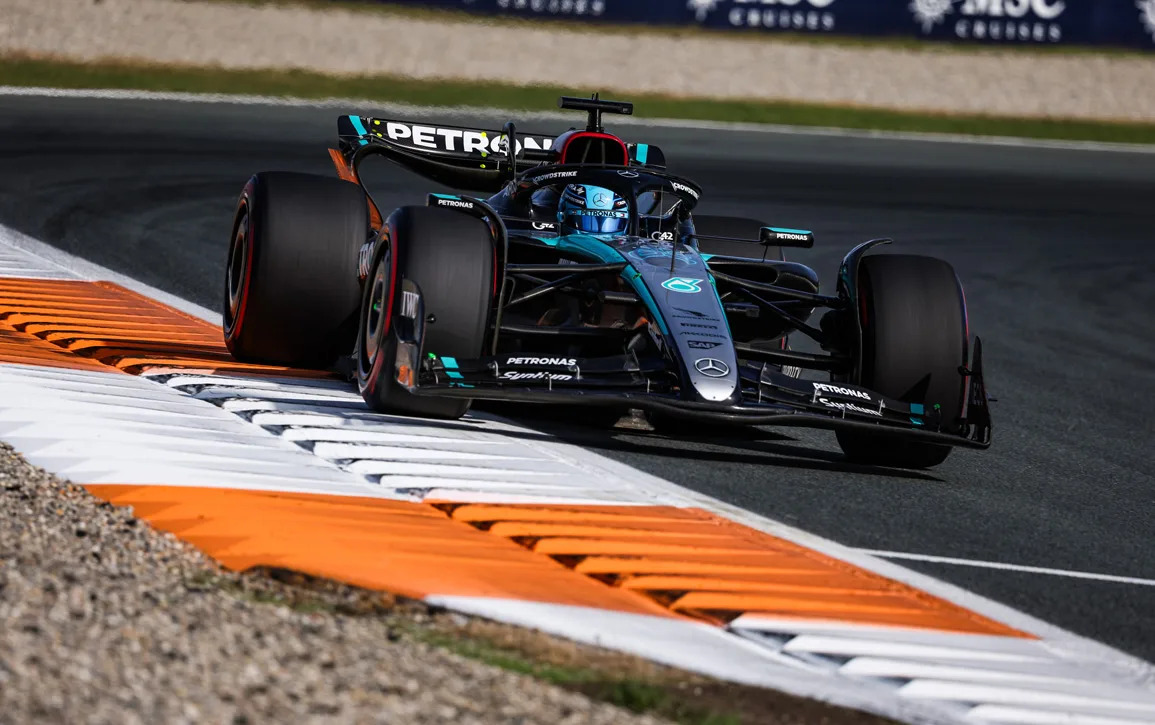
Tyre management is central to performance at the Dutch Grand Prix. The banking and the long right‑handers load the front‑left tyre heavily; teams consistently report pronounced one‑sided front‑left wear. That pattern creates both thermal and structural stresses: managing bulk overheating while keeping tyre temperatures in the optimal window is vital, and compound choice becomes a strategic lever because degradation and thermal runaway potential influence stint length.
SETUP TRADE-OFFS AND CAR COMPROMISES
Because Zandvoort rewards cornering and stability through undulations, teams commonly opt for relatively higher downforce, especially at the rear, to stabilise the car in fast sequences and the banked final corner. The trade‑off is increased drag and possible sensitivity in low‑speed traction zones; teams must find mechanical grip settings that support front end responsiveness without exacerbating the front‑left tyre’s load. These compromises mean a car that is strong over one lap in qualifying can be more vulnerable on long runs if tyre thermal management is not resolved.
OVERTAKING, DRS, AND RACECRAFT
The short lap, limited long straights and the need for a single committed line reduce natural overtaking opportunities during the Dutch Grand Prix. The technical sequences around Turns 8–10 and the importance of a clean exit from the final banked corner amplify the premium on qualifying and pit strategy. Available evidence suggests that track position, tyre life and timing of pit stops often have a larger effect on race outcome here than wheel‑to‑wheel passing in the mid‑race laps.
HISTORICAL AND COMPETITIVE CONTEXT
Zandvoort’s compact, banked, undulating character has long made it a distinctive stop on the calendar. The circuit’s modern return emphasised the same traits: a narrow technical field where aero balance and tyre care are decisive. That competitive context explains why teams bring setup approaches that prioritise stability and why race strategies often revolve around managing the front‑left tyre and exploiting qualifying position.
CLOSING INTERPRETATION
The Dutch Grand Prix at Circuit Zandvoort imposes a coherent reading of performance: commit to aero and balance that stabilise through undulations, respect the asymmetric tyre loads that produce front‑left wear, and accept that grid position and tyre strategy frequently outweigh mid‑race overtaking. Understanding Zandvoort is less about raw speed and more about sequencing — how each corner prepares the next, how the tyres age, and how teams reconcile downforce with mechanical grip across an intense, short lap.
Author: William L.