How F1 Australia (Albert Park) Shapes Setup, Strategy and On-Track Action
The Australian Grand Prix at Albert Park in Melbourne is one of Formula 1's semi-permanent street circuits. Its mix of parkland roads, relatively high average speeds for a street-style layout and an evolving surface creates a distinctive test for chassis balance, tyre strategy and racecraft.
Albert Park (~5.303 km) is a semi-street circuit combining fast and medium-speed sections with technical corners. The venue rewards a reactive front end, aerodynamic efficiency and strategic tyre use; weather and safety-car periods often swing outcomes.
Circuit identity • Corner rhythm & speed • Setup trade-offs • Tyres & strategy • Overtaking & racecraft
FIRST READING OF THE CIRCUIT
Albert Park is a semi-permanent street circuit laid out on public roads and parkland in Melbourne. At roughly 5.303 km per lap it sits unusually high in lap length for a street-style venue and produces average speeds that are high for that category. The immediate impression is of a hybrid track: not a tight, cathedral-of-kerbs street circuit, but not a purpose-built permanent circuit either. That hybrid DNA shapes the weekend from free practice through to race day.
CORNER RHYTHM AND SPEED PROFILE
The lap alternates between fast, flowing sectors and shorter straights that lead into technical corner sequences. This creates a rhythm where momentum in high-speed portions matters, but frequent direction changes and short linking straights interrupt long aero-stability runs. The net effect is that time can be found both by carrying speed through medium-speed sweepers and by crisp, reactive turn-ins in the tighter sections.
BRAKING ENERGY AND TRACTION DEMANDS
Albert Park puts a premium on a well-sorted chassis and a responsive front end for clean turn-in. Drivers face a mix of firm braking zones and traction exits where rear grip and stability on throttle are important. Because the circuit sustains relatively high average speeds, aerodynamic stability under braking and at turn entry is a practical concern for teams when setting brake bias and suspension response.
SETUP TRADE-OFFS AND CAR COMPROMISES
Teams must balance aerodynamic downforce against drag: the circuit’s higher-than-typical average speed rewards aerodynamic efficiency, but the sequence of technical corners requires enough downforce and a reactive front end for quick turn-in. The verified evidence points to a setup compromise between aero and mechanical balance; teams often tune for front-end responsiveness while trying not to sacrifice straight-line speed. Ride and compliance also matter because Albert Park is a semi-street layout where kerbs and surface transitions influence mechanical grip.
TYRES, THERMAL LOAD, AND STINT SHAPE
Pirelli commonly nominates the softer part of its range for Australia (examples in recent years include C3–C4–C5), reflecting medium abrasiveness and the desire to encourage pit-stop strategies. The surface rubberises through the weekend, changing grip levels between sessions. That evolution, combined with kerb use and corner sequences, produces degradation patterns where both one- and two-stop strategies can be plausible. Consequently, tyre management and strategic calls often determine race shape more than outright cornering speed alone.
KERBS, SURFACE, AND TRACK EVOLUTION
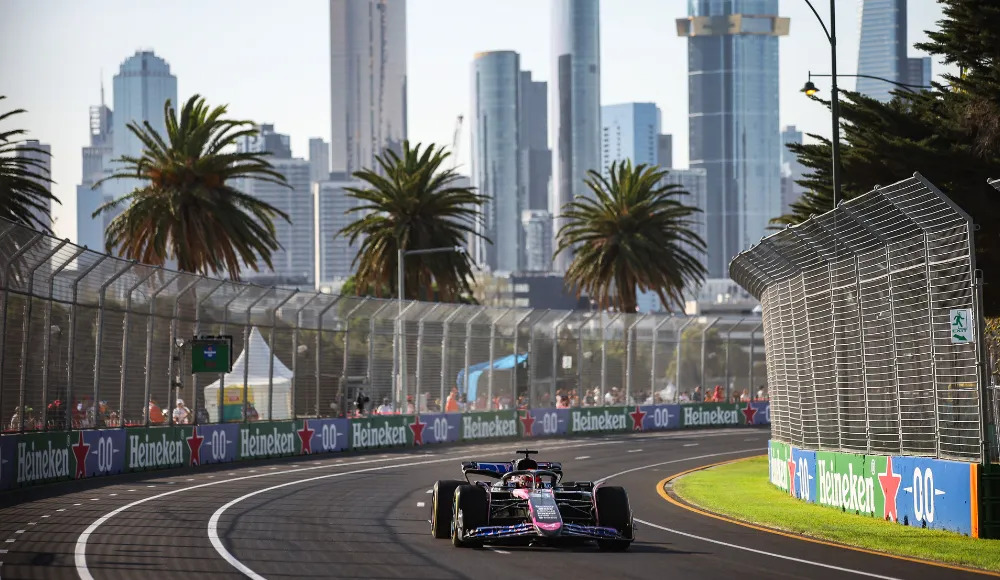
The parkland roads provide a relatively smooth starting surface that nevertheless evolves as rubber builds up across practice and qualifying. Kerbs and short straights feeding technical corners encourage track limits scrutiny and active kerb use; teams monitor surface evolution closely because grip gains from rubbering-in affect lap times and tyre degradation trajectories between sessions.
OVERTAKING, DRS, AND RACECRAFT
Overtaking at Albert Park is generally more difficult than at many modern, purpose-built circuits. The layout’s combination of short run-offs, technical entries, and limited long heavy-braking zones reduces natural overtaking windows. For that reason, strategy, tyre choices, safety cars and timing often have an outsized influence on race outcome. When DRS is used on the circuit, track-position and exit speed from the preceding corner become decisive because clean slipstream and a well-timed run to the overtaking zone are required to complete a pass.
HISTORICAL AND COMPETITIVE CONTEXT
Albert Park has long served as a season highlight because its semi-street character produces variable race conditions and strategic permutations. The venue’s tyre nominations, surface behaviour and weather sensitivity have repeatedly made strategy debriefs and team analysis core parts of the weekend narrative. These factors keep the circuit relevant in the modern calendar even as layout debates continue between street-style spectacle and purpose-built overtaking opportunities.
CLOSING INTERPRETATION
Albert Park’s identity is defined by its hybrid nature: semi-street roads that deliver relatively high average speeds, technical corner sequences that reward a reactive front end, and a surface that evolves to make tyre strategy central. The venue does not guarantee wheel-to-wheel excitement on merit alone; instead it amplifies the tactical side of Formula 1. For teams and drivers the challenge is clear—find the balance between aero efficiency and mechanical responsiveness, manage tyres across changing grip levels, and be prepared for weather or strategic incidents to reshape the race.
Author: William L.