Monza Grand Prix: reading performance between key sequences, technical…
The Monza Grand Prix imposes a distinct interpretation of performance: a lap built around long full-throttle sections, a handful of decisive slow-speed moments and a setup compromise that favours minimum drag without wrecking stability. Understanding Monza means reading sequences rather than isolated corners—how long straights, heavy braking zones and medium-speed sweepers interact to expose strengths and weaknesses in car design and strategy.
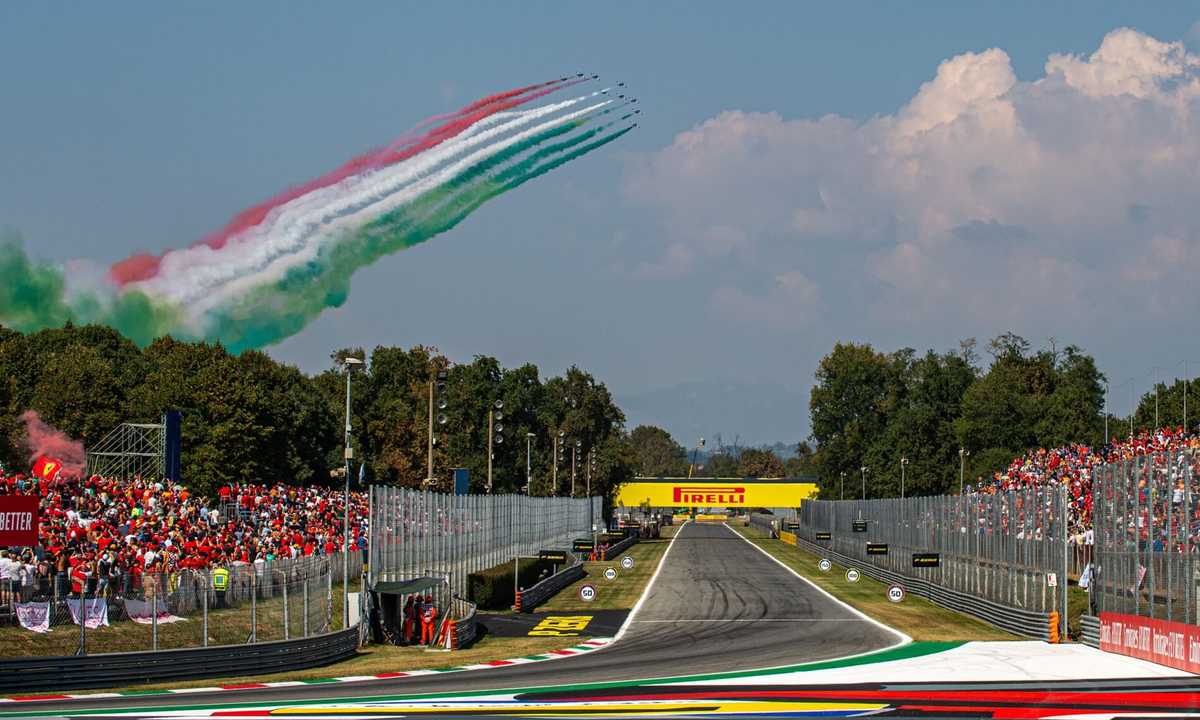
Monza is the fastest circuit on the calendar. Teams run the lowest downforce packages, drivers spend around 80% of a lap at full throttle and the lap is defined by a few heavy braking zones and signature high-speed corners.
Circuit identity • Setup trade-offs • Overtaking & DRS logic • Tyres and stint shape
FIRST READING OF THE CIRCUIT
Monza is the fastest circuit on the Formula 1 calendar and its visible DNA is straight-line speed. Teams run the lowest downforce aero packages of the season to minimise drag, and the track layout rewards top speed and power unit efficiency more than peak cornering downforce. That single-minded identity forces a lap-plan built around momentum conservation across long straights punctuated by a few intense deceleration and medium-speed sequences.
CORNER RHYTHM AND SPEED PROFILE
The lap rhythm alternates between very long full-throttle runs and compact, high-stress sequences. Signature high-speed corners—Curva Grande, the two Lesmo corners and Parabolica (Curva Alboreto)—demand stability and clean aerodynamic behaviour at speed. These sweepers are where aerodynamic efficiency still matters: you need enough stability to carry speed without generating excessive drag that costs you on the straights. Conversely, the chicanes and the Variante sequences break momentum sharply and reset the lap’s rhythm, making transitions between extreme speed and heavy mechanical load critical for lap time.
BRAKING ENERGY AND TRACTION DEMANDS
Monza includes several very heavy braking zones, notably into the first chicane (Variante del Rettifilo) and Variante Ascari. Those stops put the brakes and stability settings under real stress: teams must ensure a predictable brake balance and a chassis that resists nose-dive and instability under high deceleration. Traction zones after these hard stops are decisive for sector time—good rear mechanical grip and clean throttle application help turn a strong braking point into a usable exit and a long run down the next straight.
TYRES, THERMAL LOAD, AND STINT SHAPE
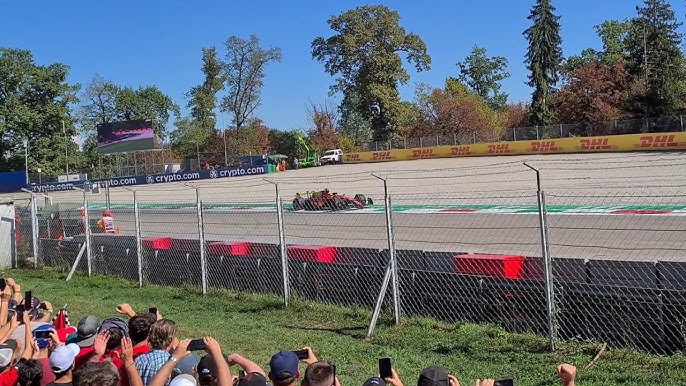
Pirelli’s analysis and race previews consistently show Monza leans toward lower tyre degradation compared with more abrasive, high-downforce circuits. That durability means one-stop strategies are frequently viable when the compounds and conditions align. However, recent resurfacing has altered grip characteristics; tyre behaviour and surface interaction have thus become an explicit factor in setup and strategy discussions. The available evidence suggests teams must balance tyre preservation through a low-drag aero choice against ensuring enough mechanical grip and temperature to keep the tyres in their optimal window, especially after heavy braking zones.
SETUP TRADE-OFFS AND CAR COMPROMISES
At Monza the clearest compromise is between minimum drag for top speed and sufficient stability for high-speed sweepers and hard braking. Running the lowest downforce package reduces lap-time loss on the straights, but it increases demands on mechanical grip and ride control in medium-speed corners like Lesmo and Parabolica. Brake cooling and balance are also setup levers: brake ducts and suspension settings must protect against fade in heavy-stop sequences without adding unnecessary drag. In short, teams that find the best balance between aerodynamic efficiency, mechanical grip and braking stability tend to extract the most from a Monza weekend.
OVERTAKING, DRS, AND RACECRAFT
Monza’s combination of long straights and heavy braking zones naturally creates overtaking opportunities. The track’s high-speed character amplifies the value of slipstream and top-end power: cars with better straight-line efficiency and power-unit performance can convert DRS and tow advantages into passes. But successful overtakes still require clean braking into the tight chicanes and Ascari complex; drivers who can carry momentum through sweepers and then out-brake rivals in the braking zones gain the decisive edge. Positioning on the approach to those braking points is therefore often more important than outright cornering ability.
HISTORICAL AND COMPETITIVE CONTEXT
Monza’s status as the temple of speed is embedded in its competitive logic: teams that bring efficient low-drag aero concepts and strong straight-line power typically perform better here than at high-downforce tracks. Pirelli and circuit officials have documented how resurfacing and compound choices influence recent races, reinforcing that small changes to surface or tyre selection can shift strategic outcomes even at a venue dominated by speed.
CLOSING INTERPRETATION
Reading performance at the Monza Grand Prix means reading the lap as a sequence: long full-throttle runs, a few braking-rich interruptions and medium-speed sweepers that demand stability. The track exposes trade-offs—minimal downforce for top speed versus the need for mechanical grip and brake predictability—and it rewards designs and drivers who can navigate that balance. For teams, Monza is a test of aerodynamic efficiency and racecraft in equal measure; for drivers, it is a study in timing and momentum management.
Author: William L.