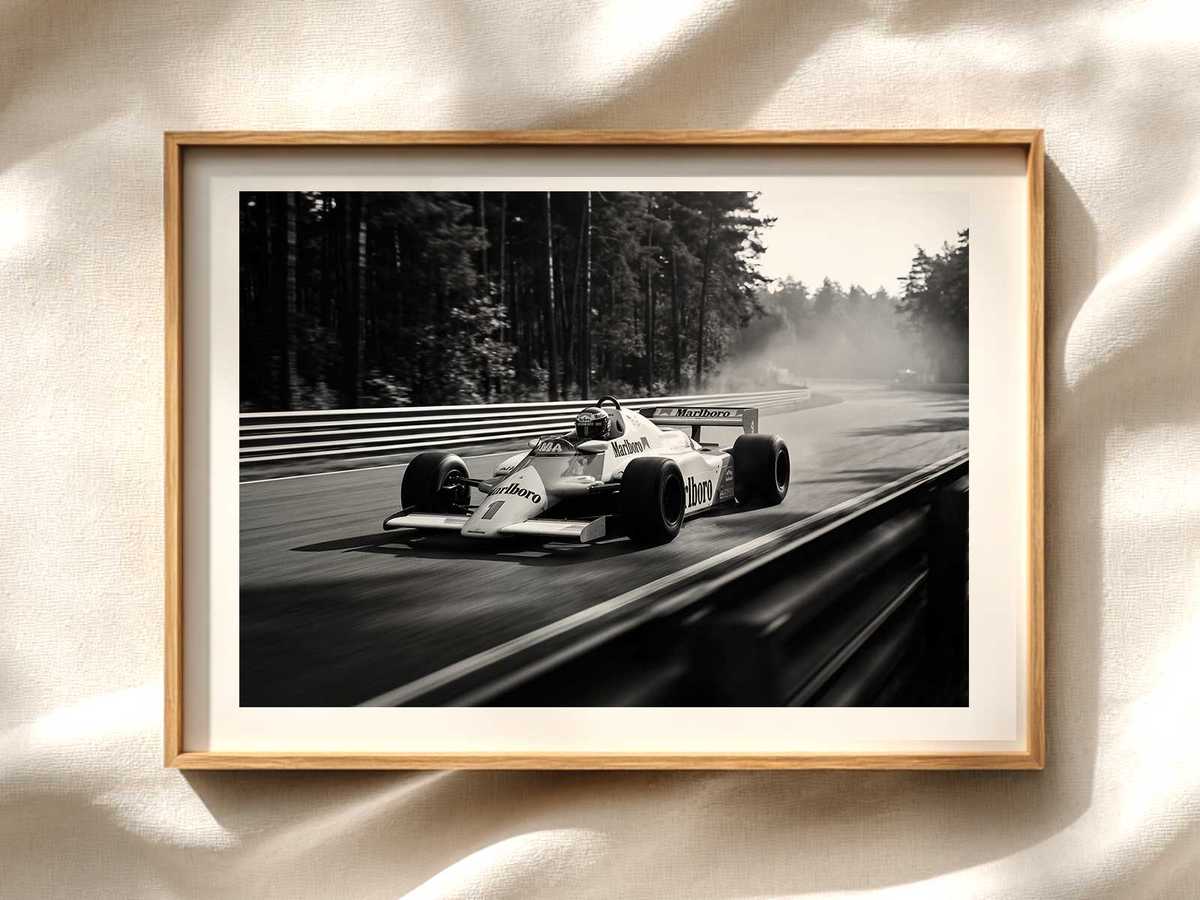
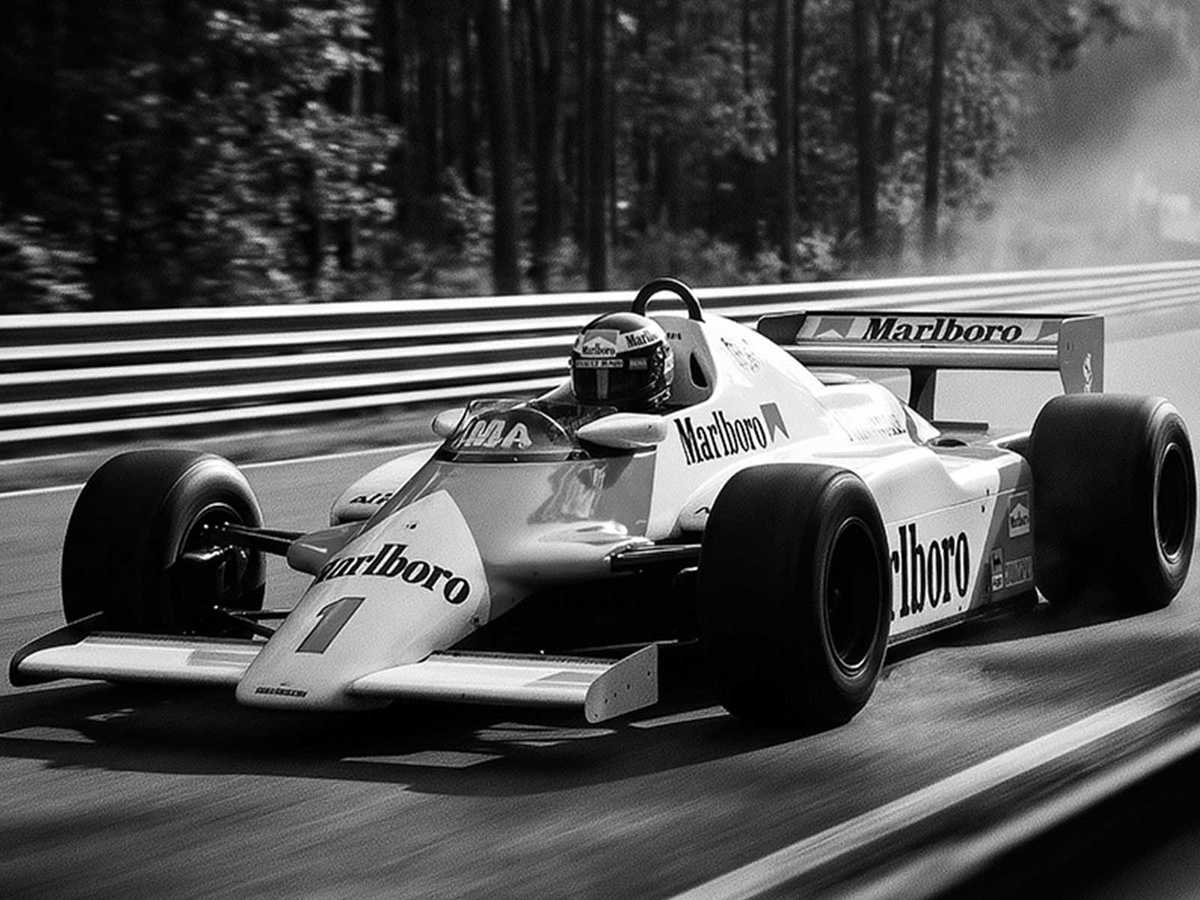
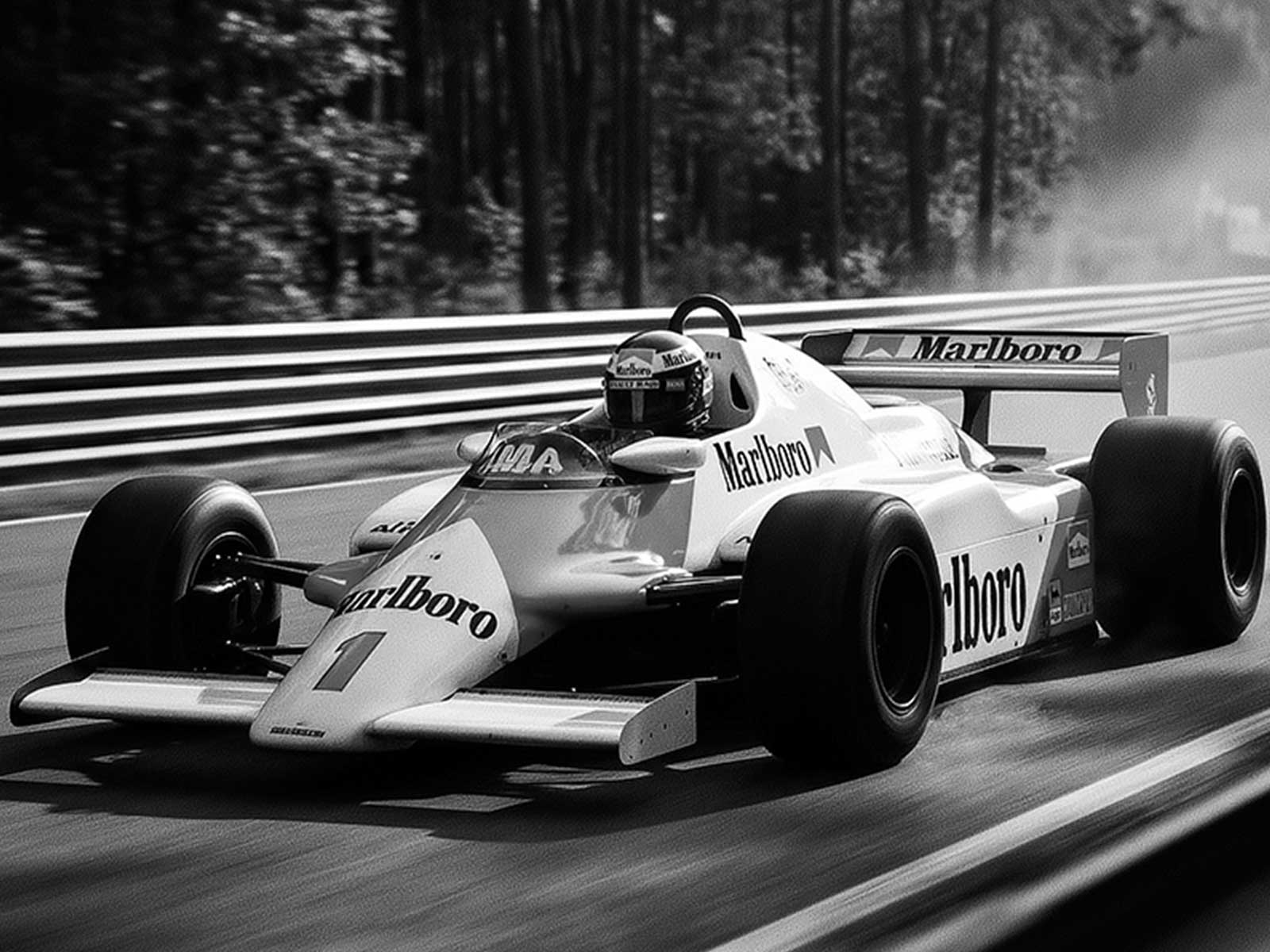
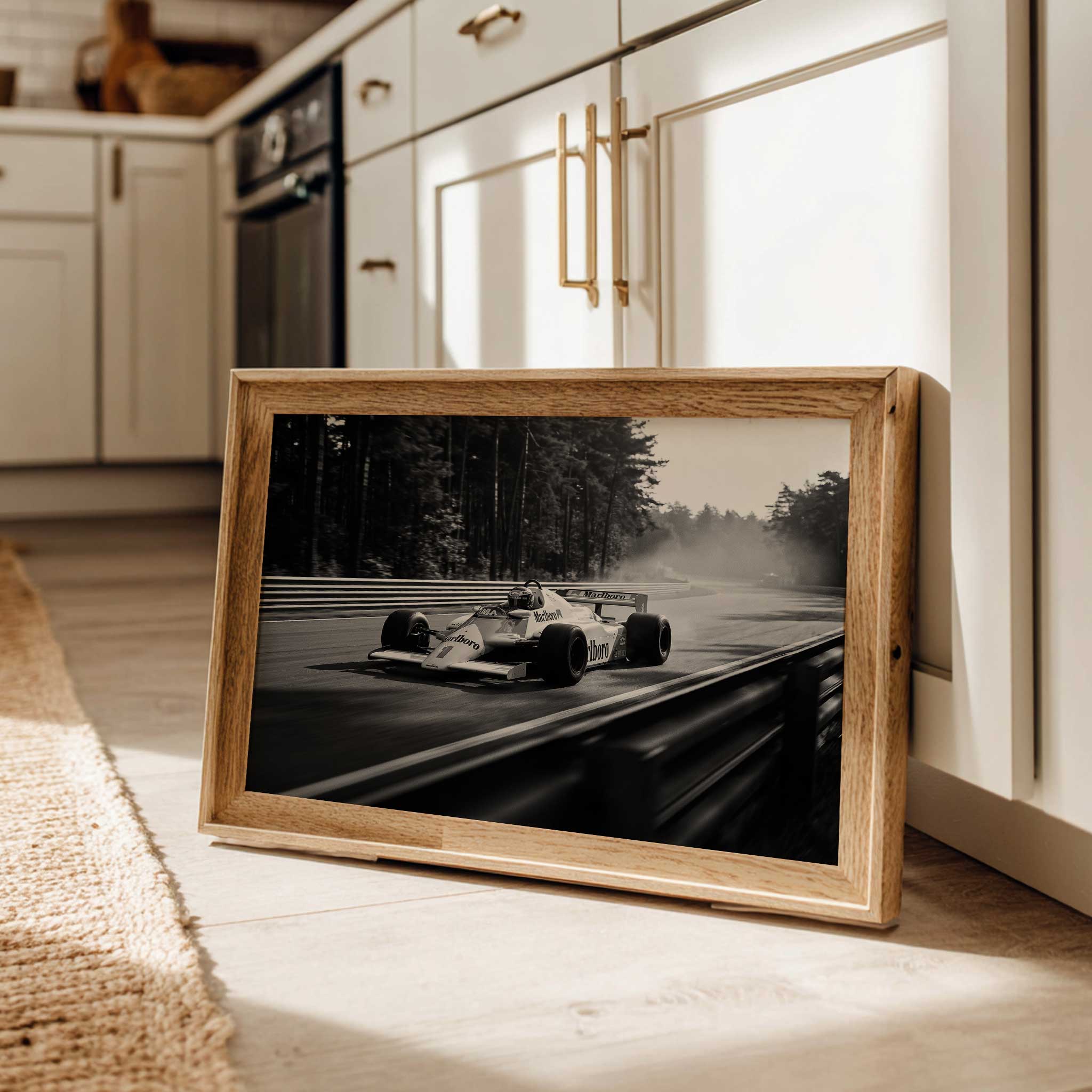
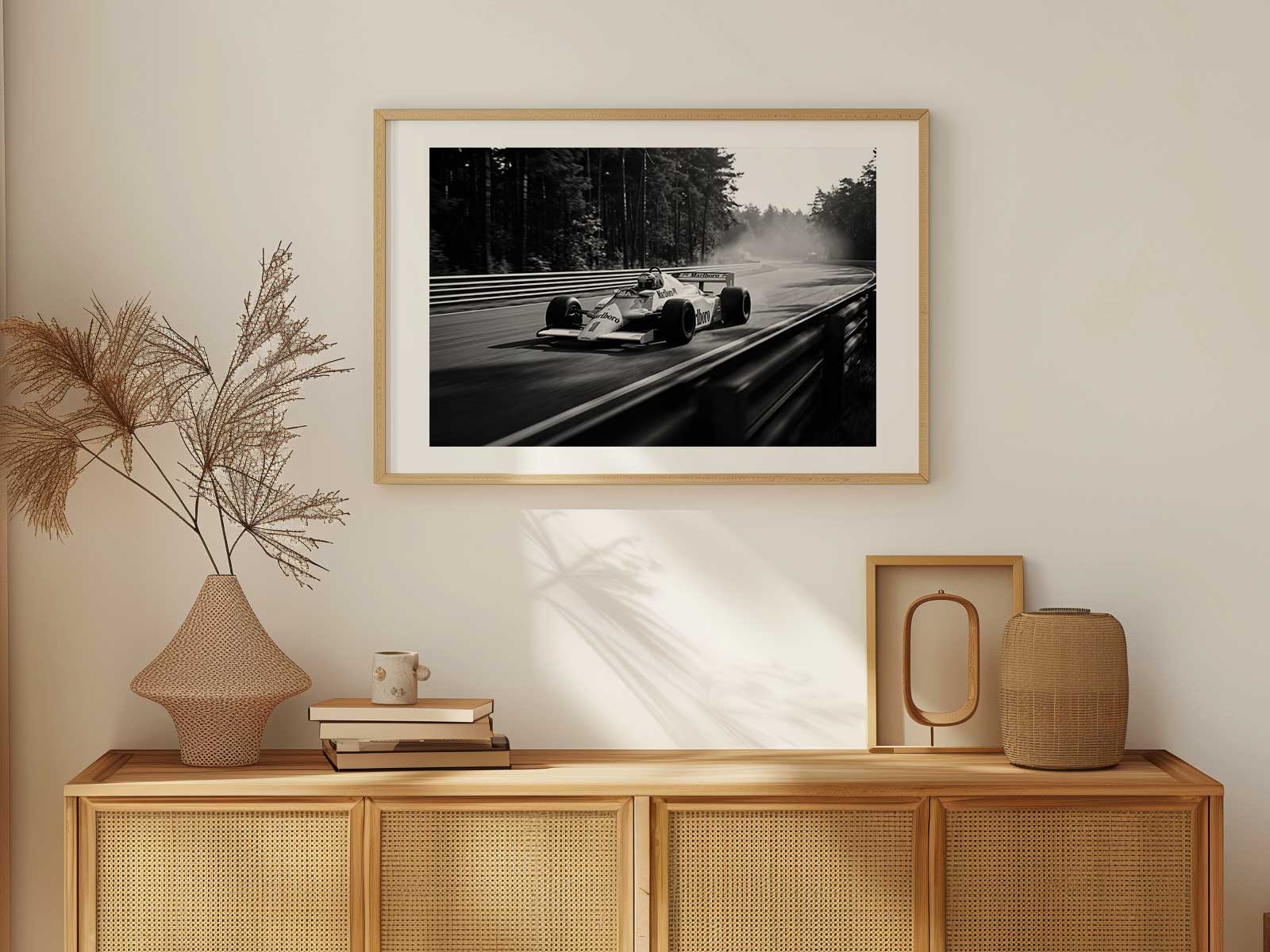
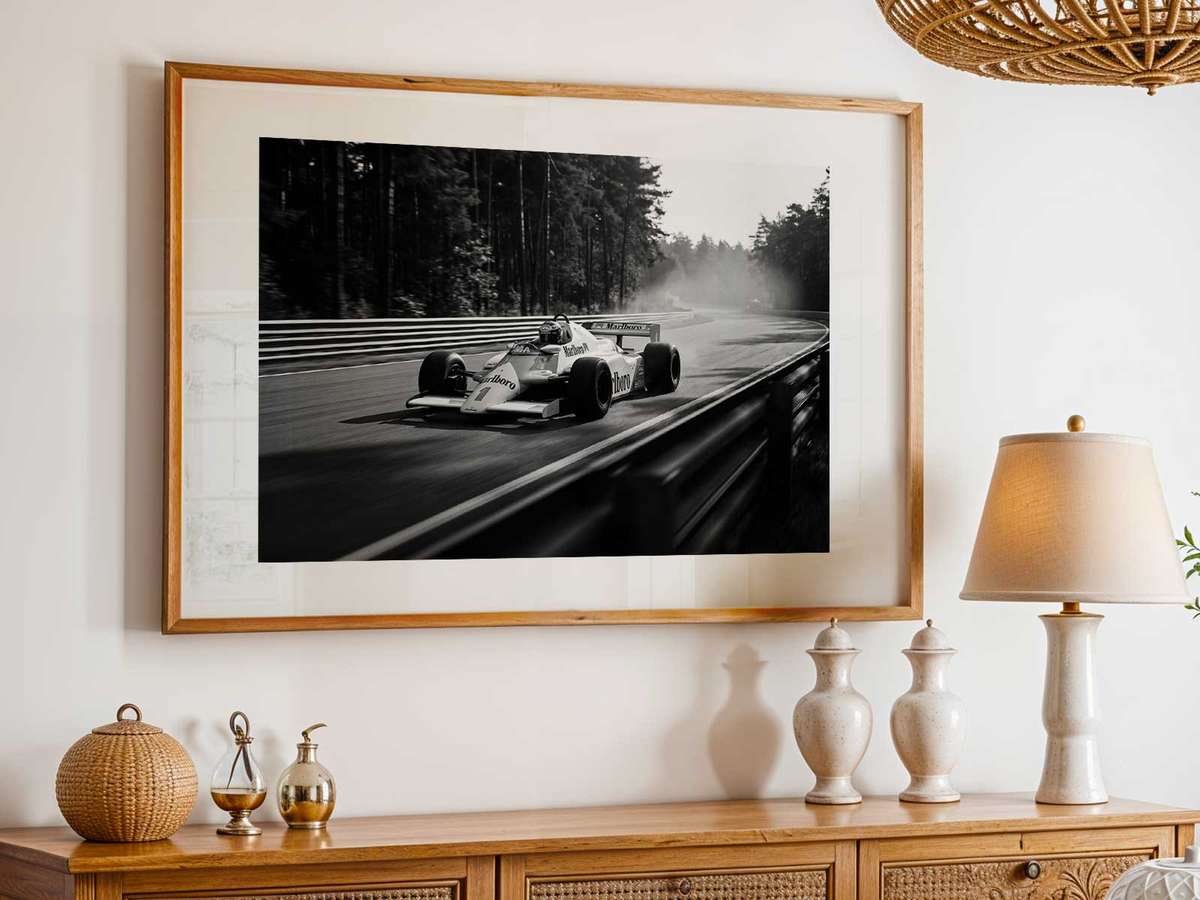
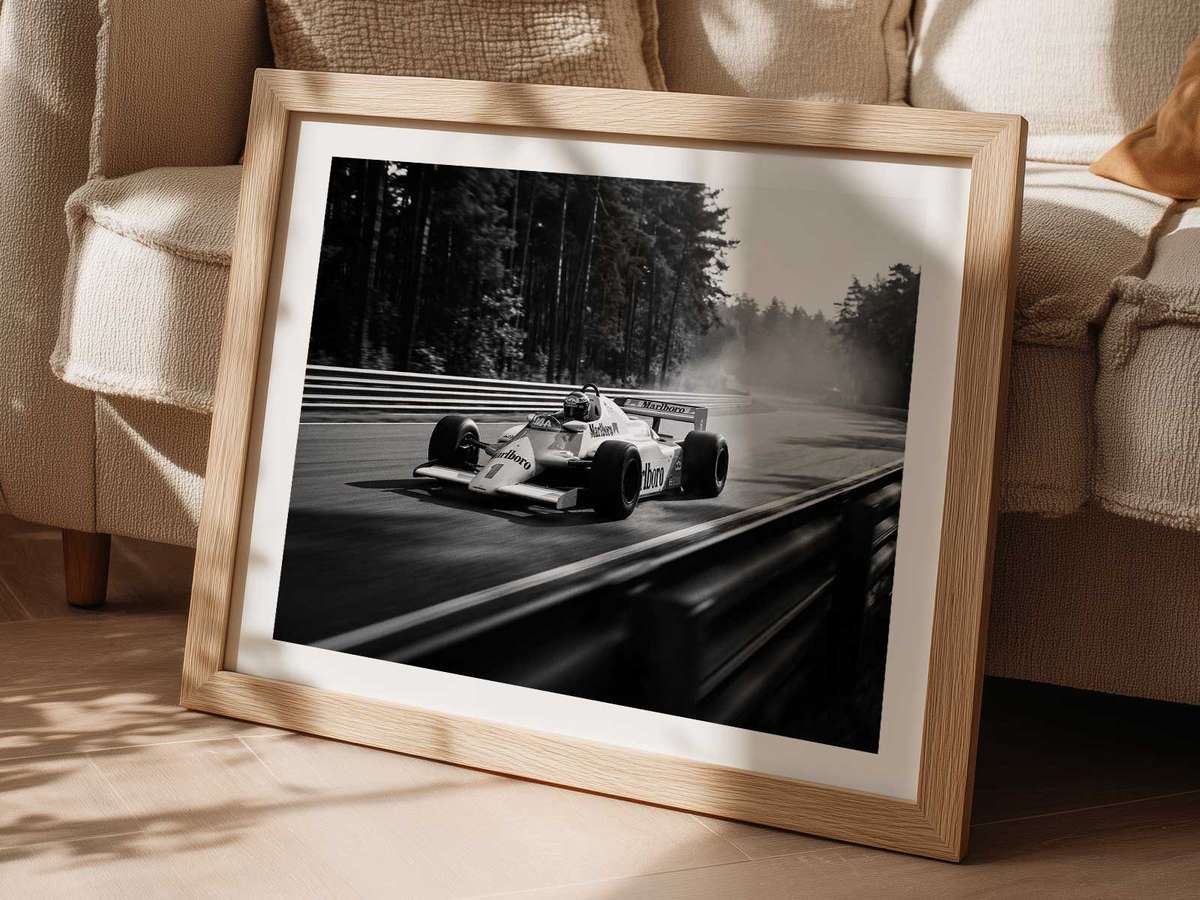
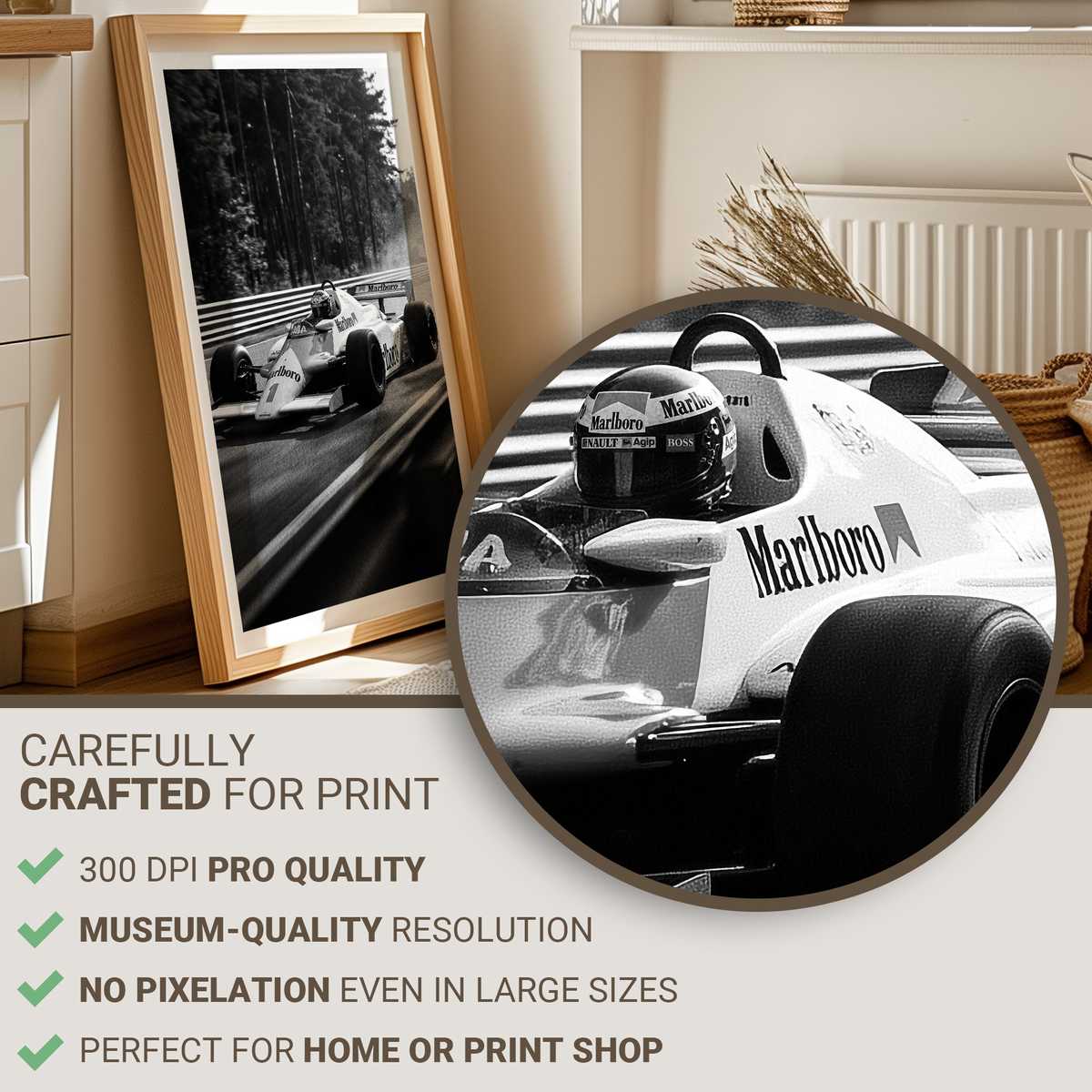
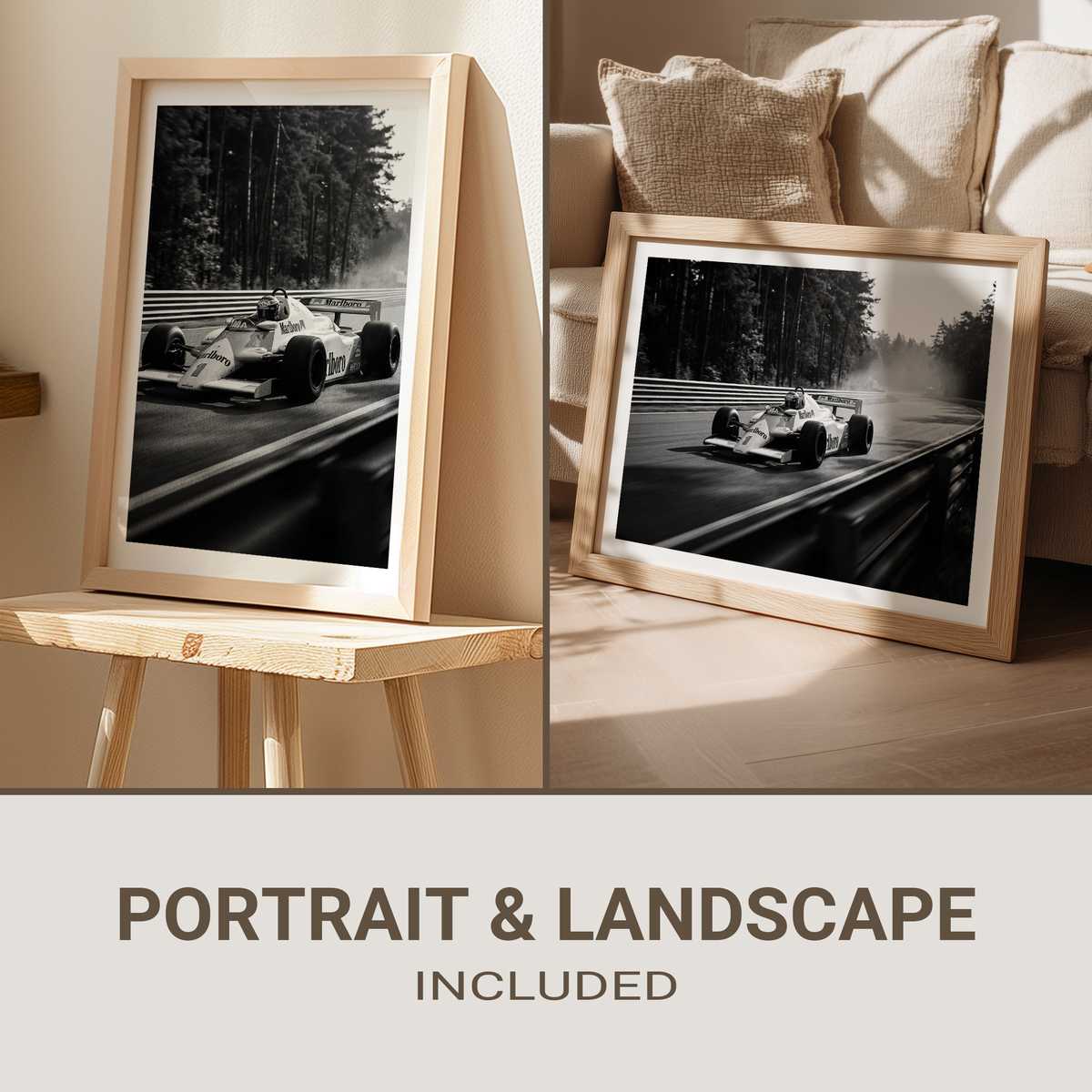
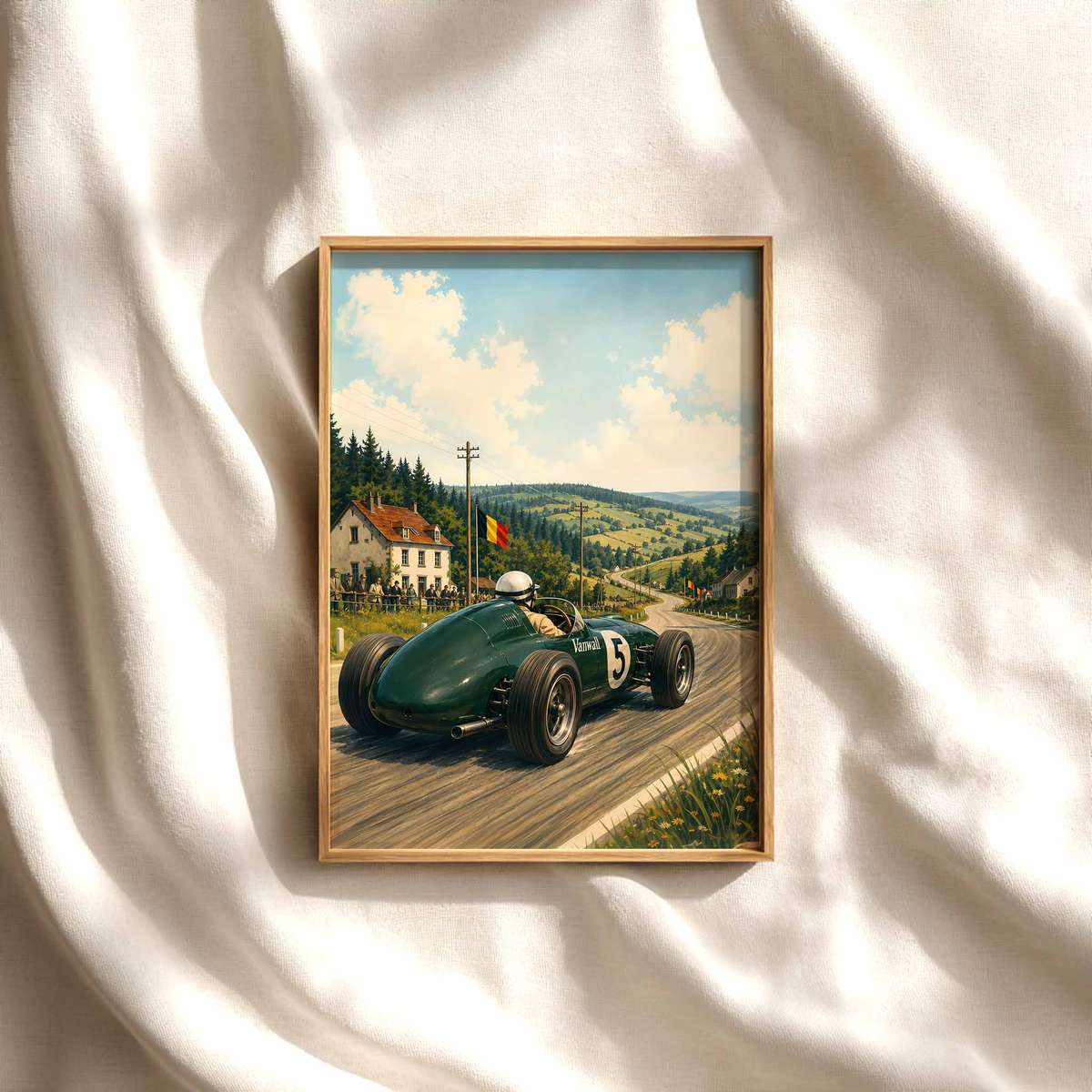
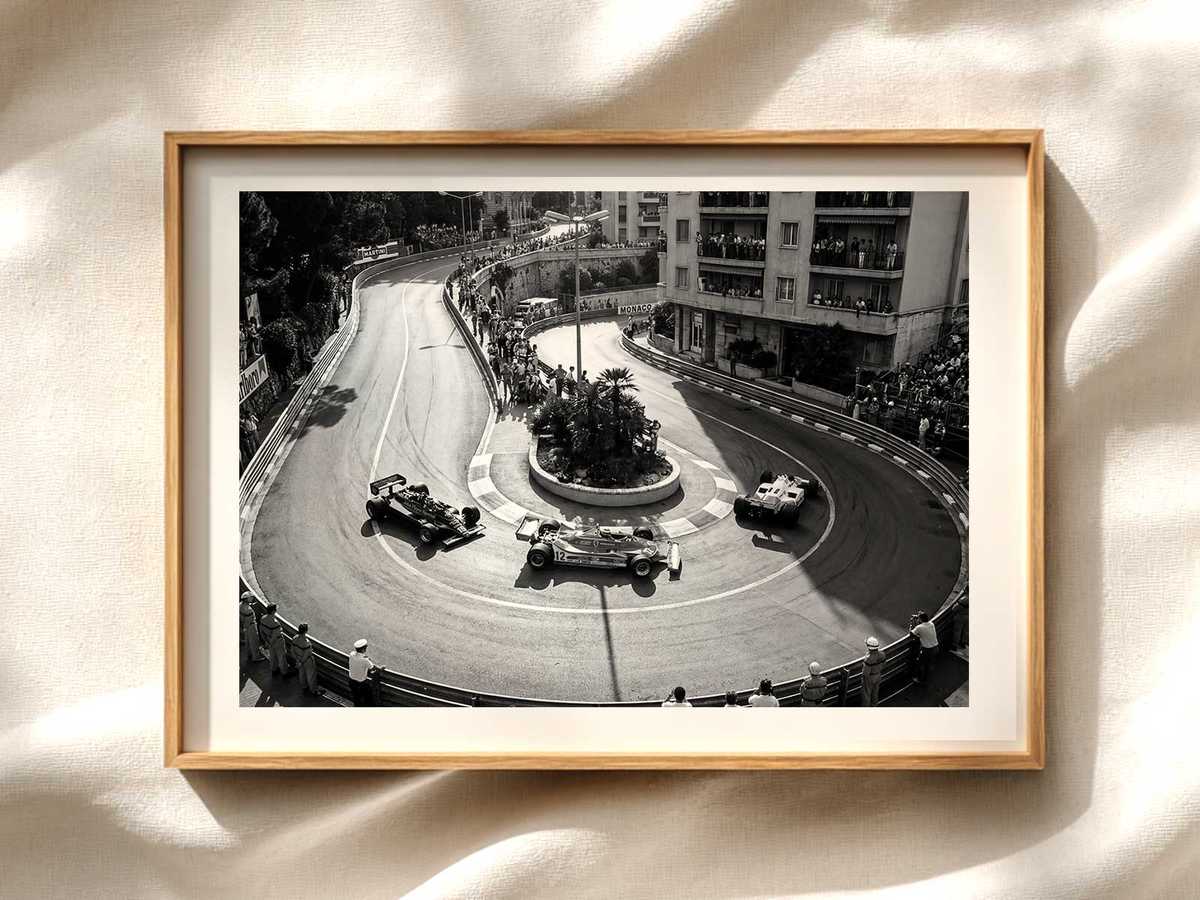
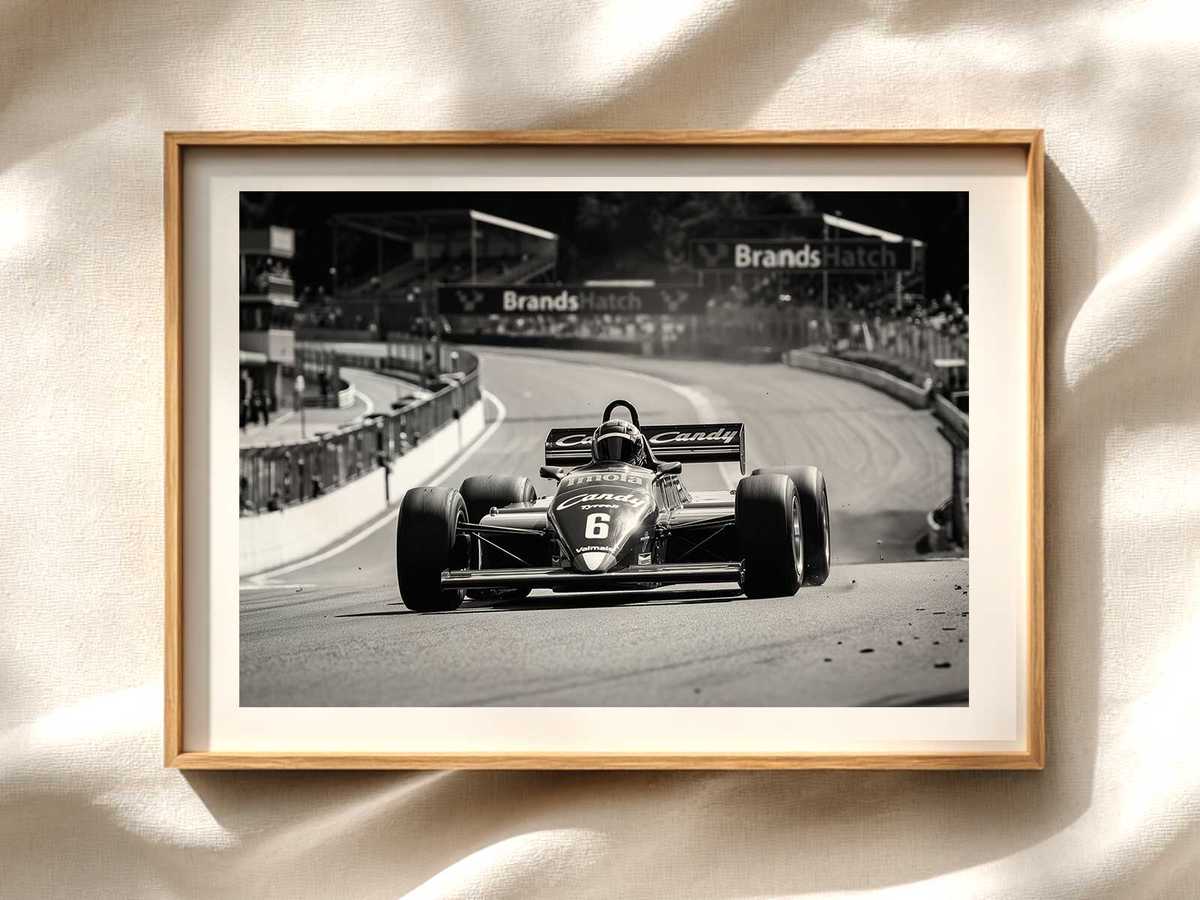
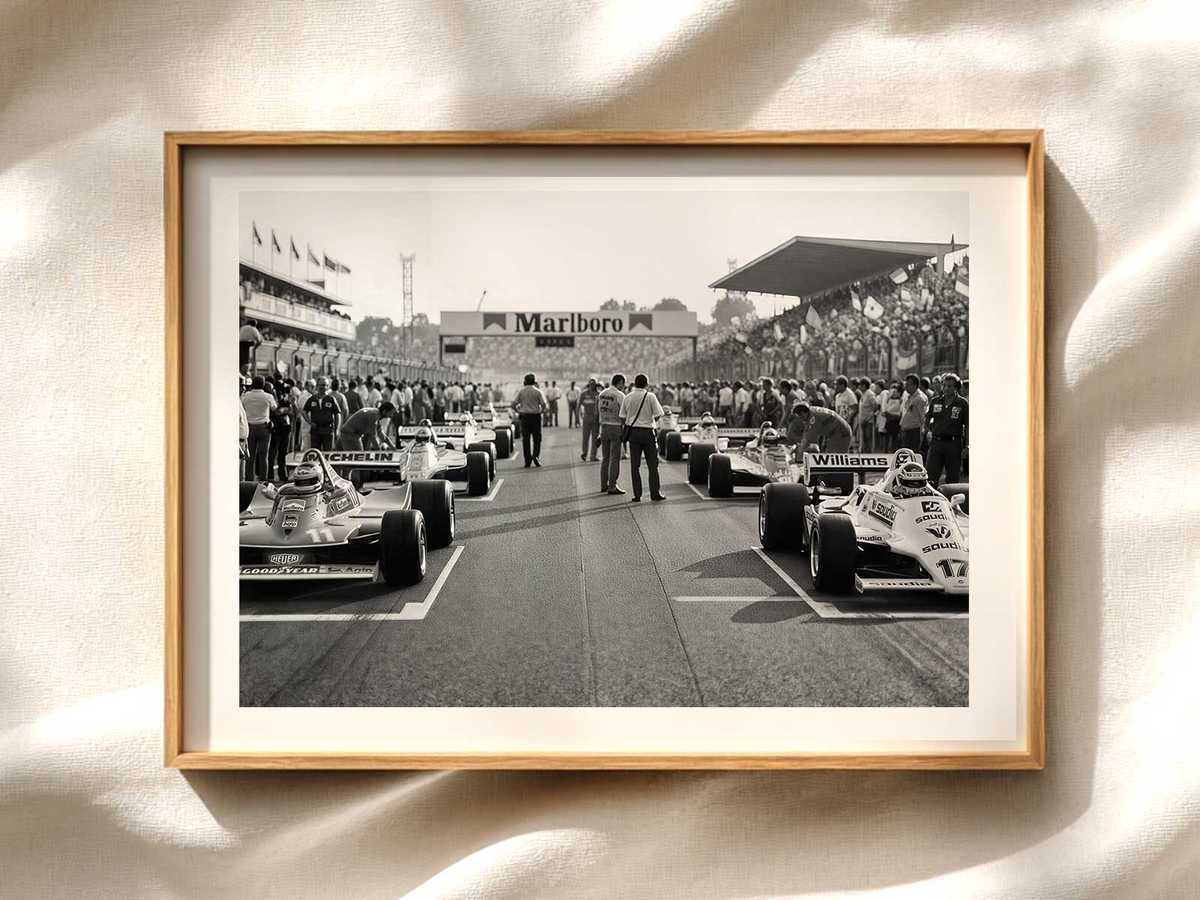
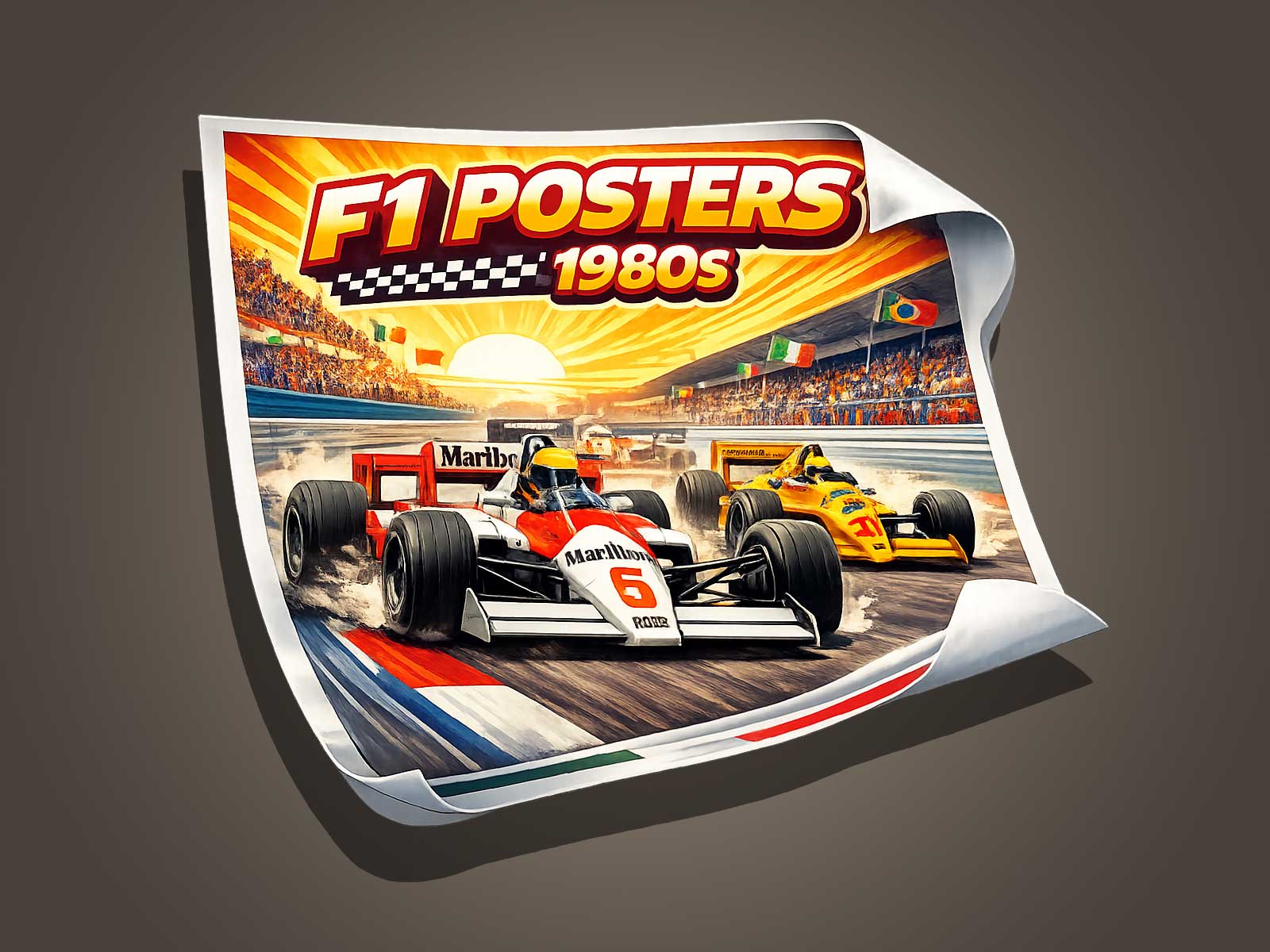
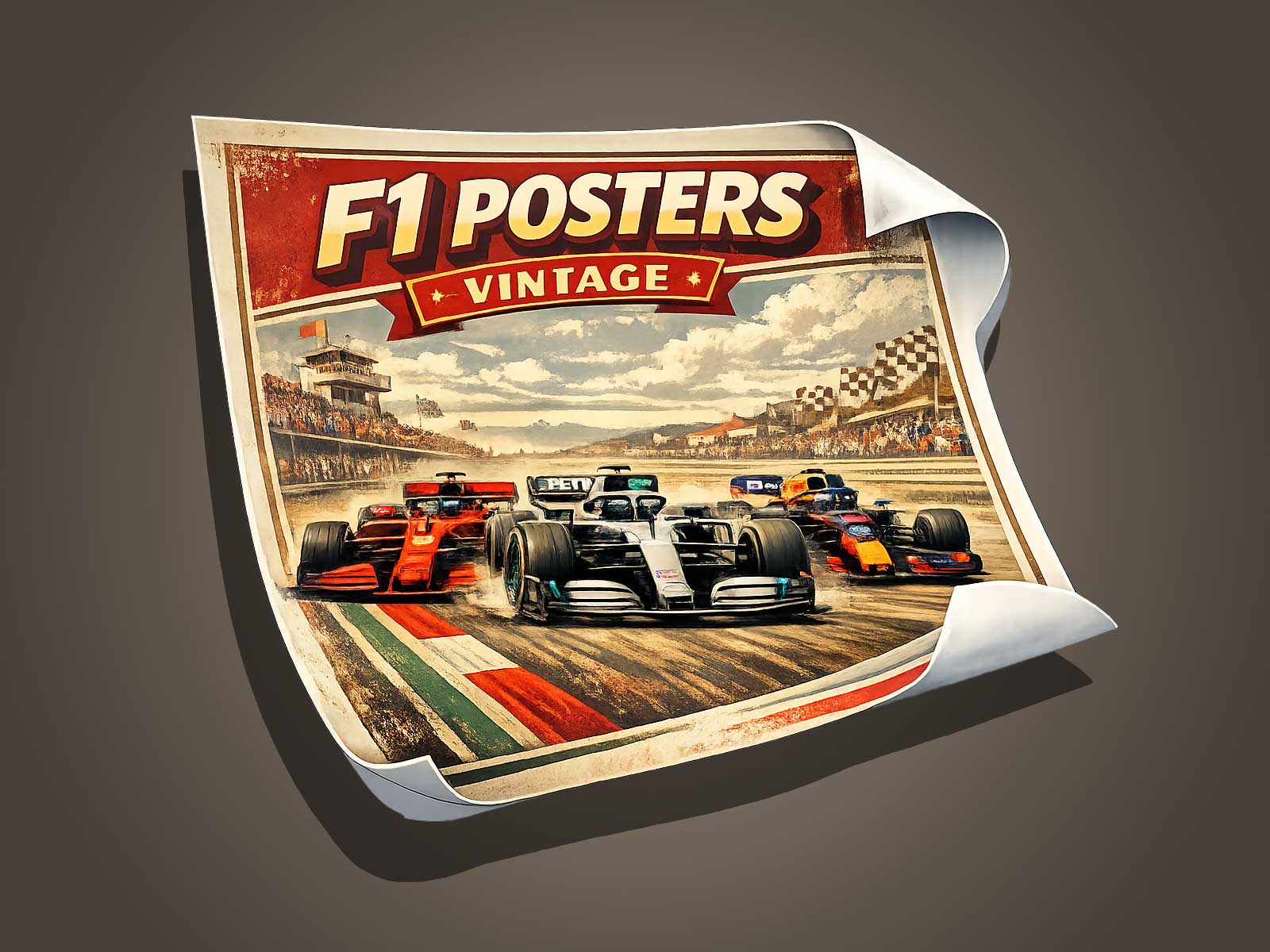
The visual trace left by a McLaren F1 car becomes richer and more meaningful when filtered through a vintage 1980s motorsport aesthetic. This article examines why that layering—memory, patina, and heritage—matters for collectors, designers, and fans. We look at the visual cues that create authenticity, the emotional dynamics of memory in automotive imagery, and how a poster can function as both decoration and historical artifact.
Why the 1980s Aesthetic Deepens Visual Memory
Images operate as memory anchors. When a McLaren F1 poster adopts the colors, typography, and film grain associated with 1980s motorsport, it taps into shared visual shorthand: wide sponsor bands, saturated primary colors, and analog texture. Those cues activate recollection—real or imagined—about an era of bold liveries and mechanical bravado. For viewers who lived through the decade, the poster conjures personal memories of races, broadcasts, and magazines. For younger fans, the same aesthetic suggests authenticity and narrative depth rather than mere retro styling.
Patina and the Illusion of Age
Patina in a printed image is more than surface wear: it communicates time. Designers achieve this through subtle techniques—vignette, color fading that mimics chemical shifts in aged inks, simulated paper grain, and the softening of contrast typical of older camera lenses. Applied carefully to a McLaren composition, these elements suggest a history behind the photograph: a sequence of viewings, a journey from paddock to poster, a relationship with its owner. That perceived continuity enhances the object’s desirability because it reads as an artifact rather than a purely decorative print.
Heritage Value: From Racing Machine to Cultural Icon
Heritage value emerges when an image refers not only to a vehicle but to a cultural moment. McLaren’s F1 history occupies a special place in motorsport memory, and a vintage-styled poster frames that legacy. The design choices—period-accurate typefaces, era-appropriate sponsor placement, and historically informed color grading—help position the poster as part of a lineage. Collectors perceive this as stewardship: the poster preserves and retells a story about engineering, team identity, and motorsport aesthetics.
Design Principles for an Authentic 1980s F1 Poster
Creating a convincing vintage McLaren poster requires restraint and research. Key principles include:
- Reference real materials: study race photography, period advertisements, and team graphics to capture authentic proportions and tonalities.
- Use analog texture sparingly: grain and yellowing should suggest age without erasing detail in the car’s form.
- Respect composition: era-typical framing often favored dynamic angles that emphasize speed and mechanical detail; incorporate negative space where appropriate.
- Typography matters: choose typefaces and treatments that reflect 1980s editorial and sponsorship systems rather than modern display fonts.
Why Collectors Value a Vintage-Style Motorsport Poster
Collectors respond to authenticity, narrative, and rarity. A well-executed 1980s-style McLaren poster delivers all three: it reads as authentic through researched visual cues, it offers narrative by suggesting a larger history, and it can be produced in limited editions to create scarcity. The result is an object that functions as wall art and as a tangible node of motorsport memory.
Practical Tips for Buyers
If you are considering a McLaren vintage-style poster, pay attention to print quality, edition size, and provenance statements. Inspect reproductions for how they handle patina—overdone distress can reduce legibility and the image’s emotional impact. For living-room display, choose paper stocks that balance tactile warmth with archival longevity so the poster ages gracefully rather than deteriorates prematurely.
Conclusion: The Poster as Historic Conversation
A McLaren F1 image reframed by 1980s vintage aesthetics does more than recall a look; it initiates a conversation between past and present. Through controlled patina, era-aware design choices, and an emphasis on heritage, such posters become more than decoration: they are visual memories that preserve and amplify the cultural significance of racing history.
Shop an example of a McLaren F1 vintage print on Etsy: https://www.etsy.com/listing/4433928602/mclaren-f1-print-racing-wall-art-vintage