F1 black flag explained: meaning, rarity and how it differs from warnings and…
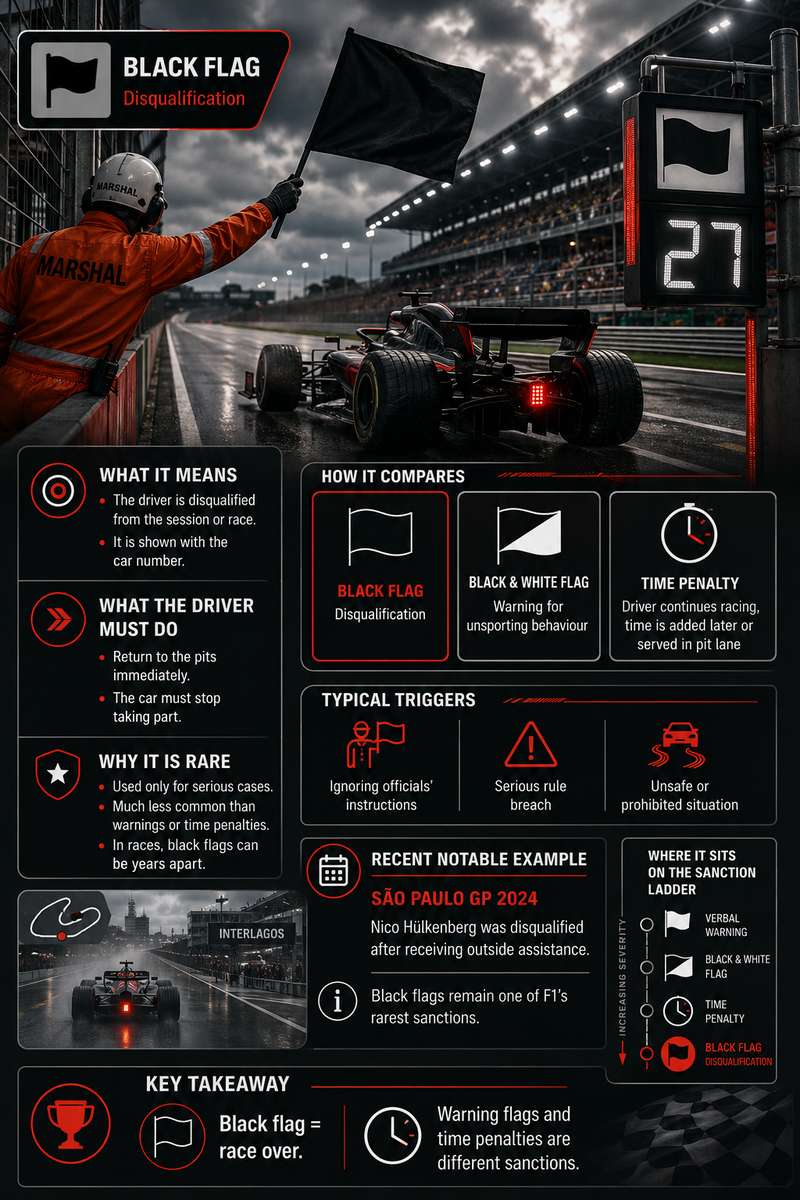
The black flag is the most severe on-track signal in Formula 1: displayed with a car number it orders that driver to return to the pits immediately and retire from the session. This article explains what the black flag means, the related black-and-orange and black-and-white flags, why race stewards rarely use the black flag today, and how it differs from the warnings and time penalties teams more commonly see.
Quick summary: A plain black flag plus a car number = immediate return to pits and removal from the event (disqualification). A black flag with an orange disc ("meatball") = pit to fix an unsafe mechanical issue. A black-and-white diagonal flag = an on-track warning; repeated offences can escalate to a black flag. Time penalties are separate and communicated by stewards.
Quick access: Definition · How it works · Comparison with warnings & penalties
CLEAR DEFINITION
In Formula 1 a plain black flag shown alongside a driver's car number is the most severe flag signal. It instructs that driver to return to the pits immediately and retire from the event — effectively on-track disqualification or removal from the session. The FIA International Sporting Code and official F1 materials list this flag among the limited set of on-track signals stewards can use.
HOW IT WORKS
When the black flag is displayed with a car number, marshals and race control are directing that specific driver to come into the pit lane and stop; the driver must comply at once. The black-and-orange flag is visually similar but has a different instruction: it signals the car has a mechanical problem or damage that makes it unsafe and requires the driver to pit so the team can fix the issue.
The black-and-white diagonal flag serves as an on-track warning for unsportsmanlike behaviour. It operates like a formal caution: stewards use it to mark conduct that is unacceptable and which, if repeated or ignored, may be escalated to more severe penalties, potentially leading to a black flag.
WHY IT MATTERS IN F1
The black flag directly affects a driver's race result by removing them from the session. The black-and-orange flag matters for safety: it forces a potentially dangerous car off the racing line into the pits for inspection or repair. The black-and-white warning is important because it publicly records a driver's misconduct and warns teams that further breaches could lead to disqualification.
RULES AND FIA PROCEDURES — COMPARISON WITH WARNINGS & TIME PENALTIES
Modern stewarding in Formula 1 uses a range of measures. Time penalties (for example 5s, 10s, etc.), drive-throughs, stop-and-go penalties and reprimands are imposed by the stewards and communicated through official messages and timing systems; these penalties do not require a specific on-track flag to be shown at the time they are applied. The black flag is distinct because it is an immediate, visual order to retire.
Because stewards can and do apply penalties via radio, official bulletins and post-session decisions, outright black-flagging a car during a session has become rare. Many breaches are handled off-track or via time penalties rather than an on-the-spot disqualification.
SAFETY AND RACE IMPACT
The black-and-orange "meatball" flag exists to protect other drivers and marshals: a car with loose bodywork, fluid leaks or major damage can shed parts or create hazards at high speed. By forcing a pit stop the flag reduces risk. The plain black flag also has a safety dimension in extreme cases where a driver or team has flagrantly broken a rule that endangers others; its use removes the source of danger immediately.
COMMON MISUNDERSTANDINGS
Beginners often think any black flag means "bad" broadly, but its meaning is specific: plain black = remove the car from the event; meatball = pit to fix an unsafe problem; black-and-white = warning. Another misconception is that time penalties will always be signalled by flags; they are typically issued by the stewards through timing and official messages rather than by a specific flag.
CLOSING INTERPRETATION
The black flag family is a short but powerful part of F1's language: it connects immediate on-track action to stewarding, safety and sporting fairness. Understanding the plain black, the black-and-orange meatball and the black-and-white warning helps fans read what race control is saying in a way that clarifies why a driver might be forced to pit, warned publicly, or removed from the session — and why outright black-flag disqualifications are now a rare, last-resort tool.
Author: Eric M.