How Valtteri Bottas Manages Risk in Formula 1: Control, Initiative and…
Valtteri Bottas is commonly portrayed in authoritative Formula 1 coverage as a technically accomplished driver whose career progressed from Williams (debut 2013) to Mercedes and later roles with other manufacturers. That trajectory, and the match between his reputation and results, provides a useful lens to examine how an elite F1 driver manages risk: balancing control of the car, moments of initiative and the practical exposure to on-track incidents.
Summary: Public records and race archives describe Bottas as consistent and strong on car control. Statistical databases and steward documents offer concrete references when assessing his incident exposure, but no single authoritative metric fully quantifies driver-attributed risk across his career.
Where Formula 1 risk really lives
Risk in Formula 1 is a combination of human decision-making and the car–track environment. For a driver like Bottas, documented career progression and race archives show that technical competence and consistency are recurrent themes in reporting. Those qualities matter because risk is not distributed evenly across a race weekend: qualifying aggression, first-lap bunching, wet conditions and wheel-to-wheel duels each concentrate different types of danger.
Reading the edge of grip
Public reporting and driver profiles characterise Bottas as a driver with strong car control. That description points to two distinct skills: the ability to find the limit of mechanical grip without exceeding it, and the capacity to recognise transient instability — lock-ups, snaps toward oversteer or understeer — before they become unrecoverable. While the verified sources do not provide internal telemetry, repeated commentary across reputable outlets supports the view that Bottas’ technique emphasises consistency and measured inputs, which reduces avoidable excursions.
Braking commitment and escape margin
Braking is one of the principal moments where a driver must judge risk. Reported assessments of Bottas’ driving point to a methodical approach: committing enough braking to maximise lap time while preserving a margin for recovery if traction or tyre behaviour changes. Race reports and steward documents provide examples where braking and wheel-lock events enter official record, but the broader pattern in statistical archives suggests Bottas’ career contains comparatively fewer self-attributed crash DNFs than some peers — an important factual anchor when discussing braking conservatism versus outright bravery.
Wheel-to-wheel judgement
Wheel-to-wheel battles impose spatial and timing demands that reveal how a driver balances initiative and caution. Coverage across Formula1.com, Autosport and RaceFans highlights Bottas’ racecraft in overtakes and defensive moves without claiming a universal tendency toward reckless aggression. Official steward documents that reference specific collisions demonstrate that incidents do occur and are inspected, but the career-wide picture assembled by statistical sites characterises him as relatively incident-averse compared with drivers who figure more frequently in collision reports.
Wet races and unstable conditions
Wet and mixed conditions magnify uncertainty: grip is lower and variable, visibility can be restricted and the margin between a competitive pass and a spin narrows. Feature reporting and driver interviews collected by reputable outlets indicate that Bottas, like other experienced drivers, frames incidents and early-lap collisions in public commentary, using those moments to explain what went wrong or how conditions evolved. The verified material supports cautious interpretation: his public reflections and race archives align with a driver who adapts to changing track states while aiming to minimise error exposure.
Starts, restarts and high-density moments
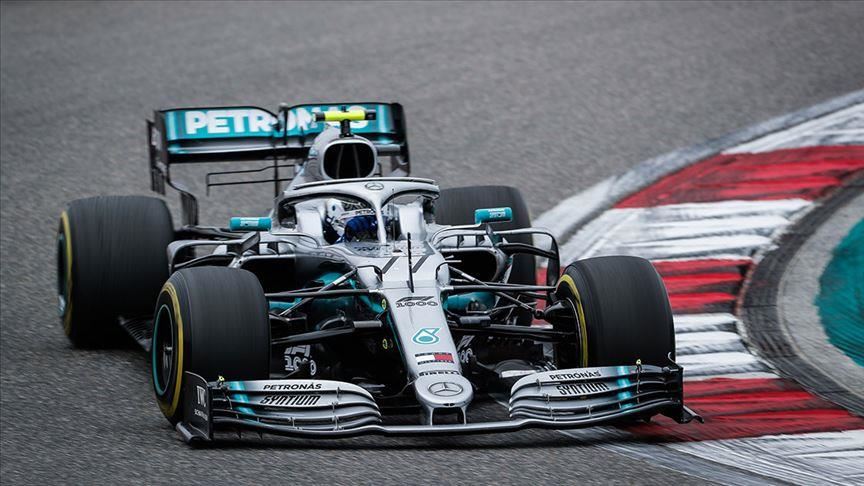
First laps and restarts are where concentrated car density raises collision probability. The verified sources include steward rulings and race reports that document specific early-lap incidents involving Bottas. Those official records show how governing bodies classify and adjudicate such events, and they underline that—even for drivers known for control—high-density situations remain a prime source of race-ending incidents when positioning, cold tyres or misjudged trajectories combine unfavourably.
How experience changes the equation
Bottas’ career arc, visible in official driver profiles and season archives, provides a factual basis to discuss how accumulated experience reshapes decision-making. Progression from debut seasons through top-team roles correlates with refinement in risk perception: more precise throttle modulation, improved contextual judgement in traffic, and a clearer sense of when to press for lap time versus when to accept a conservative line. Statistical compilations of starts, finishes and podiums support a narrative of consistency that reduces avoidable mistakes over time.
Bravery versus calculated risk
Public analysis and race-history databases caution against conflating visible aggression with effective risk-taking. The verified material frames Bottas as a driver whose style is often described as technically strong and consistent; that profile suggests a preference for calculated risk—pushing the car within a recoverable envelope—over repeated high-exposure gambles. At the same time, steward documents and incident reports remind readers that even measured drivers can be party to collisions when split-second choices and dense racing cause margins to evaporate.
How elite drivers reduce avoidable errors
- Consistent setup and feedback loops: authoritative driver profiles and technical reporting show that experienced drivers habitually tune their inputs to the car’s balance, which reduces surprise instability.
- Contextual prioritisation: race archives demonstrate that seasoned drivers alter aggression between qualifying and race situations, accepting different risk-reward trade-offs for a single-lap push versus a points-scoring stint.
- Public reflection and learning: interviews and race reports document drivers, including Bottas, using post-incident analysis to explain decisions and adapt behaviour—an important component of reducing repeat incidents.
In short: verified reporting and statistical archives portray Valtteri Bottas as a technically strong, consistency-oriented driver whose career record and public reflections provide a solid basis to analyse risk management. Official steward documents and race reports supply concrete incident evidence; aggregate statistics indicate comparatively fewer self-attributed crash DNFs, supporting the view that his driving style tends toward controlled initiative rather than reckless exposure.
Author: William L.