F1 Austria: What truly defines the Red Bull Ring in modern Formula 1
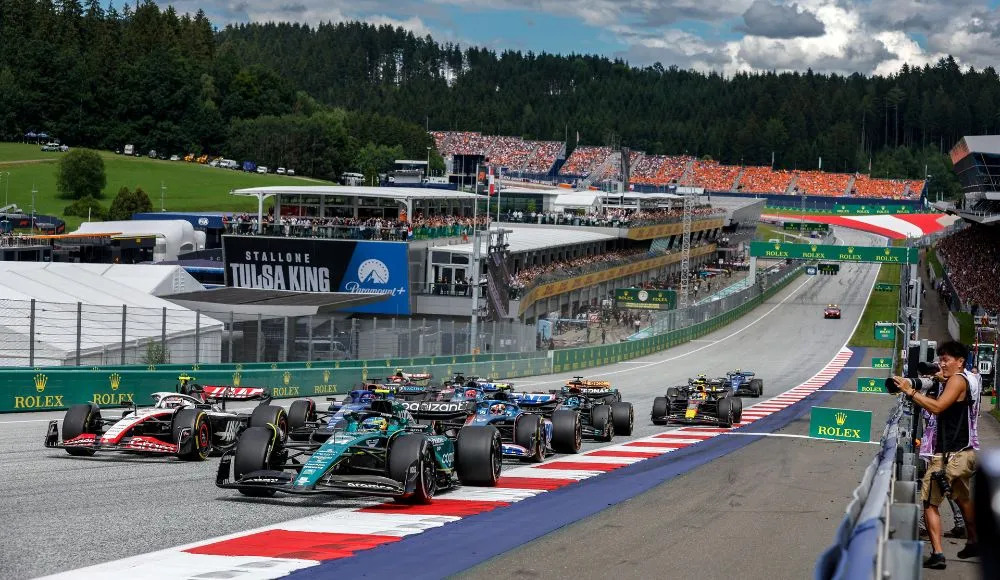
The Red Bull Ring — the home of F1 Austria — presents a compact, high‑intensity test of balance. Its short lap length, three long straights and pronounced elevation changes produce a distinct identity: high proportions of full‑throttle running paired with rapid transitions that force setup compromises and sharpen where time can be gained on a single lap.
FIRST READING OF THE CIRCUIT
At first glance the Red Bull Ring reads as a short, fast lap dominated by three long straights and a low number of corners. The layout length is documented at roughly 4.318–4.326 km, which produces short lap times and frequent full‑throttle percentage across a lap. The compactness and hillside location also give clear sightlines and a toboggan‑like feel because of the elevation changes.
CORNER RHYTHM AND SPEED PROFILE
The sequence alternates rapid, changing‑radius corners with long acceleration zones. The uphill approach into Turn 1 sets a clear rhythm: a heavy emphasis on exit speed there carries time down the first long straight. The mid‑section’s downhill stretches create fast transitions where balance through quick, linked corners matters more than outright cornering count.
BRAKING ENERGY AND TRACTION DEMANDS
Key braking points are concentrated at the ends of the long straights; these heavy deceleration zones define where drivers lose or gain time. Turn 1 — the uphill right‑hander — is especially decisive: its exit speed dictates performance onto the opening straight and therefore strongly influences overtaking chance into the following heavy braking area. The available evidence suggests the track’s layout punishes poor exits and rewards stable rear‑end behaviour through elevation changes.
TYRES, THERMAL LOAD, AND STINT SHAPE
Despite a relatively abrasive surface, tyre degradation at the Red Bull Ring is often moderate because the circuit imposes lower average lateral load compared with more technical tracks. The long full‑throttle runs shift emphasis toward straight‑line performance and thermal management rather than constant high lateral heating. This dynamic makes tyre conservation on long stints a different challenge: teams watch temperatures during acceleration and braking phases rather than only during sustained high‑load cornering.
SETUP TRADE-OFFS AND CAR COMPROMISES
The documented setup dilemma for the venue is clear: reduce drag to exploit the long straights, but retain enough downforce and mechanical grip for the quick, undulating corners and the uphill/downhill transitions. The altitude — roughly 660–680 metres above sea level — lowers air density, which further reduces aerodynamic downforce and cooling effectiveness compared with sea‑level tracks. Teams therefore must temper aerodynamic reductions with the knowledge that downforce losses are amplified by altitude and by the mid‑section’s need for stability.
OVERTAKING, DRS, AND RACECRAFT
Overtaking logic at the Red Bull Ring is straightforward: the long straights create prime run‑and‑brake opportunities, and track position out of the preceding corner is frequently decisive. Because exit speed from uphill Turn 1 feeds a long straight, drivers who can maximise traction and aerodynamic efficiency there gain the best chance to deploy slipstreaming and DRS (where applicable) into the heavy braking zones. The compact lap and short lap time also compress pit‑stop windows and tyre‑warmup patterns, which affects strategic timing of overtaking attempts during the race.
HISTORICAL AND COMPETITIVE CONTEXT
The Red Bull Ring’s compact nature and spectator‑friendly topography shape both sporting and operational decisions: short laps mean more frequent traffic in qualifying and tighter windows for pit‑stop execution. Team circuit guides and technical analyses consistently highlight the venue’s high full‑throttle percentage and the uphill Turn 1 as repeatedly decisive across events, reinforcing its reputation as a circuit that rewards strong exit traction and low‑drag performance while not demanding the highest lateral downforce levels.
CLOSING INTERPRETATION
In modern F1 terms the Austrian Grand Prix at the Red Bull Ring is a study in compromise. Its identity comes from a high share of full‑throttle running, a handful of decisive corners — notably the uphill Turn 1 — and elevation swings that expose setup weaknesses. The altitude effect and the layout’s toboggan character make straight‑line performance and temperature management as important as mechanical balance, which explains why teams approach the weekend with a very specific, evidence‑backed trade‑off between drag and downforce.
Author: Alex R.