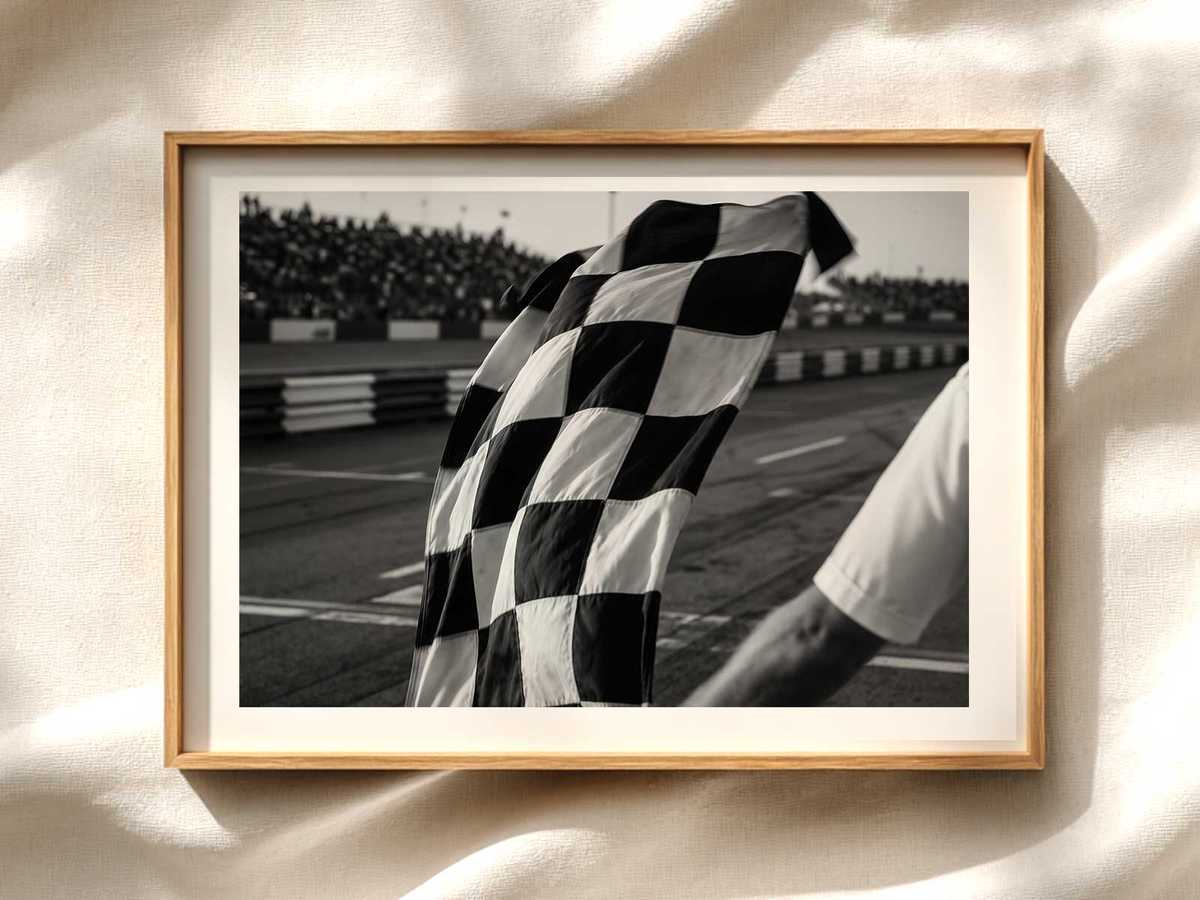
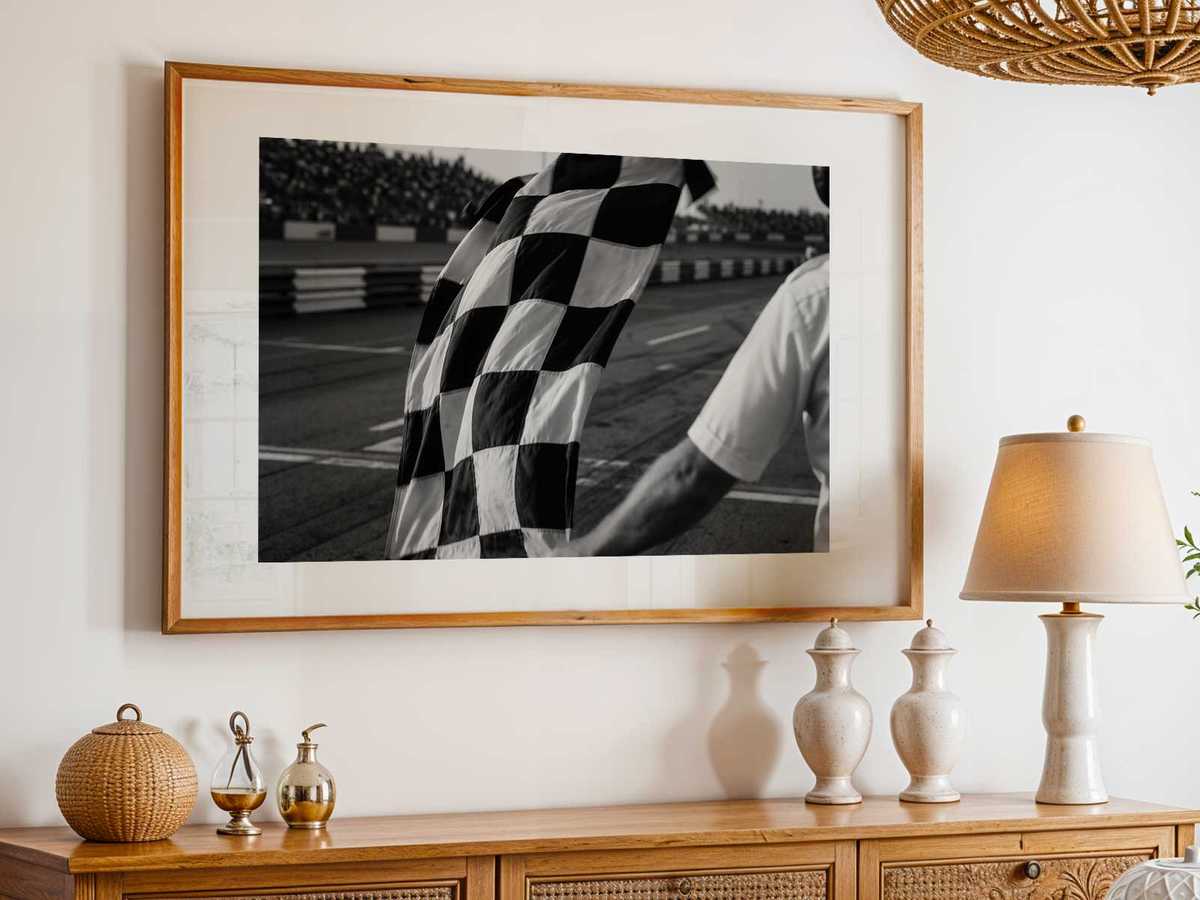
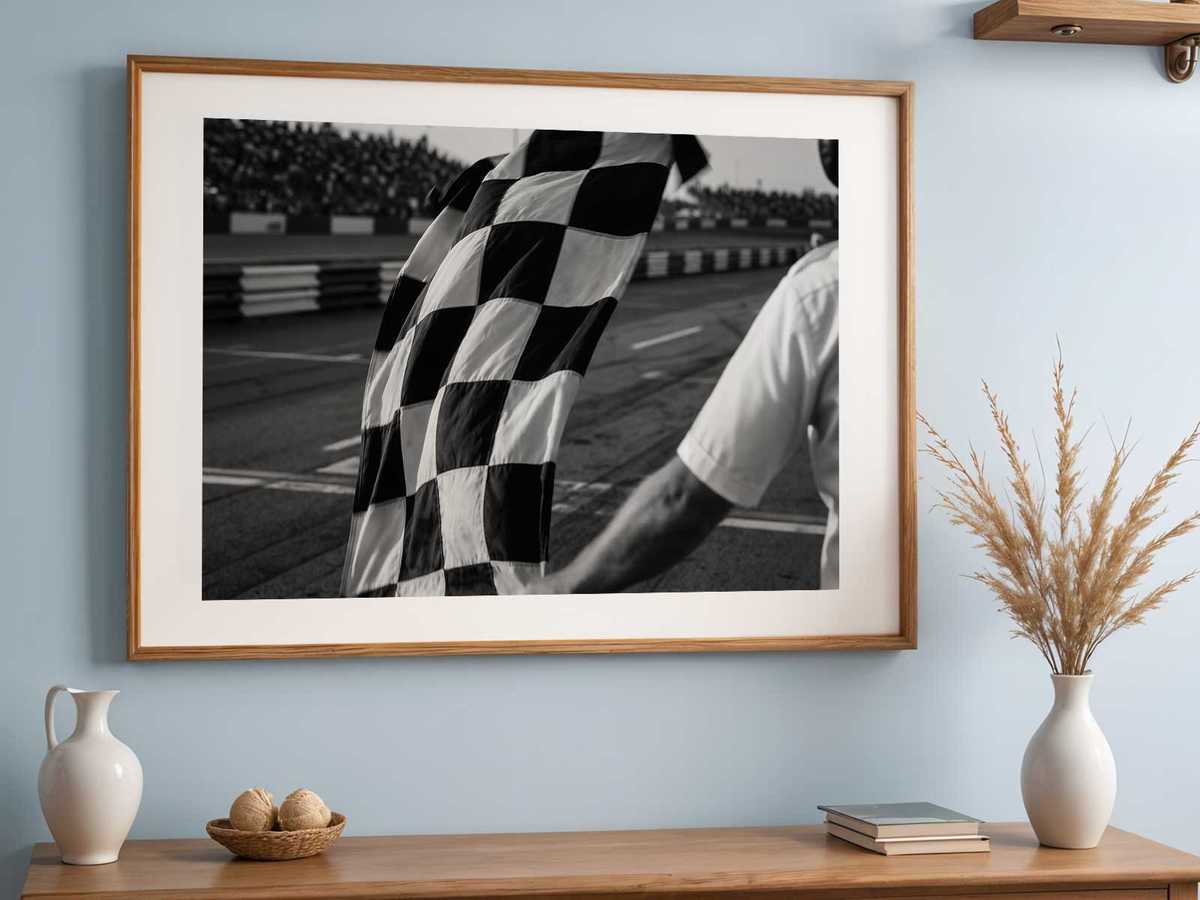
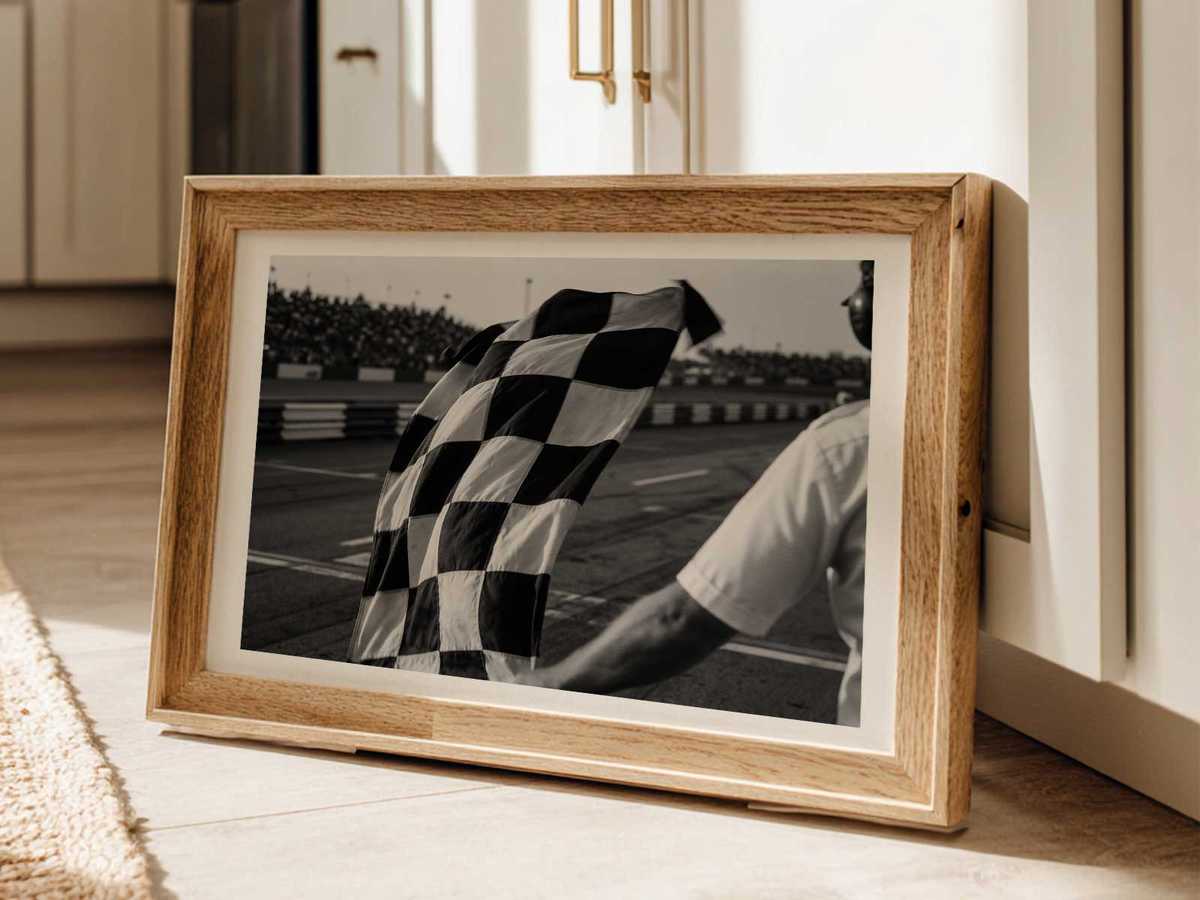
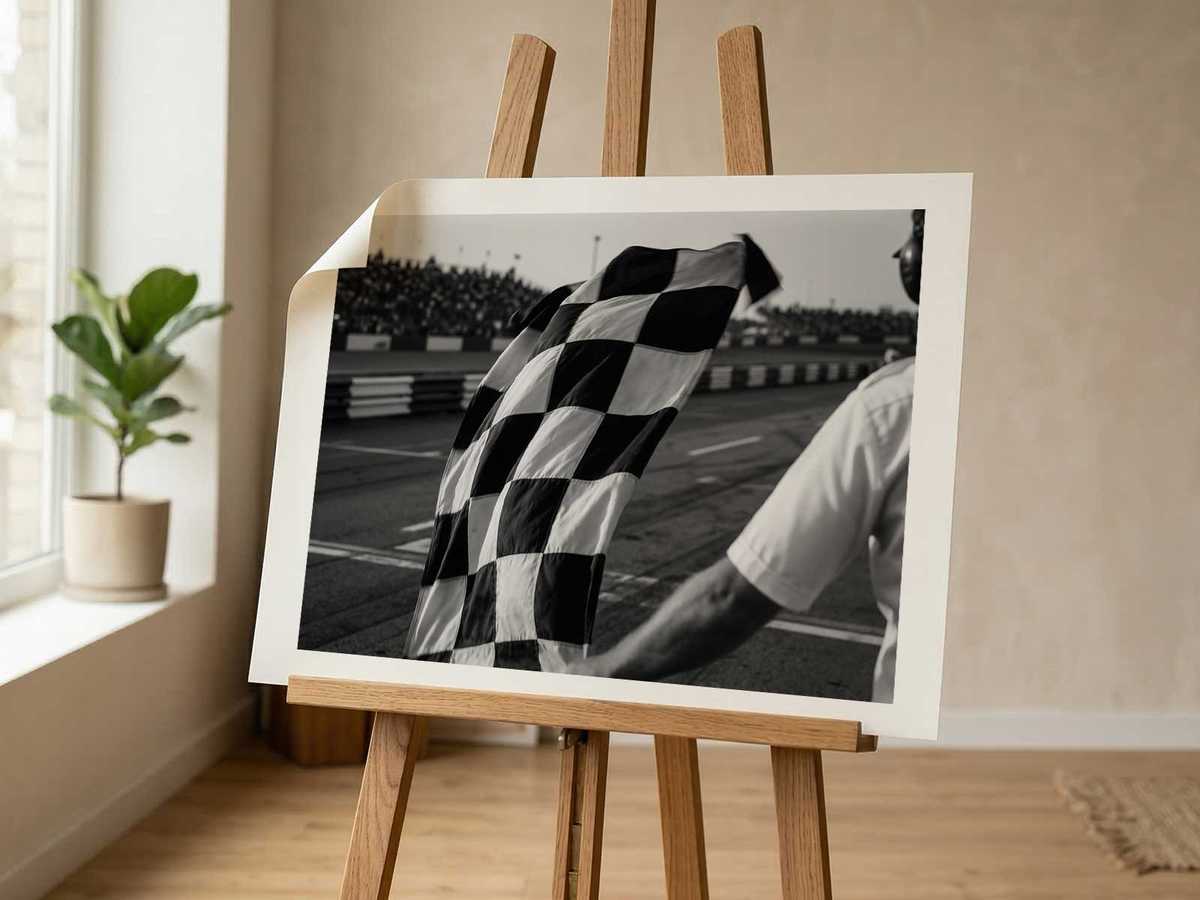
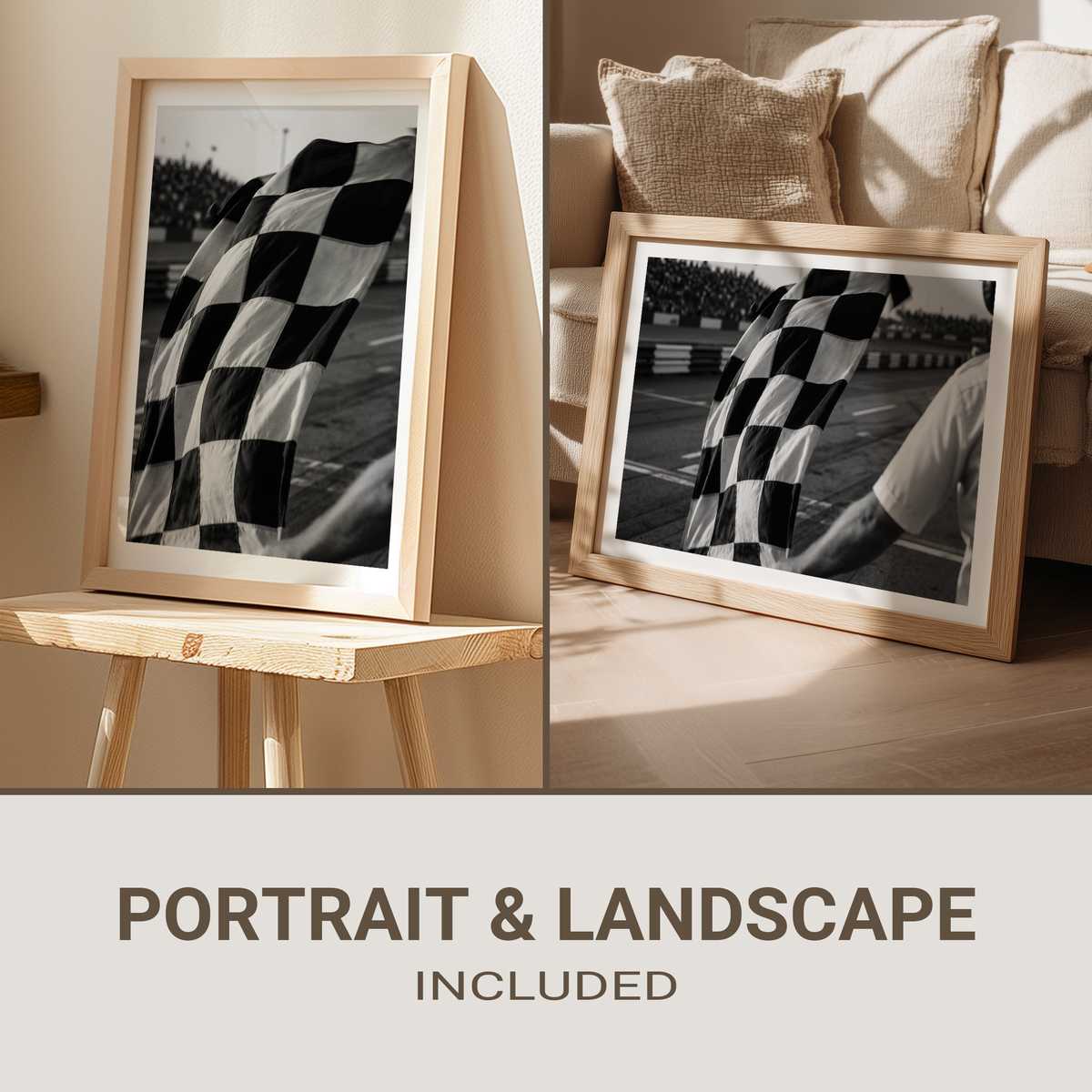
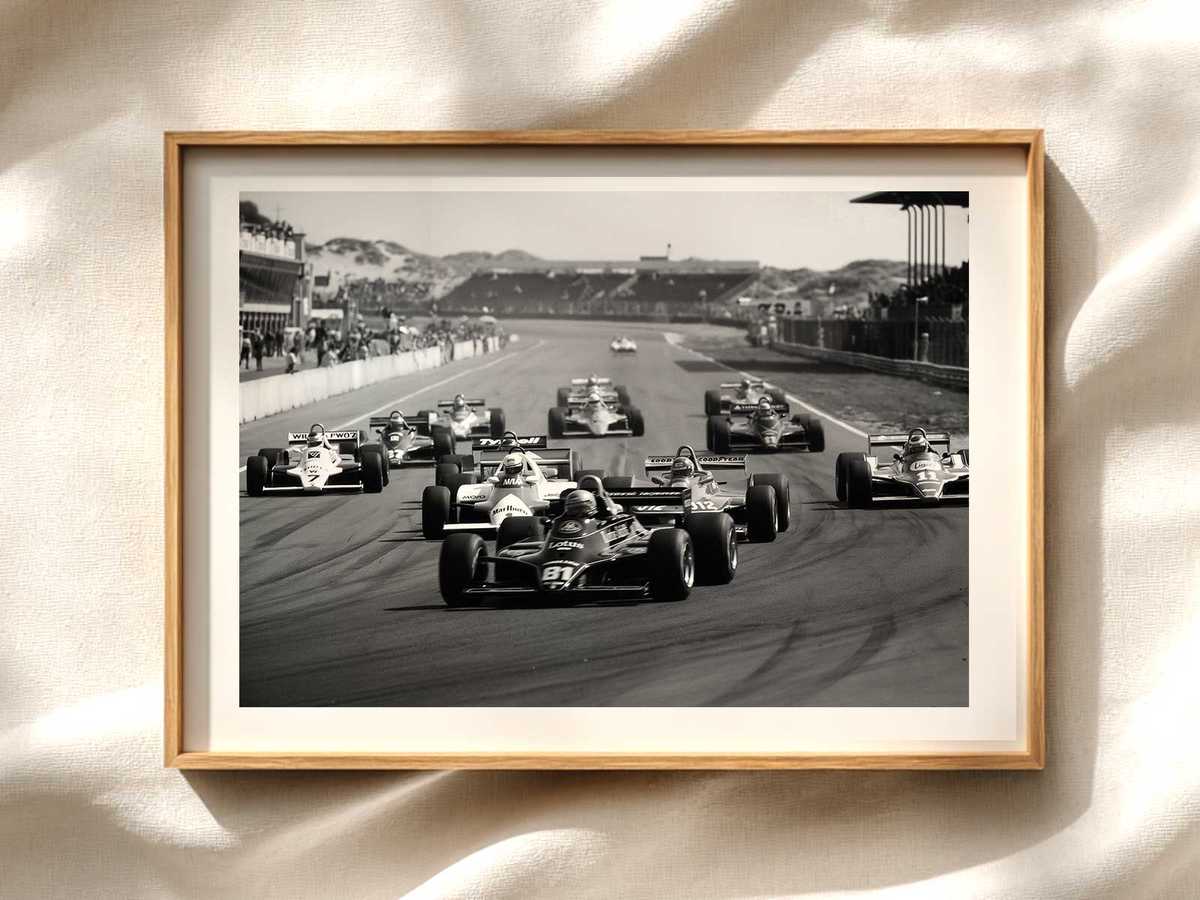
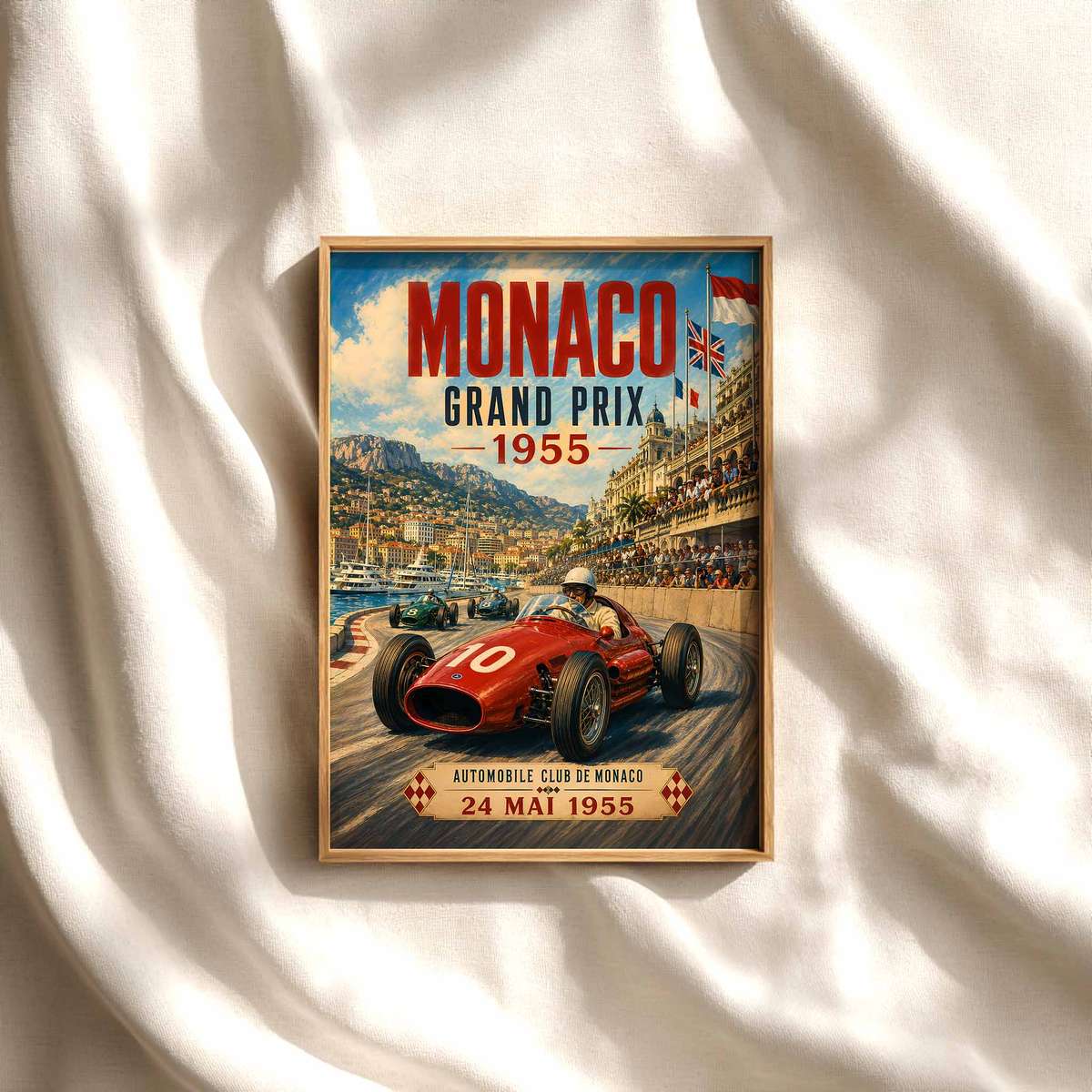
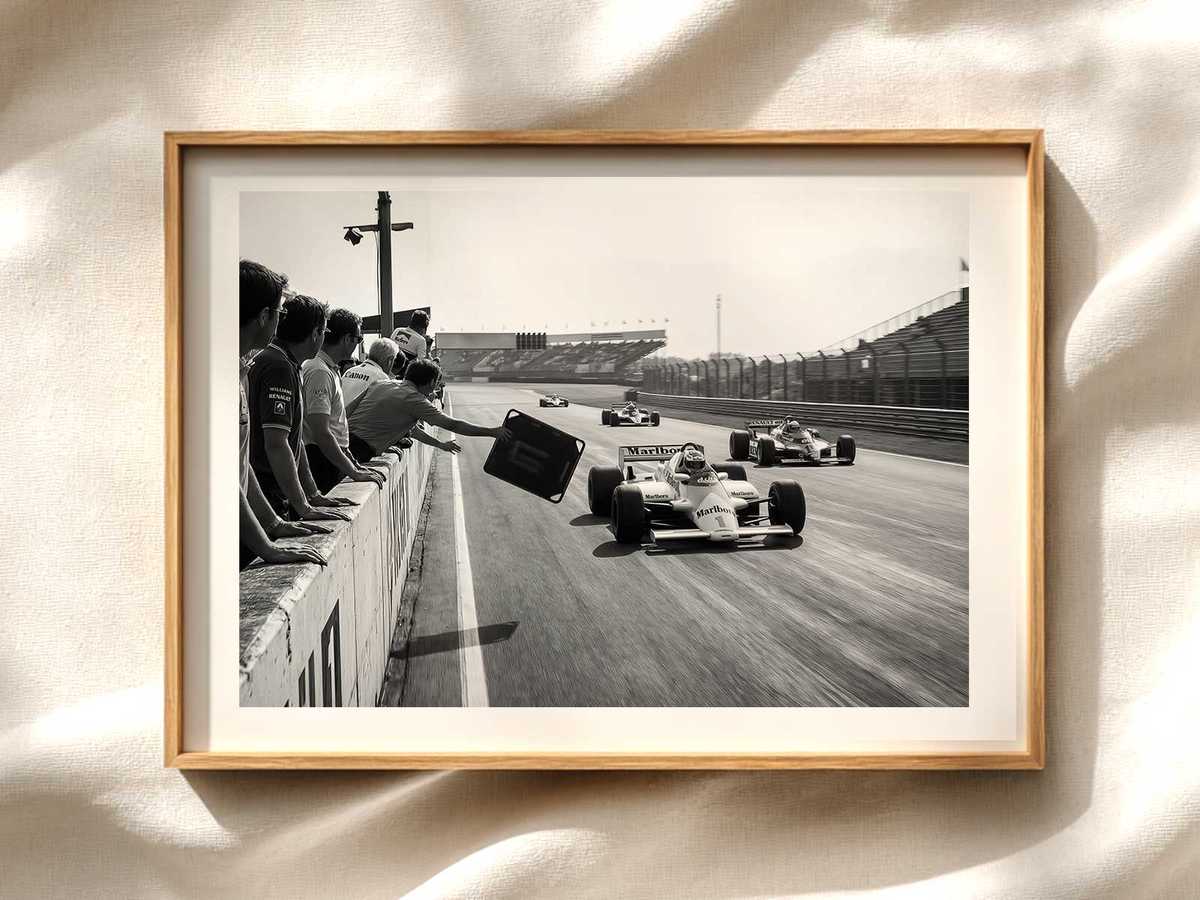
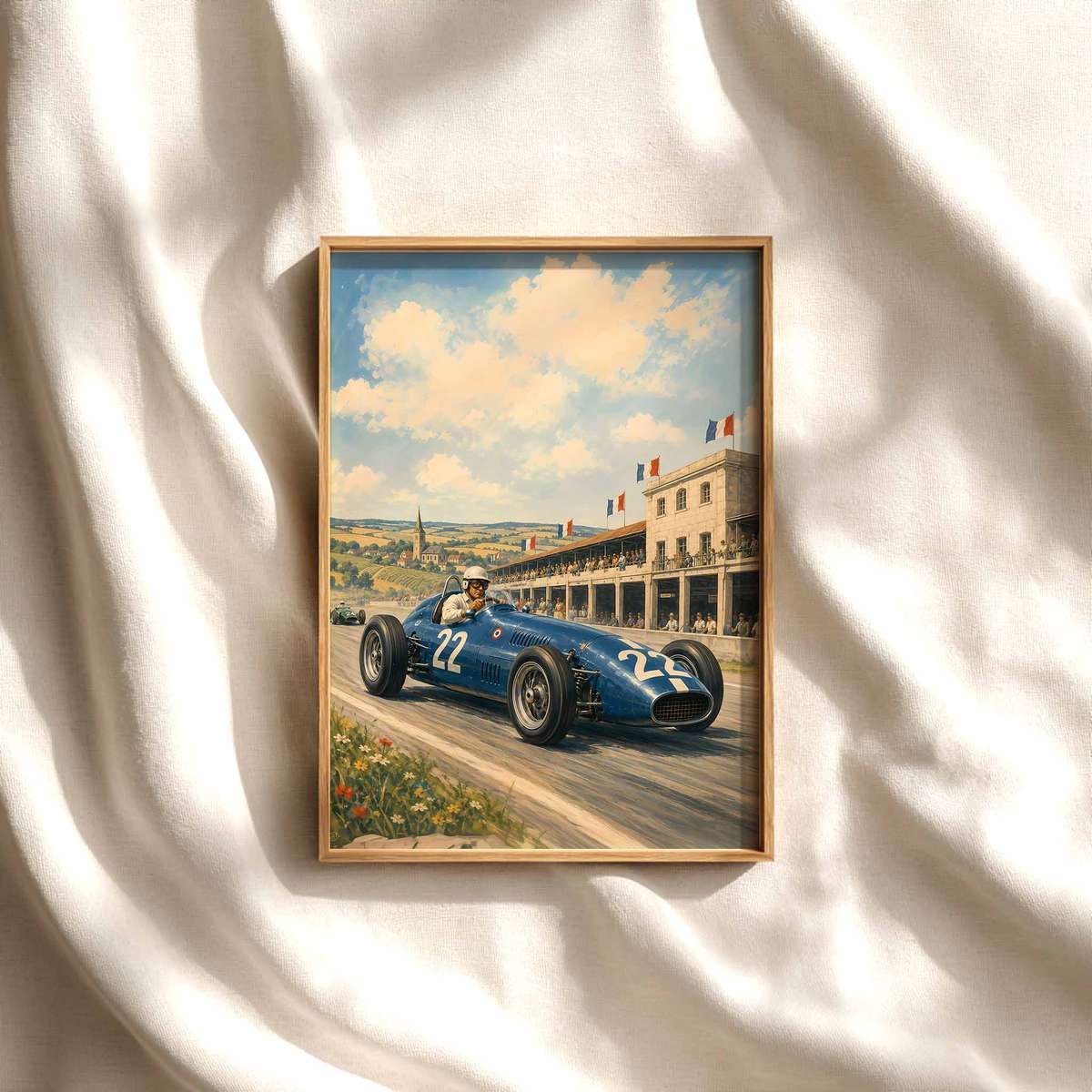
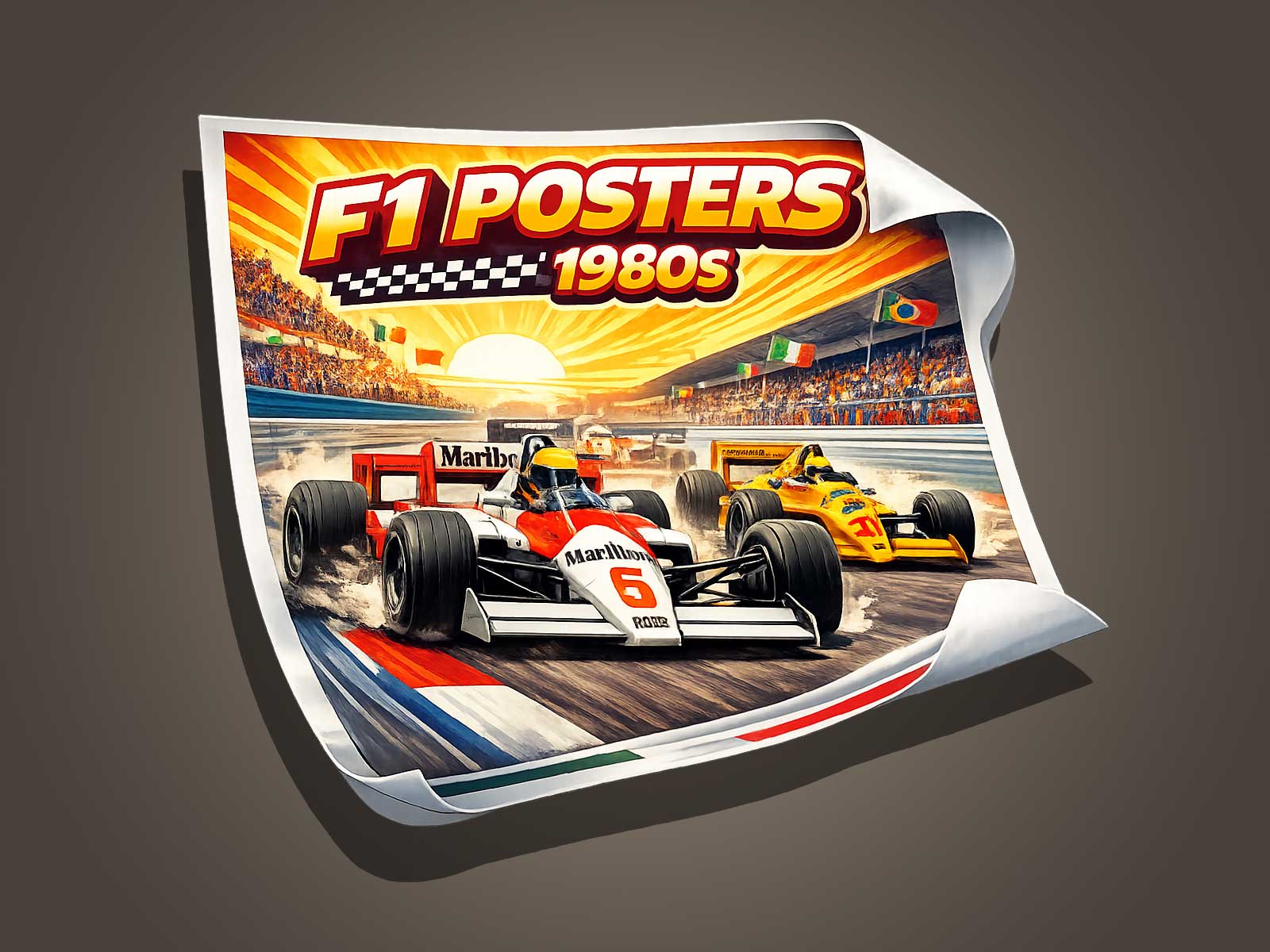
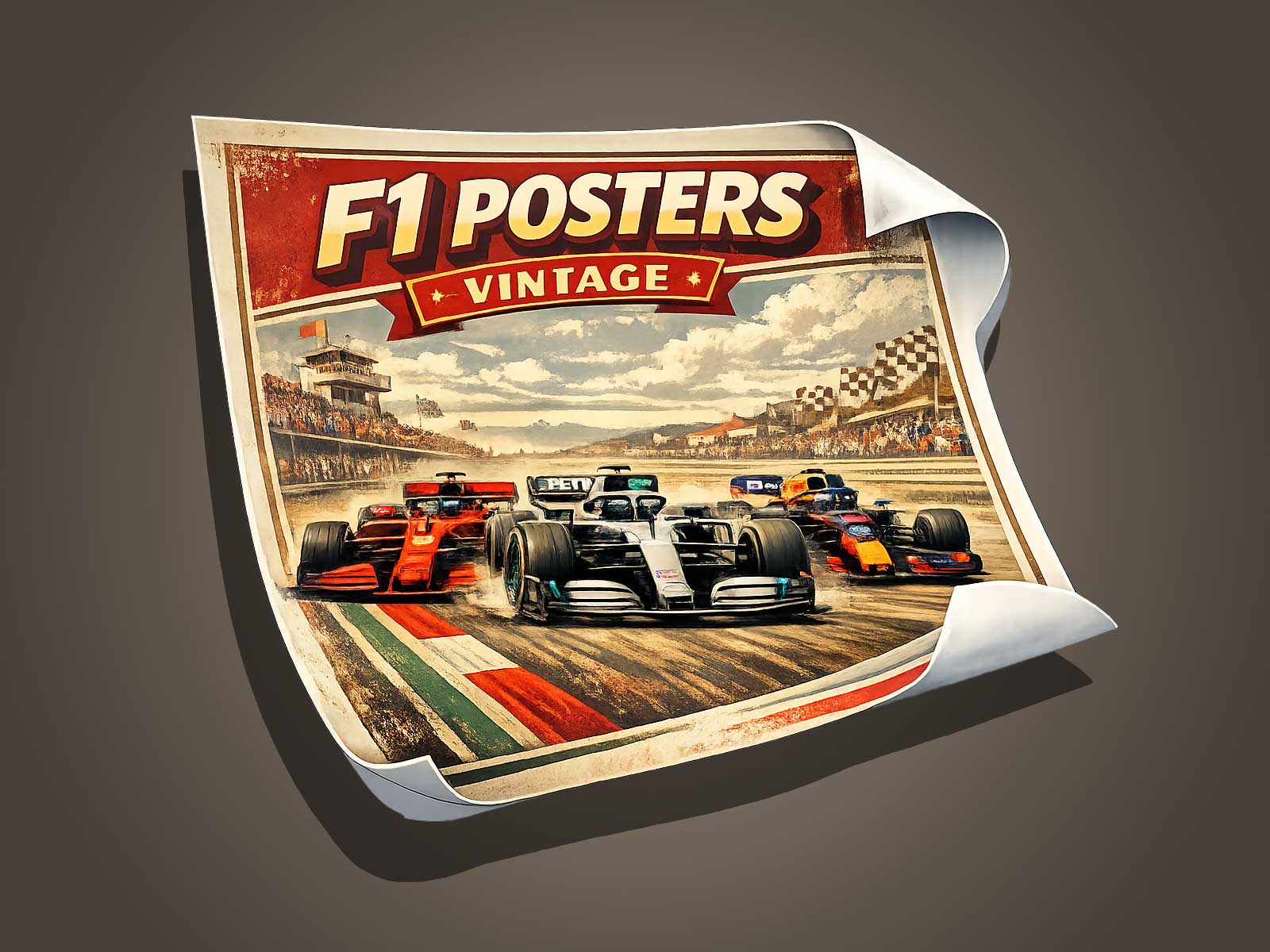
An F1 poster that leans on the sport's imagined drama — a car sliced against a blurred grandstand, a helmet caught in profile beneath floodlights, or the suggestion of speed in a washed ribbon of colour — does more than illustrate a moment. It condenses the sport's visual language into a single, decisive image that functions equally well as premium décor and as a declaration of automotive passion. The first thing the eye finds is usually shape and contrast: the silhouette of a low, purposeful nose, the curve of a wing, the bright streak of livery against a neutral wall. Those formal elements give the poster immediate presence and make it readable from across a room, which is essential for wall art that wants to feel confident rather than decorative filler.
Beyond pure form, an F1 poster carries identity. Colour palettes—team reds, deep blues, iconic carbon greys—act like shorthand for eras, constructors and driver legacies without requiring captions. A poster that hints at tyre smoke, a spray of gravel, or the staccato rhythm of pit lights invokes the sport’s rituals and tension; viewers familiar with F1 recognise those cues and bring memory to the image. Even when the composition stays deliberately abstract, the language of racing—low-slung machines, extreme negative space, tight framing—reads as an instantly recognisable aesthetic. That recognition is what turns an image into a statement piece in an office, living room or game den: it announces a taste for engineering elegance and high-stakes competition.
[IMAGE_INSERT_ARTICLE_01]
Speed in stillness is the poster’s real trick. A well-designed print translates velocity into visual rhythm: elongated motion blur, a compressed horizon line, or the diagonal sweep of a car crossing the frame. Those devices create an energetic pull that changes a room’s atmosphere from static to charged; a quiet study becomes a place that feels capable of movement and focus. The emotional lure of that energy matters as much to collectors as any factual reference. People don’t only buy images of cars — they buy the sensation of a lap, the memory of a finish, the memory of a checkered flag falling. This evocative power makes such posters suitable gifts and anchors for curated walls where mood and identity are being composed.
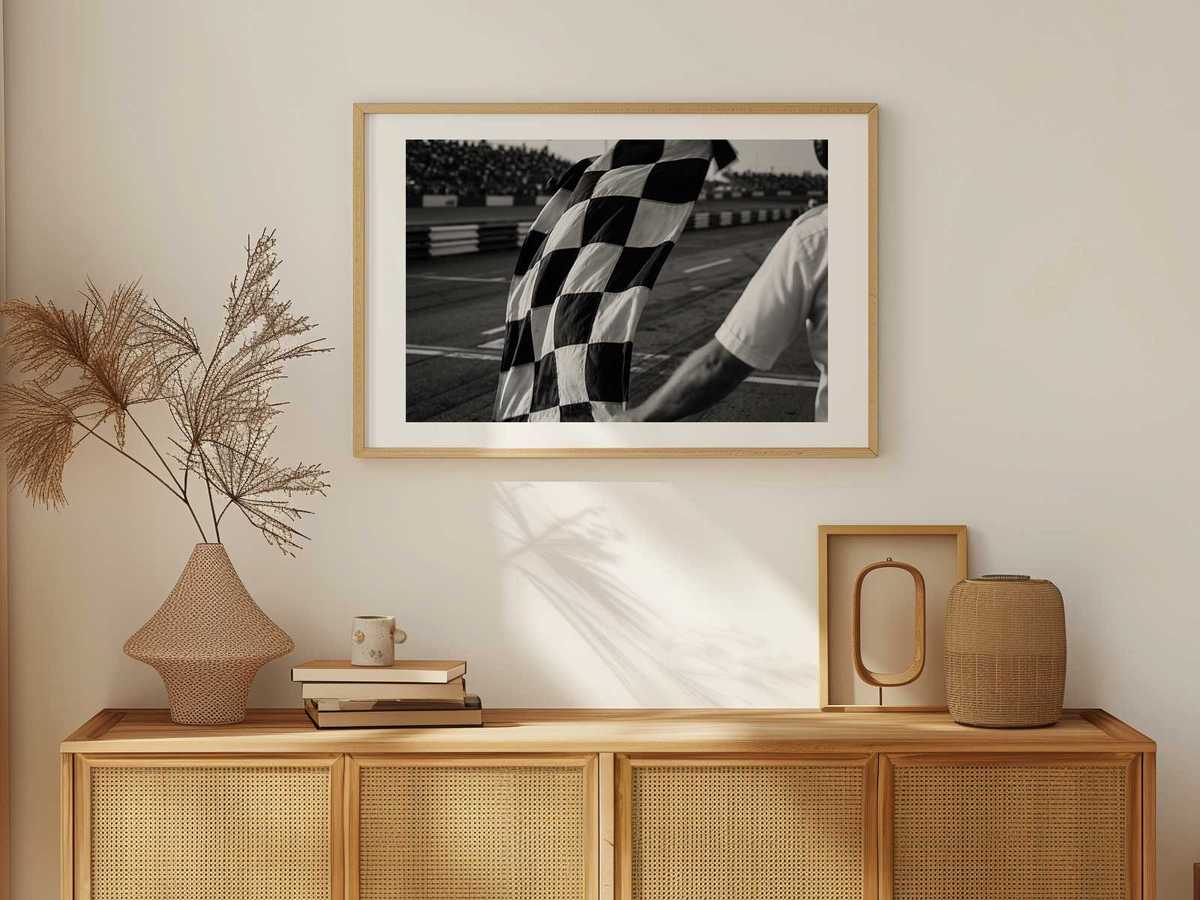
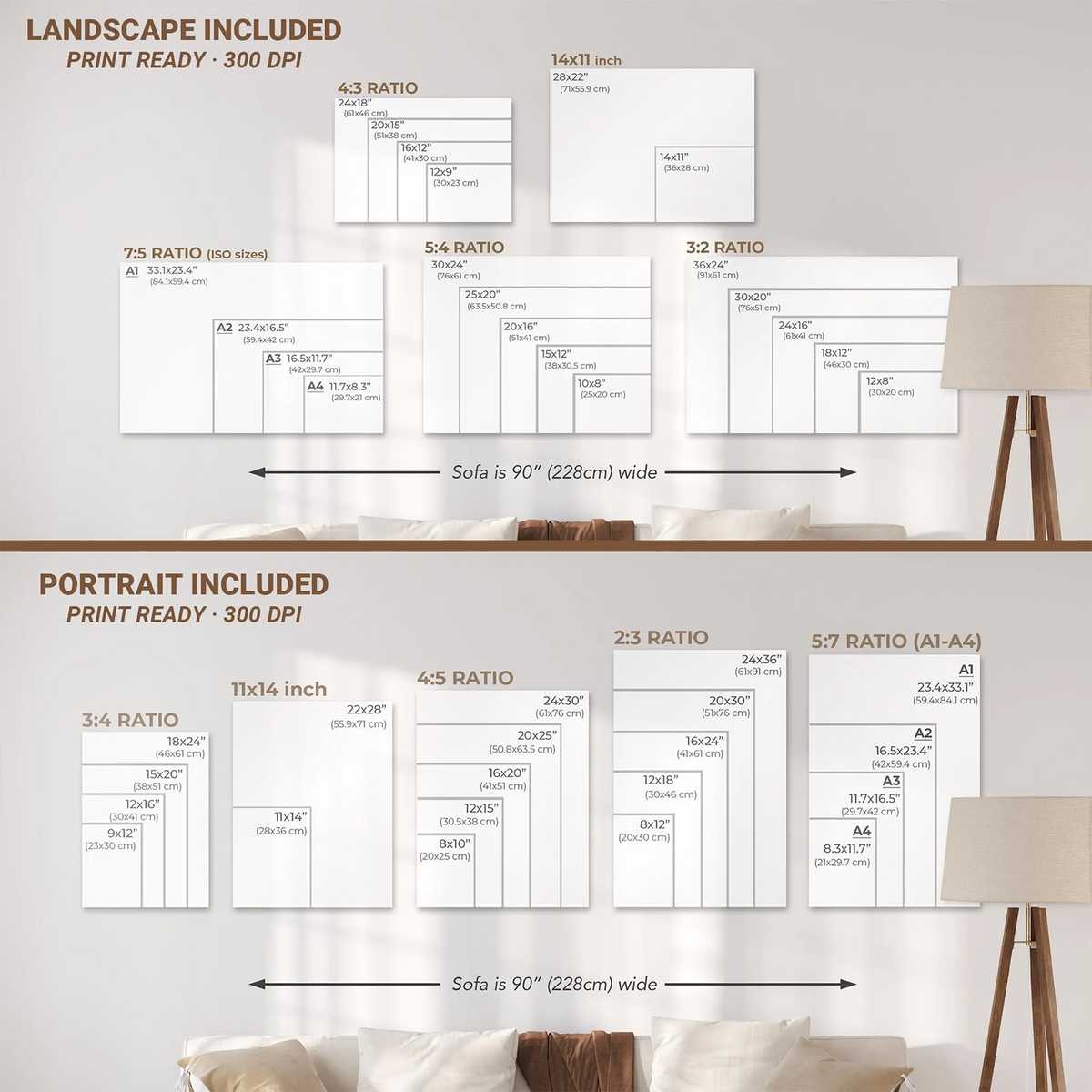
Composition also dictates how the poster functions with interior design. A centred, portrait-oriented study of a helmet or single car offers formality and symmetry ideal for minimalist or Scandinavian interiors. Wide, panoramic depictions of a circuit or a pack of cars provide cinematic breadth that can dominate a media wall or above-a-sofa placement. Thoughtful use of negative space and restrained palettes allows the poster to sit alongside books, trophies, or other motorsport objects without competing visually; instead it ties the collection together. In that way, an F1 poster is versatile — it reads as curated art in a modern apartment and as heartfelt fandom in a garage display.
Finally, the poster’s cultural currency matters. Formula 1 imagery carries a global visual memory: circuits with floodlit straights, the texture of wet spray, the geometry of kerbs and runoff. A poster that channels those motifs lets the viewer participate in a wider narrative of speed, skill and spectacle. It’s this blend of instant recognisability and sensory suggestion that makes a single printed image feel like both a refined decorative choice and a genuine expression of automotive devotion. Whether hung above a desk to inspire focus or collected on a gallery wall among other motorsport pieces, an evocative F1 poster delivers lasting visual impact and a compact, daily reminder of why the sport captivates.