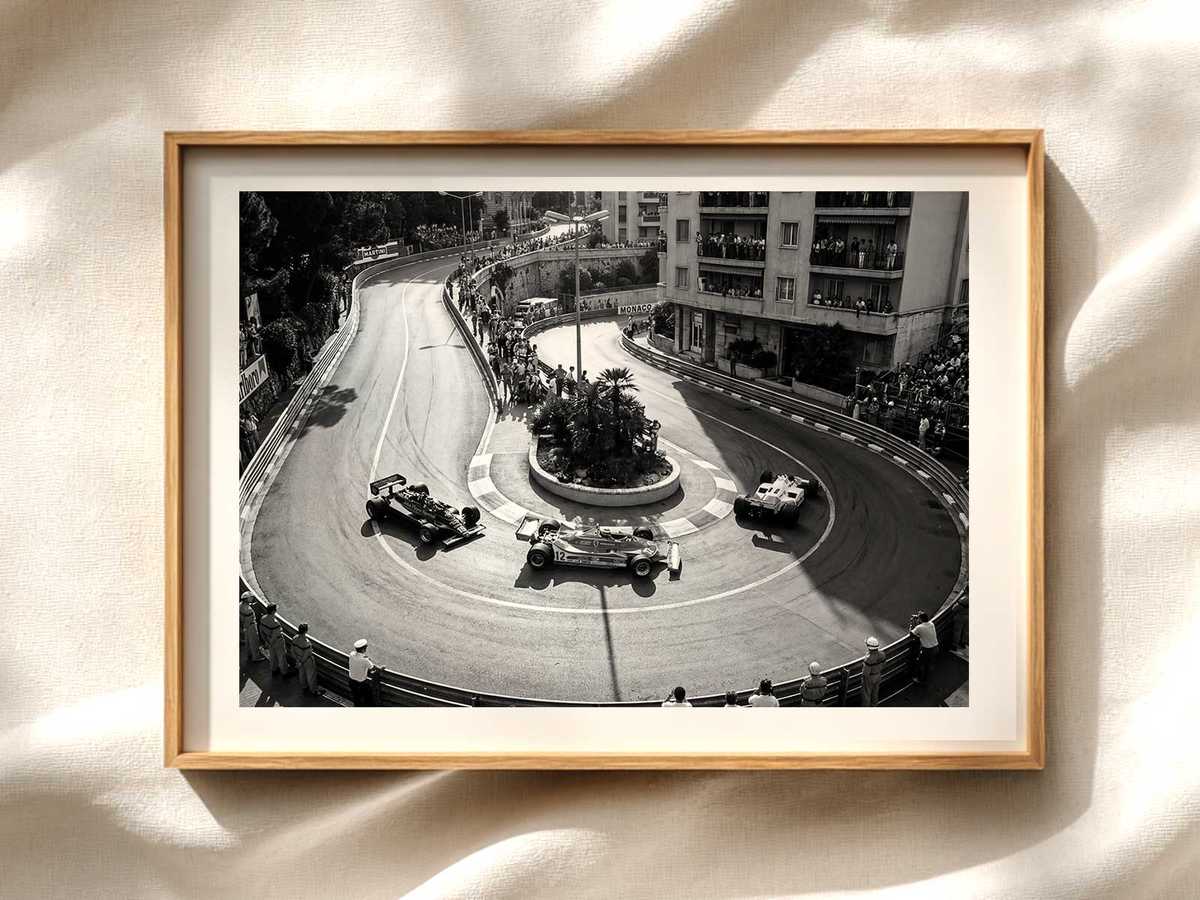
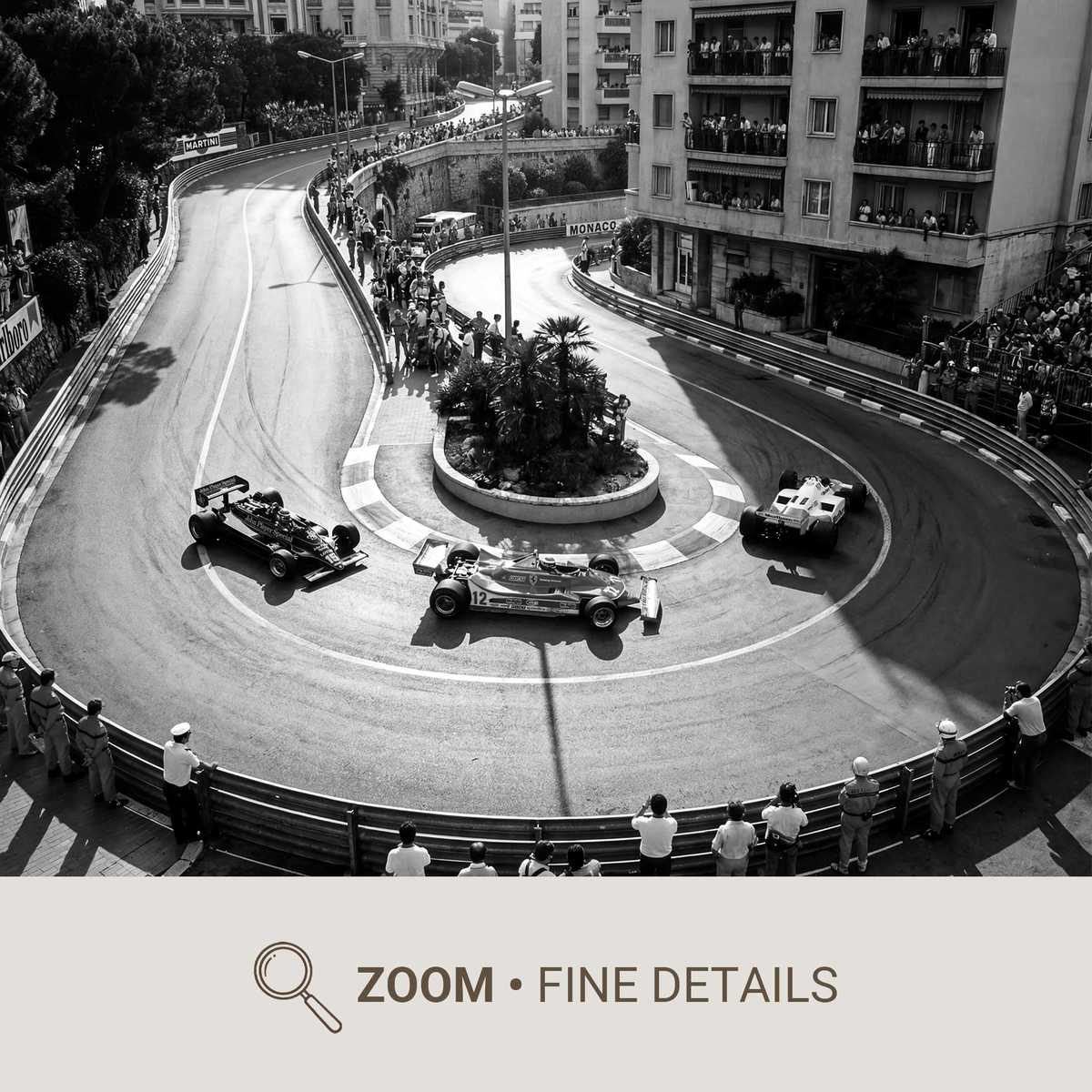
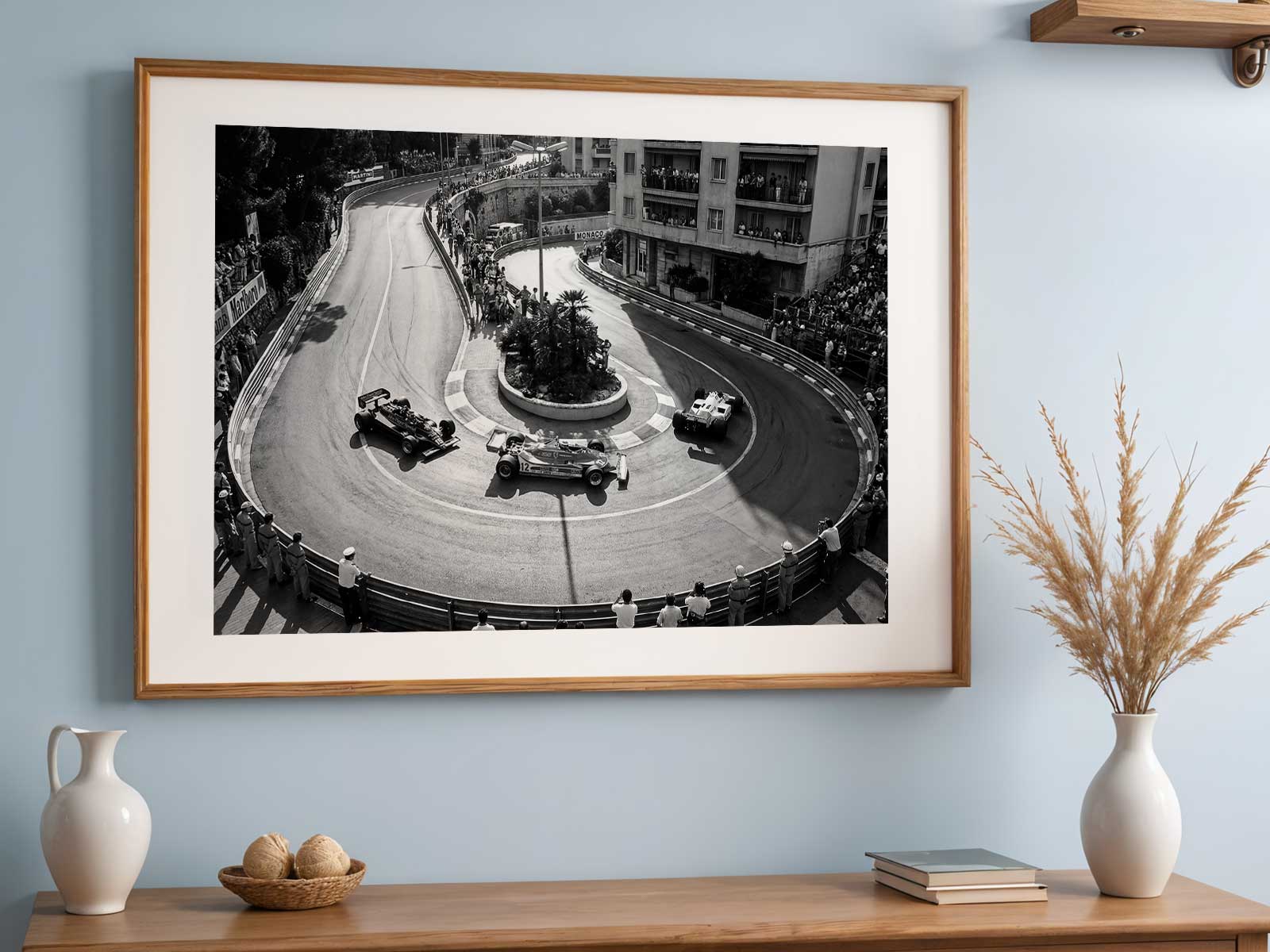
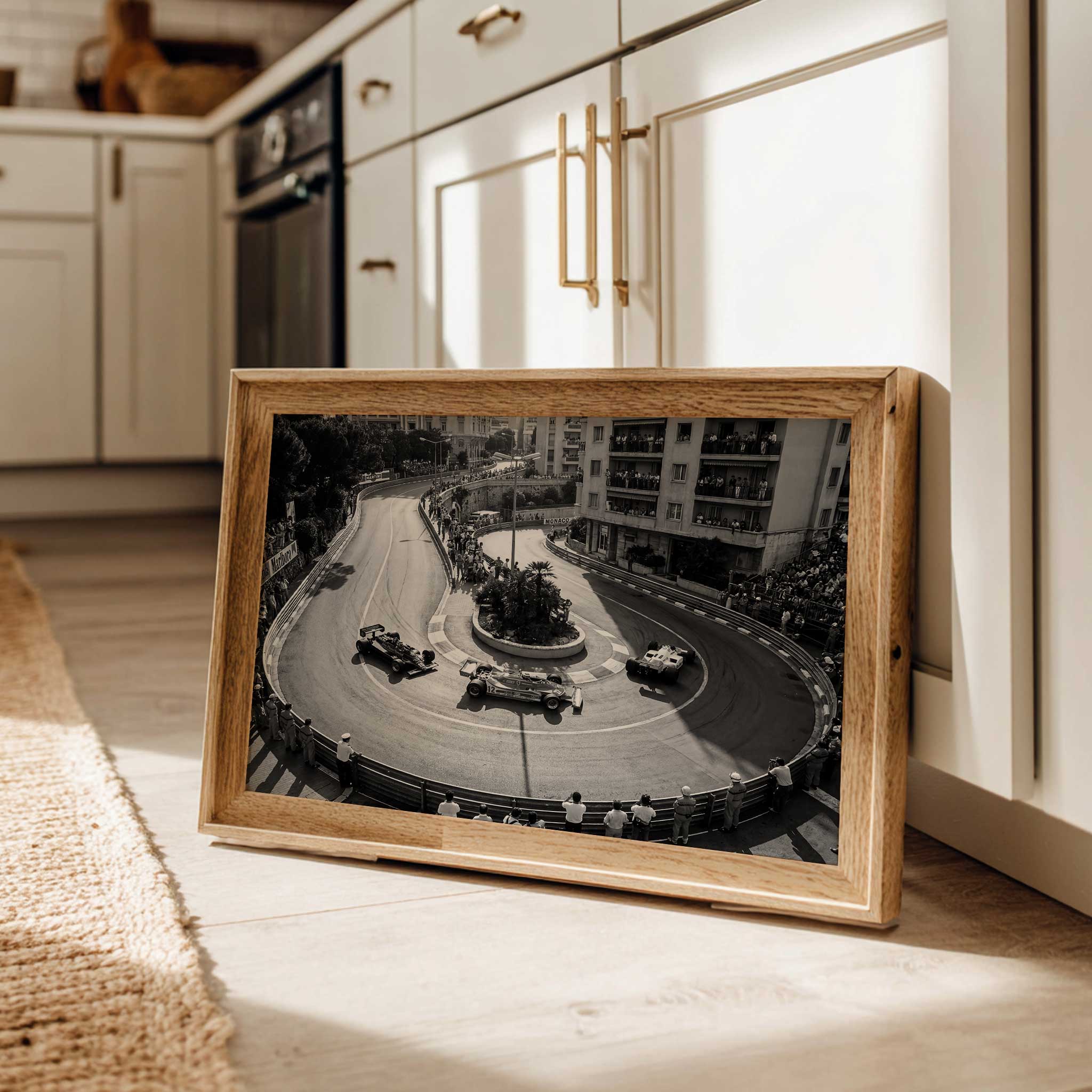
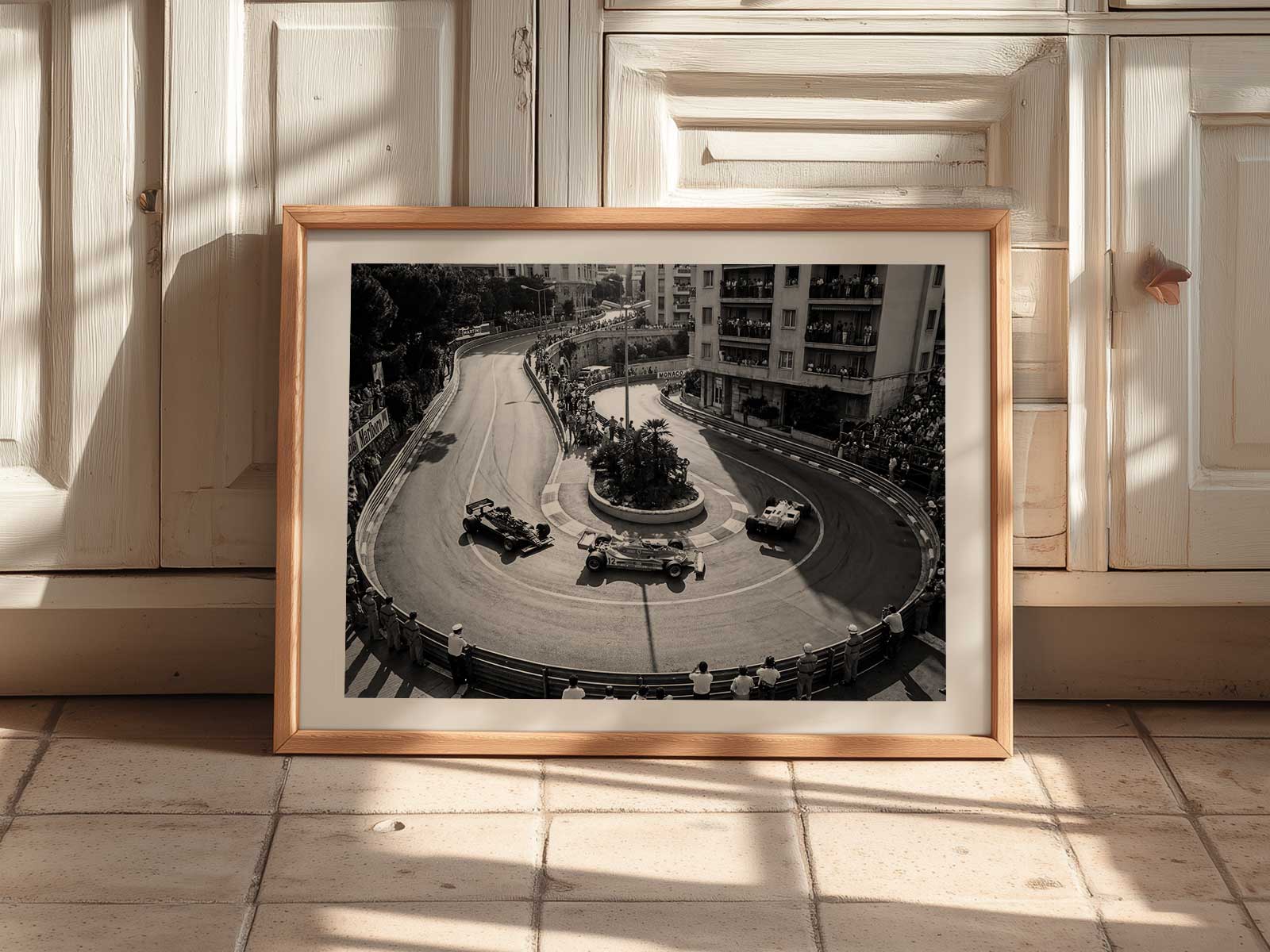
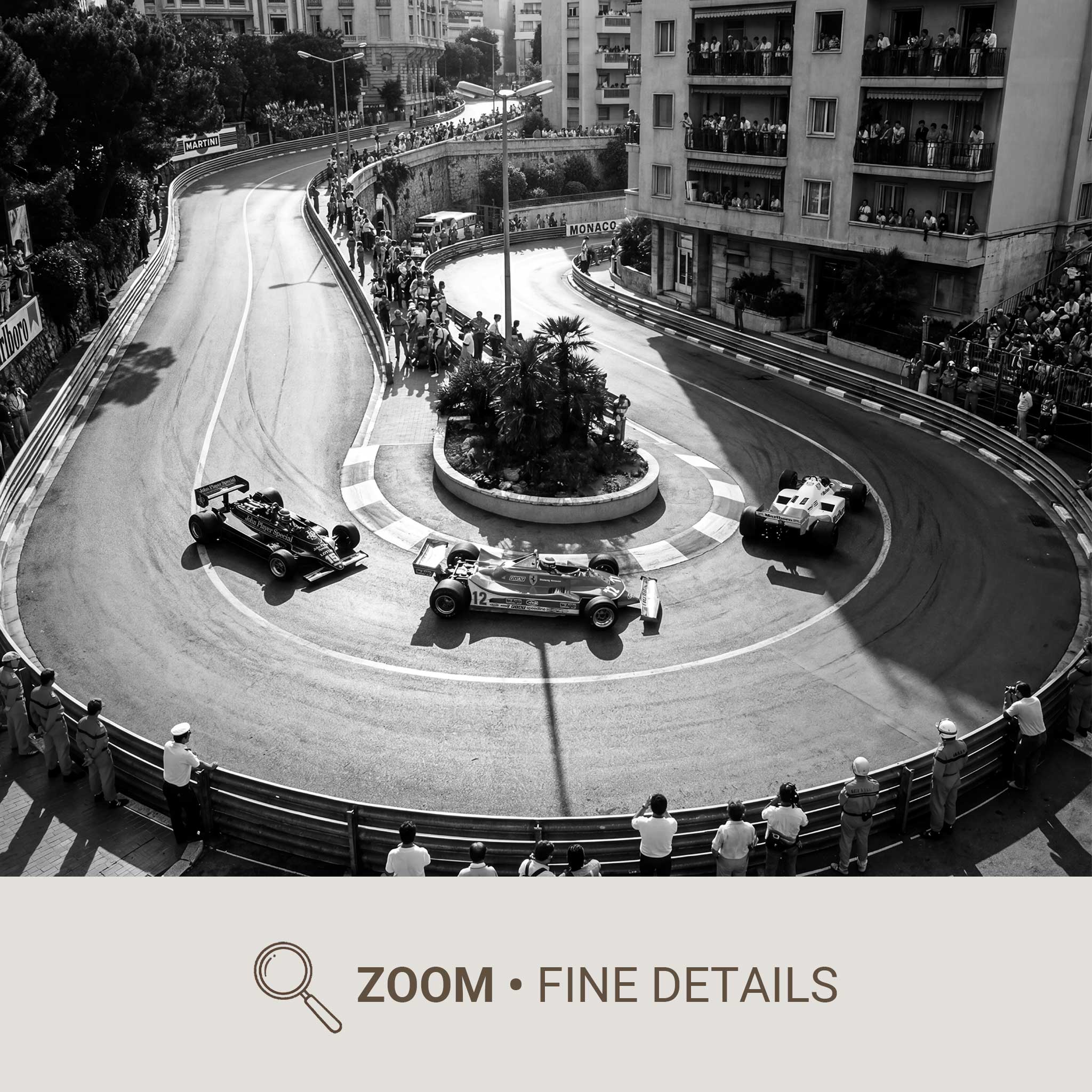
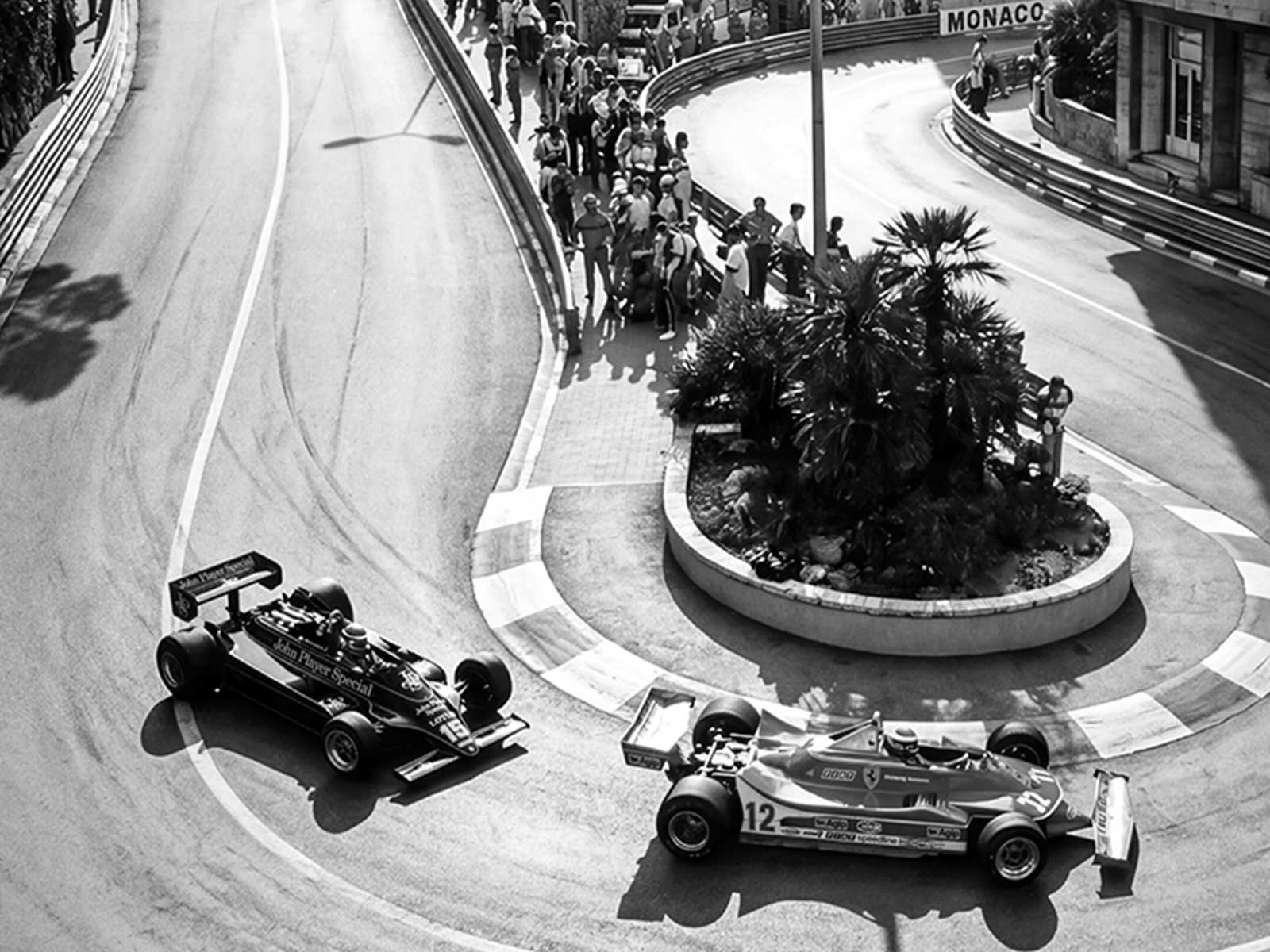
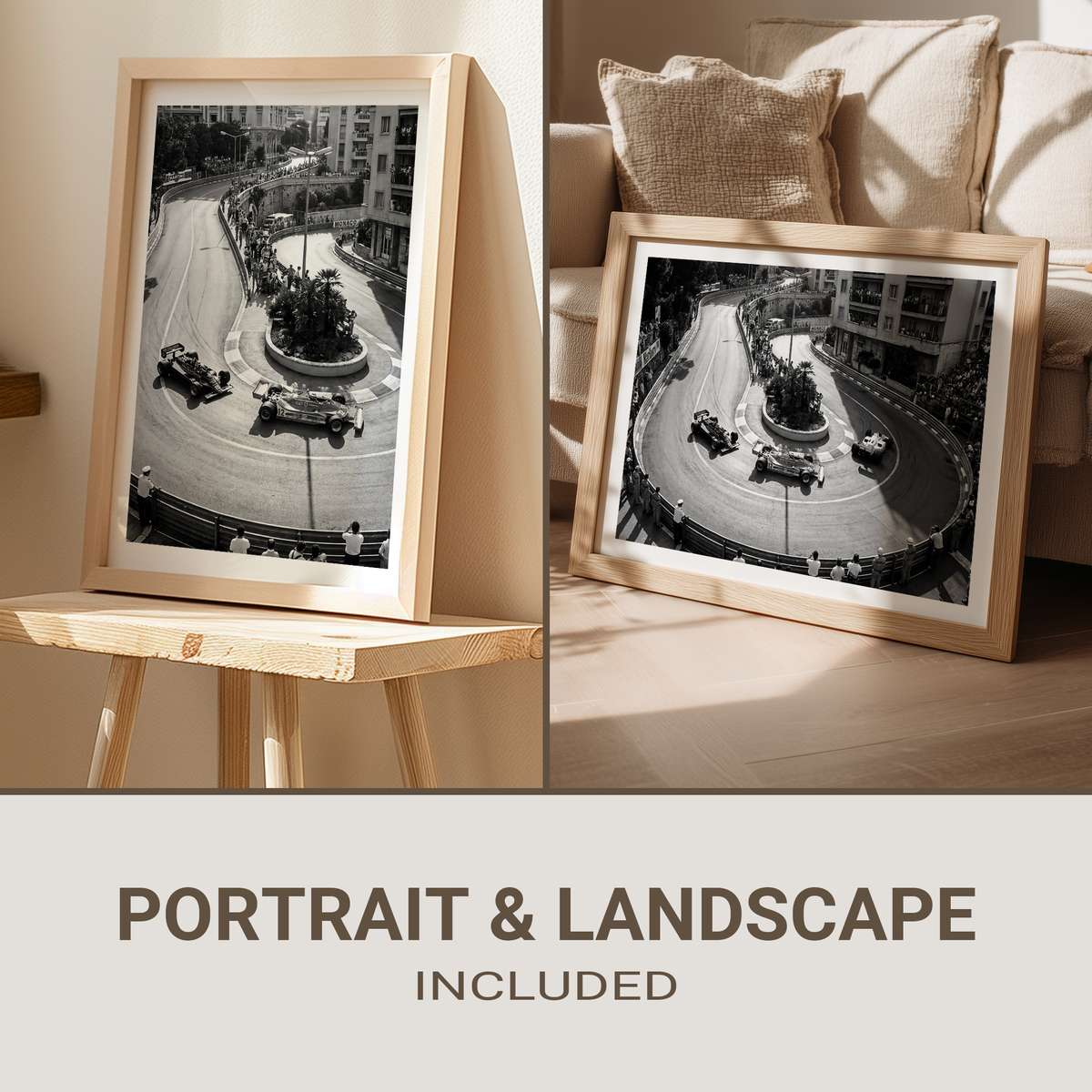
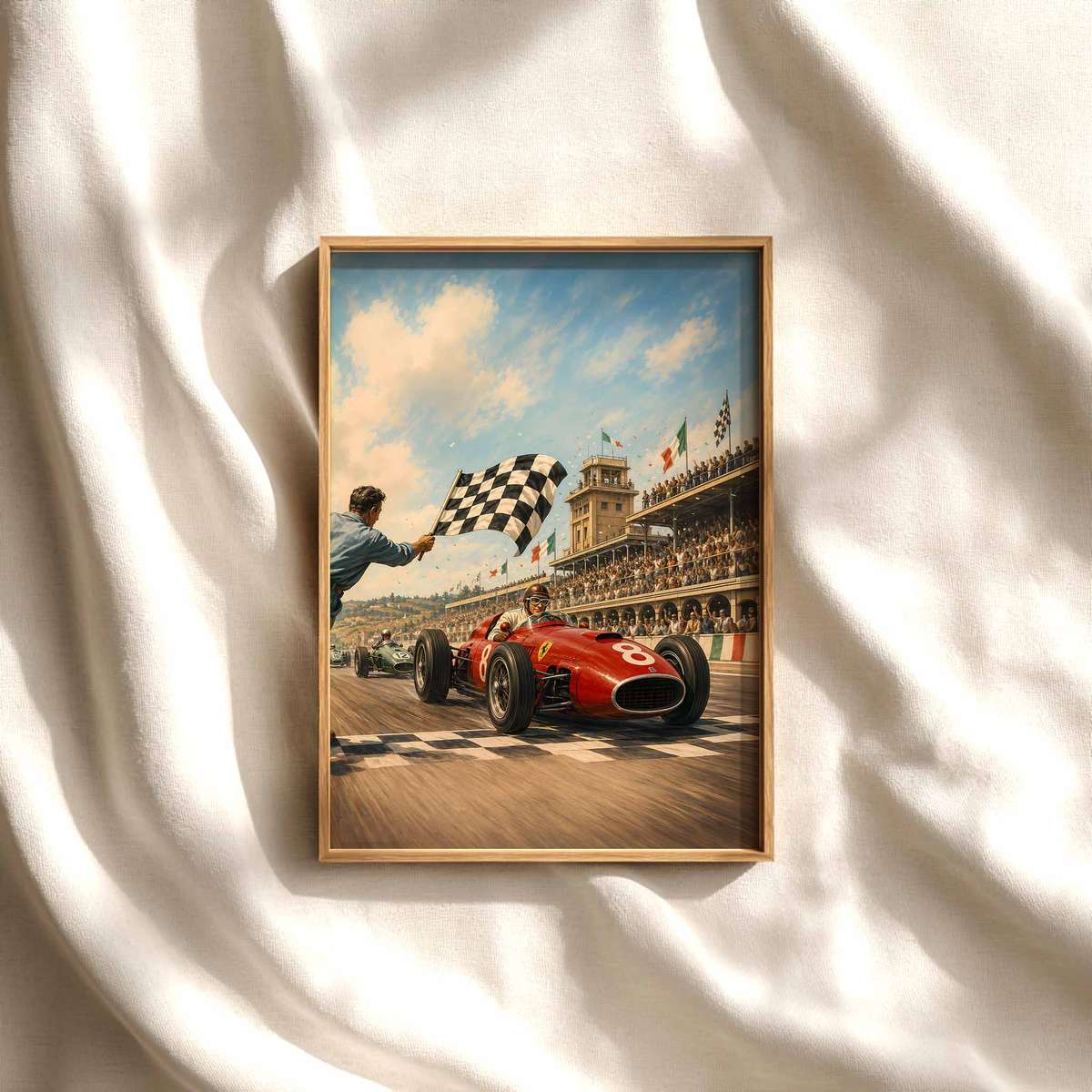
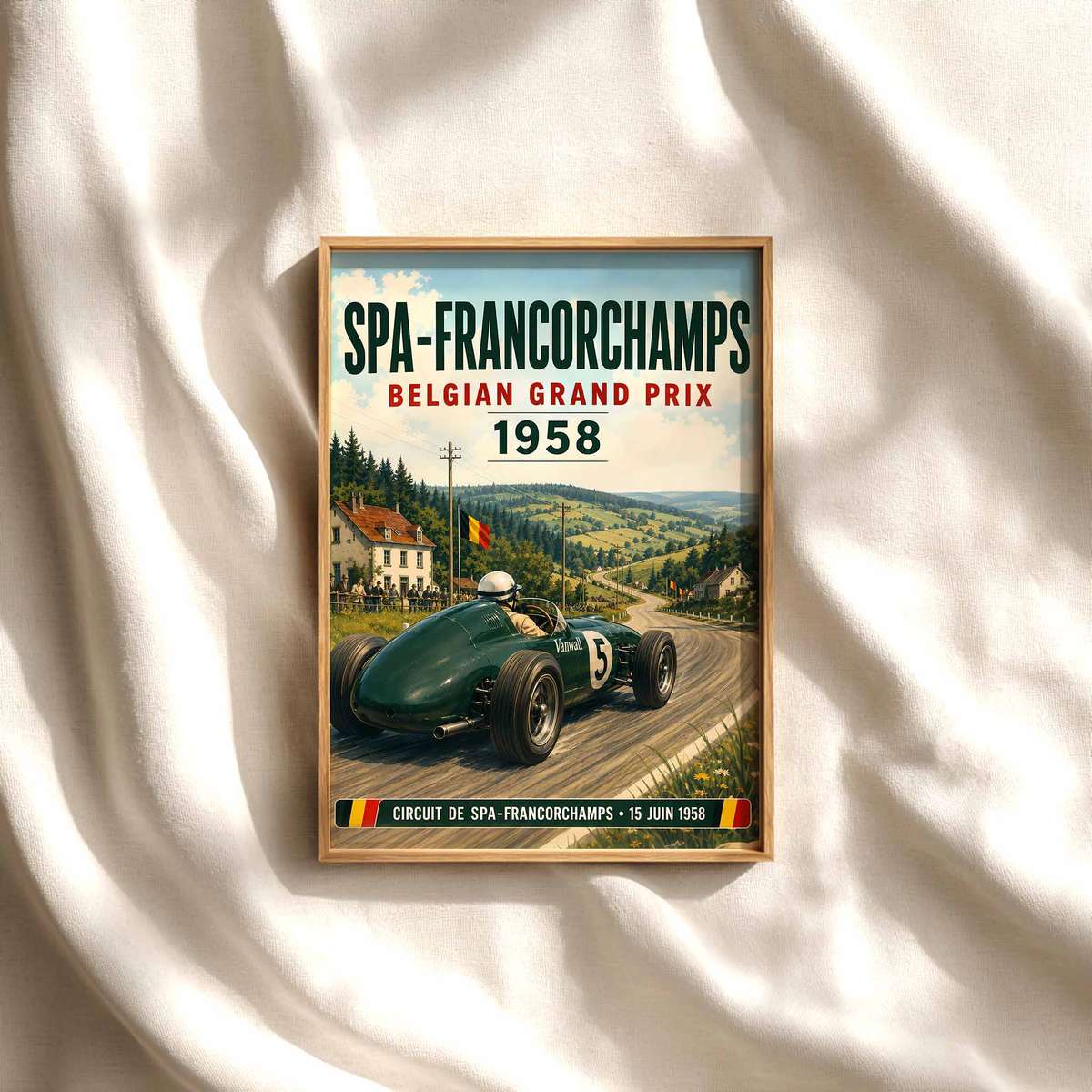
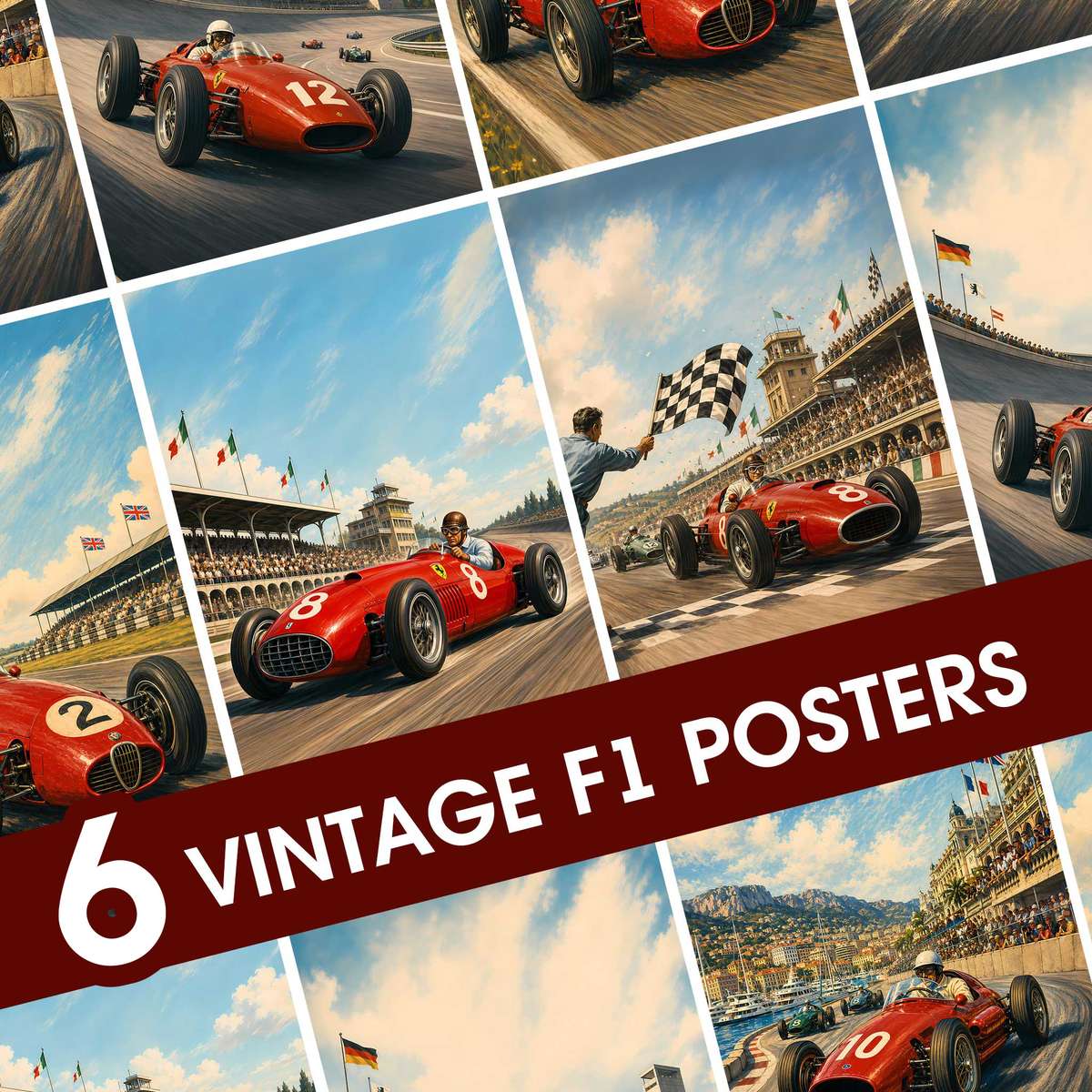
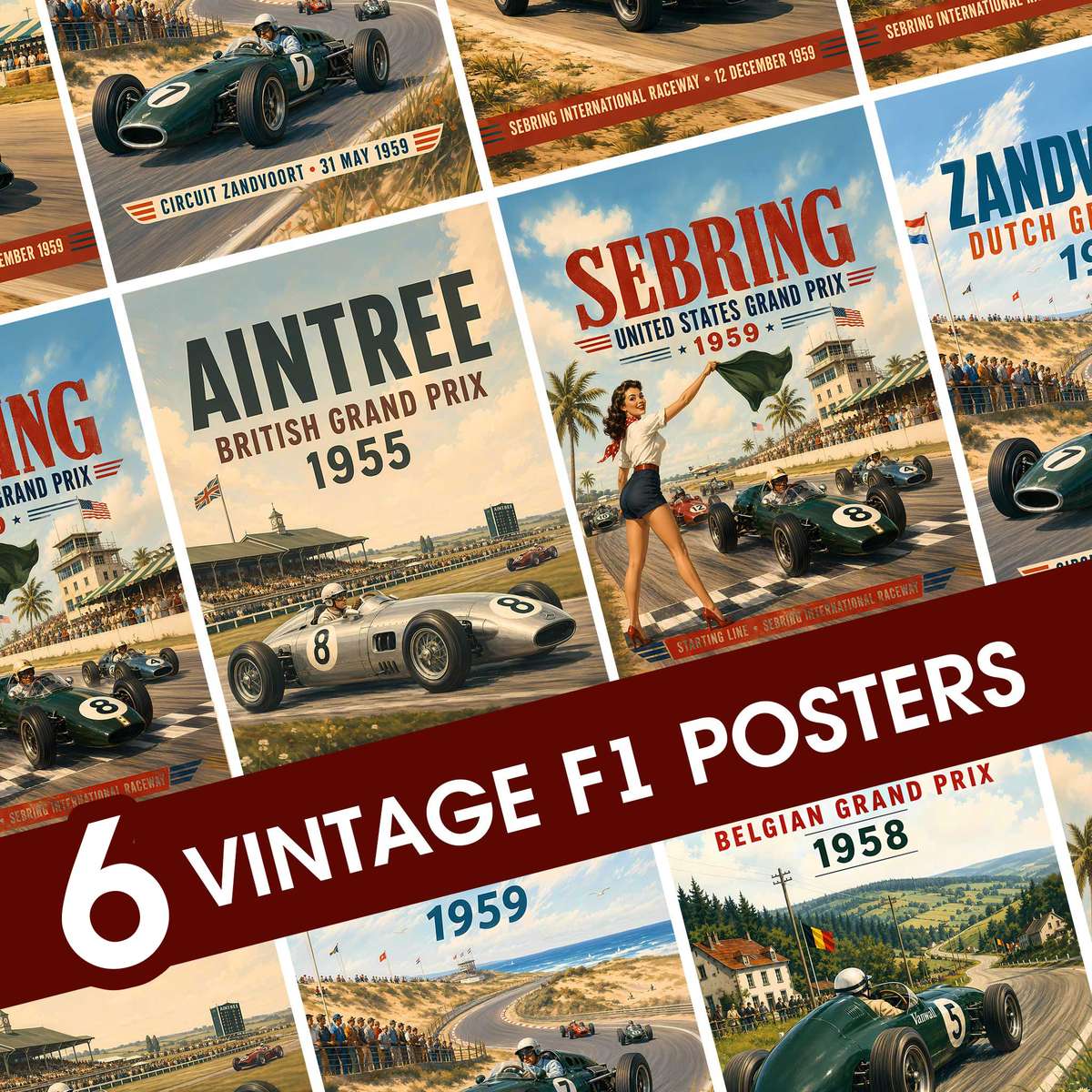
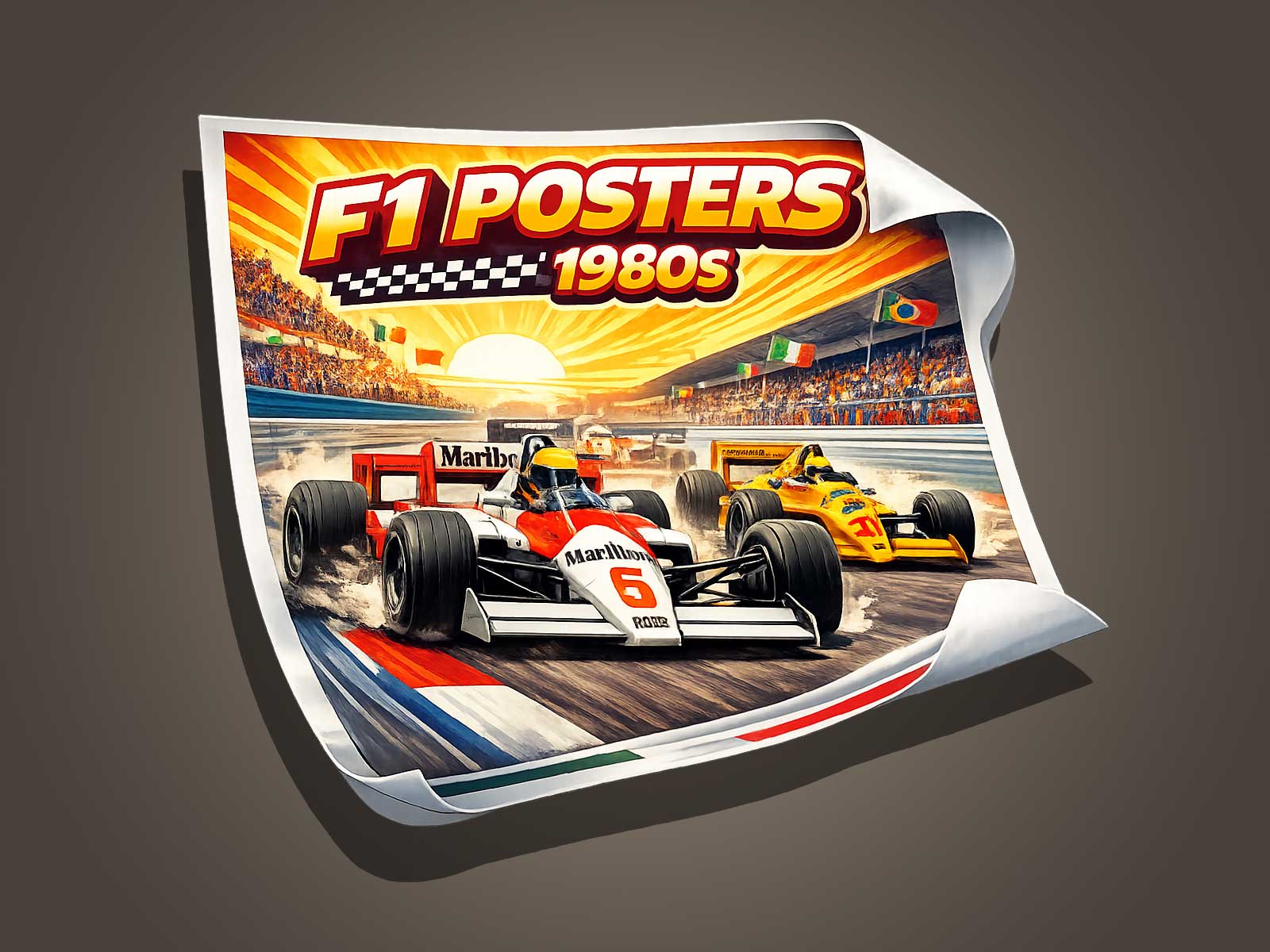
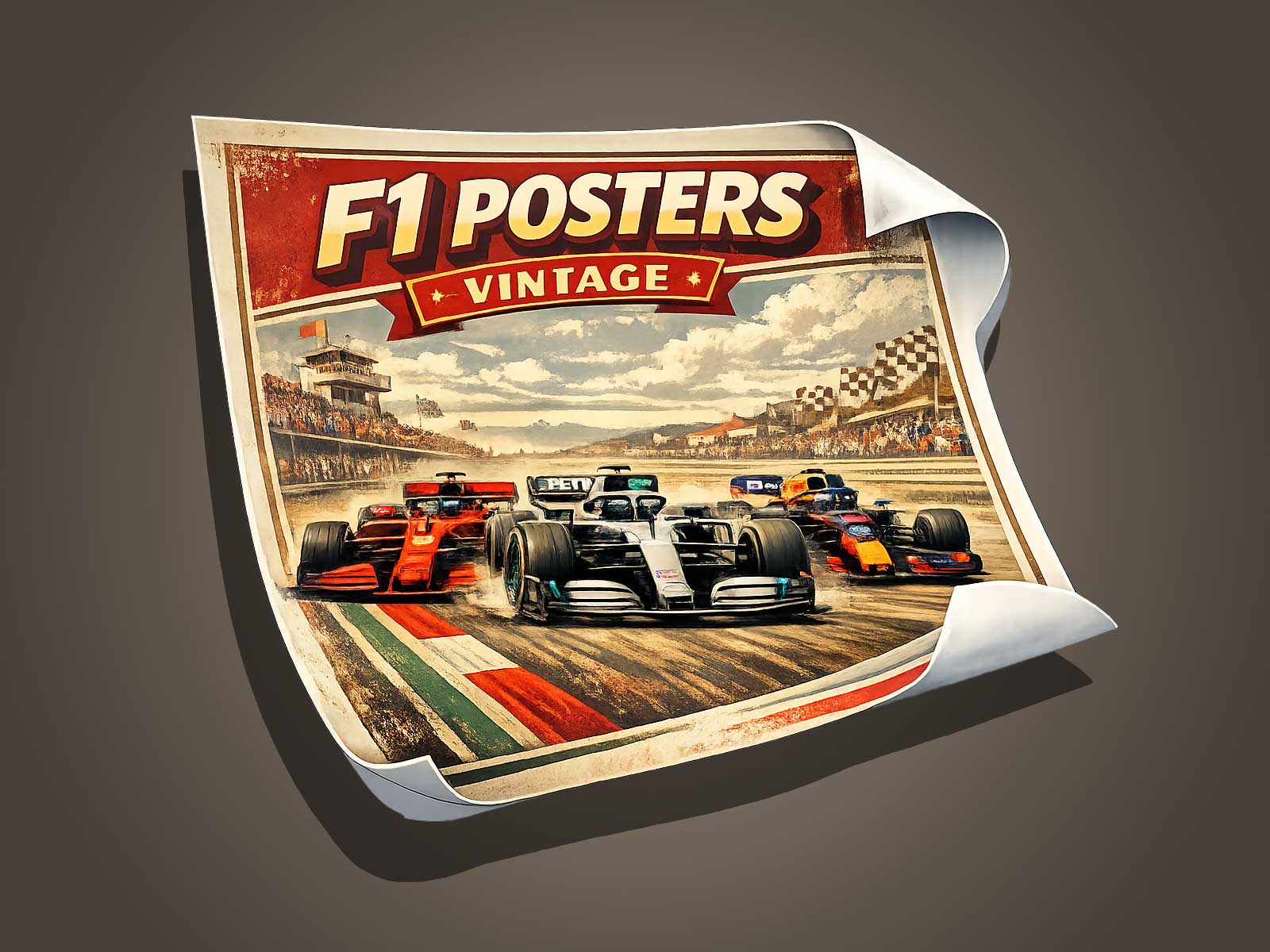
The narrow streets of Monaco compress more than cars; they condense drama. This article examines how the spectacular compression of a peloton between guardrails and building facades turns a fleeting racing instant into a powerful, narrative-rich F1 poster. We'll explore visual cues that convey motion, the perceptual tricks that heighten pressure, and layout choices that make a race moment read as both decorative artwork and cinematic snapshot.
Why compression matters in F1 poster design
Compression is a visual shorthand. When multiple cars cluster tightly within a confined space, the scene communicates urgency and risk: wheel-to-wheel proximity implies contested lines, split-second reactions, and concentrated sound. For a poster, that tension is desirable because it translates directly into emotional impact. A viewer doesn’t have to know lap times to feel the moment; the compressed composition does the storytelling.
Key elements that convey movement and pressure
Designers can rely on several concrete elements to make a compressed peloton feel kinetic and tense:
- Converging lines: Use guardrails, curbs and building edges to form converging perspectives that push the eye toward the focal cluster of cars. Convergence increases perceived speed and directs dramatic focus.
- Scale and overlap: Slight scale variations and overlapping silhouettes communicate depth and closeness. Partially obscured cars suggest proximity and the claustrophobic nature of a street circuit.
- Motion blur and directional streaks: Targeted, stylized blur on wheels, exhaust plumes or reflections can imply velocity while preserving legibility of main shapes.
- Light and shadow contrasts: Strong side lighting or reflected highlights on helmets and bodywork accentuate form and create tense chiaroscuro that reads as drama at a glance.
- Color hierarchy: Muted backgrounds with saturated car liveries help the peloton pop. Using a dominant accent color on the lead car subtly suggests traction and narrative priority.
Composing for narrative: the poster as condensed story
A successful race moment poster does more than reproduce what happened; it frames a micro-story. Consider these compositional strategies:
- Single decisive moment: Pick an instant that implies consequence—a near-miss, a wheel-to-wheel passing attempt, or a braking cluster. Freeze that breath before resolution and the viewer supplies the tension-filled before and after.
- Foreground elements for immediacy: Introducing a fragment of rail or a blurred wheel in the extreme foreground pulls the observer into the scene and creates spatial compression consistent with Monaco’s streets.
- Negative space as dramatic foil: Tight clusters contrasted with pockets of calm (an empty sidewalk, a shadowed façade) amplify the sensation of pressure within the peloton.
Decorative logic: balancing art and authenticity
Posters intended for interior decoration must marry evocative racing drama with compositional restraint so they work on a wall. Keep these decorative principles in mind:
- Simplify details: Reduce distracting technical clutter—too many sponsors, tiny text or busy background elements dilute the central compression.
- Stylized realism: Maintain recognizable car shapes and architectural cues from Monaco while using graphic simplification—solid color blocks, enhanced reflections, and subtle texture—to create a clean, modern look.
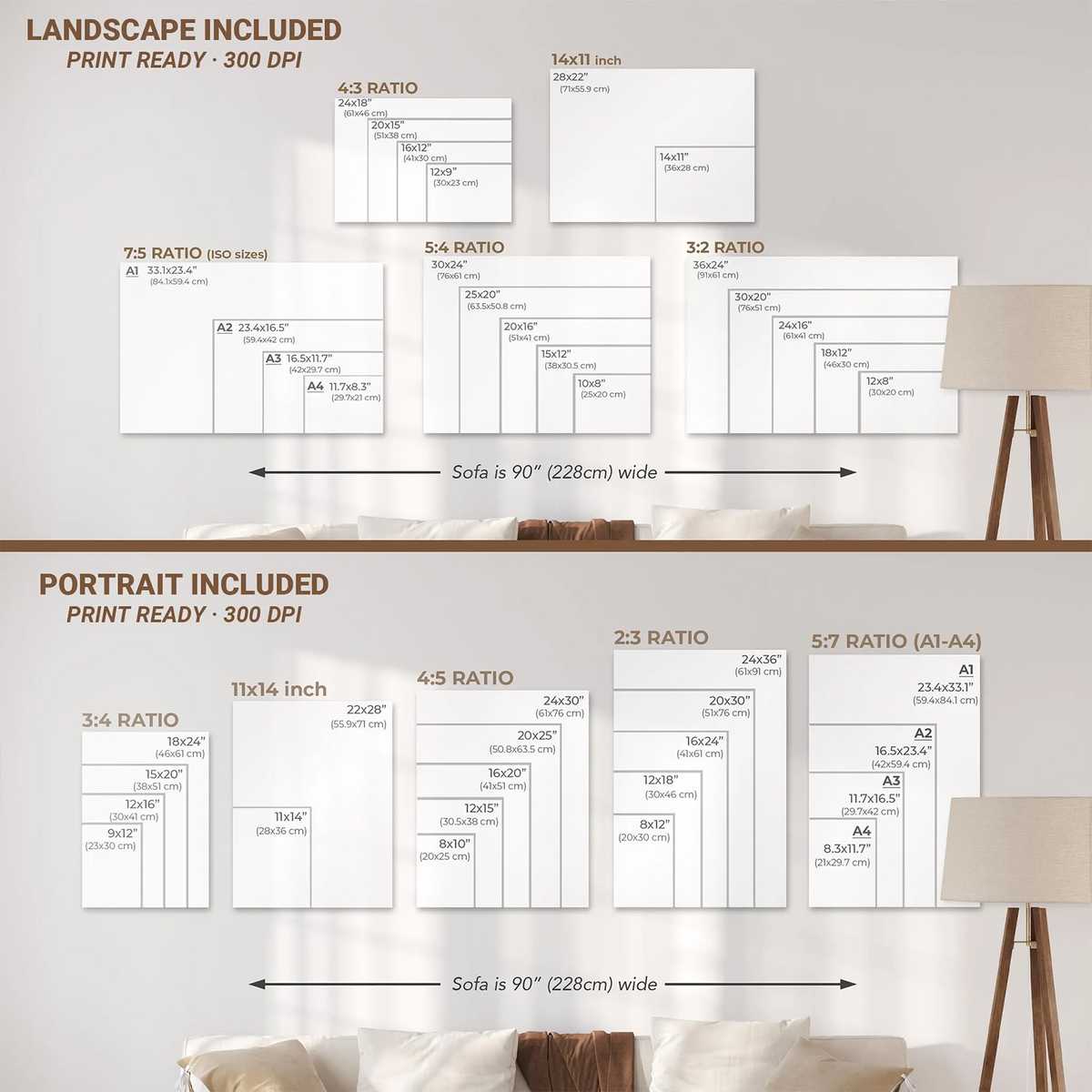
- Aspect and framing: Choose an aspect ratio that supports a horizontal sweep of cars or a vertical view that emphasizes tower-like facades and rail lines. Provide margin space so the composition breathes on a wall.
Practical tips for photographers and illustrators
Whether working from photography or illustration, these practical techniques help capture compression convincingly:
- Use a moderate telephoto lens: Compress perspective to bring background architecture closer to the cars and emphasize density.
- Position near chokepoints: Shoot from locations where the street narrows or curves sharply—these naturally generate compact clusters of cars.
- Time for brake and steering gestures: Freeze moments when drivers are visibly loaded—wheels turned, suspension compressed—to communicate mechanical effort and imminent change.
- Post-process for cohesion: Apply controlled contrast, selective desaturation of the surroundings, and unified color grading so the compressed peloton reads as a single dramatic unit.
Making the poster resonate in a living space
A poster should translate the track’s tension into a decorative object that complements interiors. Consider finishes and presentation: matte paper reduces glare and preserves shadow detail, while a slightly textured stock gives an analog warmth that complements the urban grit of Monaco. Framing options—thin black or floating frames—can enhance the sense of enclosure and mirror the rail-and-facade boundaries central to the image.
Conclusion: turning a race instant into a lasting narrative
Compression between rails and façades is not just a physical phenomenon on street circuits—it’s a compositional tool. By emphasizing converging lines, scale relationships, selective motion cues and a clear narrative moment, designers create F1 posters that feel alive and dramatic while remaining decorative. A well-composed Monaco peloton poster condenses an explosive fragment of racing into an image that reads as both event and emblem, making the viewer feel movement, pressure and the drama of the Grand Prix every time they glance at the wall.
Related listing: Monaco F1 race posters on Etsy