Tracing Williams Formula 1: the design journey from FW07 to FW40 and beyond
The story of Williams Formula 1 cars is one of technical ambition, marked shifts in design philosophy and periods of both dominance and decline. From the team's origins in the late 1970s to the machines preserved in its Grove heritage collection, the Williams lineage reveals how regulation changes, engine partnerships and engineers’ approaches shaped some of the sport’s most memorable cars.
Short summary — Williams Grand Prix Engineering, founded by Frank Williams and Patrick Head, produced a succession of FW-designated chassis from the late 1970s. The team won multiple Constructors' and Drivers' Championships across eras defined by ground effect, electronic aids and engine partnerships, and today maintains a heritage programme at Grove.
Where the Williams project began
The context that produced Williams
Williams Grand Prix Engineering was established by Frank Williams and Patrick Head in 1977 and began designing its own Formula 1 cars from the late 1970s onward. The Grove site in Oxfordshire became the team’s technical nucleus: design, manufacture and the heritage collection are all based there. Early work at Williams coincided with a period in F1 when aerodynamics and engine choice were decisive factors; that environment shaped the team’s initial directions.
Early ground-effect era and the FW07
One of Williams’ landmark early designs was the FW07, which belongs to the ground-effect period. The FW07 exemplified Williams’ move into in-house chassis design and established the team as a competitive force. Ground-effect aerodynamics and packaging around robust engines were central to the FW07’s concept and to Williams’ approach in the early 1980s.
The transition to electronic sophistication: Newey-era innovations
In the early 1990s Williams produced cars such as the FW14 and its evolutions that are notable for integrating advanced electronic systems and active suspension. These cars demonstrate a clear philosophical shift from the earlier reliance on mechanical grip and ground-effect packaging to an emphasis on electronic aids and system-level integration. The adoption of active suspension and complex electronics in that era was a defining technical direction for Williams.
Engine partnerships and the 1990s competitive context
Williams’ competitiveness in the 1990s was closely tied to a partnership with Renault, which supplied power units recognised for their performance and reliability. That collaboration underpinned cars that contested championships and shaped Williams’ design priorities: chassis packaging, aerodynamics and systems integration were developed to exploit the engine partnership.
FW19 and the late-1990s peak
The FW19 is another milestone in Williams history. It sits in the narrative as the car that delivered a Drivers’ Championship in the late 1990s and reflects continuity with the team’s refined technical philosophy: mature aerodynamics, tight engine-chassis integration and race-focused development. The FW19’s success is part of the broader run of Williams title-winning machinery across its most successful decades.
How the Williams project evolved into the 21st century
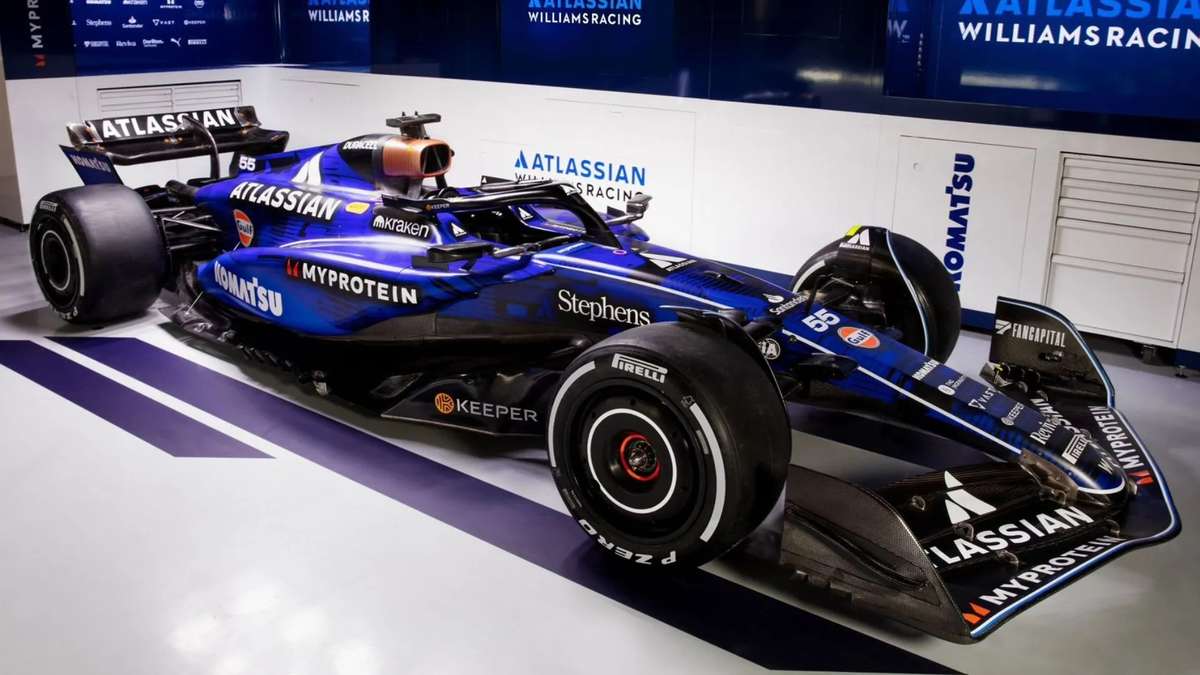
Across subsequent regulation cycles Williams adapted its technical approach to changing aerodynamic rules and the arrival of hybrid power units. The team’s long history includes continual restructuring of its business and technical setup—including the creation of Williams Grand Prix Technologies and later changes in ownership and organisation. These structural shifts mirror the technical adjustments required to remain competitive under new rulebooks and power-unit architectures.
Dominance, decline and recovery attempts
Williams’ record across decades is uneven by design: the team has been one of F1’s most successful outfits, with nine Constructors' Championships, seven Drivers' Championships and more than 100 race wins, but it has also experienced deep performance troughs. Periodic reorganisations and strategic responses have been a recurring feature of the team’s history as it sought to regain competitiveness after challenging seasons.
Why these cars matter today
Williams maintains an active heritage programme at Grove that preserves and displays key cars such as the FW07, FW14, FW19 and anniversary chassis like the FW40. These preserved cars serve a dual purpose: they document technical evolution (ground effect, active suspension, engine partnerships) and they anchor Williams’ cultural memory within Formula 1. Running and showing these machines at events and in the Grove collection keeps the team’s design milestones visible to new generations.
The lasting legacy of Williams designs
The Williams narrative is less a single continuous technical line than a sequence of responses to regulation changes, power-unit opportunities and competitive pressure. From ground-effect experiments with the FW07 to the electronics-driven FW14-series and the title-winning FW19, each milestone reveals how the team interpreted the rules and exploited available technology. The Grove-based heritage programme ensures those interpretations remain part of the sport’s recorded history.
Author: Cynthia D.