Tracing Jenson Button's trajectory to Formula 1: from karting prodigy to 2009…
Jenson Button's career is one of the clearer modern examples of a driver who progressed cleanly from junior karting dominance to the top of Formula 1. Born in 1980 in Frome, Somerset, Button combined early national success in karts with steady steps through single-seater categories before arriving in Formula 1 and, a decade later, claiming the sport's highest prize.
Snapshot:
Born 19 January 1980, Button began karting at age eight, raced to dominant national karting results, won the 1998 British Formula Ford title, debuted in F1 with Williams in 2000 and became 2009 World Champion with Brawn GP.
Reader preview
- How early karting success set the foundation for single-seater progression.
- Key milestones: Formula Ford title, F1 debut, first win, and the 2009 championship.
- Why the 2009 season crystallised Button's place in F1 history.
Childhood and first competition years
Jenson Button was born on 19 January 1980 in Frome, Somerset, England. He began karting at the age of eight. Early competitive years in karts produced exceptional results nationally, including a period in which he won every race in a cadet category season as a young karting competitor, a sign that he would rise rapidly through the junior ranks.
Karting and the first serious signals
Button's karting record in Britain was notable for the consistency and volume of victories he compiled as a child and teenager. That sustained success in British karting categories provided the platform many drivers need to move into single-seater racing and attracted attention through clear on-track results rather than hype.
The junior formula climb
Progressing from karting into cars, Button took a key national single-seater title when he won the 1998 British Formula Ford championship. That title is a traditional proving ground in the UK and marked Button out as ready for the next steps toward professional single-seater racing.
Arrival in Formula 1
Button made his Formula 1 debut with Williams in 2000. His introduction to the sport was immediate: he became, at that time, the youngest driver to score a championship point in Formula 1. That early milestone established him within the grid as a driver with genuine racecraft and adaptability under F1 pressure.
Breakthrough seasons and defining campaigns
Button took his first Formula 1 race victory at the 2006 Hungarian Grand Prix. That maiden win was a pivotal confirmation of his capacity to convert potential into race-winning performance at the highest level. The decisive peak of his career came in 2009 when he won the FIA Formula One World Championship driving for Brawn GP. The title was secured at the Brazilian Grand Prix on 18 October 2009, the same weekend Brawn GP clinched the Constructors' Championship in the unique story of a team formed from the management buyout of the Honda F1 operation.
Teammates, rivals and paddock relationships
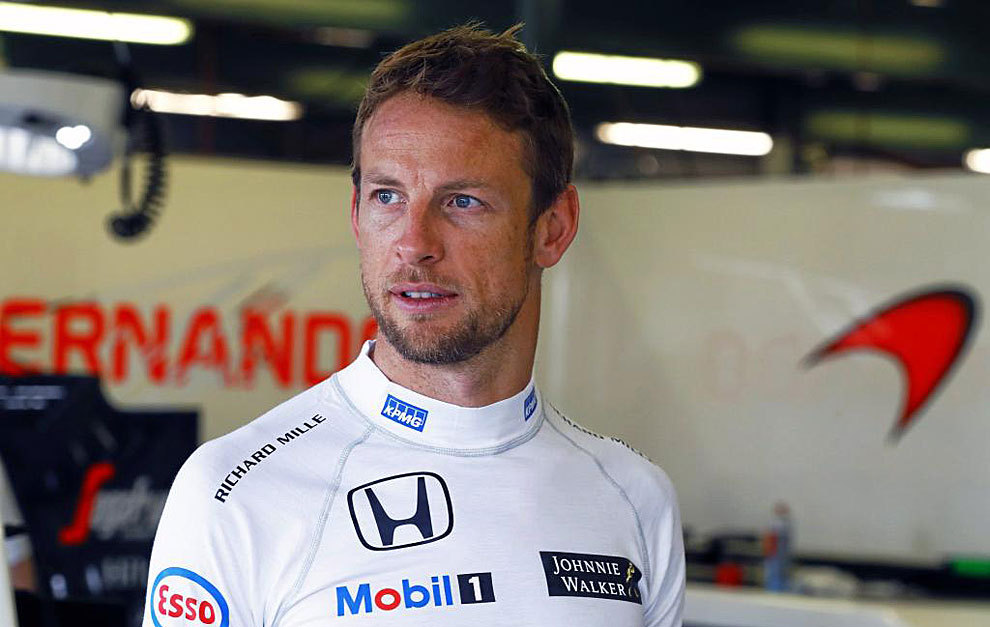
Across a long F1 career Button drove for a succession of teams: Williams, Benetton, Renault, BAR, Honda, Brawn GP and McLaren. Those team changes framed a career that moved between development roles, championship contention and reinvention. The 2009 season with Brawn GP, in particular, remains the defining moment when the driver and team narrative aligned to produce championship success.
Transfers, resets and reinvention
Button's career featured multiple team moves that required adaptation to different cars and environments. After the Honda-era transition into Brawn GP, the 2009 season was a transformational reset: a newly formed operation, derived from Honda's exit, emerged to win both titles in its only year of competition. Following that peak, Button continued at the front of the sport with later seasons spent at McLaren, maintaining a presence among established teams through further transitions.
What the career looks like today
Career totals frequently cited for Button include 15 F1 wins, 50 podiums and 8 pole positions across roughly 305 Grands Prix. After stepping back from full-time competition, he remained connected to motorsport and made a one-off Formula 1 appearance for McLaren at the 2017 Monaco Grand Prix. The arc from karting dominance to world champion and continued involvement underlines a career that combined early promise, professional longevity and a singular championship moment.
Closing interpretation
Jenson Button's story matters because it maps a clear, evidence-based progression: childhood karting success that translated into a national single-seater title, a precocious entry into Formula 1, steady development, a first win that validated his progress, and a championship season that crystallised years of accumulation. The 2009 title — achieved with a team that itself rose from a crisis to immediate triumph — remains the defining turn in a career built on measurable milestones and adaptability rather than myth.
Author: William L.