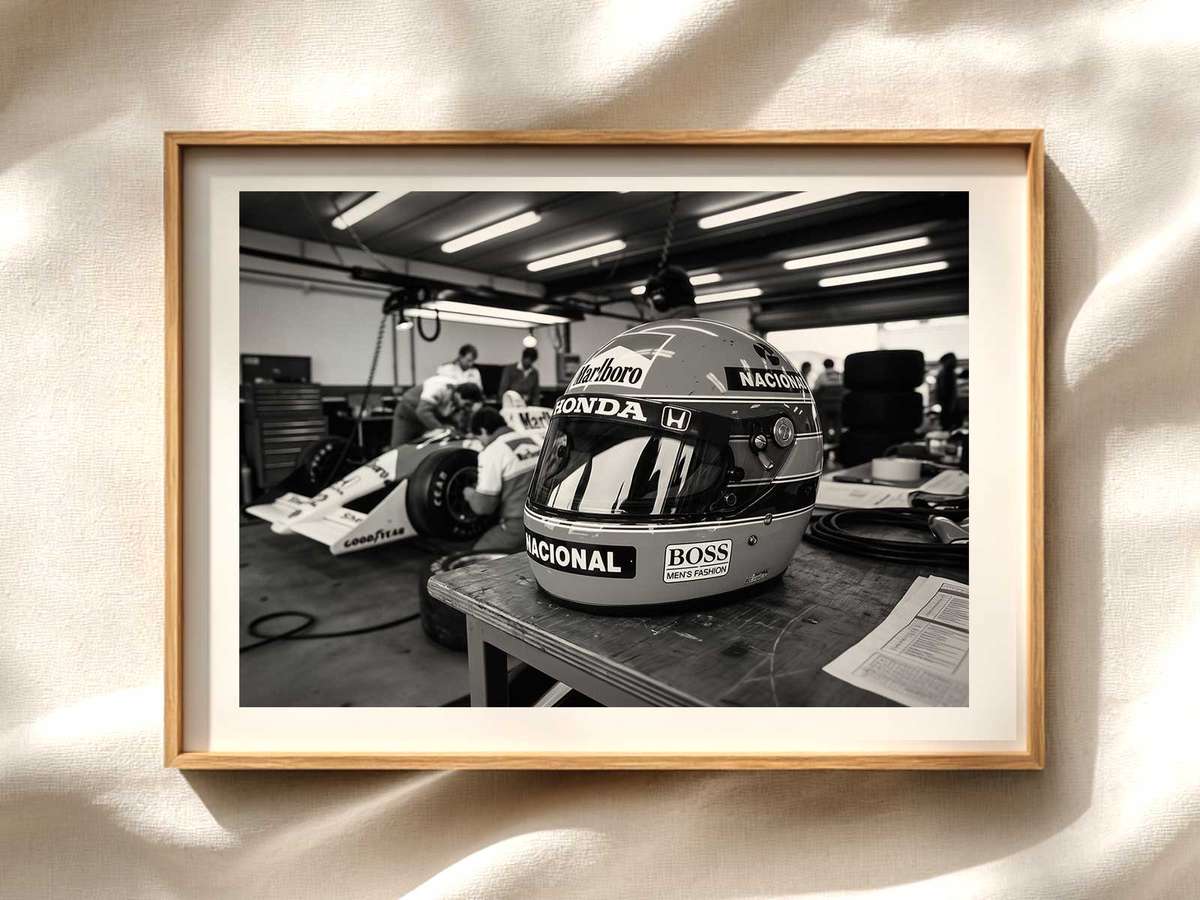
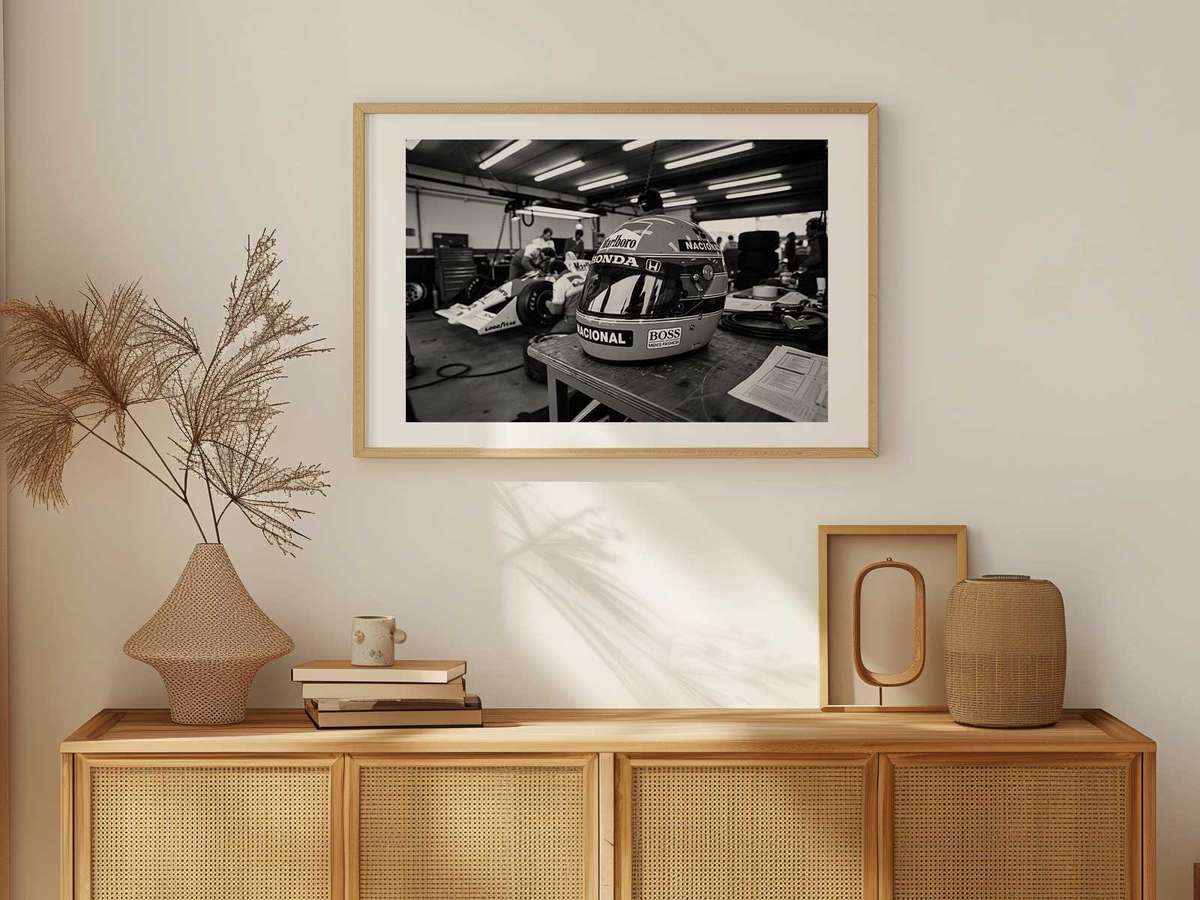
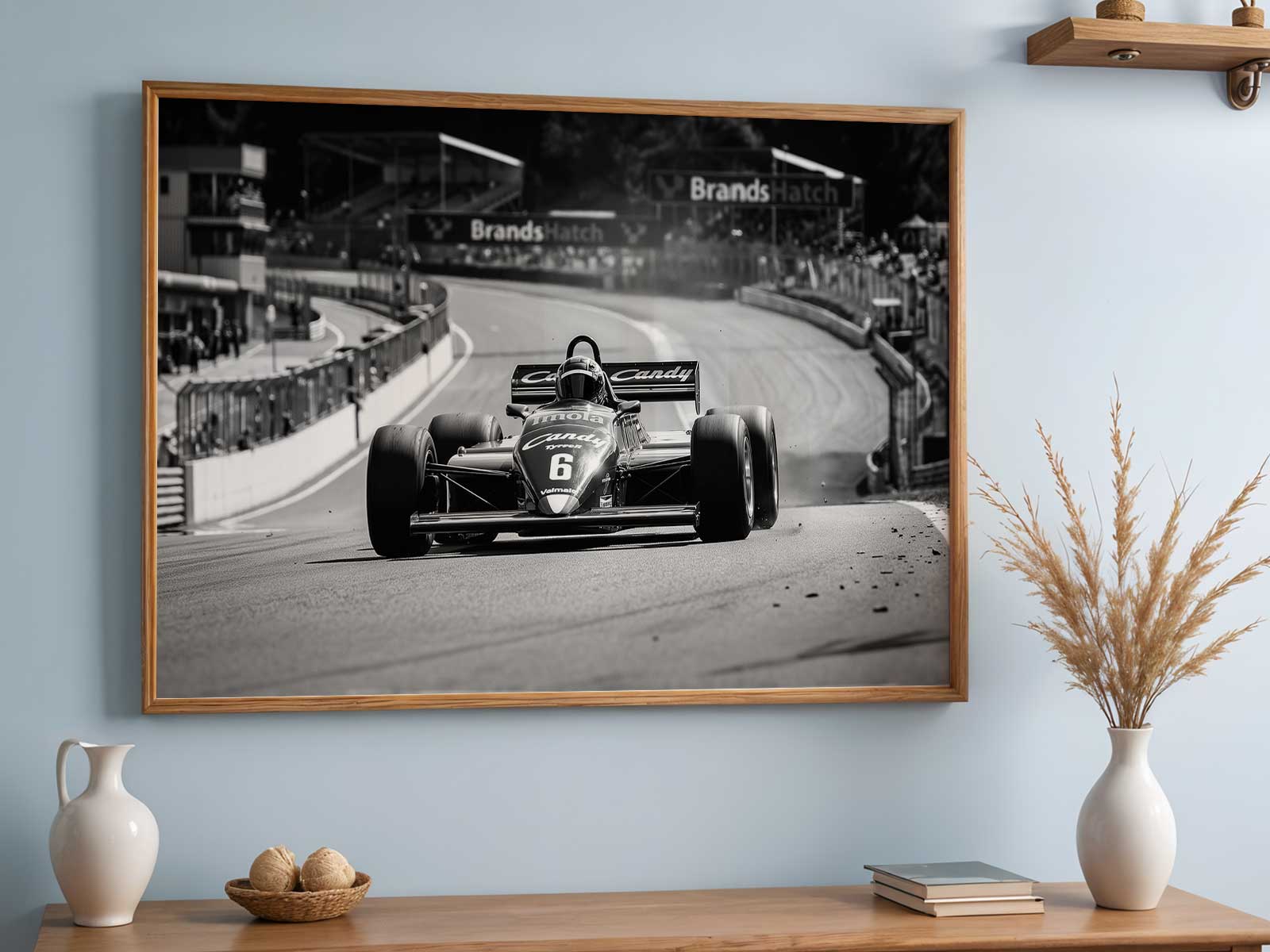
The Spielberg setting has a particular visual vocabulary: sweeping elevation changes, tight natural amphitheatres and a sense of concentrated speed. A poster that translates that atmosphere into a single frame can do more than celebrate a circuit; it becomes a piece of interior art that reshapes a room. At first glance such an image announces itself through scale — the track carved into the landscape, a car leaned into an apex, and often, a helmet shown close enough to feel human. That combination of environment, engineering and personality is precisely why a Spielberg-focused print reads as premium Formula 1 décor rather than mere motorsport memorabilia.
What a viewer notices first is usually the visual anchor: a swooping line of tarmac, a flash of team colour or the glossy curve of a helmet visor. These elements work like compositional magnets. The circuit’s natural bowl frames the subject and gives the poster an architectural quality; the car’s silhouette or a helmet’s profile provides a focal point that invites recognition even from across a room. In interior terms, this makes the poster an instant statement piece — it arrests the eye without demanding constant explanation.
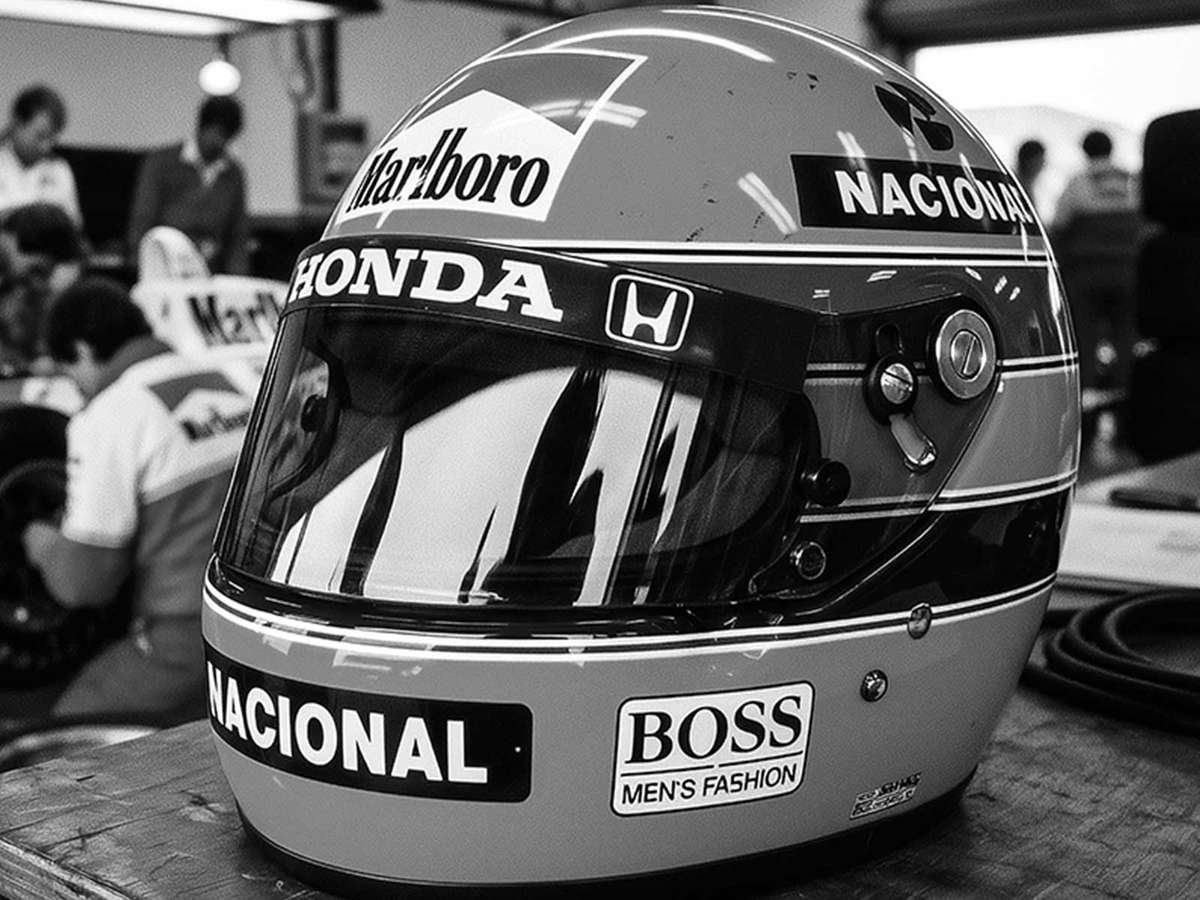
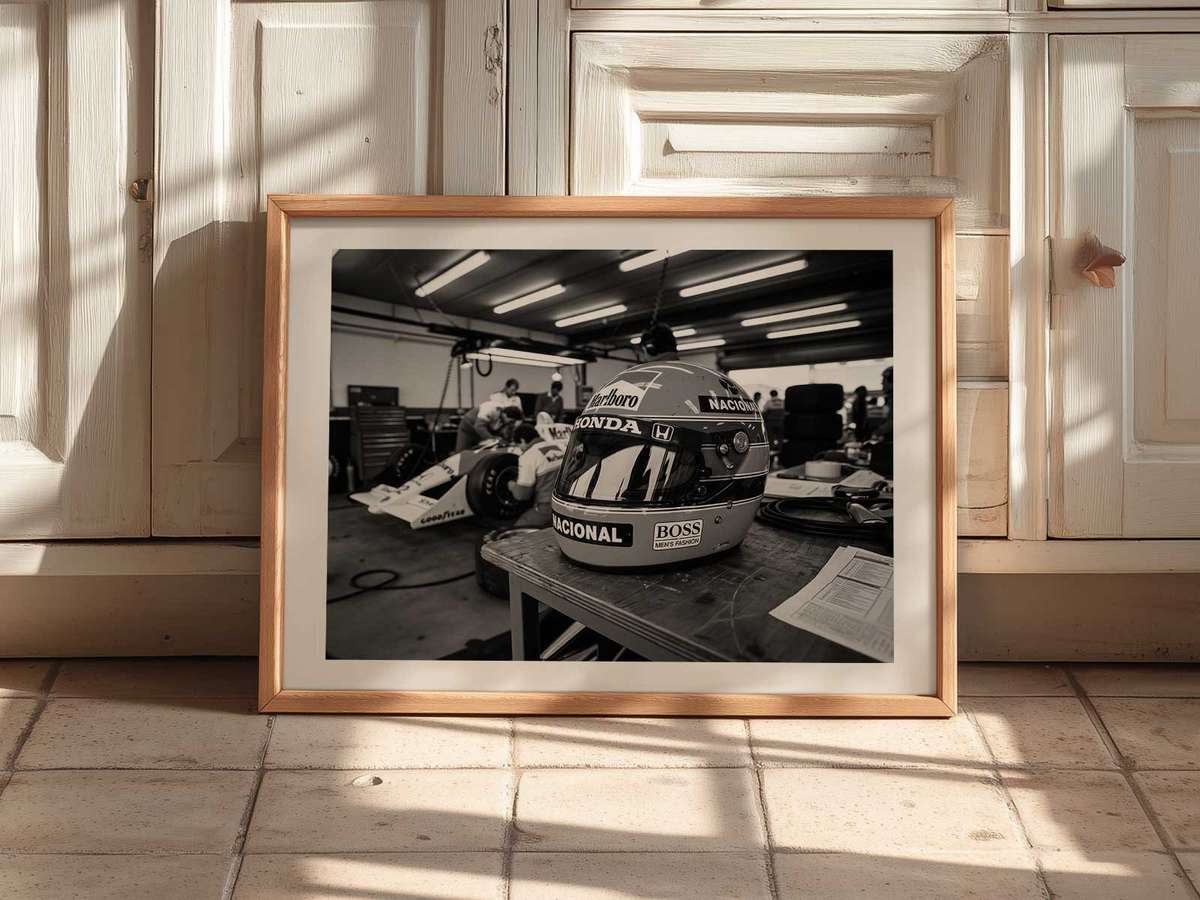
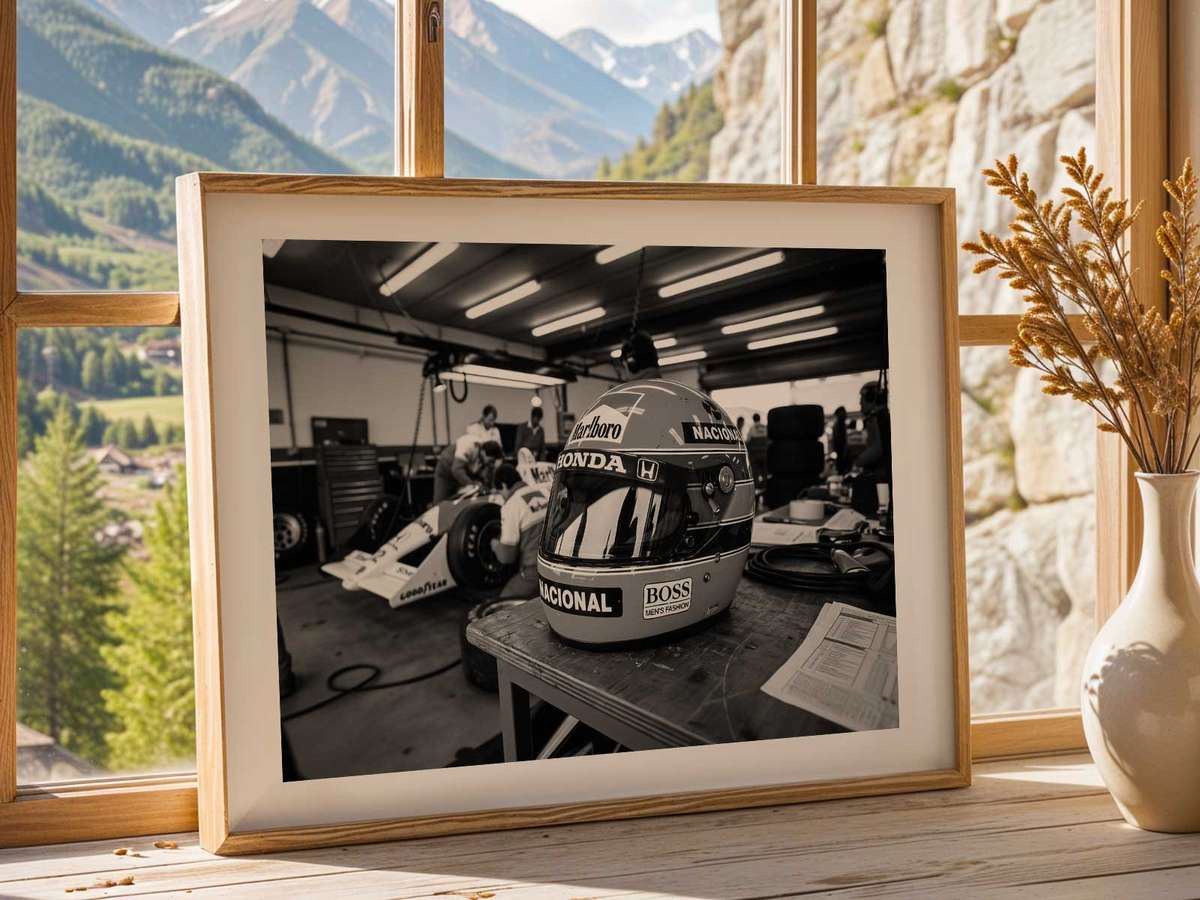
Beyond instant recognition, the image carries an identity that any F1 enthusiast can read at a glance. Colour and livery act as shorthand for team character, while helmet motifs evoke the human presence behind the machine. A helmet rendered with attention to reflection, scuff or signature stripe becomes emblematic: it stands for risk, precision and the emotional intensity of the driver’s craft. That symbol alone shifts the work from decorative print to an artefact of racing culture — a sign that signals passion as much as it signals decor taste.
Visually, the poster harmonises opposing forces. Speed is implied through compositional motion — blurred background, angled lines and a foreground element that suggests momentum. At the same time, the stillness of a carefully lit helmet or the frozen geometry of a braking zone introduces calm. This tension between motion and pause is central to why motorsport imagery translates so well into wall art: it offers drama without chaos, energy without clutter, and an emotional charge that feels controlled and collectible.
[IMAGE_INSERT_ARTICLE_01]
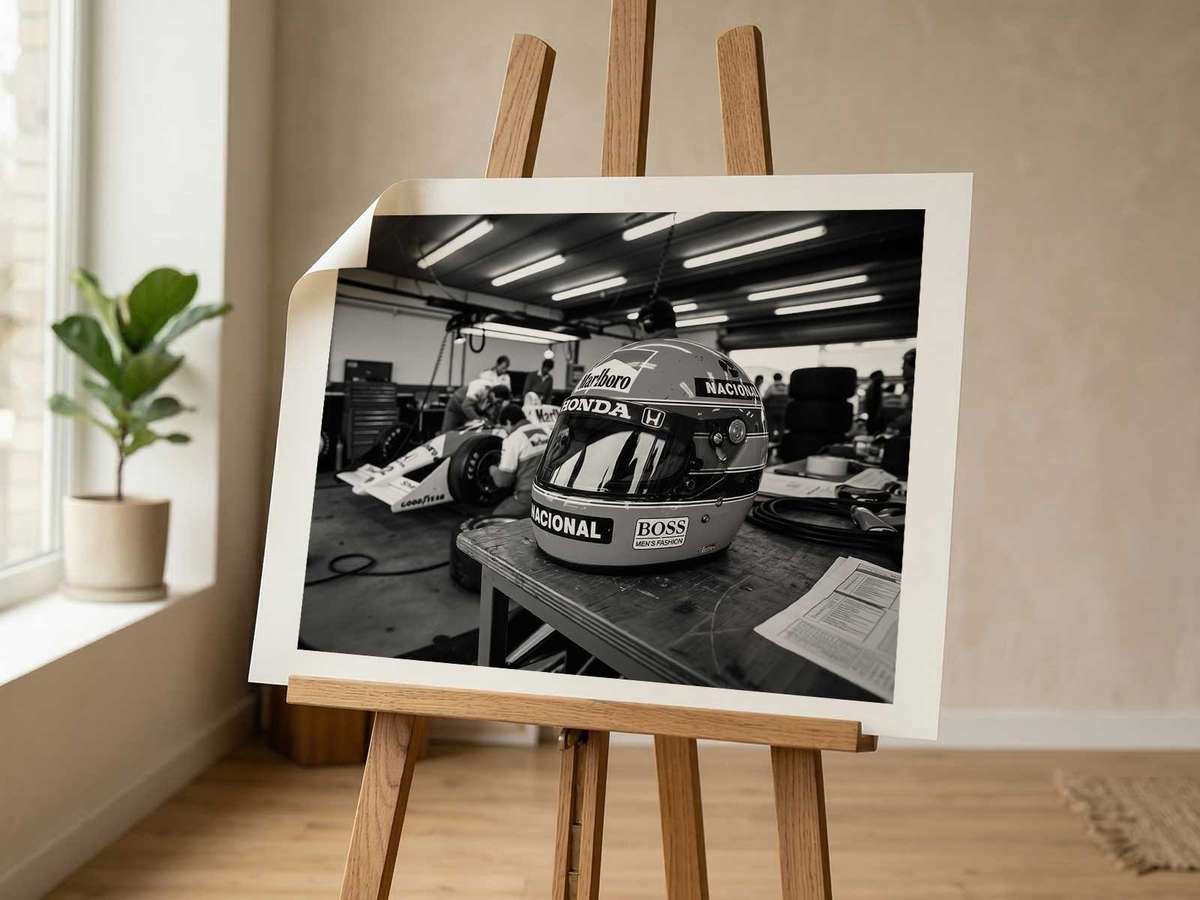
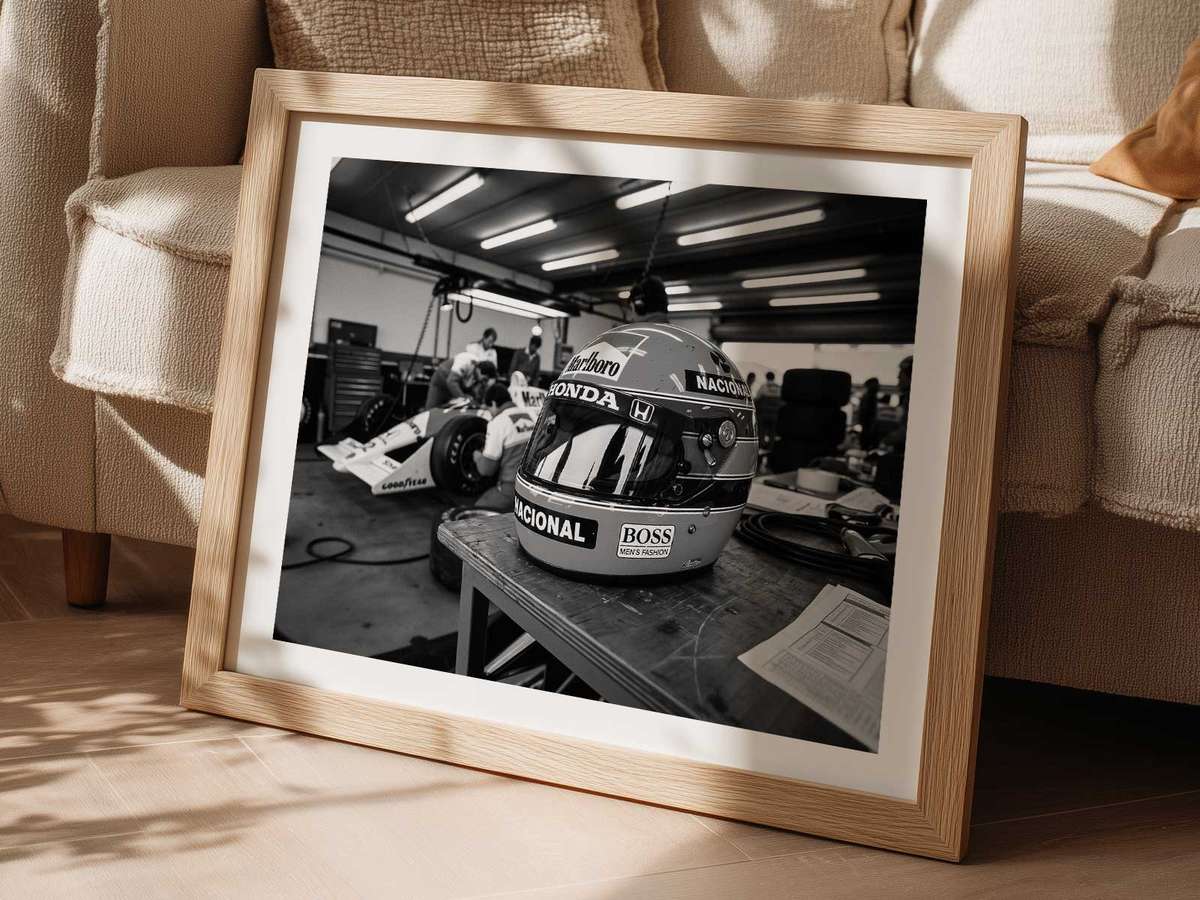
For collectors and interior designers the appeal is practical as well as emotional. A Spielberg poster adapts to many settings: a minimalist living room benefits from the poster’s sculptural lines; an office gains focused energy from its forward momentum; a game room or garage adopts a sporty edge without tipping into kitsch. The visual language of F1—clean surfaces, purposeful typography, and bold colour contrasts—plays nicely with contemporary interiors, making the piece feel curated rather than loud.
Finally, the evocative power of a helmet deserves emphasis. More than a piece of protective equipment, the helmet is an icon—portable, intimate and immediately personal. When an artist isolates that object against the circuit’s backdrop, the poster becomes a meditation on identity and memory: the helmet recalls a particular driver’s presence, the circuit summons race day rituals, and the combined image prompts recollection of speed, tension and triumph. That layered resonance is what elevates the poster from image to heirloom-like décor.
In short, a Spielberg Austria Grand Prix poster succeeds because it speaks simultaneously to the eyes and to racing memory. It offers strong visual architecture, a readable racing identity and the potent symbol of the helmet — all qualities that let it perform as both premium wall art and a genuine expression of automotive passion. Whether displayed in a study, lounge or motorsport sanctuary, the print reshapes space by introducing motion, narrative and a distinctive aesthetic of speed.