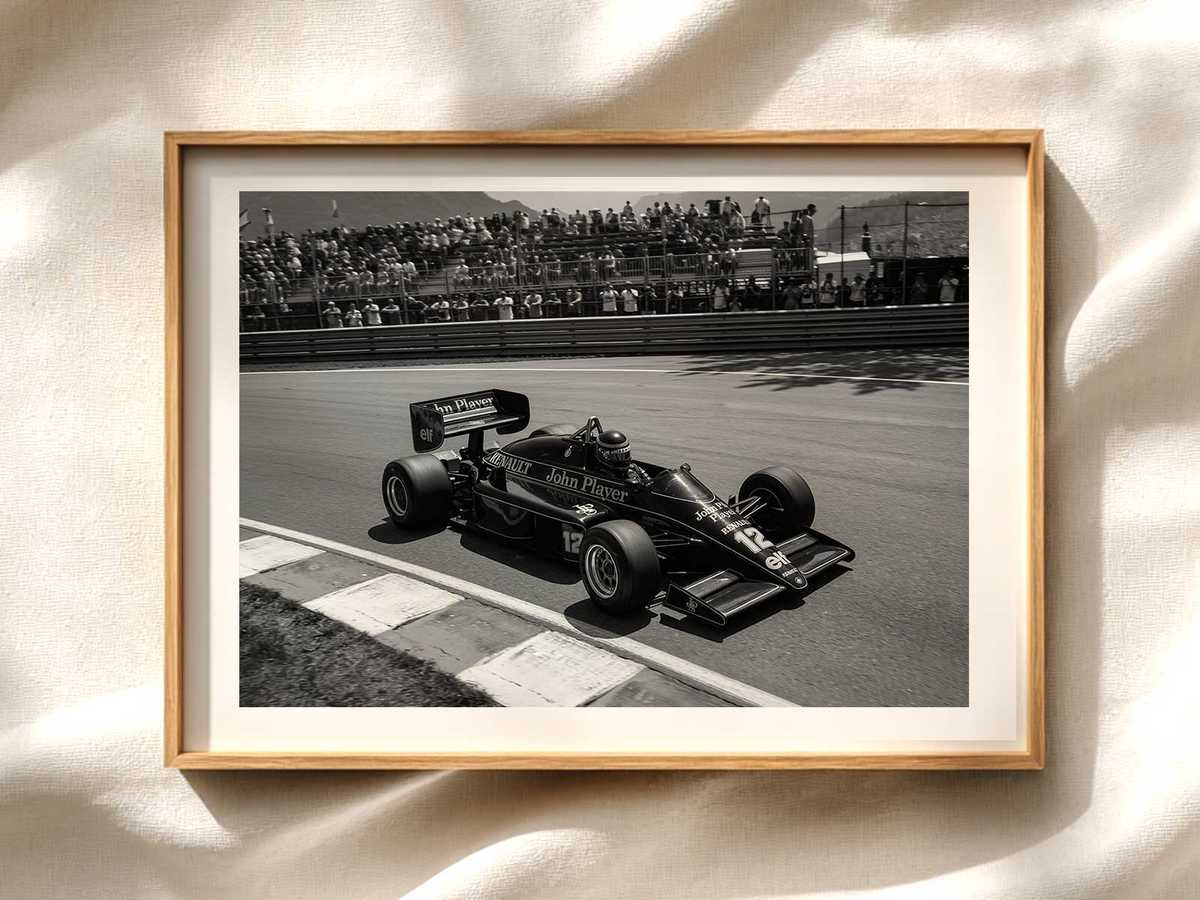
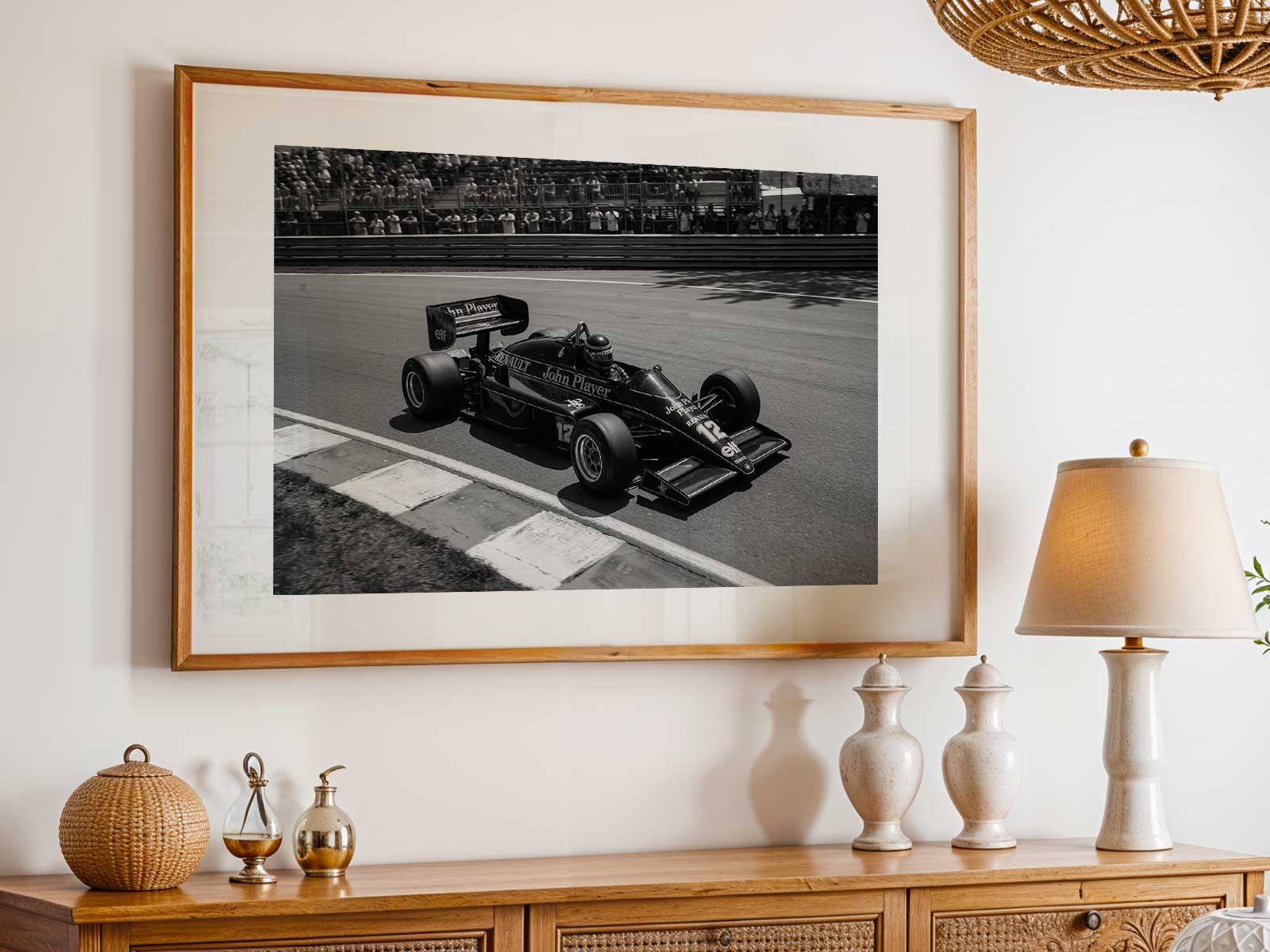
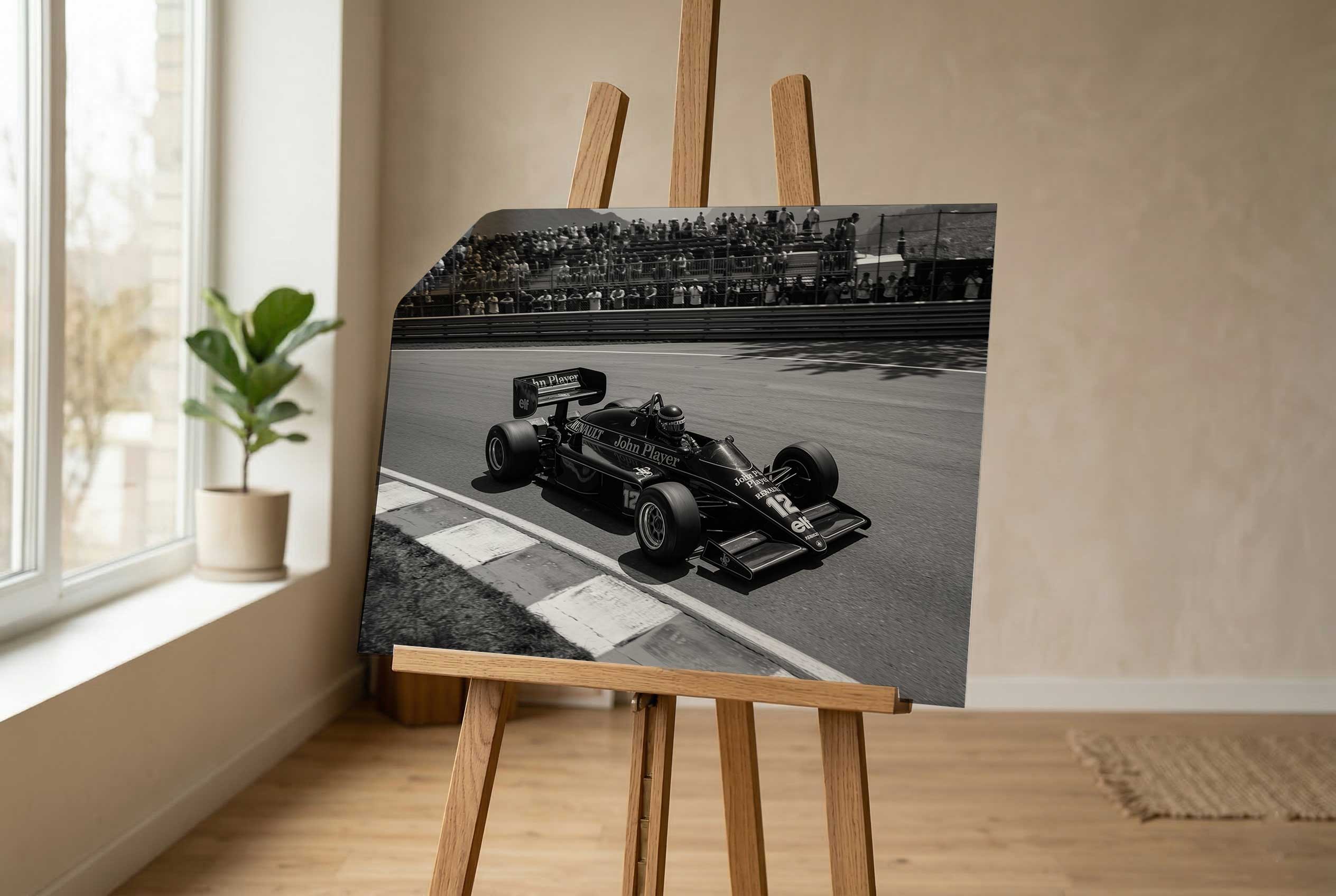
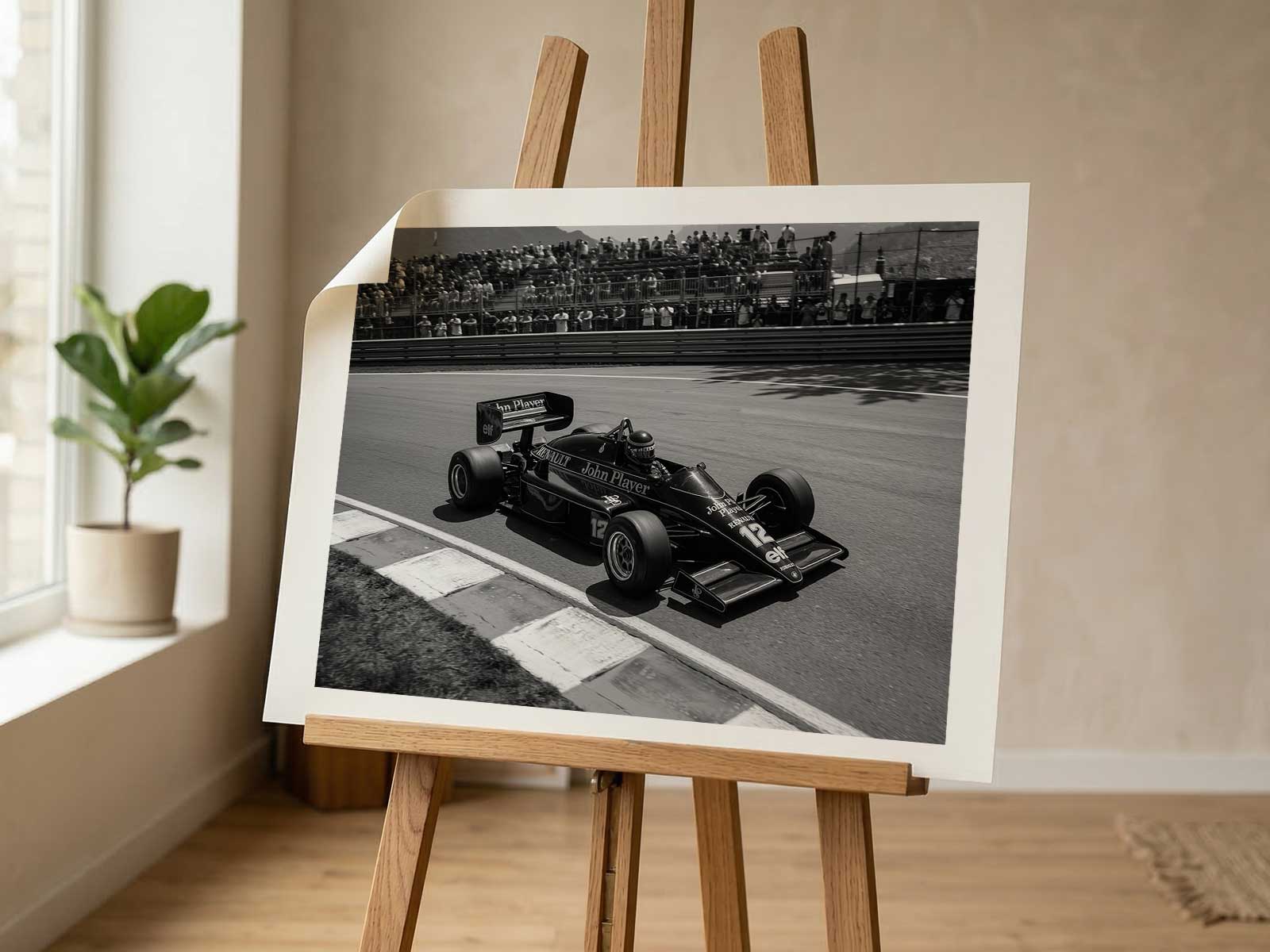
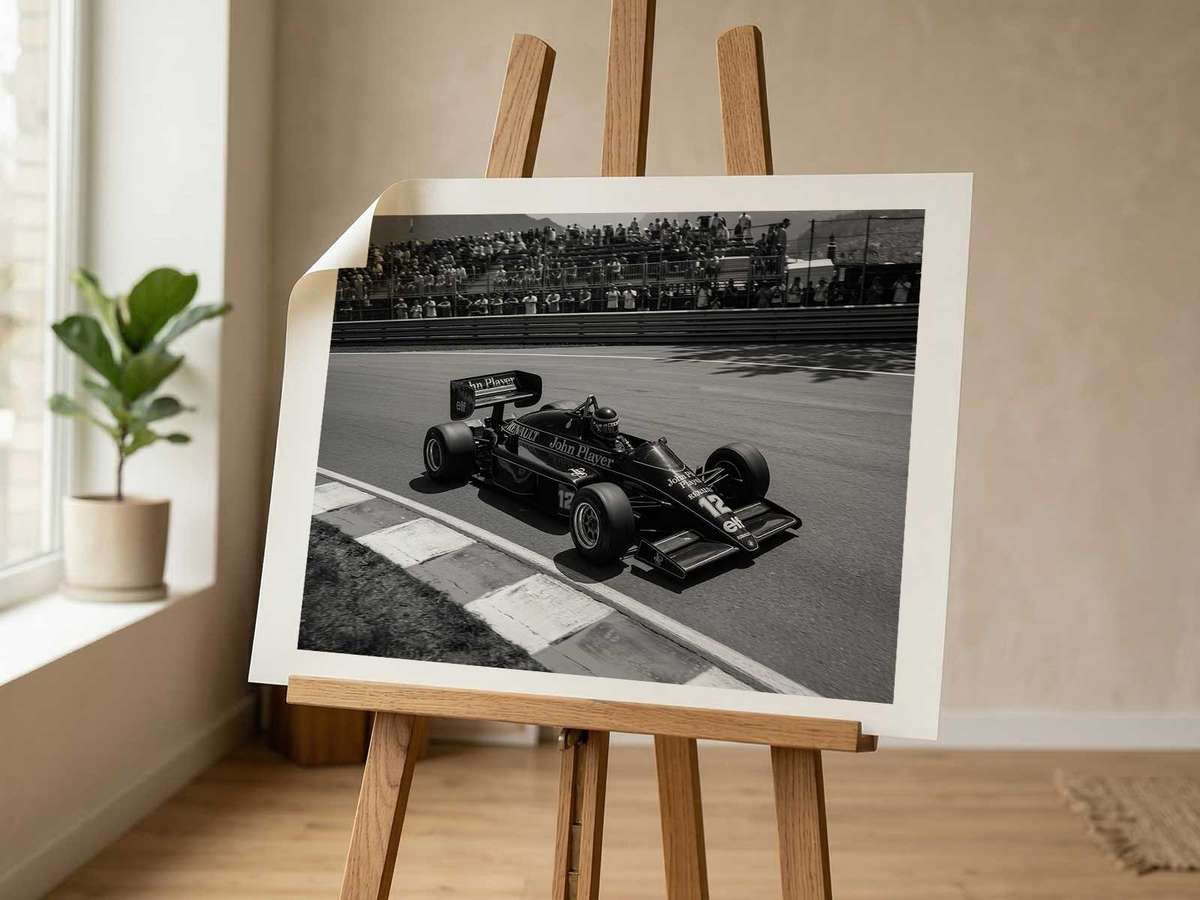
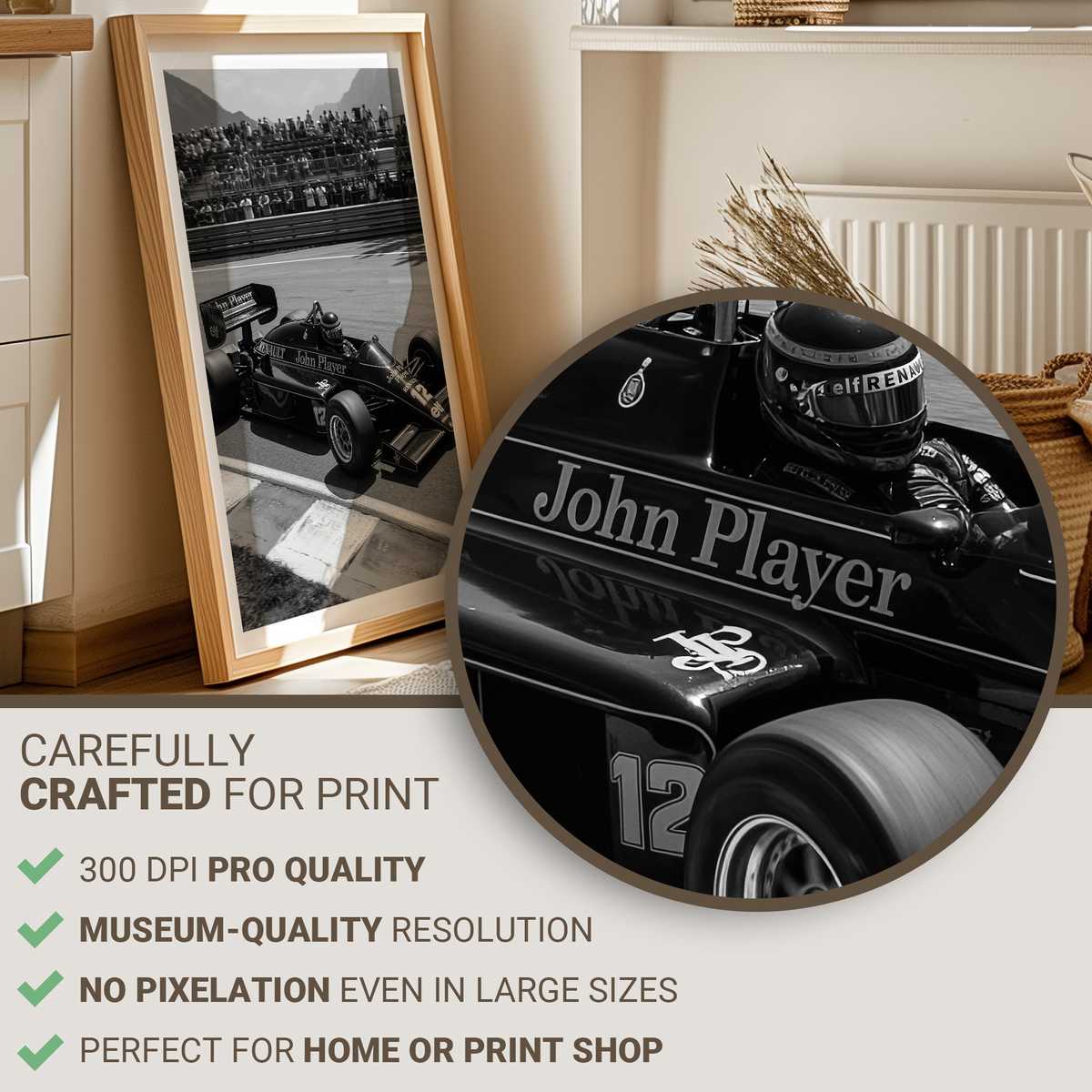
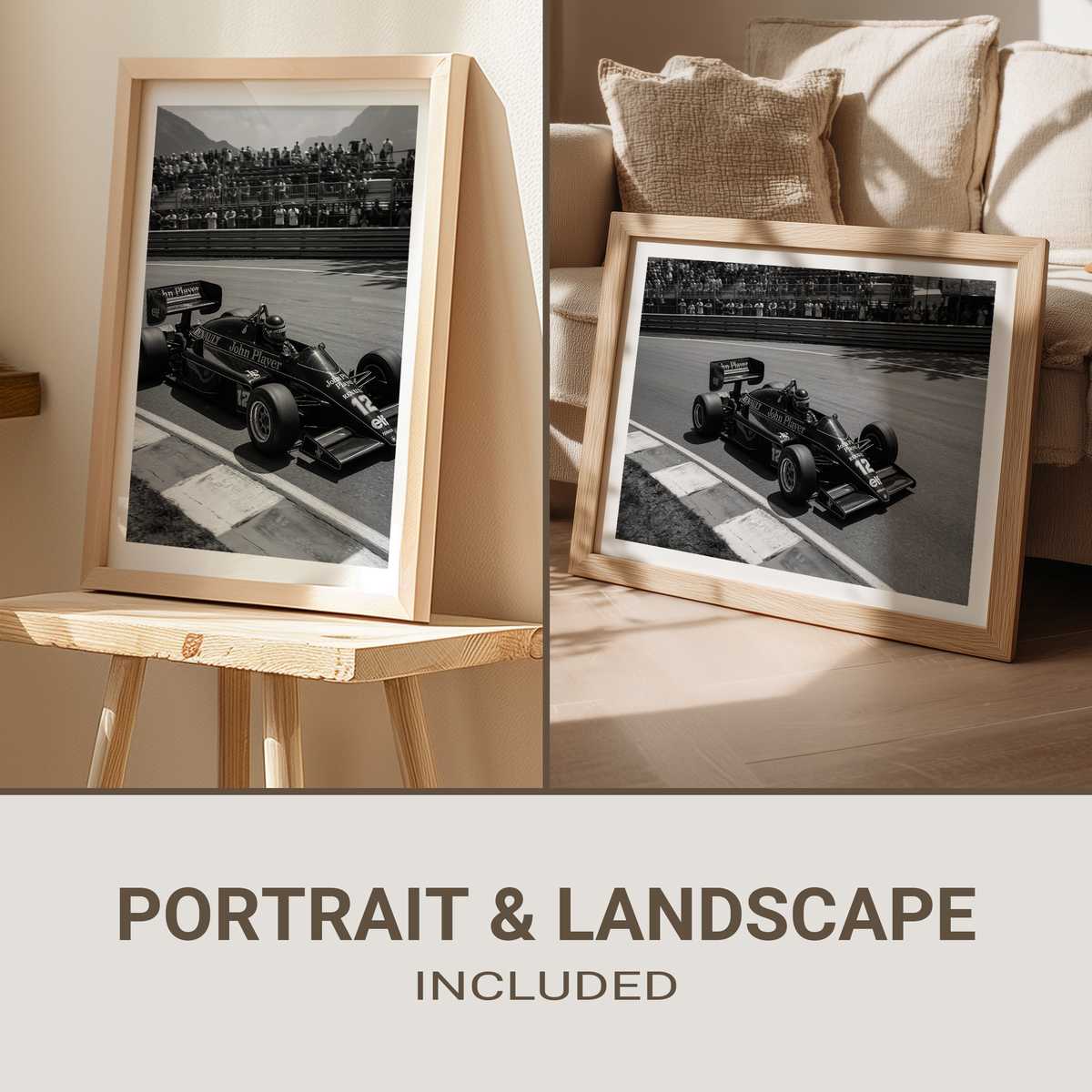
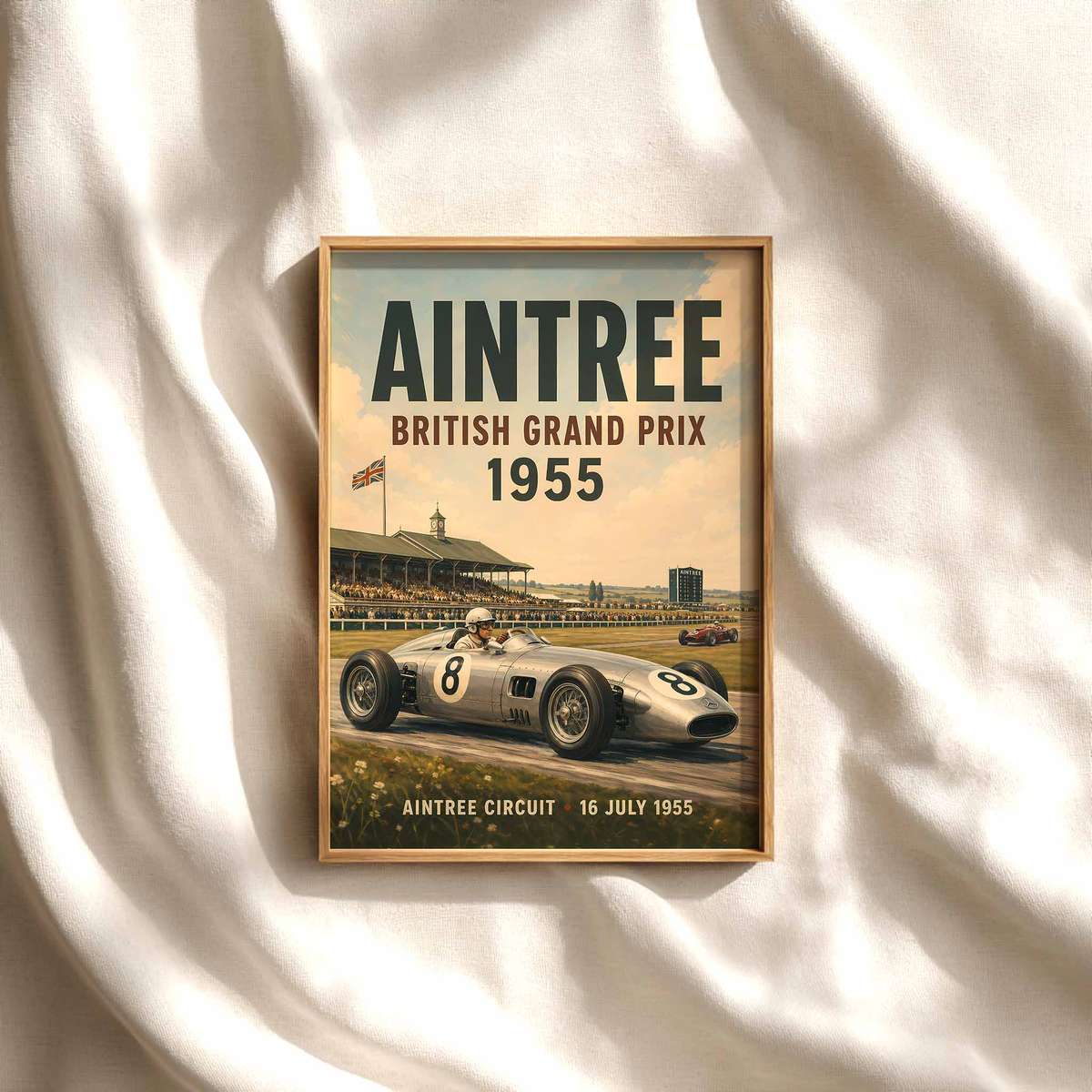
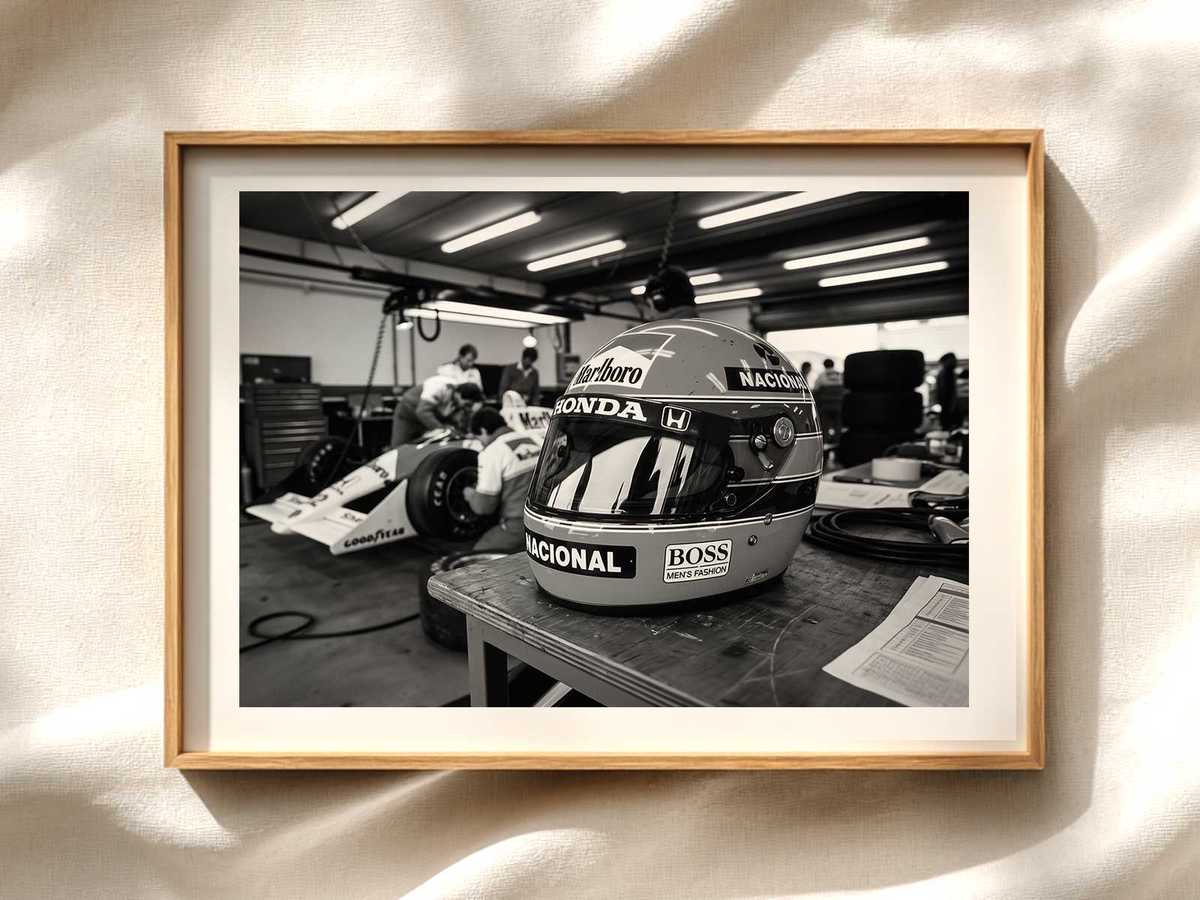
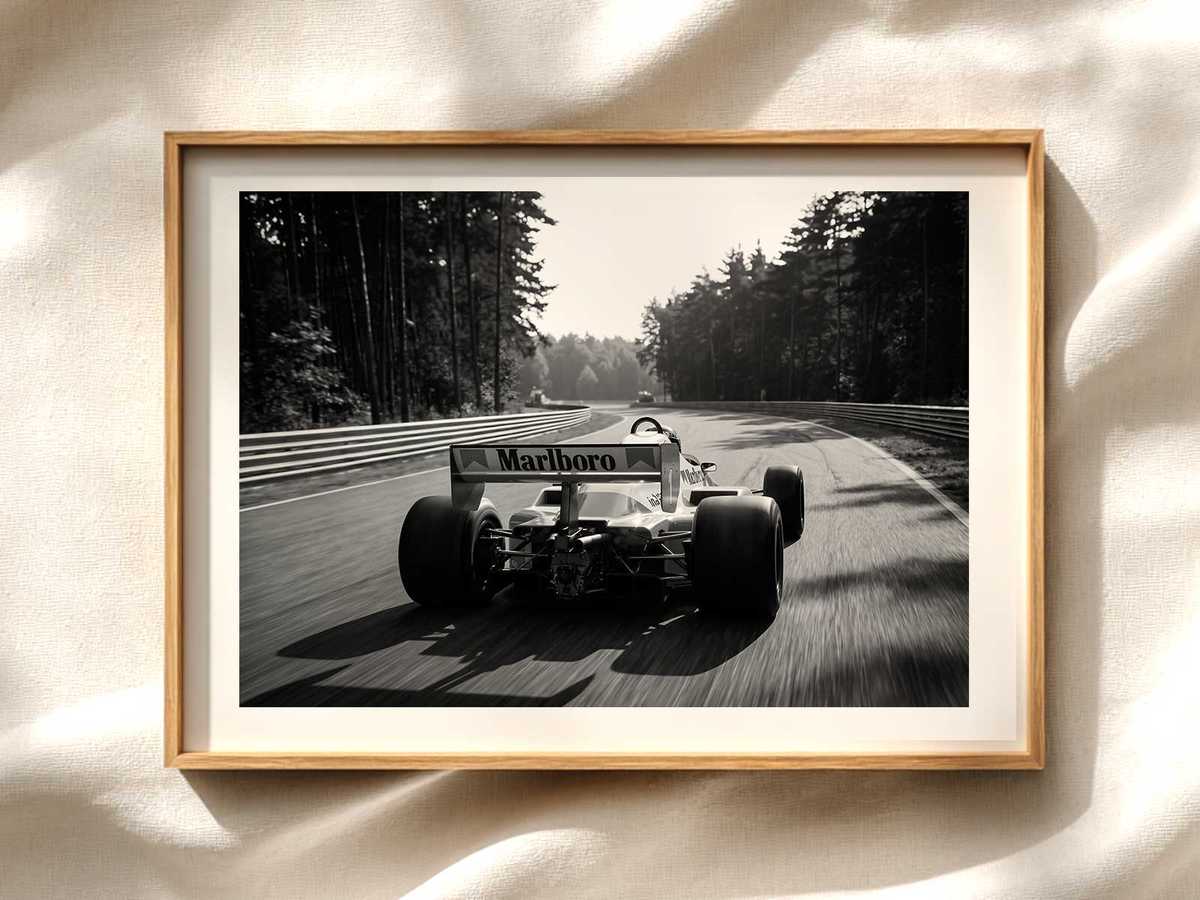
A Lotus F1 poster has a rare ability to sit equally well in a collector's gallery and a refined living space. The car's visual language—long, purposeful lines, minimalist livery, and an anatomy that reads as both function and sculpture—translates immediately into a strong compositional focal point. Seen from a distance it reads like an object of design; up close its racing cues and surface tension reward a fan's eye. That duality is what makes it ideal f1 wall art.
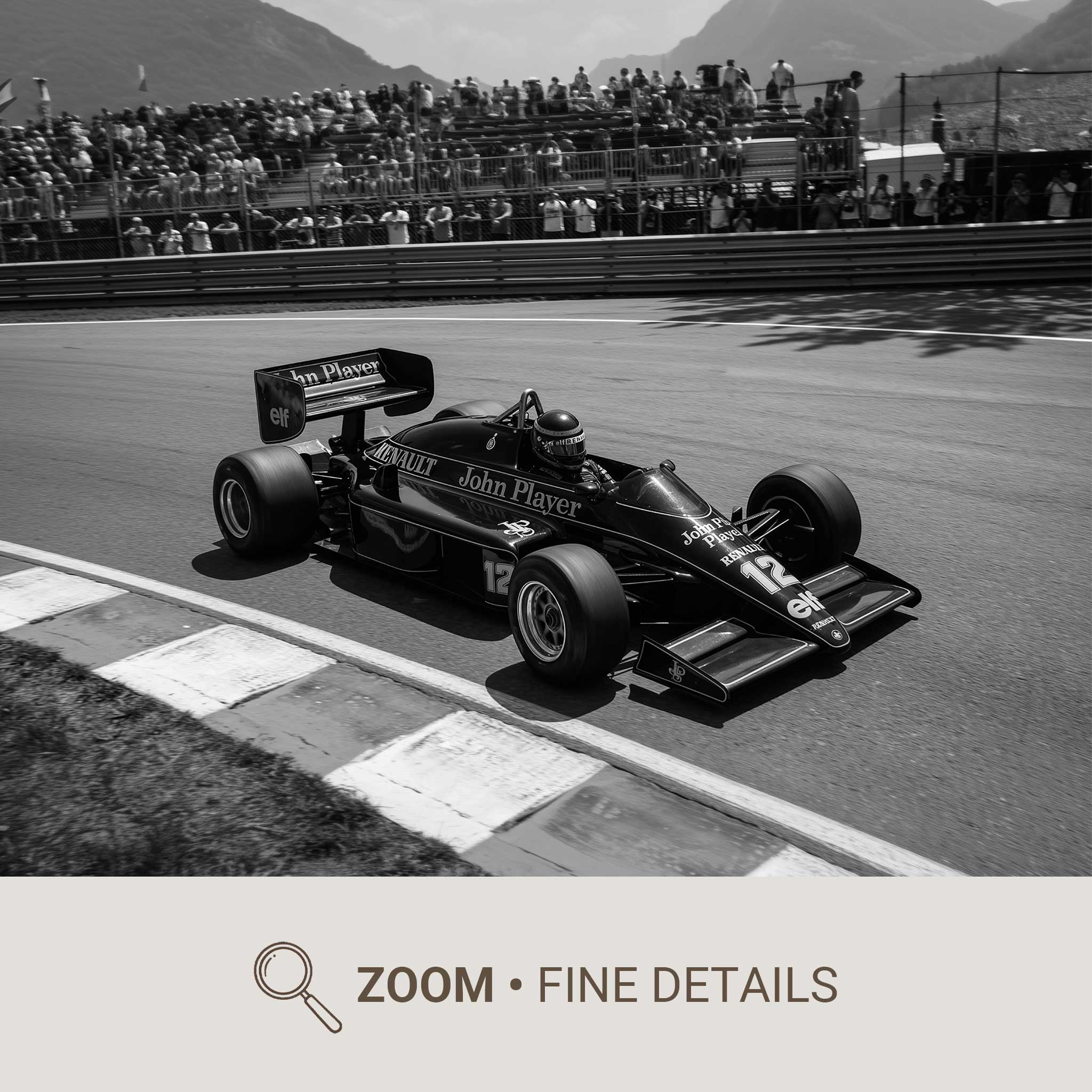
The first thing most viewers notice is the line: the Lotus silhouette reduces the complex mechanics of a Grand Prix car to an elegant sweep. Where many racing images shout speed through motion blur or overt drama, a Lotus poster often trusts restraint. A spare palette and decisive negative space let the shape breathe, so the eye follows the nose, the cockpit halo, and the rear wing as if tracing a single drawn stroke. This simplicity is what allows the piece to behave like premium décor—calm, sculptural, and immediately recognisable to anyone who knows motorsport language.
Identity in racing is rarely only about colour; it's about attitude. A Lotus-themed print carries that identity with quiet authority: racing intent without ostentation. The visual cues that signal F1—low-slung profile, exposed suspension, purposeful aerodynamics—are present but not crowding the frame. That creates a poster that can speak to enthusiasts through detail while remaining tasteful for a living room, office, or gallery wall. It’s a bridge between passion and provenance: an artwork that confirms you love motorsport without shouting brand slogans across the room.
[IMAGE_INSERT_ARTICLE_01]
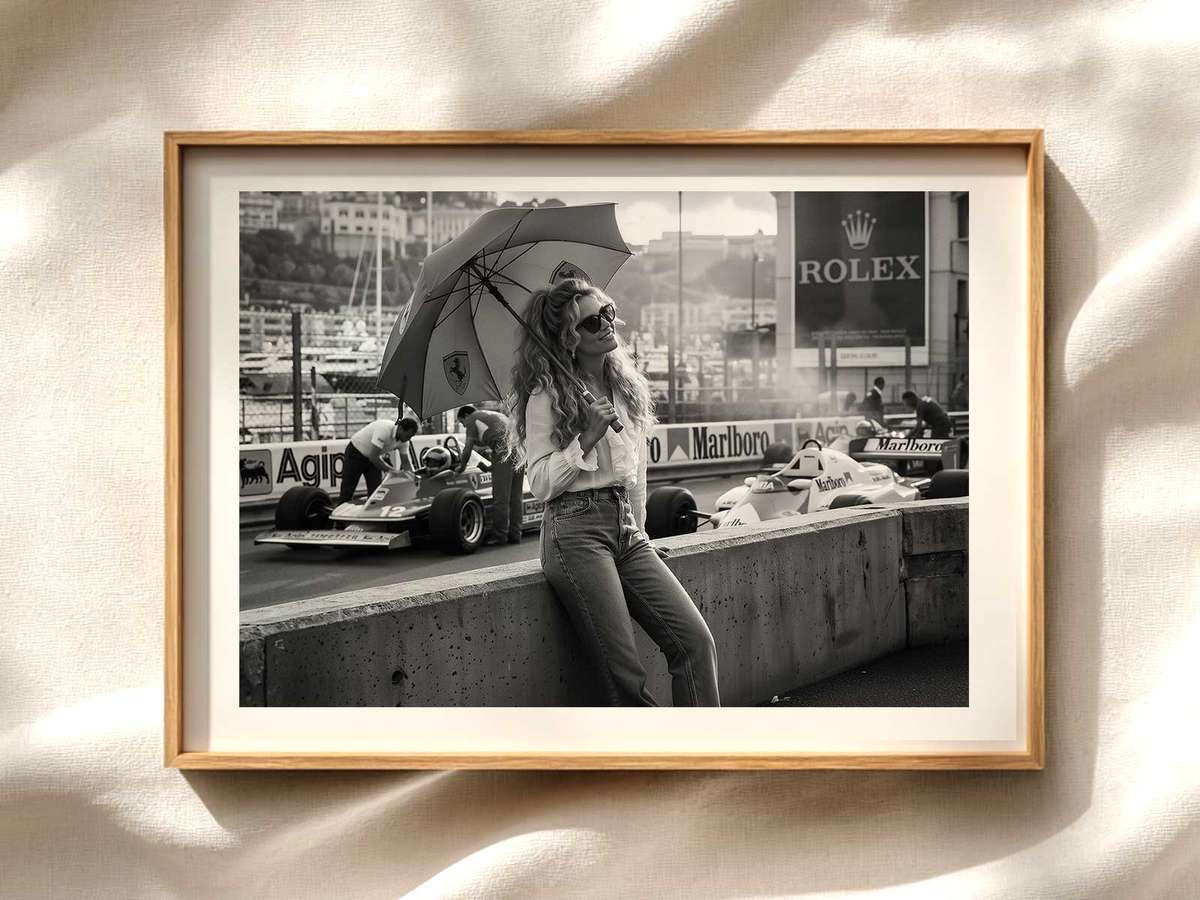
The poster's atmospheric choices amplify its appeal as much as the car itself. Lighting and tonal contrast can turn metal and carbon into a study of form: a soft side-light revealing texture, or a high-contrast shot that dramatises silhouette. Even an implied sense of speed—a subtle motion trail, a tilted horizon, or the suggestion of a curving circuit—gives the composition a kinetic heartbeat without overwhelming the composition. For interior design this is perfect: the artwork animates a space without dominating it, creating movement that complements other elements rather than clashing with them.
Collectors and designers both appreciate how such an image ages. Unlike trend-driven graphics, a Lotus poster rooted in line and proportion remains visually relevant across seasons. It references racing culture and engineering finesse rather than a single result or headline, so it accumulates meaning over time. Hanging one becomes an invitation to recall races, drivers, and circuits—memories that enrich the room's atmosphere and make the poster more personal with each glance.
Finally, the emotional economy of a Lotus image is compelling. There is a purity in restraint: the poster does not require explanation. It rewards familiarity—the subtleties of livery, the stance of the car at speed, the way light plays across its surfaces—while remaining accessible to anyone drawn to good design. As a gift, it reads as thoughtful rather than flashy; as a centrepiece, it elevates an interior through confident understatement. That balance of racing identity, visual impact, and decorative grace is why a Lotus F1 poster functions so naturally as premium f1 wall art.